May 5, 2021 | News
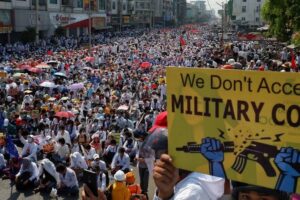
The ICJ condemns the Danish authorities’ practice of revoking residence permits of Syrian refugees, mainly women and older men, on the false premise that Syria is safe for refugees’ return. Partly due to a lack of diplomatic relations with Syria, Denmark cannot forcibly remove refugees and instead detains them.
These practices should end immediately, individual assessments must be carried out in each case, and those detained pending removal should be immediately released, the ICJ said.
“International law requires that before any forcible removal, an individualized assessment of risks for each individual must be made and the principle of non-refoulement must be respected at all times,” said Róisín Pillay, ICJ Europe and Central Asia Director.
The principle of non-refoulement, prohibiting States to transfer anyone to a country where he or she faces a real risk of persecution or other serious human rights abuses, is a fundamental principle of international law and one of the strongest limitations on the right of States to control entry into their territory and to expel aliens as an expression of their sovereignty, as set out in Article 33 of the Geneva Refugee Convention and Article 3 of the Convention against Torture.
“Immigration detention pending removal is permitted only for as long as removal proceedings are in progress, and only if such proceedings are executed with due diligence and there is a realistic prospect that removal will be carried out within a reasonable time. Denmark’s practices fail to meet these standards as set out in international and EU law,” Pillay added.
At least 189 Syrians have had applications for renewal of temporary residency status denied since last summer, a move the Danish authorities said was justified because of a report that found the security situation in some parts of Syria had “improved significantly”. In March, ECRE and the Danish Refugee Council reported that the geographical scope of reassessments of cases of Syrian nationals has been expanded to include cases from greater Damascus with hundreds of cases set to be reassessed by the Appeals Board in 2021.
“The ‘improved situation’ assessment in Syria does not reflect the reality on the ground and runs counter to assessments of the UN, the European Parliament and other countries,” said Róisín Pillay.
On 11 March, the European Parliament adopted a resolution on the conflict in Syria which “(r)eminds all Member States that Syria is not a safe country to return” for refugees, and “calls on all EU Member States to refrain from shifting national policies towards depriving certain categories of Syrians of their protected status, and to reverse this trend if they have already applied such policies.” The EP also opposed any “normalization of diplomatic relations with the Syrian regime as long as there is no fundamental progress on the ground in Syria, with clear, sustained and credible engagement in an inclusive political process.”
The UNHCR considers that “changes in the objective circumstances in Syria, including relative security improvements in parts of the territory, are not of a fundamental, stable and durable character so as to warrant cessation of refugee status on the basis of Article 1C(5) of the 1951 Convention.” Furthermore, “in light of continued conflict, insecurity, and contamination with explosive remnants of war (ERW); severe concerns about the rule of law and widespread human rights violations and abuses, including against returnees; fragmented community relations and a lack of genuine reconciliation efforts; massive destruction and damage to homes, critical infrastructure and agricultural lands; and deepening economic and humanitarian crises, which are compounded by the COVID-19 pandemic, UNHCR continues to call on states not to forcibly return Syrian nationals and former habitual residents of Syria, including Palestinians previously residing in Syria, to any part of Syria, regardless of whether the area is under control of the Government or under control of another state or non-state entity. ”
“The Danish authorities’ assessment of the situation in Syria refers solely to the situation of wide-spread violence and bombing in some parts of Syria, in total disregard of the continuing hostilities in other parts of the country, as well as Syria’s abysmal human rights record, including widespread and systematic use of torture and other ill-treatment, arbitrary detention and enforced disappearances,” said Said Benarbia, ICJ MENA Director.
Read the full statement here.
Apr 29, 2021 | News
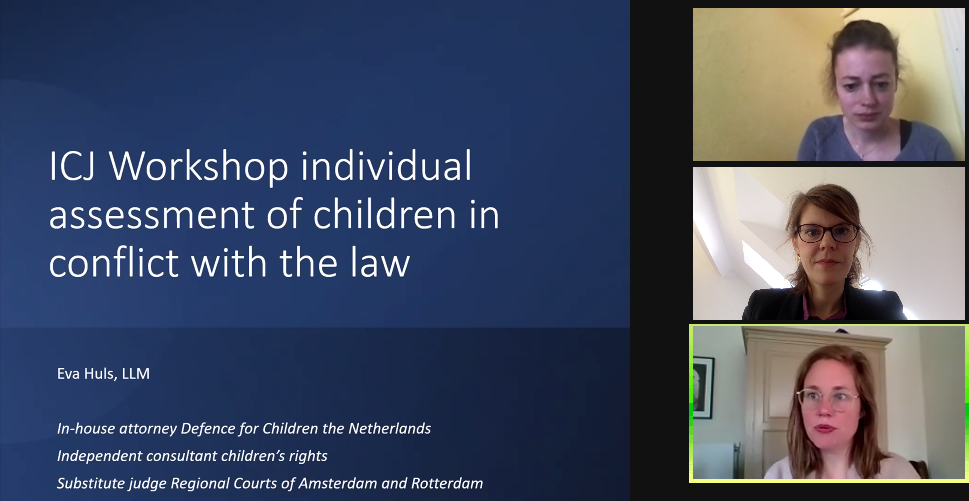
It is important to involve children suspected or accused of breaching the law, in the proceedings in a rights-based way, agreed judges, prosecutors and probation officers during a seminar for Czech and Slovak professionals, organised by the ICJ and Forum for Human Rights on 28 and 29 April.
The individual assessment according to Article 7 EU Directive 2016/800 on procedural safeguards for children suspected or accused in criminal proceedings should serve as a genuine right of the child, rather than as evidence, the seminar was told.
Speakers at the seminar emphasized that the actions of children often only reflect how they were treated by adults – including by parents, teachers, or public authorities, who have failed to address systemic inequalities and situations of discrimination. The contact of the child with the justice system provides an opportunity to help the child, to show them that they have rights and an important role in the society, and involve them actively in the proceedings, experts said. The environment in which the child grows up may have an important impact on the child’s behaviour.
During the seminar, professionals and experts discussed a number of practical questions, such as how to work with information in a child’s case: how sources in reports and assessments for the court should be as objective as possible, up to date, and how sources should be verified, so that information is not doubled or amplified in the individual assessments.
A considerable part of discussion in the seminar was dedicated to restorative justice principles and how these can serve professionals in contact with children in the justice system, in order to ensure the rights-based approach.
Restorative justice experts pointed out that most children grow out of crime without any intervention, and so minimum intervention is usually the best approach to prevent crime in the future. They explained the benefits of giving the child the feeling of control and involving them in the search for solutions, so they will feel respected, and are more likely to see the process as fair and are more likely to follow the decision made.
Practical exercises were part of the seminar and participants actively engaged and shared their concerns and challenges they encounter in their work.
The two seminars gathered over 50 judges, public prosecutors, probation officers and experts from the Ministry of Justice from both countries working in the field of child justice or family law. Experts included Mikiko Otani, ICJ Commissioner and member of the Committee on the Rights of the Child, Dainius Puras, former UN Special Rapporteur on the Right to Health, as well as judges and academics other EU Member States and from the European Forum on Restorative Justice, FORUM and the ICJ.
See the full agenda here:
In English
In Czech
The PRACTICE project is implemented by the ICJ-EI and Forum for Human Rigths aims at building the capacity of judges and other relevant professionals to ensure effective individual assessments of children in criminal proceedings in the Czech Republic and Slovakia. It supports the implementation of EU Directive 2016/800, as well as international human rights law obligations of the states concerned. In the second part of the project the ICJ-EI will draft and publish recommendations on individual assessments of children with specific vulnerabilities, to support an EU-wide interpretation and application of Article 7 of Directive 2016/800, in light of international human rights law.
This project was funded by the European Union’s Rights, Equality, and Citizenship Programme (2014-2020). The content of this publication represents the views of ICJ only and is its sole responsibility. The European Commission does not accept any responsibility for use that may be made of the information it contains.
Apr 1, 2021 | Agendas, Events, News
Migrants and asylum seekers must be provided adequate procedural guarantees in asylum procedures and in immigration detention, a group of experts and judges asserted during a seminar for Greek and Italian judges held by the ICJ, Scuola Superiore Sant’Anna (SSSA), and Greek Council for Refugees (GCR) on 29-31 March.
Asylum applicants should have access to adequate information about the procedure and their entitlements in a language they understand, access to a reliable communication system with the authorities, the availability of interpreters, access to legal aid, and reasoned decisions, experts said during the seminar, held in the framework of the FAIR plus project. Speakers further emphasized that immigration detention must be subject to automatic review by an independent body with a power to release detainees, especially when removal is no more an option.
More than 30 judges from Italy and Greece came together for this event to discuss procedural guarantees for migrants and asylum seekers, related to the safe third country concept, the access to legal assistance and interpretation, safeguards related to immigration detention, and procedural guarantees in the asylum procedure, especially in the accelerated procedures.
A summary of the discussions
On the first day, the judges exchanged overviews of national systems and presented some specific questions regarding the Italian and the Greek systems. Following the discussion on the safe third country concept and its implementation in Greece, an Italian judge presented recent developments in the Italian case-law, and the role of the judge, country of origin information, accelerated procedures, the length of procedures and the question of credibility assessment.
On the second day, the discussion related to the impact of Covid-19 pandemic on the rights of migrants and asylum seekers took place. The situation in Greece and in Italy was described by judges, in particular in relation to the access to the asylum procedure, the lawfulness of detention, the right to health and the question of access to a personal hearing when some of the hearings take place electronically.
An overview of the situation of immigration detention in Italy and Greece was presented by an Italian lawyer and an expert from UNHCR Greece. Speakers highlighted that in cases when people cannot be returned, they should not be kept in detention without a legal basis.
Accelerated procedures in law and in practice in both countries have been introduced by UNHCR Greece and Italy were addressed through a case-study and discussion, covering mainly the specific needs in accelerated procedures, automatic suspensive effect of appeals, and time limits in the accelerated procedures.
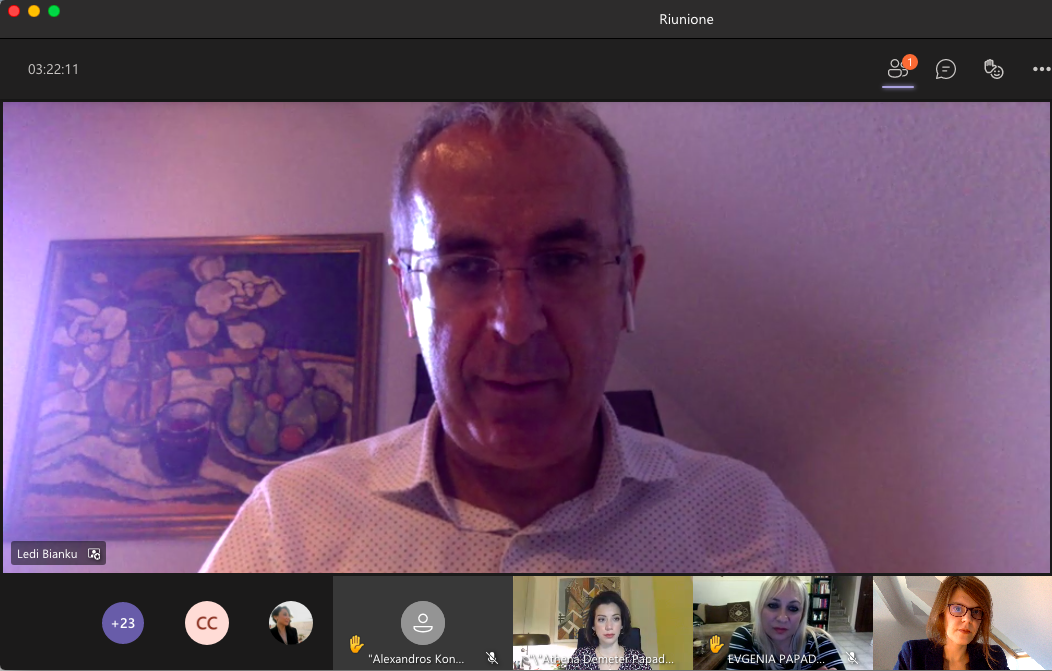
Finally on the last day, two lectures were delivered by Ledi Bianku, a former judge of the European Court for Human Rights, and an Associate Professor at the University of Strasbourg. First, looking into the guarantees in asylum and migration proceedings, Ledi Bianku stressed the need to always provide asylum applicants adequate information about the procedure and their entitlements in a language they understand, access to a reliable communication system with the authorities, the availability of interpreters, access to legal aid, and reasoned decisions in order to provide access to an effective remedy. In the second part of his intervention, Mr. Bianku discussed the detention of migrants, where he stressed the need for automatic review of detention, especially when removal is no more an option, by an independent body with a power to release.
The FAIR plus project is a judicial training and cooperation project supported by the European Union’s Justice programme, focusing on four countries Ireland, Greece, Italy and the Czech Republic. The aim of the project is to contribute to better judicial protection of the fundamental rights of migrants across the EU. Within the project the ICJ and partners are drafting of training materials and relevant legal briefings, implement training of the existing judicial trainers in the target countries, conduct four national trainings, two transnational seminars, and an international roundtable. The project is implemented in collaboration with national partners: Immigrant Council of Ireland (ICI), Scuola Superiore Sant’Anna (SSSA), Greek Council for Refugees (GCR) and Forum for Human Rights (Czech Republic).
Please find the agenda here.
Feb 4, 2021 | Agendas, Events, News
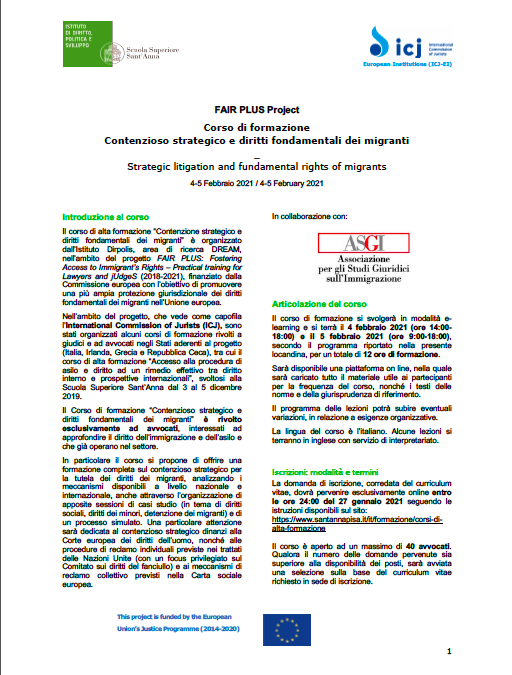
Today, the ICJ in collaboration with Scuola Universitaria Sant’Anna is holding an online training seminar on strategic litigation and fundamental rights of migrants.
The two-day training (4-5 February 2021) brings together 40 lawyers working in the field of migration and refugee law in Italy.
Experts from ASGI (Association for Juridical Studies on Immigration), ICJ and Scuola Universitaria Sant’Anna will provide an overview and analysis of redress mechanisms available at national and international level to migrants and their representatives. The training pays particular attention to strategic litigation before the European Court of Human Rights, the individual complaint procedures under the UN treaties with a focus on the Committee on the Rights of the Child, and to the collective complaint mechanism under the European Social Charter. The training will also cover social rights, children’s rights, immigration detention, and a moot court exercise.
See the full agenda here.
This training is a part of FAIR PLUS project. It was carried out with the financial support of the European Union’s Justice programme (2016-2020). Its contents represents the views of ICJ only and is its sole responsibility. The European Commission does not accept any responsibility for use that may be made of the information it contains.

Jan 18, 2021 | News
Soltan Achilova, Loujain AlHathloul and Yu Wensheng, three outstanding human rights defenders based in authoritarian states are nominated for the 2021 Martin Ennals Award for Human Rights Defenders. The ICJ is member of the MEA Jury.
In isolated Turkmenistan, Soltan Achilova documents human rights violations and abuses through photojournalism.
Imprisoned in Saudi Arabia, Loujain AlHathloul is a leading advocate for gender equality and women’s rights.
A lawyer, Yu Wensheng defended human rights cases and activists before his conviction and imprisonment in China.
The Finalists distinguish themselves by their bravery and deep commitment to the issues they defend, despite the many attempts to silence them by respective governmental authorities.
“Every year thousands of human rights defenders are persecuted, harassed, imprisoned, even killed. The Martin Ennals Foundation is honored to celebrate the 2021 Finalists, who have done so much for others and whose stories of adversity are emblematic of the precarity faced by the human rights movement today,” said Isabel de Sola, Director of the Martin Ennals Foundation.
“Authoritarian states tend to believe that by jailing or censoring human rights defenders, the world will forget about them. During the COVID-pandemic, it seemed like lockdowns would successfully keep people from speaking out. This year’s Finalists are a testament to the fact that nothing could be further from the truth,” added Hans Thoolen, Chair of the Jury.
Nothing can stop us from celebrating human rights defenders
Each year, the Martin Ennals Award honors human rights defenders from around the world who distinguish themselves by their strong commitment to promoting our fundamental rights – often at the risk of their own lives.
The 2021 Martin Ennals Award Ceremony will celebrate their courage on 11 February during an online ceremony hosted jointly with the City of Geneva which, as part of its commitment to human rights, has for many years supported the Award.
The 2021 Finalists
In Turkmenistan, one of the world’s most isolated countries, freedom of speech is inexistant and independent journalists work at their own peril. Soltan Achilova (71), a photojournalist, documents the human rights abuses and social issues affecting Turkmen people in their daily lives. Despite the repressive environment and personal hardships, she is one of the very few reporters in the country daring to sign independent
In Saudi Arabia, women still face several forms of gender discrimination, so much so, that the Kingdom ranks in the bottom 10 places according to the World Economic Forum’s Global Gender Gap Report 2020. Loujain AlHathloul (31) was one of the leading figures of the Women to drive movement and advocated for the end of the male guardianship system. She was imprisoned in 2018 on charges related to national security together with several other women activists. Tortured, denied medical care, and subjected to solitary confinement, Loujain was sentenced to 5 years and 8 months in prison on 28 December 2020.
In China, more than 300 human rights activists and lawyers disappeared or were arrested in 2015 during the so called 709 Crackdown. A successful business lawyer, Yu Wensheng (54) gave up his career to defend one of these detained lawyers, before being arrested himself. Detained for almost three years now, Yu Wensheng’s right hand was crushed in jail and his health is failing.
Contact
Olivier van Bogaert, Director Media & Communications, ICJ representative in the MEA Jury, t: +41 22 979 38 08 ; e: olivier.vanbogaert(a)icj.org
Chloé Bitton, Communications Manager, Martin Ennals Foundation, t +41 22 809 49 25 e: cbitton(a)martinennalsaward.org
MEA Finalists Bios-2020-ENG (full bios of finalists, in PDF)
MEA Finalists Bios-2020-ARA (full story and bios of finalists in Arabic, PDF)