May 7, 2021 | News
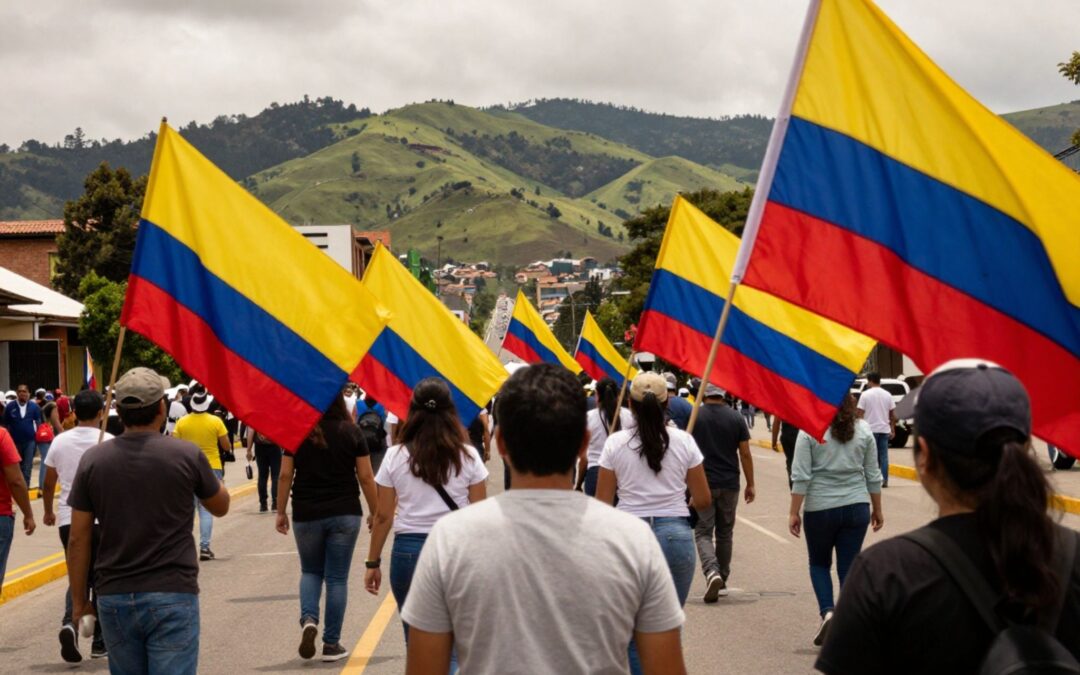
The Colombian Commission of Jurists (CCJ) and the ICJ have called upon national and local authorities to respect the right of peaceful assembly and cease all use of unlawful force against protestors immediately.
Beginning 28 April, thousands of people have taken to the streets in towns and cities throughout Colombia to protest and the social and economic policies of the current national government. As of this writing the protests continue.
The CCJ and the ICJ have expressed their concern about widespread and serious human rights violations committed during the protests.
There are multiples reports from civil society organizations that document incidents where police officials have opened fire with live ammunition against protestors.
Although full and precise figures are unavailable, as of 6 May 2021, according to the Ombudspersons’ Office at least 26 people had lost their lives. In at least 11 cases, police officials were allegedly responsible for the killings.
The NGO Temblores has documented 37 killings and the NGO Indepaz has information of more than 1.200 people injured during the protests. In addition, a number of cases of sexual violence have been reported.
The organizations are especially concerned that there are substantial number of people whose whereabouts are unknown. Complete figures on possible disappeared persons are not available. Even more worrisome, there are substantial differences among the figures provided by different sources.
In this regard, for instance, the Ombudspersons’ Office said that it has received information about the possible disappearance of 145 people. The Ombudspersons’ Office has established the whereabout of 55 people.
For its part, the civil society platform Mesa de Trabajo sobre Desaparición Forzada en Colombia has informed that it has information of 471 potential cases of enforced disappearances. According to the platform, the whereabout of 92 people have been determined.
The violent acts committed in Valle del Cauca are particularly serious. In this region, it has been reported that at least 17 people have died, and an undetermined number of people are seriously wounded.
Similarly, in Cali, some members of human rights organizations and the Office of the United Nations High Commissioner for Human Rights in Colombia alleged that they had been subject to verbal attacks and physical assault when there were verifying the situation of detained people.
The CCJ and the ICJ urge Colombian authorities to acknowledge act to address the allegations of human violations committed during the protests. They must conduct, independent, impartial, prompt, thorough, effective, and transparent investigations in accordance with Colombian law and its obligations under the International Covenant on Civil and Political Rights.
Furthermore, the investigation must take place within the ordinary criminal jurisdiction and under no circumstances should there be resort to military jurisdiction. Under international law and standards, cases that may constitute arbitrary deprivation of life or enforced disappearances cannot be considered to be connected with military duties.
Additionally, there is information that some police officials have been wounded, and at least one was allegedly unlawfully killed. The CCJ and the ICJ condemn these and other violent acts and urge judicial authorities to investigate and sanctions those responsible.
On the other hand, the CCJ and the ICJ recall that the use of force by police officials should must only be deployed in accordance with international standards. In particular, any such action must comply with the UN Basic Principles on the Use of Force and Firearms by Law Enforcement Officials.
These Principles establish that the use of force should be exceptional, necessary and proportional. Especially, authorities should faithfully comply with principle 9 that sets out that lethal force should be not used “except in self-defence or defence of others against the imminent threat of death or serious injury”.
Finally, the CCJ and the ICJ express their great concern about the national government’s decision to involve the military forces for the contention of the violence under the legal figure of “military assistance” (asistencia militar). The decision does not respect the international human rights law standards on the use of force and the right of peaceful assembly.
It should be remembered that military forces are not trained or designed to protect and control civilians during protests or scenarios of disruption of public order.
Therefore, the participation of military forces should be exceptional in situations of necessity, for example to confront immediate extreme violence and temporally limited, as affirmed by international bodies such as the UN Committee on Human rights and the Inter-American Court of Human Rights.
Contacts:
Ana María Rodríguez, Deputy Director of the Colombian Commission of Jurists, anarodriguez(a)coljuristas.org
Rocío Quintero M, Latin American Legal and Policy Adviser, International Commission of Jurists, rocio.quintero(a)icj.org

May 5, 2021 | News
The ICJ condemns the Danish authorities’ practice of revoking residence permits of Syrian refugees, mainly women and older men, on the false premise that Syria is safe for refugees’ return. Partly due to a lack of diplomatic relations with Syria, Denmark cannot forcibly remove refugees and instead detains them.
These practices should end immediately, individual assessments must be carried out in each case, and those detained pending removal should be immediately released, the ICJ said.
“International law requires that before any forcible removal, an individualized assessment of risks for each individual must be made and the principle of non-refoulement must be respected at all times,” said Róisín Pillay, ICJ Europe and Central Asia Director.
The principle of non-refoulement, prohibiting States to transfer anyone to a country where he or she faces a real risk of persecution or other serious human rights abuses, is a fundamental principle of international law and one of the strongest limitations on the right of States to control entry into their territory and to expel aliens as an expression of their sovereignty, as set out in Article 33 of the Geneva Refugee Convention and Article 3 of the Convention against Torture.
“Immigration detention pending removal is permitted only for as long as removal proceedings are in progress, and only if such proceedings are executed with due diligence and there is a realistic prospect that removal will be carried out within a reasonable time. Denmark’s practices fail to meet these standards as set out in international and EU law,” Pillay added.
At least 189 Syrians have had applications for renewal of temporary residency status denied since last summer, a move the Danish authorities said was justified because of a report that found the security situation in some parts of Syria had “improved significantly”. In March, ECRE and the Danish Refugee Council reported that the geographical scope of reassessments of cases of Syrian nationals has been expanded to include cases from greater Damascus with hundreds of cases set to be reassessed by the Appeals Board in 2021.
“The ‘improved situation’ assessment in Syria does not reflect the reality on the ground and runs counter to assessments of the UN, the European Parliament and other countries,” said Róisín Pillay.
On 11 March, the European Parliament adopted a resolution on the conflict in Syria which “(r)eminds all Member States that Syria is not a safe country to return” for refugees, and “calls on all EU Member States to refrain from shifting national policies towards depriving certain categories of Syrians of their protected status, and to reverse this trend if they have already applied such policies.” The EP also opposed any “normalization of diplomatic relations with the Syrian regime as long as there is no fundamental progress on the ground in Syria, with clear, sustained and credible engagement in an inclusive political process.”
The UNHCR considers that “changes in the objective circumstances in Syria, including relative security improvements in parts of the territory, are not of a fundamental, stable and durable character so as to warrant cessation of refugee status on the basis of Article 1C(5) of the 1951 Convention.” Furthermore, “in light of continued conflict, insecurity, and contamination with explosive remnants of war (ERW); severe concerns about the rule of law and widespread human rights violations and abuses, including against returnees; fragmented community relations and a lack of genuine reconciliation efforts; massive destruction and damage to homes, critical infrastructure and agricultural lands; and deepening economic and humanitarian crises, which are compounded by the COVID-19 pandemic, UNHCR continues to call on states not to forcibly return Syrian nationals and former habitual residents of Syria, including Palestinians previously residing in Syria, to any part of Syria, regardless of whether the area is under control of the Government or under control of another state or non-state entity. ”
“The Danish authorities’ assessment of the situation in Syria refers solely to the situation of wide-spread violence and bombing in some parts of Syria, in total disregard of the continuing hostilities in other parts of the country, as well as Syria’s abysmal human rights record, including widespread and systematic use of torture and other ill-treatment, arbitrary detention and enforced disappearances,” said Said Benarbia, ICJ MENA Director.
Read the full statement here.
Apr 29, 2021 | News
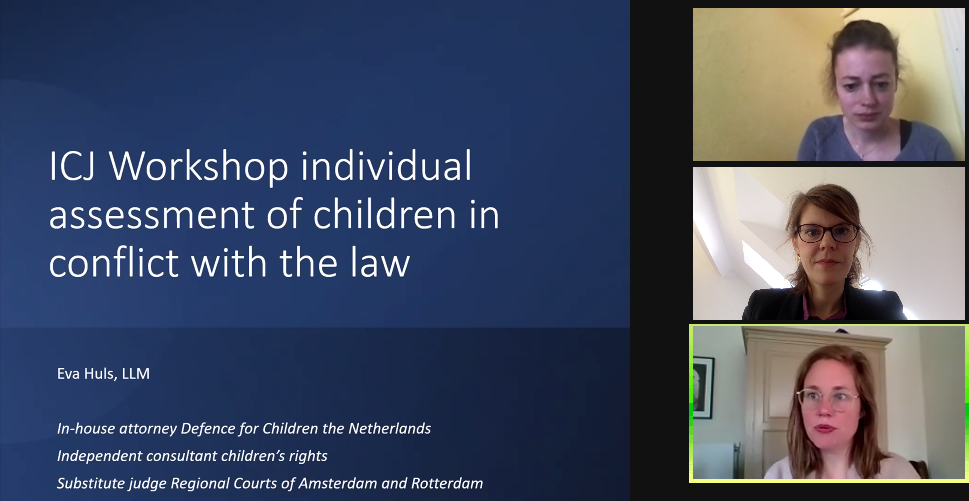
It is important to involve children suspected or accused of breaching the law, in the proceedings in a rights-based way, agreed judges, prosecutors and probation officers during a seminar for Czech and Slovak professionals, organised by the ICJ and Forum for Human Rights on 28 and 29 April.
The individual assessment according to Article 7 EU Directive 2016/800 on procedural safeguards for children suspected or accused in criminal proceedings should serve as a genuine right of the child, rather than as evidence, the seminar was told.
Speakers at the seminar emphasized that the actions of children often only reflect how they were treated by adults – including by parents, teachers, or public authorities, who have failed to address systemic inequalities and situations of discrimination. The contact of the child with the justice system provides an opportunity to help the child, to show them that they have rights and an important role in the society, and involve them actively in the proceedings, experts said. The environment in which the child grows up may have an important impact on the child’s behaviour.
During the seminar, professionals and experts discussed a number of practical questions, such as how to work with information in a child’s case: how sources in reports and assessments for the court should be as objective as possible, up to date, and how sources should be verified, so that information is not doubled or amplified in the individual assessments.
A considerable part of discussion in the seminar was dedicated to restorative justice principles and how these can serve professionals in contact with children in the justice system, in order to ensure the rights-based approach.
Restorative justice experts pointed out that most children grow out of crime without any intervention, and so minimum intervention is usually the best approach to prevent crime in the future. They explained the benefits of giving the child the feeling of control and involving them in the search for solutions, so they will feel respected, and are more likely to see the process as fair and are more likely to follow the decision made.
Practical exercises were part of the seminar and participants actively engaged and shared their concerns and challenges they encounter in their work.
The two seminars gathered over 50 judges, public prosecutors, probation officers and experts from the Ministry of Justice from both countries working in the field of child justice or family law. Experts included Mikiko Otani, ICJ Commissioner and member of the Committee on the Rights of the Child, Dainius Puras, former UN Special Rapporteur on the Right to Health, as well as judges and academics other EU Member States and from the European Forum on Restorative Justice, FORUM and the ICJ.
See the full agenda here:
In English
In Czech
The PRACTICE project is implemented by the ICJ-EI and Forum for Human Rigths aims at building the capacity of judges and other relevant professionals to ensure effective individual assessments of children in criminal proceedings in the Czech Republic and Slovakia. It supports the implementation of EU Directive 2016/800, as well as international human rights law obligations of the states concerned. In the second part of the project the ICJ-EI will draft and publish recommendations on individual assessments of children with specific vulnerabilities, to support an EU-wide interpretation and application of Article 7 of Directive 2016/800, in light of international human rights law.
This project was funded by the European Union’s Rights, Equality, and Citizenship Programme (2014-2020). The content of this publication represents the views of ICJ only and is its sole responsibility. The European Commission does not accept any responsibility for use that may be made of the information it contains.
Apr 1, 2021 | Agendas, Events, News
Migrants and asylum seekers must be provided adequate procedural guarantees in asylum procedures and in immigration detention, a group of experts and judges asserted during a seminar for Greek and Italian judges held by the ICJ, Scuola Superiore Sant’Anna (SSSA), and Greek Council for Refugees (GCR) on 29-31 March.
Asylum applicants should have access to adequate information about the procedure and their entitlements in a language they understand, access to a reliable communication system with the authorities, the availability of interpreters, access to legal aid, and reasoned decisions, experts said during the seminar, held in the framework of the FAIR plus project. Speakers further emphasized that immigration detention must be subject to automatic review by an independent body with a power to release detainees, especially when removal is no more an option.
More than 30 judges from Italy and Greece came together for this event to discuss procedural guarantees for migrants and asylum seekers, related to the safe third country concept, the access to legal assistance and interpretation, safeguards related to immigration detention, and procedural guarantees in the asylum procedure, especially in the accelerated procedures.
A summary of the discussions
On the first day, the judges exchanged overviews of national systems and presented some specific questions regarding the Italian and the Greek systems. Following the discussion on the safe third country concept and its implementation in Greece, an Italian judge presented recent developments in the Italian case-law, and the role of the judge, country of origin information, accelerated procedures, the length of procedures and the question of credibility assessment.
On the second day, the discussion related to the impact of Covid-19 pandemic on the rights of migrants and asylum seekers took place. The situation in Greece and in Italy was described by judges, in particular in relation to the access to the asylum procedure, the lawfulness of detention, the right to health and the question of access to a personal hearing when some of the hearings take place electronically.
An overview of the situation of immigration detention in Italy and Greece was presented by an Italian lawyer and an expert from UNHCR Greece. Speakers highlighted that in cases when people cannot be returned, they should not be kept in detention without a legal basis.
Accelerated procedures in law and in practice in both countries have been introduced by UNHCR Greece and Italy were addressed through a case-study and discussion, covering mainly the specific needs in accelerated procedures, automatic suspensive effect of appeals, and time limits in the accelerated procedures.
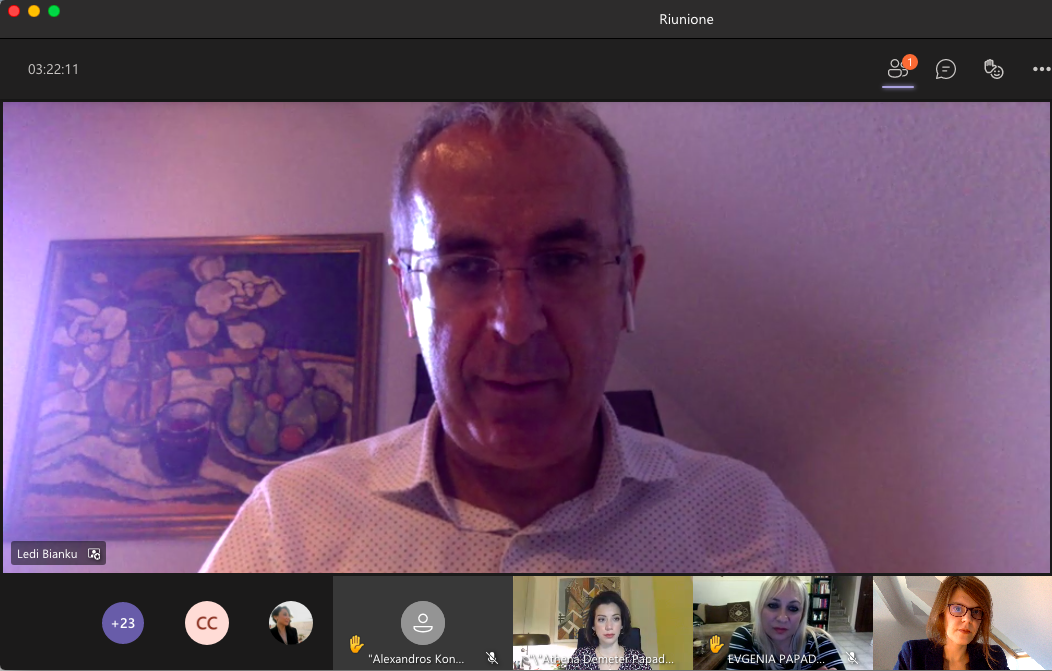
Finally on the last day, two lectures were delivered by Ledi Bianku, a former judge of the European Court for Human Rights, and an Associate Professor at the University of Strasbourg. First, looking into the guarantees in asylum and migration proceedings, Ledi Bianku stressed the need to always provide asylum applicants adequate information about the procedure and their entitlements in a language they understand, access to a reliable communication system with the authorities, the availability of interpreters, access to legal aid, and reasoned decisions in order to provide access to an effective remedy. In the second part of his intervention, Mr. Bianku discussed the detention of migrants, where he stressed the need for automatic review of detention, especially when removal is no more an option, by an independent body with a power to release.
The FAIR plus project is a judicial training and cooperation project supported by the European Union’s Justice programme, focusing on four countries Ireland, Greece, Italy and the Czech Republic. The aim of the project is to contribute to better judicial protection of the fundamental rights of migrants across the EU. Within the project the ICJ and partners are drafting of training materials and relevant legal briefings, implement training of the existing judicial trainers in the target countries, conduct four national trainings, two transnational seminars, and an international roundtable. The project is implemented in collaboration with national partners: Immigrant Council of Ireland (ICI), Scuola Superiore Sant’Anna (SSSA), Greek Council for Refugees (GCR) and Forum for Human Rights (Czech Republic).
Please find the agenda here.
Feb 4, 2021 | Agendas, Events, News
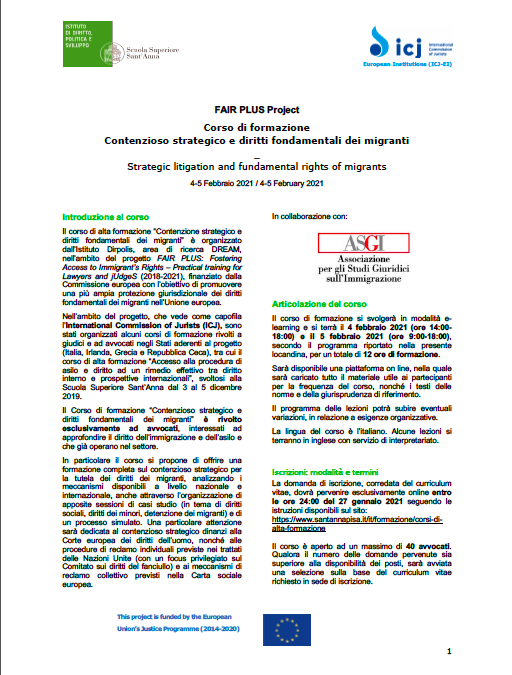
Today, the ICJ in collaboration with Scuola Universitaria Sant’Anna is holding an online training seminar on strategic litigation and fundamental rights of migrants.
The two-day training (4-5 February 2021) brings together 40 lawyers working in the field of migration and refugee law in Italy.
Experts from ASGI (Association for Juridical Studies on Immigration), ICJ and Scuola Universitaria Sant’Anna will provide an overview and analysis of redress mechanisms available at national and international level to migrants and their representatives. The training pays particular attention to strategic litigation before the European Court of Human Rights, the individual complaint procedures under the UN treaties with a focus on the Committee on the Rights of the Child, and to the collective complaint mechanism under the European Social Charter. The training will also cover social rights, children’s rights, immigration detention, and a moot court exercise.
See the full agenda here.
This training is a part of FAIR PLUS project. It was carried out with the financial support of the European Union’s Justice programme (2016-2020). Its contents represents the views of ICJ only and is its sole responsibility. The European Commission does not accept any responsibility for use that may be made of the information it contains.