Mar 15, 2018 | News
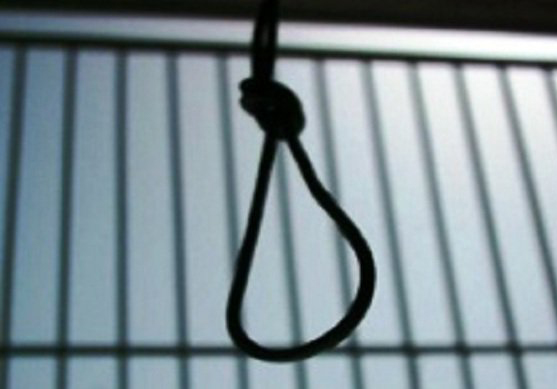
The ICJ called on the Government of Singapore to halt the impending execution of Hishamrudin bin Mohd, and take immediate steps to impose a moratorium on executions, with a view towards the abolition of the death penalty in the near future.
Hishamrudin bin Mohd, a Singaporean national, was sentenced to death in 2016, under mandatory sentencing laws, after being convicted of possessing drugs for the purpose of trafficking.
His execution is scheduled to take place on 16 March 2018.
The ICJ opposes the death penalty in all circumstances as a denial of the right to life and a form of cruel, inhuman and degrading punishment.
“Singapore, as this year’s Chair of the Association of Southeast Asian Nations, must use this opportunity to lead the way in the region in recognizing that the death penalty is inherently incompatible with human dignity and a violation of human rights,” Sam Zarifi, ICJ Secretary General said.
“Singapore should set an example to other ASEAN Member States in upholding the rule of law and protecting human rights,” he added.
Furthermore, the ICJ expressed serious concern that Singapore still applies the mandatory death penalty, including for drug offenses which, according to international standards does not the meet the threshold of “most serious crimes” to which the death penalty must be confined.
“States that have not yet abolished the death penalty should never apply them for drug offenses nor make them automatic,” Zarifi said.
The UN Special Rapporteurs on extrajudicial, summary or arbitrary executions have stated that under no circumstances should death penalty be mandatory.
International human rights law is undermined when mandatory death penalty is imposed since sentencing must reflect assessment of the factors in each case to ensure that the defendant’s human rights and the narrow limits on the use of death penalty have been respected.
The ICJ notes that the UN General Assembly has adopted repeated resolutions with the support of the overwhelming majority of States, most recently in December 2016 calling for an international moratorium on the use of death penalty with a view to abolition.
Presently, some 170 States around the world have either abolished the death penalty or put a moratorium to its use.
The UN Secretary General Antonio Guterres emphasized that “the death penalty has no place in the 21st century.”
Contact
Emerlynne Gil, Senior International Legal Adviser for Southeast Asia, t: +662 619 8477 (ext. 206); e: emerlynne.gil(a)icj.org
Background
Hishamrudin bin Mohd, a Singaporean national, was found guilty of possessing 34.94 grams of diamorphine, allegedly for the purpose of trafficking. His appeal was rejected on 3 July 2017 and his execution was scheduled on 16 March 2018.
The ICJ received information that Hishamrudin bin Mohd filed a last-minute application for judicial review on 12 March 2018 and a closed-door hearing was set on 14 March 2018. However, on 15 March 2018, the Court of Appeal denied his appeal.
Mar 14, 2018 | News
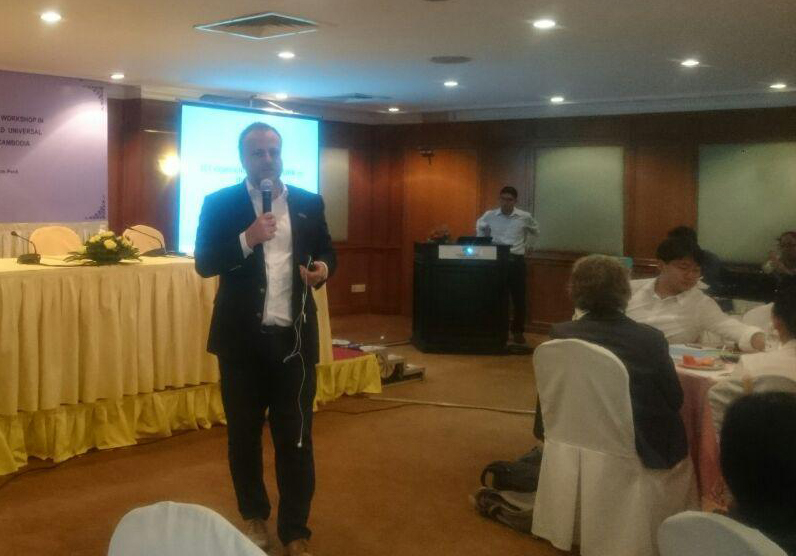
On 12 and 13 March 2018, the ICJ participated in and presented at a workshop for Cambodian civil society on the Universal Periodic Review (UPR).
The workshop was organized by the Cambodian Center for Human Rights (CCHR), UPR Info and the Cambodia Country Office of the United Nations Office of the High Commissioner for Human Rights (OHCHR).
This workshop aimed to prepare participants ahead of the deadline for civil society submissions to the UPR in July 2018.
The Royal Government of Cambodia (RGC) will undergo the third cycle of its UPR in January 2019.
The objectives of the workshop were to:
- 1. Introduce the UPR to newcomers, identifying where the UPR fits within the UN’s human rights framework and demonstrating how civil society organizations (CSOs) can utilize the UPR to further their human rights objectives;
- 2. Share experiences of national stakeholders in the UPR process and discuss developments since the second cycle and priorities for the third cycle;
- 3. Learn from the experiences of CSOs in the region on developing UPR CSO submissions;
- 4. Provide technical training regarding the drafting of UPR CSO submissions;
- 5. Establish thematic groups to begin developing joint submissions and establish a timeline for the drafting process.
On 12 March 2018, Kingsley Abbott, Senior International Legal Adviser for Southeast Asia for the ICJ, delivered a presentation on submissions drafting and advocacy techniques for the UPR and also spoke about the experiences of CSOs in Thailand in developing UPR CSO submissions.
Contact
Kingsley Abbott, ICJ Senior International Legal Adviser for Southeast Asia, e: kingsley.abbott(a)icj.org
Mar 6, 2018 | News
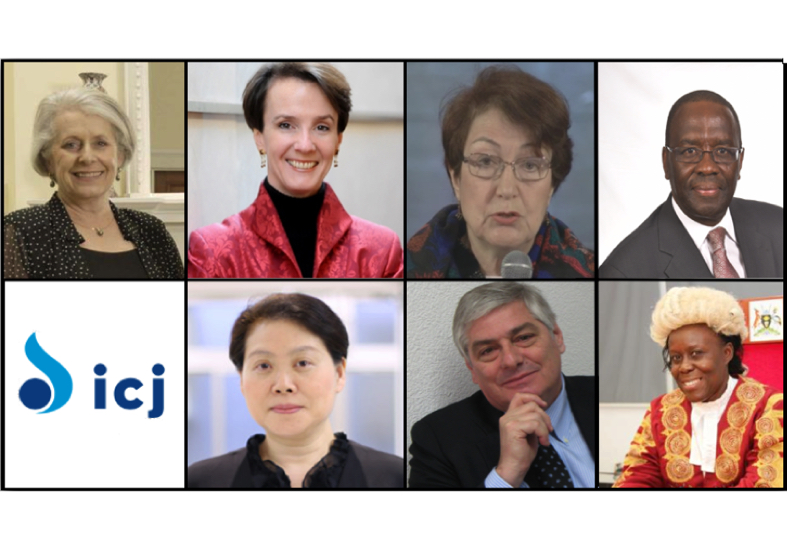
The ICJ is pleased to announce the addition of seven new members to the Commission.
They are Dame Silvia Cartwright (New Zealand), Professor Sarah Cleveland (USA), Justice Martine Comte (France), Justice Willy Mutunga (Kenya), Ms Mikiko Otani (Japan), Mr Wilder Tayler (Uruguay) and Justice Lillian Tibatemwa-Ekirikubinza (Uganda).
“The ICJ is pleased to welcome seven new Commissioners, five of whom are women, whose wealth of experience and expertise from a diverse range of legal backgrounds will greatly add to the Commission,” said the ICJ’s Acting President, Professor Robert Goldman.
“The addition of such strong new Commissioners helps ensure that we can carry out our fundamental work in defence of the rule of law and universal human rights at a time when we are witnessing a worldwide attack on respect for human rights and dignity,” he added.
The ICJ is also pleased to announce the appointment of Professor Carlos Ayala (Venezuela) as a new Vice-President.
Professor Ayala has shown a great deal of dedication to the ICJ since his initial election to the Commission in 2012.
Amongst other roles, he has served as chairman of the Inter-American Commission of Human Rights and taught constitutional, administrative and human rights law at a number of universities around the world.
“The ICJ’s ability to promote and protect human rights through the rule of law would not be possible without the dedicated Commissioners that make this organization what it is. The newly-appointed Commissioners and Vice-President will greatly enhance the ICJ and I look forward to working with them,” said Goldman.
In addition to the new appointments, Commissioners Roberta Clarke and Justice Sanji Monageng were elected to serve on the Executive Committee.
Eight Commissioners were also re-elected to serve second terms: Justice Radmila Dragicevic-Dicic (Serbia), Mr Shawan Jabarin (Palestine), Justice Egbert Myjer (Netherlands), Justice Qinisile Mabuza (Swaziland), Professor Victor Rodriguez Rescia (Costa Rica), Professor Marco Sassoli (Switzerland), Justice Stefan Trechsel (Switzerland) and Professor Rodrigo Uprimny Yepes (Colombia).
Further information on the new Commissioners
Dame Silvia Cartwright (New Zealand) was Governor-General of New Zealand from 2001-2006 and the first woman appointed to the High Court in New Zealand. She was also a judge on the Extraordinary Chambers in the Courts of Cambodia. Amongst others, she has the following honours: Dame Commander of the British Empire (DBE) and Principal Companion of the New Zealand Order of Merit (PCNZM). Dame Cartwright has served on the Committee on the Elimination of Discrimination against Women and played a role in drafting the optional protocol to the Convention on the Elimination of Discrimination against Women (CEDAW).
Professor Sarah Cleveland (USA) is the Louis Henkin Professor of Human and Constitutional Rights and faculty director of the Human Rights Institute at Columbia Law School. She is currently a member of the UN Human Rights Committee, the US member of the Venice Commission, and former counsel to the US State Department legal adviser. She also serves as coordinating reporter of the American Law Institute’s project on the Restatement (Fourth) of the Foreign Relations Law of the United States.
Justice Martine Comte (France) has been a judge in France for more than 30 years, including having served as President of the Orléans Court of Appeal from 2011-2014. Prior to this her judicial career has been extensive and amongst other roles she has served as President of the Pontoise Tribunal of First Instance, President of the Bourgoin-Jallieu Court of First Instance and as Head of the Regional Administrative Department of Paris. She has also served as an Inspector of Judicial Services. Justice Comte is an Officer of the National Order of Merit and Knight of the Légion d’Honneur.
Justice Willly Mutunga (Kenya) served as Chief Justice & President of the Supreme Court, Republic of Kenya, 2011- 2016. He was the Commonwealth Secretary-General’s Special Envoy to the Maldives, 2016-17. He is an active member of the Justice Leadership Group. He has a previous career as an academic and in human rights movements in East Africa and Canada, and served as Executive Director of the Eastern Office of the Ford Foundation, 2004-2011.
Ms Mikiko Otani (Japan) Mikiko Otani is a member of the United Nations Committee on the Rights of the Child (CRC) (2017-) and a former Chair of the Committee on International Human Rights of the Japan Federation of Bar Associations. Prior to being elected as a member of the CRC, she was actively involved in the reporting process for Japan under the CRC and the CEDAW, representing NGOs.
Mr Wilder Tayler (Uruguay) is a Director of the National Institution of Human Rights and Ombudsman’s Office in Uruguay. He was Secretary-General of the International Commission of Jurists from 2008-2017. Between 2007 and 2014 he was a member and Vice-Chairperson of the UN Sub-Committee on the Prevention of Torture. Mr Tayler was Legal Director of Human Rights Watch from 1997 to March 2007 and before that he worked with Amnesty International as Director of the Americas Programme and a Legal Advisor.
Justice Lillian Tibatemwa-Ekirikubinza (Uganda) is a Justice of the Supreme Court of Uganda. Prior to joining the Court, she served on Uganda’s Constitutional Court for two years. Before joining the Judiciary, Tibatemwa-Ekirikubinza served as Deputy Vice-Chancellor in charge of Academic Affairs at Makerere University, Uganda, where she was also a Professor of Law. She is an author of law textbooks currently in use as reference texts in East African Law Schools.
More information about all the Commissioners can be found on the Commission page.
Mar 3, 2018 | Agendas, Events, News
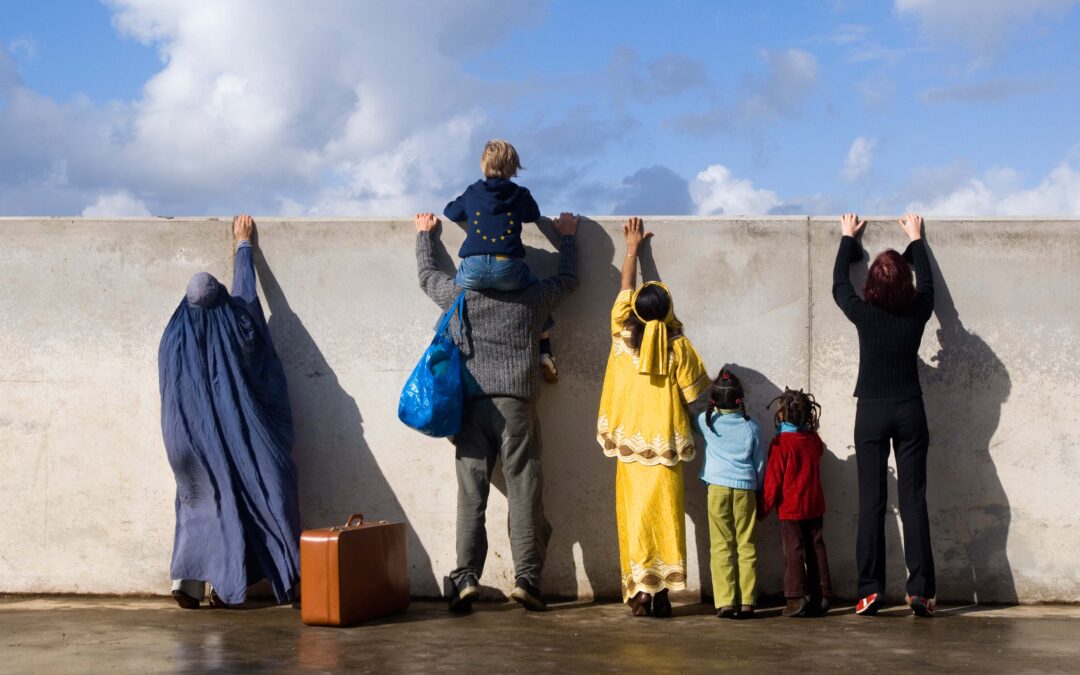
Today begins in Istanbul (Turkey) a two-day training for lawyers and CSO practitioners representing and working with migrants, refugees and asylum-seekers.
This event is organized by ICJ, in cooperation with its partners Refugee Rights Turkey, the European Council on Refugees and Exiles (ECRE), Mülteci-Der (MD) and ICJ-EI, as part of the EU co-financed project Fostering Access to Rights for Migrants, Refugees and Asylum-Seekers in Turkey.
30 lawyers and civil society practitioners – representing nine different bar associations and relevant organisations from the Ankara area and other nearby key migration and asylum locations – are taking part in the training on 3 and 4 March.
The training aims to update lawyers and CSOs on the international and national law on the rights of refugees, migrants and asylum-seekers in order to be effective in their work at both the national and international levels. It aims at an effective implementation of the Turkish legal framework on asylum and migration.
The main thematic areas to be discussed will be the principle of non-refoulement, international protection, detention and access to economic, social and cultural rights.
The training will use as a basis the draft training materials prepared by the ICJ and its partners (to be published an the end of 2019) and, among other sources, the ICJ Practitioners Guide no. 6: Migration and International Human Rights Law.
The project “Fostering Access to Rights for Migrants, Refugees and Asylum-Seekers in Turkey” is funded by the European Instrument for Democracy and Human Rights (EIDHR) of the European Union.
Turkey-Training-Istanbul2-MigrationAsylum-Agenda-2018-tur (download the agenda in Turkish)
Feb 13, 2018 | News
The Egyptian government has trampled over even the minimum requirements for free and fair elections for the planned March 26-28, 2018 vote for president, the ICJ and thirteen international and regional rights organizations said today.
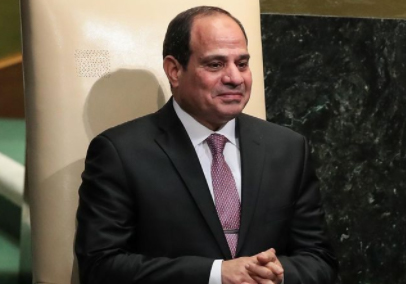
The government of President Abdel Fattah al-Sisi (photo) has relentlessly stifled basic freedoms and arrested potential candidates and rounded up their supporters.
“Egypt’s allies should speak out publicly now to denounce these farcical elections, rather than continue with largely unquestioning support for a government presiding over the country’s worst human rights crisis in decades,” the groups said.
The United States, European Union, and European states, which provide substantial financial assistance to the Egyptian government, should consistently integrate human rights into their relations with Egypt.
These countries should halt all security assistance that could be used in internal repression and focus aid on ensuring concrete improvements to protect basic rights.
The repression in advance of Egypt’s presidential election is a substantial escalation in a political environment that denies people’s rights to political participation and to freedom of expression, association, and peaceful assembly.
The Egyptian authorities should immediately release all those arrested for joining political campaigns or stating their intention to run as presidential candidates in the elections, the groups said.
The authorities have successively eliminated key challengers who announced their intention to run for president. They have arrested two potential candidates, retired Lt. Gen. Sami Anan and Col. Ahmed Konsowa.
A third potential candidate, Ahmed Shafik, a former prime minister and air force commander, apparently was placed under undeclared house arrest in a hotel until he withdrew from the race.
Two other key potential candidates, the human rights lawyer Khaled Ali and a former parliament member, Mohamed Anwar al-Sadat, backtracked on formally registering, citing the repressive environment, concerns over the safety of their supporters, and government manipulation.
The only current candidate running against al-Sisi is Mousa Mostafa Mousa, the leader of the Al-Ghad Party, which supports the government. He registered his candidacy on January 29, the last possible day, after efforts from pro-government parliament members to convince him to run.
Until the day before he registered his candidacy, he was a member of a campaign supporting al-Sisi for a second term. In this context, the right of every citizen to freely stand and vote in elections that reflect the free expression of the will of the electors appears meaningless.
These government actions are in contravention to Egypt’s Constitution and a clear violation of its international obligations and commitments, including the International Covenant on Civil and Political Rights (ICCPR), the African Charter on Human and Peoples’ Rights (ACHPR), and the 2002 African Union Declaration on the Principles Governing Democratic Elections in Africa. Article 25 of the ICCPR and Article III of the African Union declaration link political participation, as a voter and as a candidate, to the freedoms of assembly, expression, and association.
An EU handbook for elections observations, detailing standards of fair elections, says that these are rights “without which it [elections] cannot be meaningfully exercised.”
The current atmosphere of retaliation against dissenting voices and the increasing crackdown against human rights defenders and independent rights organizations have made effective monitoring of the elections extremely difficult for domestic and foreign organizations.
Media reports have said that the number of organizations that were granted permission to monitor the elections was 44 percent fewer than in the last presidential election in 2014 and that the number of requests, in general, has gone down.
Several opposition parties called for boycotting the elections. A day later al-Sisi threatened to use force, including the army, against those who undermine “Egypt’s stability and security.”
On February 6, the Prosecutor-General’s Office ordered an investigation against 13 of the leading opposition figures who called for a boycott, accusing them of calling for “overthrowing the ruling regime.”
“Seven years after Egypt’s 2011 uprising, the government has made a mockery of the basic rights for which protesters fought,” the groups said. “Egypt’s government claims to be in a ‘democratic transition’ but move further away with every election.”
Contact
Said Benarbia, Director of ICJ’s Middle East and North Africa Programme, t: +41-22-979-3817 ; e: said.benarbia(a)icj.org.
Signatories
Cairo Institute for Human Rights Studies
CIVICUS “World Alliance for Citizen Participation”
CNCD-11.11.11
EuroMed Rights “The Euro-Mediterranean Human Rights Network”
Human Rights First
Human Rights Watch
International Commission of Jurists
International Federation for Human Rights (FIDH)
International Service for Human Rights
Project on Middle East Democracy
Reporters Without Borders (RSF)
Robert F. Kennedy Human Rights
Solidar
World Organisation Against Torture (OMCT)
Egypt-Presidential vote neither free nor fair-Presse release-2018-ENG (Full Press release in English, PDF)
Egypte-Election présidentielle dans un contexte ni libre ni équitable-Communiqué de presse-2018-FRA (Full Press release in French, PDF)
Egypt-Presidential vote neither free nor fair-Presse release-2018-ARA (Full Press Release in Arabic, PDF)