Sep 1, 2017 | News
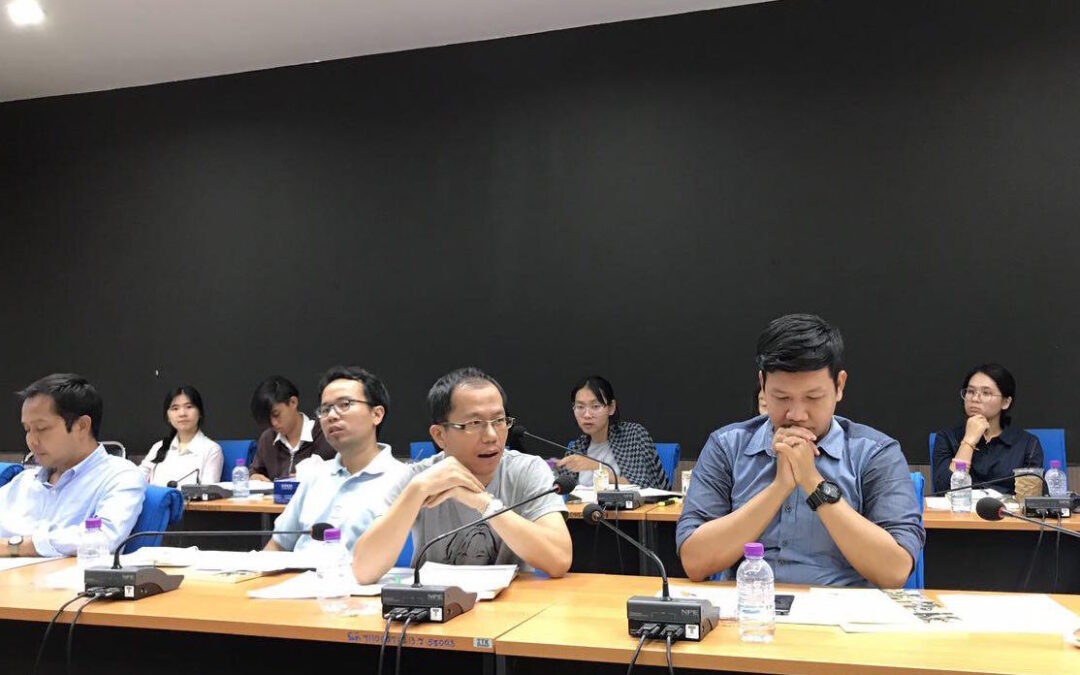
On 1 September, the ICJ, in collaboration with Chiang Mai University’s Faculty of Law and Chiang Mai University’s Center for Ethnic Studies and Development under its Faculty of Social Science, conducted a workshop on how effectively to conduct trial observation.
Participants in the Workshop included undergraduate and postgraduate students and lecturers from Chiang Mai University, lawyers and representatives from Thai civil society organizations.
The workshop was held at Chiang Mai University’s Faculty of Law campus.
The objective of the workshop was to provide participants with an overview of international law and standards governing right to a fair trial and due process in the administration of criminal justice.
The workshop used the ICJ’s Practitioners Guide No. 5, the Trial Observation Manual for Criminal Proceedings, as the basis of training.
The workshop trained participants on practical preparation techniques before undertaking trial observations, critical elements of trial observations, drafting of trial observation reports, general international legal standards governing fair trials, international legal standards applicable to arrest and pre-trial detention in criminal proceedings and international legal standards applicable to trial proceedings.
The speakers at the workshop were Kingsley Abbott, ICJ Senior International Legal Adviser, Southeast Asia and Sanhawan Srisod, ICJ Associate National Legal Adviser, Thailand.
Jun 20, 2017 | News
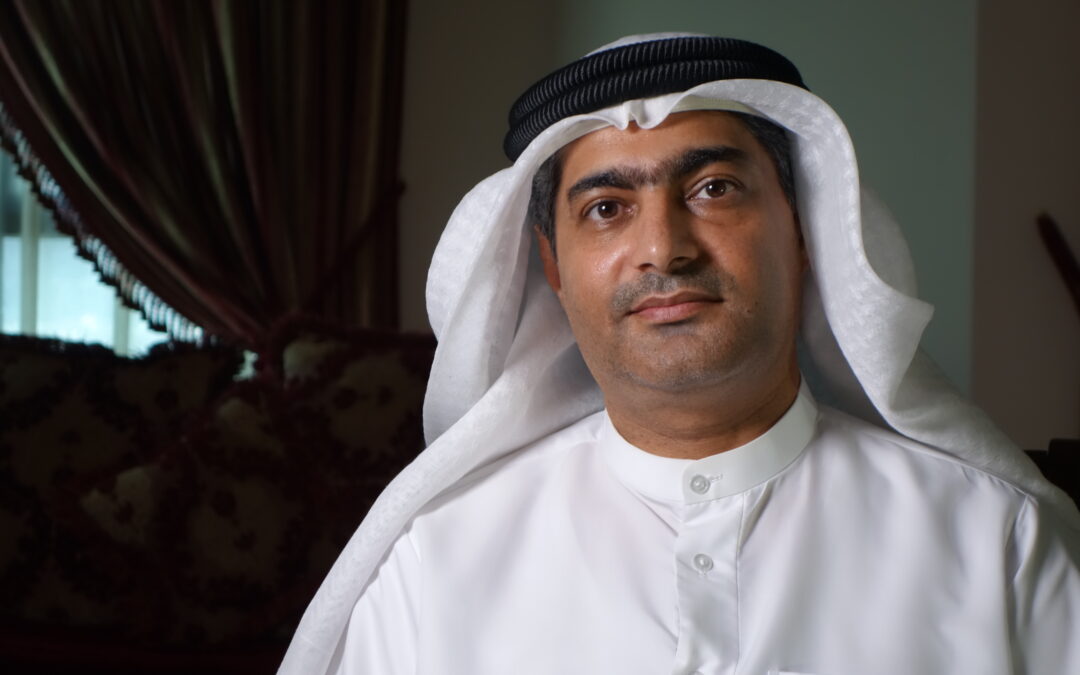
The Martin Ennals Foundation and the ten human rights organizations that make up the jury of the Martin Ennals Award for Human Rights Defenders (MEA), including the ICJ, today renewed their appeal to the UAE government to release immediately and unconditionally Ahmed Mansoor.
Ahmed Mansoor is the last remaining human rights defender in the UAE who had previously been able to criticize the authorities publicly, they say.
Ahmed Mansoor received the Martin Ennals Award for Human Rights Defenders in 2015.
Three months ago today, in the pre-dawn hours of 20 March about a dozen security officers arrested Ahmed Mansoor at his home in Ajman, about 150 kilometres northeast of Abu Dhabi, the capital of the UAE.
“We urge the UAE government to end the incomprehensible three-month imprisonment of Ahmed Mansoor. This is really about the UAE failing to respect basic principles of justice,” said Dick Oosting, Chairperson of the MEA Board.
“The purported case against Ahmed Mansoor beggars belief. States have the duty to bring to justice those whom they suspect of having committed criminal offenses,” he added.
“Yet what is clear is that the UAE authorities have arbitrarily deprived him of liberty and taken him away from his family for peacefully exercising his human right to freedom of expression. The three-month lapse and total lack of transparency indicates, likewise, that the authorities merely wanted to silence him,” he further said.
On 20 March, the UAE authorities stated that Ahmed Mansoor was accused of using social media websites, including to “publish false and misleading information that harm national unity and social harmony and damage the country’s reputation,” under the UAE’s repressive 2012 Cybercrime Law, which authorities have used to imprison numerous human rights activists and which provides for long prison sentences and severe financial penalties.
On 28 March, a group of United Nations human rights experts called on the UAE government to release him immediately, describing his arrest as “a direct attack on the legitimate work of human rights defenders in the UAE.” They expressed their fear that his arrest “may constitute an act of reprisal for his engagement with UN human rights mechanisms, for the views he expressed on social media, including Twitter, as well as for being an active member of organizations such as the Gulf Centre for Human Rights, and an active supporter of others, including Human Rights Watch.”
The next day, the UAE authorities responded directly to the statement, disputing the allegation that Ahmed Mansoor’s detention was arbitrary, and stating that he “has the freedom to hire a lawyer and that his family has full access to the place of confinement and is allowed to visit him.”
The government has detained Ahmed Mansoor in Abu Dhabi.
It is too far from his home for regular visits from his family, who have only been able to see him once in the last three months.
The authorities appear determined to isolate Ahmed Mansoor from his own family.
Despite government assertions that he is able to do so, it appears that he has not been able to appoint an independent lawyer of his own choosing.
This is a necessary component of the right to a fair trial.
The right to see a lawyer is a basic right of anyone detained as outlined in article 16 of the Arab Charter on Human Rights, which the UAE has ratified.
The ten human rights organizations that make up the jury of the Martin Ennals Award for Human Rights Defenders reiterate their call to the UAE authorities to release Ahmed Mansoor immediately and unconditionally, since the charges against him relate solely to his human rights work and his right to freedom of expression.
In the meantime, he should be granted immediate and regular access to his family and a lawyer of his choosing. The UAE must end their harassment of human rights defenders and critics of the authorities.
Signatories
Organizations forming the jury of the Martin Ennals Award:
Agency for Diakonia and Development, Germany
Amnesty International
FIDH
Front Line Defenders
Human Rights First
Human Rights Watch
International Commission of Jurists
International Service for Human Rights
HURIDOCS
World Organisation Against Torture (OMCT)
May 31, 2017 | News
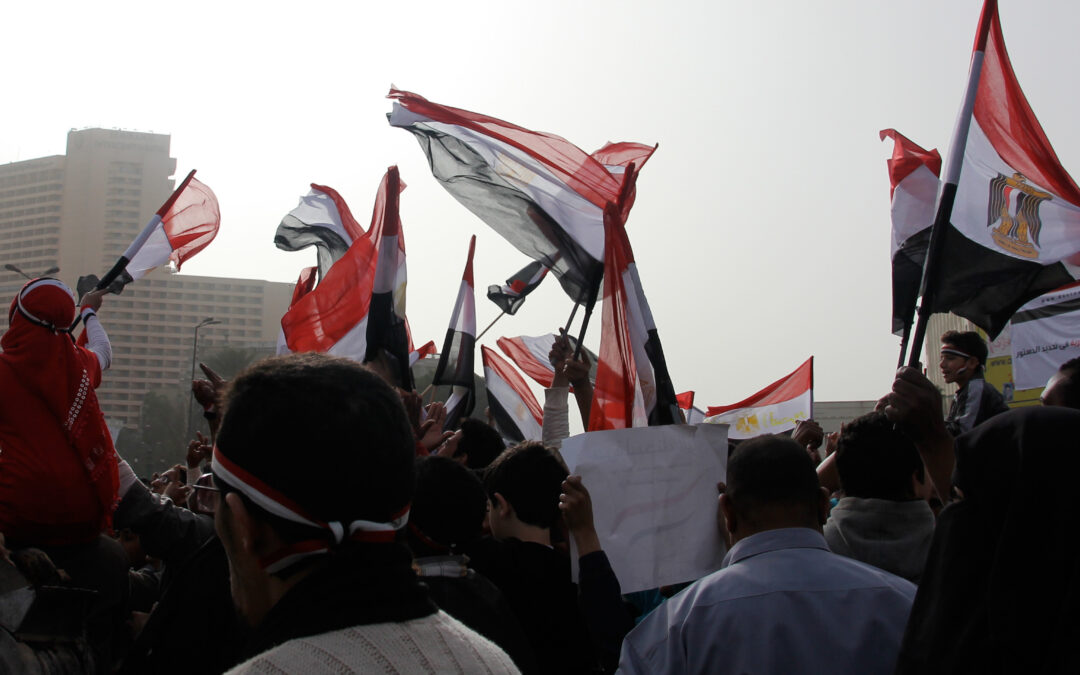
The ICJ today called on the Egyptian authorities to act immediately to repeal the law on civic associations.
The law was adopted by Egypt’s Parliament on 15 November 2016 and signed into law by President El-Sisi on 29 May 2017.
Until the law is repealed, the authorities should desist from enforcing it, the ICJ says.
The law effectively prohibits most Egyptian human rights non-governmental organizations (NGOs) from registering and working in Egypt, stipulating that civic associations’ work shall take place in the fields of development and social welfare consistent with “the State’s plans and its developmental needs and priorities.”
Egyptian and international NGOs are also forbidden to advocate against any law or its implementation, as well as to carry out “political activities” or any that “harm national security, public order, public morals or public health.”
They are prohibited from conducting public surveys, research or reports without permission and approval of the results of such work must be given by the authorities prior to publication (articles 14, 87).
The law also provides for an entity to be formed by presidential decree from representatives of three security bodies, which will decide on all matters related to NGO funding, the registration and issues relating to the work of international NGOs, and cooperation between Egyptian associations and any foreign body.
“The law on civic associations, if implemented in its present form, would be tantamount to an official death certificate of independent civil society in Egypt,” said Said Benarbia, ICJ Middle East and North Africa Director.
“By signing it into law, President El-Sisi is silencing the very organizations that could act as a check on the abusive and arbitrary exercise of his power,” he added.
The adoption of this repressive law is just the latest measure in a sustained, relentless campaign by Egypt’s military and executive authorities aimed at dismantling Egyptian civil society through highly politicized judicial proceedings and arbitrary travel bans against NGOs and human rights defenders.
For instance, the foreign funding case taken against NGOs (no. 173/2011) saw leading Egyptian human rights organizations, such as the Cairo Institute for Human Rights Studies (CIHRS), the Arabic Network for Human Rights Information (ANHRI) and the Hicham Mubrak Law Center (HMLC), subject to arbitrary investigations.
The grounds included “receiving funds to harm national interests and destroy the basic foundations of the state (the army, police, and judiciary),” “establishing an entity operating as a civic association without official registration,” and “income tax evasion.”
Four of these organizations and six NGO directors/board members have been subjected to asset freezes.
In the last two months, many NGO staff and directors have been summoned for interrogation by investigative judges, including ICJ partners Mustapha El-Hassan, Director of HMLC, Gamel Eid, Founder and Director of ANHRI, and Mohamed Zaree, CIHRS’ Programme Director and short-listed candidate for the Martin Ennals Award 2017.
The ICJ has previously documented how the Egyptian authorities have used the justice system as a repressive tool in their efforts to silence many of those suspected of opposing them.
“Egyptian authorities must comply with their obligations under international law and put an immediate end to their campaign to silence human rights defenders and NGOs. A first step in that direction would be the immediate repeal of the law on civic associations,” Benarbia said.
Contact
Said Benarbia, Director of the ICJ Middle East and North Africa Programme, t: +41 22 979 38 17: said.benarbia(a)icj.org
Egypt-NGO Law-News-Press release-ARA (Press release in Arabic, PDF)
Apr 26, 2017 | News
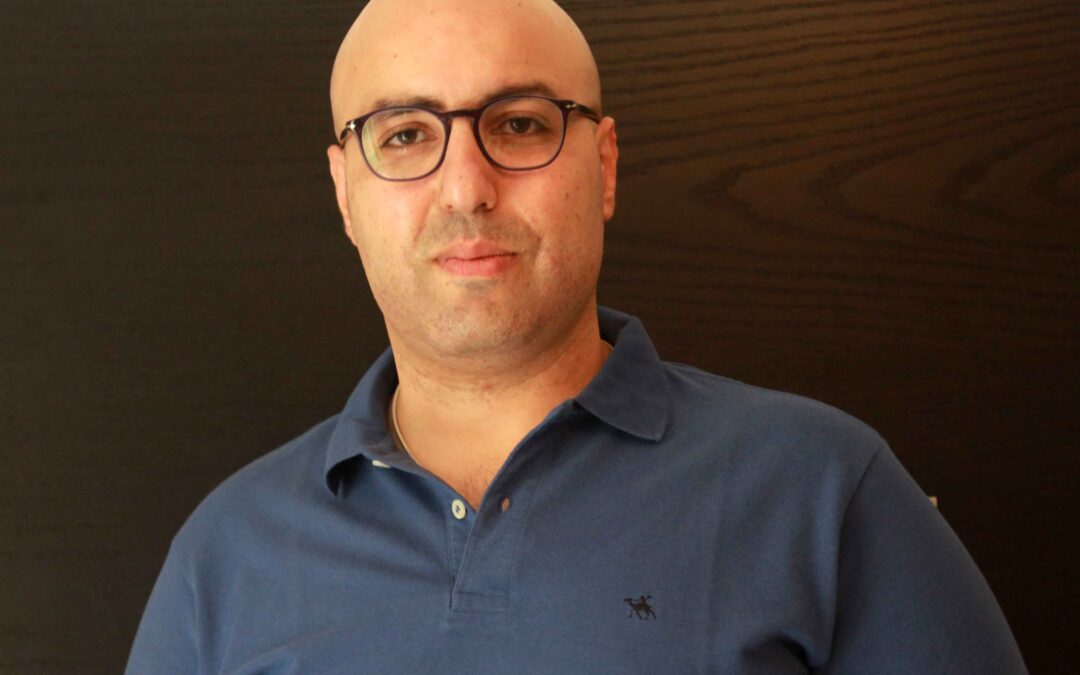
Mohamed Zaree (Egypt, photo), FreeThe5KH (Cambodia) and Karla Avelar (El Salvador) will compete for this prestigious award given to human rights defenders who have shown deep commitment and face great personal risk. The ICJ is member of the MEA Jury.
Selected by the International Human Rights Community (members of the jury are the ICJ, Amnesty International, Human Rights Watch, Human Rights First, International Federation for Human Rights, World Organisation Against Torture, Front Line Defenders, EWDE Germany, International Service for Human Rights and HURIDOCS), the final nominees for the Martin Ennals Award for Human Rights Defenders (MEA) are known:
- Mohamed Zaree is the Egypt Country Director for the Cairo Institute for Human Rights Studies (CIHRS), responsible for CIHRS’s legal research, media outreach and national advocacy. CIHRS’s work was influential in the Arab world particularly Egypt, which resulted in death threats to its director. This forced the CIHRS executive director and regional staff to move abroad to continue their work. Mohamed chose to stay and is now banned from travel. He is a legal scholar coordinating research to challenge laws designed to limit NGOs activities working on human rights, such as freedom of expression and assembly. He is widely seen a unifying figure bringing together the human rights community in Egypt to advocate with a common approach.
- FreeThe5KH are five Human Rights Defenders who have been in pre-trial detention for almost one year. This is linked to their work with the Cambodian Human Rights and Development Association (ADHOC). International bodies like the UN Working Group on Arbitrary Detention and UN Special Rapporteurs have repeatedly called for their immediate and unconditional release, and a stop to judicial harassment of human rights defenders in Cambodia based on their legitimate human rights work. This comes in the context of an increasingly severe crackdown on civil society and the political opposition in Cambodia.
- Karla Avelar, a transgender woman in El Salvador, grew up on the streets of San Salvador, suffering discrimination, violence, exploitation, and rape. She was imprisoned when she defended herself, and then regularly abused by fellow prisoners with the knowledge and even participation of the prison authorities. With three others, she founded COMCAVIS TRANS, which was created to represent, defend, and promote the human rights of LGBTI persons, with a focus on those living with HIV, as she does. She works to change legislation and the authorities’ practices, by holding them publicly to account.
Mohammed Zaree said: “Our hopes were high following the Egyptian revolution in 2011; we don’t know how the situation has instead deteriorated to such an extent. Today, we are battling human rights violations that are worse than before 2011, and challenging the normalization and acceptance of these atrocities.”
“Killing almost 1000 citizens in few hours, arresting almost 40,000 others, innocents dying in Egyptian prisons; is not the norm and we will not allow it to become so. We human rights defenders are fighting these abuses at risk of indefinite imprisonment,” he added.
The main award of the human rights movement, and as such labelled as the Nobel Price for human rights, the Martin Ennals Award aims to protect human rights defenders through increased visibility.
The Award will be presented on 10 October 2017 at a ceremony hosted by the City of Geneva.
Contact
Olivier van Bogaert, Director Media & Communications, ICJ representative in the MEA Jury, t: +41 22 979 38 08 ; e: olivier.vanbogaert(a)icj.org
Michael Khambatta, Director, Martin Ennals Foundation, t: +41 79 474 8208 ; e: khambatta(a)martinennalsaward.org
Background information
Egypt-MEA Finalists 2017 MZaree Bio-2017-ENG (Mohammed Zaree bio, in PDF)
Cambodia-MEA 2017 Finalists FreeThe5KH Bio-2017-ENG (FreeThe5KH backgrounder, in PDF)
Salvador-MEA 2017 Finalists KAvelar Bio-2017-ENG (Karla Avelar bio, in PDF)
Apr 20, 2017 | News
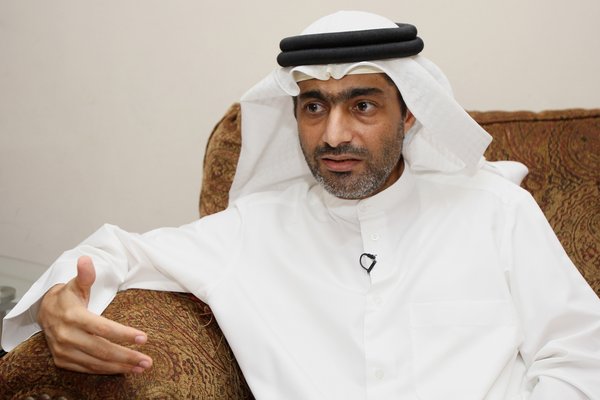
Authorities in the United Arab Emirates should immediately release Ahmed Mansoor, an award-winning human rights defender who is facing charges that violate his right to freedom of expression, a coalition of 18 human rights organizations, including the ICJ, said today, one month after his arrest.
Mansoor, who received the prestigious Martin Ennals Award for Human Rights Defenders in 2015, has been in detention since March 20, 2017 facing speech-related charges that include using social media websites to “publish false information that harms national unity.”
On March 28, a group of United Nations (UN) human rights experts called on the UAE government to release him immediately, describing his arrest as “a direct attack on the legitimate work of human rights defenders in the UAE.”
“Ahmed Mansoor has an unimpeachable record as a defender of rights and freedoms, and every day he remains in prison will constitute a black mark on the UAE’s human rights record,” said the organizations.
Mansoor was arrested at his home in Ajman in the pre-dawn hours of March 20.
Security officers conducted an extensive search and took away all of the family’s mobile phones and laptops, including those belonging to his young children.
His family had no information on his whereabouts until authorities issued an official statement on March 29, saying he was in detention in the Central Prison in Abu Dhabi.
The signatories understand that Mansoor’s family have been allowed only one short supervised visit with him which took place two weeks after his arrest on April 3, when authorities moved him from where he was being held, believed to be a detention facility adjacent to Al-Wathba Prison, to a prosecutor’s office in Abu Dhabi.
Informed sources told rights groups that Mansoor is being held in solitary confinement and has not spoken to a lawyer.
The UAE’s official news agency, WAM, said on March 20 that Mansoor had been arrested on the orders of the Public Prosecution for Cybercrimes and detained pending further investigation.
It said that he is accused of using social media websites to: “publish false information and rumors;” “promote [a] sectarian and hate-incited agenda;” and “publish false and misleading information that harm national unity and social harmony and damage the country’s reputation.”
The statement classified these as “cybercrimes,” indicating that the charges against him may be based on alleged violations of the UAE’s repressive 2012 cybercrime law, which authorities have used to imprison numerous activists and which provides for long prison sentences and severe financial penalties.
In the weeks leading up to his arrest, Mansoor had called for the release of Osama al-Najjar, who remains in prison, despite having completed a three-year prison sentence on charges related to his peaceful activities on Twitter.
Mansoor had also criticized the prosecution of Dr. Nasser bin-Ghaith, a prominent academic and economist, who was sentenced to 10 years in prison on March 29, for charges that included speech-related offenses, including peaceful criticism of the UAE and Egyptian authorities.
Mansoor had also used his Twitter account to draw attention to human rights violations across the region, including in Egypt and those committed by the Saudi-led coalition in Yemen.
He had also signed a joint letter with other activists in the region calling on leaders at the Arab Summit in Jordan at the end of March to release political prisoners in their countries.
“Ahmed has worked tirelessly, at great personal cost to himself, to advocate for human rights in the UAE and the wider region. He should be immediately released and the authorities should end their harassment of him once and for all,” the organizations added.
Signatories
ARTICLE 19
Amnesty International
Arabic Network for Human Rights Information
CIVICUS
FIDH, under the Observatory for the Protection of Human Rights Defenders
Front Line Defenders
Gulf Centre for Human Rights
Human Rights First
Human Rights Watch
Index on Censorship
International Commission of Jurists
International Service for Human Rights
Martin Ennals Foundation
PEN International
Reporters Without Borders (RSF)
Scholars at Risk
Vigilance for Democracy and the Civic State, Tunisia
World Organisation Against Torture (OMCT), under the Observatory for the Protection of Human Rights Defenders
UAE-Joint statement AMansoor-News-Press releases-2017-ENG (full statement in English, PDF)