Jan 29, 2016 | News
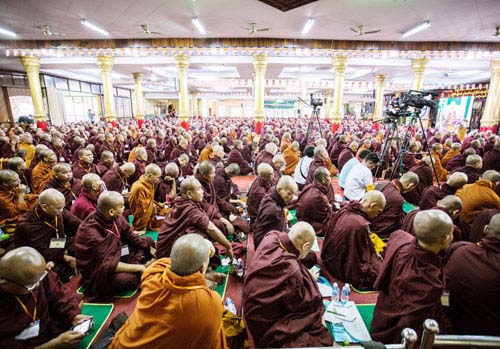
The Myanmar authorities must immediately release and drop all charges or quash convictions against all people detained for allegedly having the “deliberate and malicious intention to insult religion,” said the ICJ today.
While President Thein Sein had declared an amnesty on 22 January for 102 prisoners, including 52 political prisoners, it is unclear exactly how many prisoners continue to be detained in prison under section 295A of the Penal Code and awaiting trials for blasphemy.
“Charging and imprisoning people on charges under Myanmar’s blasphemy laws is inconsistent with human rights including freedom of opinion and expression, freedom of thought, conscience, and religion, the right to liberty, and the right to equality before the law without discrimination,” said Sam Zarifi, ICJ’s Asia Director.
“The problem is compounded in Myanmar when courts have been convicting individuals in unfair trials and in the absence of evidence of any deliberate and malicious intent to insult religion,” he added.
Last week, President Thein Sein pardoned Philip Blackwood, a New Zealand citizen sentenced to two and a half years with hard labour for posting on Facebook a psychedelic image of the Buddha wearing headphones to promote a bar.
His colleagues Tun Thurein and Htut Ko Ko Lwin, Myanmar citizens, do not seem to have been released (although it is possible that they may have been granted amnesty as well).
Another detainee, Htin Linn Oo, a writer and National League for Democracy information officer who was sentenced to two years imprisonment with hard labour, has not been released.
U Nyar Na (aka) Moe Pyar Sayar Taw, a monk arrested in Kachin state in 2010 and charged under various provisions of the Penal Code, including section 295A, was sentenced to imprisonment for 20 years. His reported release during the amnesty last week remains unconfirmed.
These charges and convictions are in violation of international law, including a range of human rights guaranteed by the Universal Declaration of Human Rights and by international treaties, the ICJ says.
“The laws must be repealed or fundamentally changed, ongoing prosecutions ended, and those imprisoned for their beliefs or protected speech and other expression immediately and unconditionally released,” Zarifi said.
“These prosecutions seem to be a result of intense political pressure from extremist Buddhist political groups. As the Myanmar judiciary and legal system try to emerge from decades of political interference on with independence, it’s crucial that they act in the interests of justice and human rights,” he added.
The ICJ urges the Myanmar authorities to drop all charges against the accused persons who have not yet been tried; take immediate measures to secure the quashing of convictions under the law; and take effective measures to ensure the immediate and unconditional release of all detainees held pursuant Section 295A.
The ICJ also calls on the government to act to repeal or amend section 295A to bring it in line with international law and standards.
Contact:
In Bangkok: Sam Zarifi, ICJ Regional Director, Asia-Pacific Programme, t: +66807819002 ; e: sam.zarifi(a)icj.org
In Myanmar: Vani Sathisan, ICJ International Legal Adviser, t: +95 9250800301 ; e: vani.sathisan(a)icj.org
Additional information:
Myanmar’s Constitution guarantees the right to freedom of expression, conscience, and to freely profess and practice religion.
The UN Human Rights Committee established by the International Covenant on Civil and Political Rights (ICCPR) emphasizes that “Prohibitions of displays of lack of respect for a religion or other belief system, including blasphemy laws, are incompatible with the Covenant”. The only limited exception under the Covenant would be for proportionate and non-discriminatory measures to prohibit “advocacy of…religious hatred that constitutes incitement to discrimination, hostility or violence”. Section 295A falls far short of this threshold.
Jan 20, 2016 | News
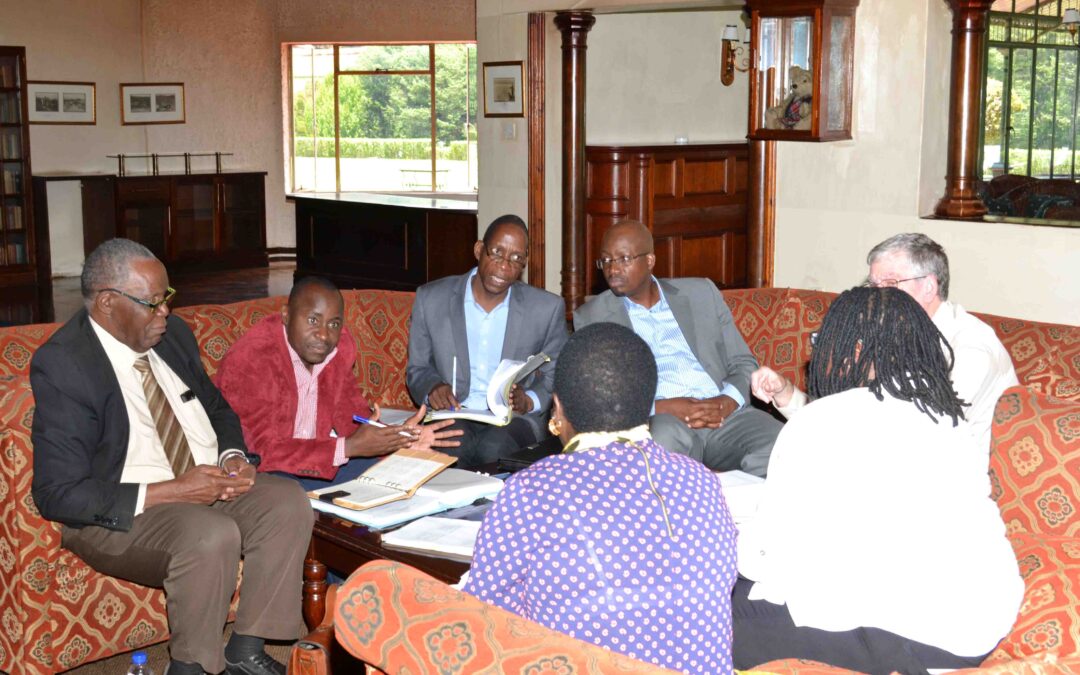
The ICJ supported the convening of a three-day meeting of the Faculty of Law of the University of Zimbabwe. The meeting reviewed the content of the courses offered at the University with the view of aligning the subject matter to the new constitution.
The Dean of Law Mr Magade noted in his introduction that “this Curriculum Review gives us a fabulous opportunity to take a long and hard look at ourselves and self introspect and come up with suggestions on how to improve our curriculum. At the end of the day we need to produce a product or graduate that is fit for purpose.”
The meeting took place at the Troutbeck Inn in Nyanga from 18 to 20 January 2016 and congregated 30 academic staff members from the University including a curriculum expert, Dr Nziramasanga, from the Faculty of Education. Dr Mosito and Dr Dingake from the Lesotho and Botswana respectively also contributed to the review process.

Dec 17, 2015 | News
The decision of the High Court of Singapore ordering blogger Roy Ngerng to pay damages to Prime Minister Lee Hsien Loong following a civil defamation suit brought in 2014 constitutes a major blow for freedom of expression in the country, said the ICJ today.
In a judgment released on 17 December 2015, the High Court ordered Roy Ngerng to pay SG$100,000 in general damages (approximately US$70,667) and SG$50,000 (approximately US$35,330) in aggravated damages.
This decision comes approximately six months after a three-day hearing on assessment of damages took place.
“Under international standards, individuals must not be the target of defamation actions over comments made about public figures, particularly where the subject matter is of public interest,” said Sam Zarifi, ICJ’s Regional Director for Asia and the Pacific.
“This decision sends a clear message that the people of Singapore are not in fact free to express their opinions about matters of public interest,” he added.
This suit against Roy Ngerng was brought by Prime Minister Lee who argued that Roy Ngerng, in his blog, suggested that the Prime Minister bore responsibility for criminal misappropriation of the Central Provident Fund (CPF), the social security savings plan of the citizens of Singapore.
In a summary judgment delivered in November 2014, the High Court found Roy Ngerng liable for defaming the Prime Minister. Roy Ngerng was later ordered by the court to pay Prime Minister Lee SG$29,000 (approximately US$22,300) for the legal fees and related expenses incurred pertaining the application for the summary judgment. Roy Ngerng did not appeal the High Court’s decision.
“The government’s ongoing use of defamation proceedings to silence critics is a deplorable practice that undermines the rule of law. It is very concerning to see measures imposed in the region that cast a chilling effect on freedom of expression of activists and human rights defenders,” said Zarifi.
The findings in this decision are inconsistent with international standards on freedom of opinion and expression that establish that pecuniary awards should be conferred only when non-pecuniary remedies, including apology, rectification and clarification are insufficient.
Background:
Roy Ngerng maintains a blog called The Heart Truths to discuss social issues. Many of the posts on his blog advocate for more transparency in the management of the Central Provident Fund.
On 15 May 2014, Ngerng published the allegedly defamatory post on his blog. A few days later, he was asked by the Prime Minister’s lawyers to take down the post, apologize and make a written offer of damages and costs, which Ngerng did within the following five days.
Despite these actions, the Prime Minister proceeded to sue the blogger for defamation. Prime Minister Lee later applied to the High Court to enter interlocutory judgment for damages to be assessed. The court ruled in his favor.
The hearing on the assessment of damages took place from 1-3 July 2015. At the end of the hearing, the High Court directed the parties to file written submissions to address issues that were raised during the three-day hearing.
In June 2015, the ICJ submitted a legal opinion to the High Court in support of certain aspects of the defendant’s position.
Contact:
Emerlynne Gil, ICJ’s Senior International Legal Adviser for Southeast Asia, t: +668 4092 3575 ;
e: emerlynne.gil(a)icj.org
Dec 10, 2015 | News
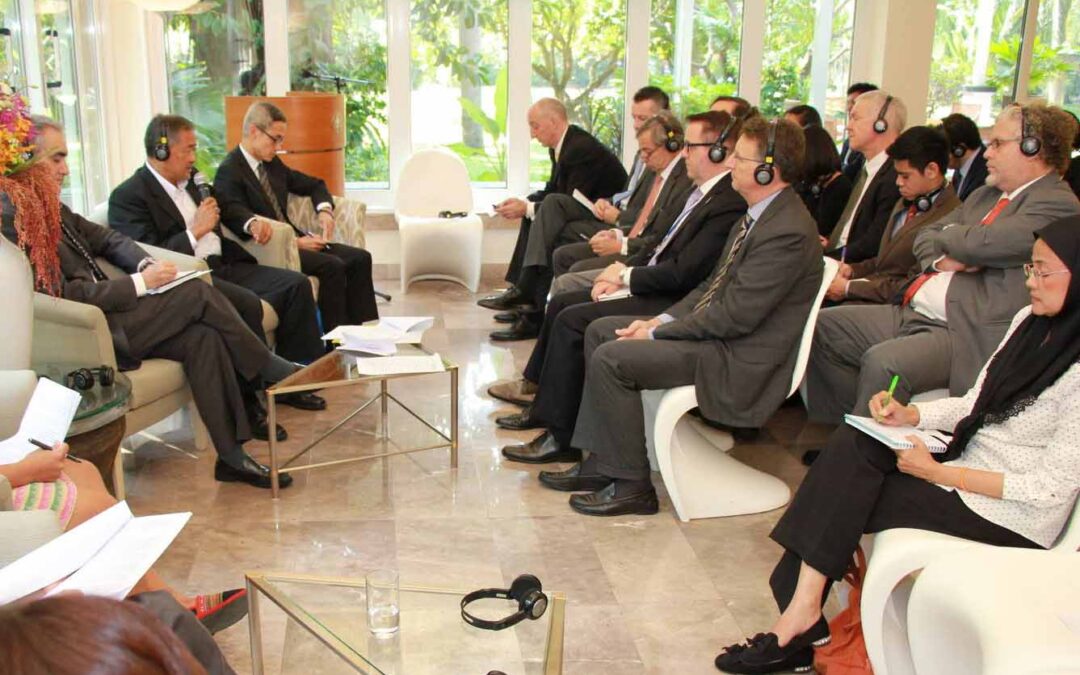
The Ambassador of the Federal Republic of Germany to Thailand and the ICJ held an event at the German Residence in Bangkok to mark Human Rights Day.
In his welcome speech, the Ambassador, Peter Prügel, stressed the importance of the protection of universal human rights which are essential for peace, long-term stability and sustainable development worldwide and referred to Germany’s long-standing support of the ICJ and its partners in Thailand.
Angkhana Neelapaijit, newly appointed Commissioner of Thailand’s National Human Rights Commission, respected human rights defender and victim of enforced disappearance then spoke about her new role and the human rights challenges currently facing Thailand.
A panel discussion on the prevailing human rights situation in Thailand then followed, which touched on a range of topics including the situation in deep South, community rights, migrants and refugees, the current legal framework, freedom of expression and assembly, the requirement to protect human rights defenders under international law and the upcoming Universal Periodic Review of Thailand by the Human Rights Council in 2016.
The panelists were:
- ICJ Commissioner, Professor Emeritus Vitit Muntarbhorn, Law Faculty, Chulalongkorn University;
- Sitthipong Chantarawirod, Chairperson of Muslim Attorney Centre Foundation;
- Pranom Somwong, Representative of Protection International Thailand;
- Somchai Homlaor, Chairperson of Cross Cultural Foundation; and
- Yaowalak Anuphan, Head of Thai Lawyers for Human Rights.
Approximately 100 members of Thailand’s civil society, the diplomatic community, the National Human Rights Commission, affected communities, academia, the United Nations, and Thailand’s Ministry of Foreign Affairs attended the event.

Nov 19, 2015 | News
Bangladesh President Abdul Hamid should stay the imminent executions of Salahuddin Quader Chowdhury and Ali Ahsan Mohammad Mujahid, the ICJ said today.
Salahuddin Quader Chowdhury, a leader of the opposition Bangladesh Nationalist Party, and Ali Ahsan Mohammad Mujahid, a leader of the Jamaat-e-Islami party, were found guilty of crimes committed during the 1971 war for independence in Bangladesh by the International Crimes Tribunal (ICT) in October 2013.
On 18 November 2015, the Supreme Court rejected their review petitions challenging their death sentences.
The only legal option available to them now is to seek a pardon from the President.
“The ICJ expresses its solidarity with the victims and survivors of the human rights violations committed during the 1971 war, and believes the perpetrators of these atrocities must be brought to justice,” said Sam Zarifi, ICJ Asia Pacific Regional Director. “However, the death penalty, especially following a deeply flawed trial, amounts to nothing more than vengeance and does not serve the interests of justice.”
The ICJ has previously raised concerns that trials before the ICT do not comply with international standards for fair trials.
Following the two previous executions in Bangladesh resulting from convictions by the ICT to date (Muhammad Kamaruzzaman in April 2015 and Abdul Qader Mollah in December 2013), the ICJ raised concerns about the serious procedural flaws in the ICT at all stages: pre-trial release has been routinely and arbitrarily denied; witnesses have been abducted and intimidated; and there have been credible allegations of collusion between the Government, prosecutors and judges.
UN agencies have also raised fair trial concerns with respect to how certain cases have been heard at the ICT.
Concerns have been raised with respect to Salahuddin Quader Chowdhury and Ali Ahsan Mohammad Mujahid’s trials as well.
“There have been several problems about the fairness of the trials under the ICT,” Zarifi added.
“Instead of compounding injustice by executing people who have been found guilty through flawed trials, the Government of Bangladesh should commute these death sentences and abolish the death penalty.”
The ICJ opposes capital punishment in all cases without exception.
The death penalty constitutes a violation of the right to life and the right not to be subjected to cruel, inhuman or degrading punishment.
Contact:
Sam Zarifi, ICJ Asia Pacific Regional Director (Bangkok), t: +66 807819002; email: sam.zarifi(a)icj.org
Background:
Ali Ahsan Mohammad Mojaheed was convicted by the International Criminal Tribunal and sentenced to death in July 2013. The Supreme Court upheld the conviction and sentence in June 2015.
Salahuddin Quader Chowdhury was found guilty and sentenced to death in October 2013 for war crimes, including genocide. The Supreme Court on appeal upheld the decision in July 2015.
The ICJ calls on Bangladesh to impose an official moratorium on the death penalty, with a view to abolishing the death penalty outright.
In December 2014, the UN General Assembly adopted a resolution, for the fifth time since 2007, emphasizing that the use of the death penalty undermines human dignity and calling on those countries that maintain the death penalty to establish a moratorium on its use with a view towards its abolition.
117 UN Member States, a clear majority, voted in favor of a worldwide moratorium on executions as a step towards abolition of the death penalty.