Jun 1, 2015 | News
The Cambodian government should withdraw a proposed law that would severely limit the rights of non governmental organizations (NGOs) in Cambodia, the ICJ and 10 other international human rights groups said in a letter to 44 foreign governments and the European Union.
The groups urged donors and others to press the government not to revive a 2011 draft law that was shelved under domestic and international pressure because it threatened freedom of association and expression.
Cambodia’s Council of Ministers discussed the draft NGO law on May 29 and is scheduled to discuss it again on June 5 before sending the measure to the National Assembly, dominated by Prime Minister Hun Sen’s Cambodian People’s Party.
A new law is unnecessary because existing legislation already addresses legitimate government concerns about the operations of NGOs, the international organizations said.
The letter was signed by the ICJ, Article 19, Asian Forum for Human Rights and Development (Forum Asia), Civil Rights Defenders, Front Line Defenders, Global Witness, Human Rights Watch, International Federation for Human Rights (FIDH), Lawyers Rights Watch Canada, Protection International, and Southeast Asian Press Alliance.
Cambodia-Australia & Cambodia lango letter-Advocacy-Open letters-2015-ENG (full text in PDF)

May 29, 2015 | Advocacy, News, Non-legal submissions, Position papers
The ICJ called today on the EU institutions to bridge the final implementation gaps to ensure an effective access to justice to victims of violent hate crimes.
The contribution of the ICJ was submitted as input for the European Commission’s first annual fundamental rights colloquium to be held next October and focused on “Tolerance and respect: preventing and combating antisemitic and anti-Muslim hatred in Europe”.
In its submission, the ICJ finds that the greatest weakness in addressing violent hate crime currently lies primarily in the failure of effective national implementation, which has meant that, despite development of the law, and despite authoritative recommendations from international and EU human rights bodies, the frequency of commission of violent hate crimes appears to have increased, and impunity for such crimes has persisted.
The ICJ considers that there are two main reasons for this lack of implementation: 1) lack of political or institutional will in Member States; 2) lack of implementation tools tailored to the laws, legal institutions and culture of the single national legal system.
The ICJ concluds, in its contribution, that it is the time for the European Union institutions to take up the opportunity to unite the efforts of all those concerned in the administration of justice – judges, court administrators, lawyers, civil society, judicial organizations, bar associations and government officers – throughout the EU to work together on the detailed technical assistance needed for an effective implementation of the right to an effective remedy for victims of crimes motivated by discrimination.
EU-Colloquium2015-ICJContribution-ViolentHateCrimes-Advocacy-non legal submission-2015-eng (download the submission)
May 27, 2015 | News
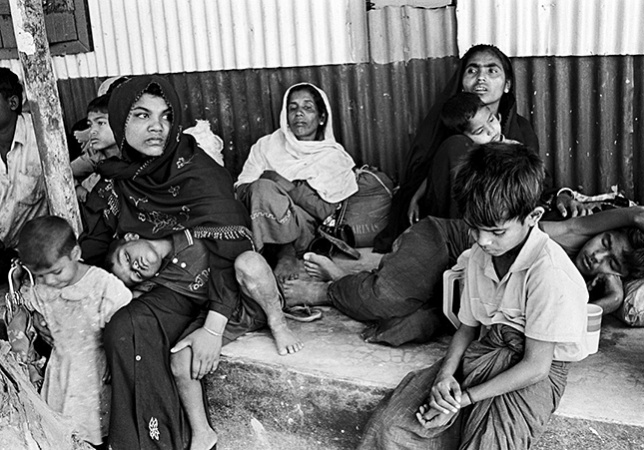
Representatives of 17 countries gathering in Bangkok on 29 May to discuss the humanitarian crisis involving thousands of Rohingya and Bangladeshis adrift in the Andaman Sea must adopt a regional response that complies with international human rights law and standards, said the ICJ today.
“The countries in ASEAN should work with each other and the international community to immediately save the lives of thousands of Rohingya and Bangladeshi people now trapped on ‘floating coffins’, and to address the human rights disaster in Rakhine state that helped create and foster this crisis,” said Sam Zarifi, ICJ’s Asia director.
“It’s essential that the participants of this meeting use this opportunity to establish a response that complies with international law and standards on human rights, the treatment of refugees and migrants, and people in distress on the sea,” he added.
The government of Thailand called the “Special Meeting on Irregular Migration in the Indian Ocean” to provide a forum for countries affected by this crisis.
The main countries involved in this crisis, Myanmar, Bangladesh, Thailand, and Malaysia, have not signed on to the Refugee Convention or to the Convention relating to the Status of Stateless Persons.
“Now they have to scramble to come up with a sensible and humane response,” Zarifi said.
“ASEAN countries have hidden behind the notion of ‘noninterference’ to turn a blind eye to the persecution of Rohingya in Myanmar, to the growth of criminal smuggling and human trafficking networks, and the increasing demand for undocumented laborers,” he added.
“But this crisis shows that problems in one country can and will quickly spread to the others unless ASEAN can provide a rights-compliant regional response.”
The ICJ calls on all ASEAN Member States and Bangladesh to become parties to key international treaties, such as the 1951 Convention Relating to the Status of Refugees and its 1967 Protocol, the Convention relating to the Status of Stateless Persons, and the 1979 International Convention on Maritime Search and Rescue (SAR).
The SAR encourages parties to enter into search and rescue agreements with neighboring states to ensure that assistance be provided to any person in distress at sea regardless of the nationality or status of such a person or the circumstances in which that person is found, and provide for their initial medical or other needs, and deliver them to a place of safety.
A draft ASEAN Convention Against Trafficking in Persons Especially Women and Children (ACTIP) and a corresponding Regional Plan of Action (RPA) for the Convention’s operationalization have yet to be endorsed by ASEAN leaders, and no copies of the drafts have been released to the public.
The ICJ calls on ASEAN to make this draft Convention and RPA public and hold consultations with civil society organizations, especially those that work with trafficked persons on which governments so frequently rely as service providers.
The ICJ also points out that certain ASEAN Member States have critical roles to play as integral components to the regional efforts addressing the current crisis.
It is clear that discriminatory policies and actions in Myanmar have significantly contributed to this regional humanitarian crisis, the ICJ says.
The ICJ adds that the Rohingya are forced to flee their homes because of ethnic conflict and the policies of the Myanmar government.
“The government has persecuted the Rohingya, refused to extend basic citizenship rights to them and in fact has recently passed legislation to entrench discrimination against the Rohingya such as the Protection of Race and Religion laws,” said Zarifi.
“These are some of the so-called ‘root causes’ that have displaced thousands within Rakhine State and driven the Rohingya to the sea and to the territory of neighboring countries. It is no longer possible to cite ‘sovereignty’ as an excuse for silencing regional discussions about these serious human rights concerns,” he added.
The ICJ has called on Myanmar to scrap laws that discriminate against minorities and to actively prosecute acts of violence fuelled by discrimination as well as crimes of hate speech.
The ICJ has also urged Myanmar to undertake every effort to improve basic living conditions for the Rohingya and Arrakhanese population in Rakhine State by enhancing respect for and protection of their economic, social, and cultural rights.
The ICJ also called on Thailand to assume its natural role as a key stakeholder in resolving this crisis.
“Thailand’s full commitment to a coordinated regional human rights based response is crucial,” Zarifi further said. “Thailand’s convening of a regional meeting is a welcome step, but as the meeting’s name suggests, Thailand still views this problem as primarily one of migration and trafficking, instead of as a serious human rights crisis that demands a human rights-based regional response.”
Thailand has recently committed to provide humanitarian assistance to migrants and refugees on board the boats.
However, the ICJ emphasized that Thailand and other countries must go further and rescue individuals in distress at sea and allow those who arrive on their shores to expeditiously and safely disembark.
Rather than pushing them back, involuntarily returning them, detaining them or applying other punitive measures, they should be provided with adequate and humane reception conditions and necessary medical care in the country.
Thereafter, with the aid of experts, their further protection and assistance needs must be individually and accurately determined and then addressed, consistent with international standards.
“The Thai government’s response that a naval vessel will be used as a floating administrative center for people already adrift in the waves, and that not even those in need of medical assistance will be allowed onshore, is simply callous and in violation of Thailand’s international obligations,” concluded Zarifi.
Additional information:
Eight ASEAN Member States will be attending the “Special Meeting on Irregular Migration in the Indian Ocean”: Cambodia, Indonesia, Lao PDR, Malaysia, Myanmar, Philippines, Vietnam, and Thailand. Singapore and Brunei Darussalam are not taking part in the meeting.
Also present will be representatives of Afghanistan, Australia, Bangladesh, India, Iran, New Zealand, Pakistan, Papua New Guinea, and Sri Lanka; the United States of America and Switzerland will participate as observers.
Three international organizations, namely the UN Refugee Agency (UNHCR), the UN Office of Drugs and Crimes, and the International Organization of Migration will also join the meeting.
Contact:
Sam Zarifi, ICJ Regional Director for Asia and the Pacific, t: +66807819002 ; e: sam.zarifi(a)icj.org

May 24, 2015 | News
The ICJ signed a joint statement together with 35 other national and international NGOs calling for the immediate release of Vietnamese blogger Tran Huynh Duy Thuc.
Tran Huynh Duy Thuc was arrested on 24 May 2009 for “promoting anti-government propaganda” after posting a blog calling for political reform and respect for human rights.
On 20 January 2010, following a one day trial with three co-defendants, he was sentenced to 16 years imprisonment followed by five years house arrest.
On 29 August 2012, the United Nations Working Group on Arbitrary Detention found that Tran Huynh Duy Thuc and his three co-defendants’ detention violated the right to freedom of opinion and expression guaranteed by Article 19 of the International Covenant on Civil and Political Rights (ICCPR), to which Vietnam is a State Party, as well as the right to liberty and security of person (Article 9) and the right to freedom of association (Article 21).
The Working Group concluded by requesting Vietnam to release Tran Huynh Duy Thuc and provide him with compensation in accordance with Article 9(5) of the ICCPR.
Vietnam-Statement on blogger Duy Thuc-News-webstory-2015-ENG (full text of statement in PDF)