May 18, 2015 | News
The ICJ condemns ongoing egregious human rights violations, including the right to life by the Egyptian authorities and facilitated by unfair judicial proceedings.
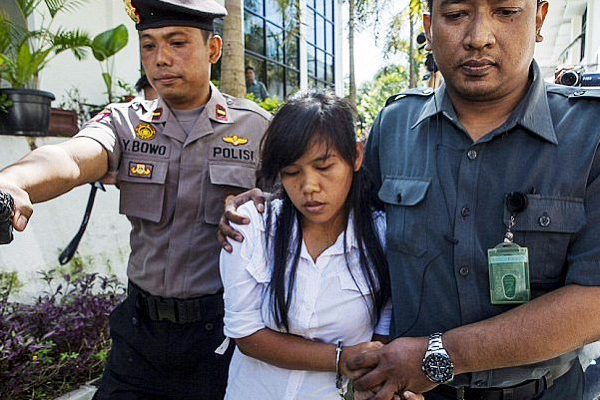
Yesterday, six men were executed following their conviction in an unfair trial by a military court and confirmation of the death sentences by the President of the Republic, Abdel Fatah Sissi, on 24 March 2015.
The men were part of a group of nine individuals accused of participating in attacks on security services and killing two officers of the armed forces on 19 March 2014.
Their conviction through military proceedings violated their right to a fair trial by a competent, independent and impartial tribunal.
Military court judges in Egypt are appointed by the Minister of Defense and are subject to military discipline procedures. By the very constitution of this court, in addition to by the manner in which the trial procedures were conducted, the defendants were denied the right to a fair trial under international standards.
All of the accused alleged that they had been subjected to torture and other ill treatment, as a result of which one of them was reported to have suffered a broken thigh and fractured knee.
Rights of defence were undermined, including the ability to have confidential access to a lawyer.
Furthermore, three of the accused were reportedly already in detention at the time the attacks they were convicted of participating in took place.
The executions came just a day after the decision on 16 May by the Cairo Criminal Court to recommend deaths sentences for more than 120 accused persons, including former President Morsi.
The cases have been referred to the mufti, the highest official religious authority in Egypt for confirmation.
This decision relates to two separate cases in which the accused, including Mohamed Morsi and other senior officials from the Muslim Brotherhood, were convicted of numerous charges.
These include, “murder”, “carrying out acts that compromise the independence of the country”, “abduction of police officers”, “collusion with a foreign organization to carry out terrorist activities in Egypt” and “carrying heavy weapons to resist the Egyptian state”.
The criminal proceedings that led to Saturday’s verdict follow grossly unfair trials.
The ICJ considers that in the trial and sentencing the defendants, the Egyptian authorities have acted in breach of Egypt’s obligations under international human rights law, including those relating to the right to life, the prohibition of torture and other cruel, inhuman or degrading treatment or punishment, and fair trial rights.
Many of the accused were denied access to counsel during detention, with some of them held incommunicado for months. Mohamed Morsi’s whereabouts were unknown from 3 July 2013 to November 2013.
The accused’s defence rights were largely undermined, including by curtailing the right to call and examine witnesses.
Further, during the entirety of the proceedings, prosecutors failed to provide substantial and credible evidence to support the charges against the accused, relying heavily on police and intelligence reports.
Reviewing numerous judgments issued in the context of similar mass trials resulting in death sentences, the ICJ has found a systematic failure of the courts to establish the individual guilt of each accused based on credible evidence.
Saturday’s judgment appears to continue this trend.
Further, under Egyptian law, decisions of felonies courts are not subject to appeal.
They can only be challenged before the Cassation Court, which does not look at the merits of the case but rather only the proper application of the law by lower courts.
“The imposition and execution of death sentences following such grossly unfair trials amount to a summary execution, a serious crime under international law,” said Said Benarbia, Director of the ICJ Middle East and North Africa programme.”
“Rather than contributing to serious human rights violations, Egyptian judges should preserve the dignity of their office and act in defence of the rule of law and human rights, not as a tool of repression,” he added.
The ICJ opposes the use of the death penalty in all circumstances as a violation of the right to life and a form of cruel, inhuman and degrading punishment.
The African Commission on Human and Peoples’ Rights has called on Egypt recently to refrain from carrying out the death penalty as it amounts to a violation of the right to life.
The UN General Assembly has repeatedly, by a large majority, called for a moratorium on its use.
Contact:
Alice Goodenough, Legal Adviser of the ICJ Middle East and North Africa Programme, t: +44 7815 570 834, e: alice.goodenough(a)icj.org
Nader Diab, Associate Legal Adviser of the ICJ Middle East and North Africa Programme, t: +41 229 793 804, e: nader.diab(a)icj.org
Egypt-Executions and mass death sentences-News-Press releases-2015-ARA (press release in Arabic, PDF)
May 13, 2015 | News
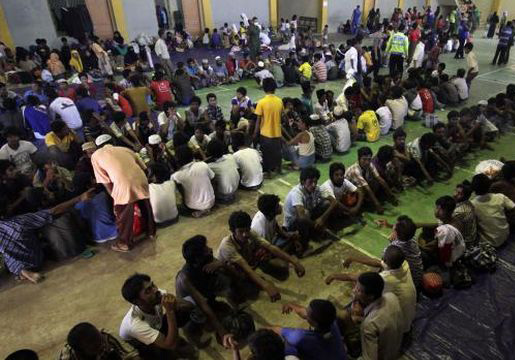
The ICJ today condemned the decisions of the governments of Indonesia and Malaysia to turn away and push back boats carrying hundreds of Bangladeshis and Rohingyas, including women and children, out to sea.
The ICJ emphasized that the increase in the number of Rohingya arrivals in Indonesia and Malaysia underscores the need to address the root causes that drive these people to set off on these perilous journeys, including the longstanding human rights abuses to which Rohingyas are subjected.
The decision by the two governments to return the boats to sea came after the arrival of about 2,000 people, mostly believed to be Rohingya and Bangladeshi nationals, onto the shores of Malaysia and Indonesia earlier this week.
“This should be a wake-up call to ASEAN that human rights is not an internal affair of one Member State,” said Sam Zarifi, ICJ’s Regional Director for Asia and the Pacific.
“Had there been action on the part of ASEAN early on to protect the rights of Rohingyas in Myanmar, this looming humanitarian crisis would not have happened,” he added.
The large majority of Rohingyas have fled Myanmar because of the discrimination and deadly violence they face there as members of a religious minority.
Many of them had no choice but to resort to callous smugglers.
However, a recent crackdown on human trafficking in both Thailand and Malaysia has spooked smugglers who, in order to avoid arrest, have abandoned boatloads adrift at sea instead of taking them ashore.
It is reported that approximately 6000 Rohingyas and Bangladeshi are now on boats adrift in the Andaman Sea in poor and overcrowded conditions.
“The decisions of the Indonesian and Malaysian governments constitute an abject failure of their duty to increase search-and-rescue efforts at sea and to provide humanitarian relief to those in need. Moreover, pushing these people back out to sea is a life-endangering practice and in no way does it provide a safe and effective solution,” said Zarifi.
Under international law, the act of pushing those boats back to the high seas constitutes a collective expulsion and may constitute a violation of the principle of non-refoulement.
Such a practice is also likely to lead to violations of the right to seek and enjoy asylum from persecution, of the right not be subjected to torture and other ill-treatment, and of the right to life.
On 29 May 2015, senior officials and representatives from at least 6 ASEAN member states will be in Thailand to have a “Special Meeting on Irregular Migration in the Indian Ocean”.
“ASEAN member states must ensure that any regional decision taken on this issue will be one that adequately and meaningfully protects the lives of people who embark on those desperate journeys across the Indian Ocean,” added Zarifi.
The ICJ urges ASEAN member states to stop the practice of returning boatloads of asylum-seekers and migrants to the sea and to immediately adopt effective regional measures in line with international human rights standards.
The ICJ also urges ASEAN to strengthen its regional human rights mechanism so that it would be able to effectively address violations of human rights in the region.
Contact:
Emerlynne Gil, ICJ Senior International Legal Adviser, in Bangkok, email: emerlynne.gil(a)icj.org or mobile: +66 84 092 3575
Picture: EPA/Zikri Maulana
Apr 28, 2015 | Advocacy, News, Non-legal submissions
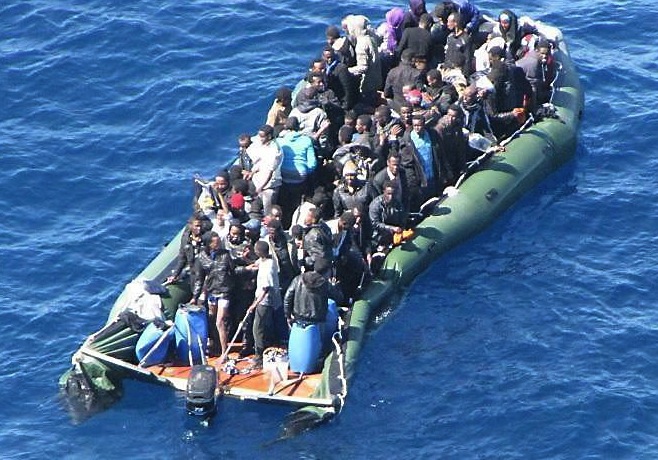
The ICJ is urging the European Council to immediately act to take effective measures to protect the lives of migrants at sea, after it failed to respond adequately to the repeated tragedies at a special meeting held on 23 April.
The special meeting of the European Council was called after the sinking of a boat in the Libyan Search and Rescue Zone left at least 700 persons dead. Since then, other incidents have brought the death toll in the Mediterranean to more than 1,000 in one week.
In its statement, released following the meeting, the European Council directed the EU institutions and the Member States to take a set of actions with the stated aim of preventing further loss of lives at sea.
The ICJ is deeply saddened by these tragedies that are the concern not only of the Mediterranean region and of Europe, but of the whole of the international community.
It is deeply regrettable that the reaction of the European Union and its Member States at a moment of such gravity has concentrated on presevering security of borders, and returning migrants, rather than on humanitarian and human rights concerns, particularly strengthening search and rescue operations in order to save lives, the ICJ says.
Although the European Council has affirmed that its “immediate priority is to prevent further loss of life at sea”, the measures envisaged in this statement are not designed to achieve this aim. Instead, they reflect a continuing security-based policy, centred on the need to “fight the traffickers” and on combatting irregular migration.
The ICJ supports the call of the UN Special Rapporteur on the rights of migrants, Fraçois Crépeau, urging the EU and Member States to focus their migration policies on the introduction of safe and legal migration routes and combatting the black labour market.
The framing of migration policies around narrowly perceived “security” interests and the strengthening of border controls creates a situation in which smugglers provide the only route for many migrants and this is leading to serious abuses of human rights. Migrants, many of whom are fleeing war or persecution, should not have to resort to such means of reaching safety in Europe.
“Strengthening our presence at sea”
While welcoming the increase in financial support for Frontex operations Triton and Poseidon with a view to foster its search and rescue capabilities, the ICJ is concerned that this commitment in the context of operations presently aimed to “control irregular migration flows towards the territory of the Member States of the EU and to tackle cross-border crime” risks marginalizing rescue at sea within these operations.
Resources must also be allocated directly to increase search and rescue capacities at the EU and national levels, in order to ensure that the human rights of migrants are protected, and that lives are saved.
“Fighting traffickers in accordance with international law”
The commitment in the statement to increase intelligence and police co-operation with third countries as a means of fighting trafficking, without corresponding human rights protections. Any such co-operation must be carried out in compliance with the EU Charter of Fundamental Rights, the European Convention on Human Rights and other international human rights law and standards.
Without strong safeguards in law and in practice, there is a risk that such co-operation may lead to exchange of information or evidence with, or transfer of suspects to, States in which human rights abuses are systematic or widespread or where particular individuals may be at risk.
This may lead to violations of human rights, including of the right to asylum, the right to the protection of non-refoulement, the right to be free from torture and ill-treatment and the right life.
In addition, engagement in intelligence and police cooperation, while an important tool in effective law enforcement, risks, if not undertaken with adequate safeguards, leading to infringements to the right to privacy, the right to data protection, and the prohibition of collective expulsions.
All of these rights are protected by the EU Charter of Fundamental Rights, as well as by international human rights treaties binding on EU Member States.
Regarding the commitment to take systematic action to capture and destroy vessels used by traffickers in the Mediterranean, the ICJ is also seriously concerned that any such any action risks to be in violation of international law and could lead to a risk of loss of lives.
Finally, the proposal to use Europol to detect and request removal of internet content used by “traffickers” to attract migrants and refugees may lack a sufficient legal basis in EU or national law.
While welcoming the statement’s acknowledgment that such measures must be in accordance with national constitutions, the ICJ recalls that they must also be in compliance with the EU Charter and international human rights law.
Any new measures must include safeguards and limitations to ensure that human rights, including the rights to freedom of expression and association are fully respected.
“Preventing illegal migration flows”
The ICJ is concerned that the stepping up of cooperation initiatives envisaged in the statement, with the aim of preventing irregular migration, poses a risk of complicity by the EU, i.e. aiding or assisting in violations of human rights by third countries.
The ICJ urges that any co-operation with third countries in preventing irregular migration must be in compliance with the EU Charter of Fundamental Rights and international human rights law.
Furthermore, the ICJ is particularly concerned by the decision of the European Council to promote further the readmission to third countries of “unauthorised economic migrants” and to order the establishment of a new return programme for the rapid return of “illegal migrants” from frontline member states, co-ordinated by Frontex.
While the content of the new fast return programme proposed by the Council remains unclear, as does the definition of “rapid return,” the ICJ considers that such a programme is likely to increase the possibility of European Union complicity in violations of the protections of non-refoulement, the right to asylum, the prohibition of collective expulsions and the right to an effective remedy, against its obligations under the EU Charter of Fundamental Rights.
The ICJ is concerned that the rapidity of the return could be linked to certain national expulsion practices that are at odds with the Member States’ obligations under the EU Charter and international human rights and refugee law. Furthermore, the ICJ recalls that under article 9 of the Frontex Regulation, Frontex, in its joint return operations, is not able to assess the compliance of return decisions on the merits. This lack of control increases the risk of aiding or assisting in serious violations of human rights.
“Reinforcing internal solidarity and responsibility”
Finally, in regard to the commitment to provide emergency aid to frontline Member States, the ICJ supports the rapid deployment of a long-term, sustainable programme of aid to such states, directed at the provision of search and rescue operations in the Mediterranean, and designed to safeguard the lives and rights of migrants.
The ICJ also recalls that, consistent with the dictates of the UN charter and international human rights treaties, States are under a general obligation to engage in international cooperation and assistance to protect human rights.
Conclusion
The ICJ deplores the fact that, following the tragic death of more than 1,000 people in one week, the EU Member States and the European Council, have failed to act meaningfully to protect the lives of migrants by taking decisive measures to protect the right to life of those crossing the Mediterranean.
In prioritizing border security and returns over search and rescue, the Member States of the European Union have demonstrated a reckless disregard for the human rights of migrants fleeing war, persecution or dire standards of living.
The ICJ urges the EU Member States and the EU institutions to take swift action, centred on the protection of lives and rights of migrants, in order to uphold the EU founding values of the rule of law and human rights, affirmed in article 2 of the Treaty on the European Union.