Nov 27, 2013 | News
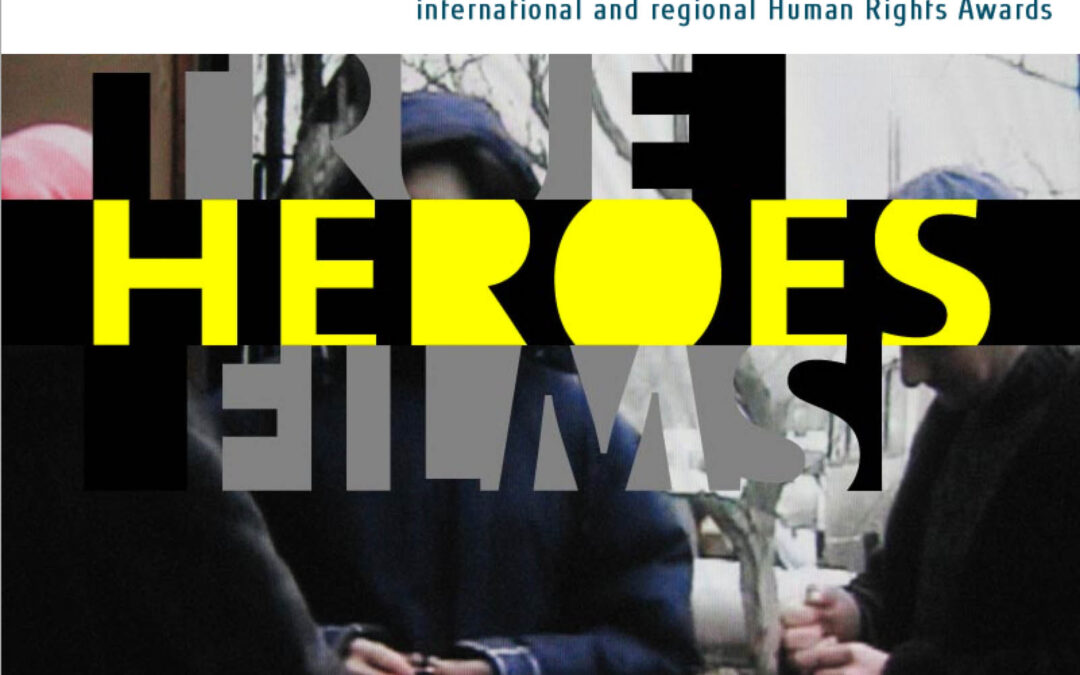
Today, the True Heroes Foundation (THF), a work partner of ICJ, launched the first-ever digest of human rights awards on www.trueheroesfilms.org.
The number of human rights awards has surged with over 50 new awards created in just the last 13 years.
The THF Digest brings together in a searchable manner 117 such awards with key information on each of them and links to their websites.
The Digest provides for the first time an overview of hereto scattered information and gives a unique tool to those who want to make nominations.
Going back over 100 years, it covers for the moment only international and regional awards. National awards are (not yet) included.
For more information on the content of the Digest (what is covered and how) read carefully the section “About the Digest” on www.trueheroesfilms.org
For additional information: jhrp.oxfordjournals.org

Nov 26, 2013 | News
The ICJ is calling on the Malaysian Government to immediately drop the criminal charge against human rights defender Lena Hendry for screening the film ‘No Fire Zone: the Killing Fields of Sri Lanka.’
The case has been fixed for case management and the defence lawyers filed an application to set aside, permanently stay or quash the charges against Lena Hendry.
“Subjecting Lena Hendry to criminal prosecution simply for screening a documentary violates her rights and contravenes Malaysia’s obligations to uphold freedom of expression,” said Sam Zarifi, ICJ’s Asia-Pacific Regional Director.
On 3 July 2013, Pusat Komas, a Malaysian human rights advocacy organization where Lena Hendry works, and Kuala Lumpur and Selangor Chinese Assembly Hall Civil Right Committee (KLSCAH CRC) screened the film “No Fire Zone”, a documentary on the war crimes and human rights abuses allegedly committed at the end of the Sri Lankan civil war in 2009.
Immediately following the screening, 30 officers from the Malaysian Ministry of Home Affairs and the police entered the hall and recorded the identity of all persons who attended the event.
The authorities then arrested Lena Hendry and two colleagues, Anna Har and Arul Prakash, and interrogated them for three hours at Dang Wangi police station.
On 19 September 2013, Lena Hendry was charged under section 6(1)(b) of the Film Censorship Act 2002 for showing a film that had not been approved by the Board of Censors.
If found guilty, she could be fined up to RM30,000 (approximately USD 9,322) and sentenced to up to three years imprisonment.
“The Malaysian government told the UN Human Rights Council during its universal periodic review that it maintains a ‘strong commitment to the rule of law, to upholding respect for human rights, and…widening the democratic space”, said Sam Zarifi. “That commitment is inconsistent with prosecuting human rights defenders for disseminating documentary human rights information.”
Under international law and standards, Malaysia must respect the right to freedom of expression of all persons, including the right to seek and impart information of all kinds.
In the case of human rights defenders, the UN Declaration on Human Rights Defenders imposes a special duty on States not only to respect this right, but also to protect those who exercise this right through their exposure of human rights violations.
The ICJ calls on the Malaysian Government to safeguard freedom of expression and uphold the right of individuals to expose and disseminate information on human rights questions, including the documentation of human rights abuses.
Nov 6, 2013 | News
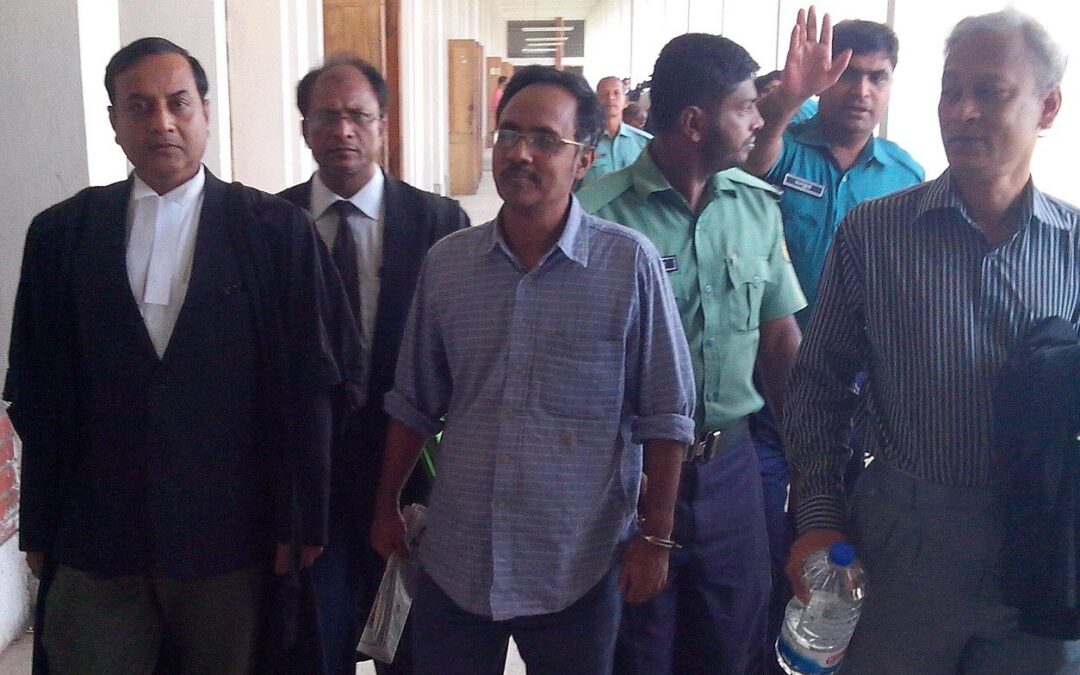
The ICJ is calling on the Bangladeshi authorities to immediately and unconditionally release Nasiruddin Elan, Director of the human rights group Odhikar.
Odhikar is an affiliate organization of the ICJ.
On 6 November 2013, a Dhaka cyber crimes tribunal rejected Nasiruddin Elan’s bail application and ordered his detention in Dhaka Central Jail.
Nasiruddin Elan (in the middle on the picture) has been accused of distorting information, presenting false evidence and manipulating photographs of a Government crackdown on a rally by Hefazat-e-Islam, an Islamist political organization, in May this year.
The action reportedly resulted in multiple deaths and injuries. Odhikar had reported that 61 protestors were killed by the Rapid Action Battalion (RAB) and the police. The Government contests the number of casualties.
“What we are seeing is a continuing unlawful attack on Odhikar and voices critical of the Government,” said Ben Schonveld, ICJ’s South Asia Director. “Nasiruddin Elan is being arbitrarily detained for the lawful exercise of the right to freedom of expression and his legitimate work as a human rights defender.”
“The Government should immediately drop its opposition to Nasiruddin Elan’s bail application,” he added. “We are concerned that he will be one of the many detainees who faces torture and ill-treatment during detention, as documented by Odhikar and other human rights organizations.”
Bangladesh-Elan arrest statement-news-web story-2013 (full text in pdf)
Nov 5, 2013 | News
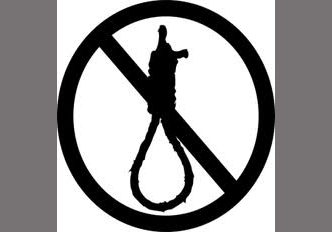
The ICJ condemns Bangladesh’s imposition of the death penalty in contravention of the global trend towards abolition of capital punishment.
It signifies a weakening of the rule of law and respect for human rights standards in the country.
On 5 November 2013, a special court sentenced 152 persons to death, most of them former officers of the Bangladesh Rifles (BDR), for participating in the 2009 mutiny in which 74 people were killed.
Two days earlier, the International Crimes Tribunal (ICT) had convicted Chowdhury Mueen Uddin and Ashrafuzzaman Khan in absentia for abduction and murder during Bangladesh’s liberation war in 1971 and sentenced them to death.
The ICT, set up by the Government of Bangladesh in 2010 to prosecute persons accused of committing genocide, crimes against humanity, war crimes and other serious crimes during the 1971 war, has so far convicted nine accused. Seven have been given death sentences.
“The numbers of death sentences issued by special courts in Bangladesh is alarming,” said Ben Schonveld, ICJ’s South Asia Director. “There seems little interest in seeking justice; this looks more like revenge.”
“Those responsible for committing atrocities during the Bangladeshi war of liberation and the 2009 mutiny must be prosecuted and brought to justice,” he added. “But the death penalty is a perversion of justice, even more so when imposed after trials that violate due process.”
The ICJ considers the death penalty to constitute a violation of the right to life and the right not to be subjected to cruel, inhuman or degrading punishment. The United Nations General Assembly has repeatedly called on all States to establish a moratorium on the death penalty with a view to abolition.
Under international law and standards, including the International Covenant on Civil and Political Rights, Bangladesh is required to scrupulously and strictly to observe all relevant fair trial guarantees.
This includes the right to effective legal assistance at all stages of the proceedings including the appeal.
The International Crimes Tribunal as well the Special Court set up by Bangladesh to try those accused of committing atrocities in the 2009 mutiny do not meet international standards and Bangladesh’s legal obligations concerning the right to a fair trial.
The 846 suspects tried by the special court in Dhaka for the 2009 mutiny had limited access to lawyers; did not have sufficient knowledge of the charges and evidence against them; and at least 47 suspects died while in custody, allegedly after being subjected to torture.
There are also serious procedural flaws at all stages in the ICT.
Pre-trial release has been routinely and arbitrarily denied; witnesses have been abducted and intimidated; and there have been credible allegations of collusion between the Government, prosecutors and judges.
The ICJ calls on Bangladesh to join the great majority of States around the world in rejecting the death penalty.
To that end, Bangladesh should impose a moratorium on the practice and take steps towards its abolition, as prescribed by repeated United Nations General Assembly Resolutions.
In addition, Bangladeshi authorities must order a retrial of all persons accused of participating in the 2009 mutiny and ensure that their fresh trials meet international law standards on fair trial.
Bangladesh-Death penalty statement-news-web story-2013 (full text in pdf)
Oct 10, 2013 | News
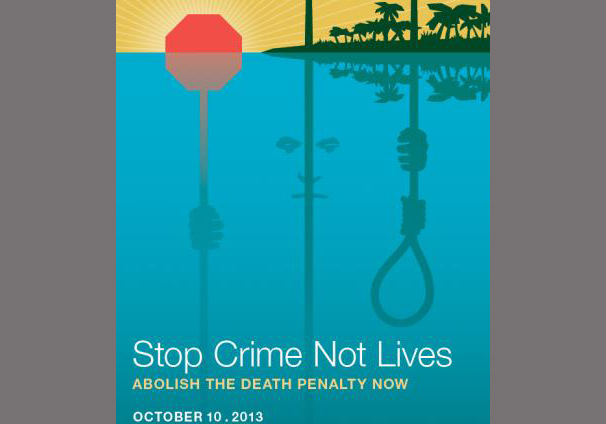
On the 11th World Day against the Death Penalty, the ICJ calls on South Asian States to stop the resurgence of executions in the region.
The ICJ considers the death penalty in all cases to constitute a violation of the right to life and the right not to be subjected to cruel, inhuman or degrading punishment.
“In the past year, we’ve seen an alarming increase in the number of executions in South Asia,” said Sheila Varadan, International Legal Advisor for the South Asia Programme.
“Capital punishment is State-sanctioned vengeance. The deliberate and premeditated act of taking a human life in State custody can never constitute a form of justice. It is is an irreversible form of punishment that, as we have seen time and again, cannot be administered without some degree of subjectivity and arbitrariness,” she added.
India ended its eight-year moratorium on the death penalty with the executions of Ajmal Amir Kasab in November 2012 and Afzal Guru in February 2013.
Although the current policy on a moratorium is unclear, Pakistan appears to be leaning towards resuming executions. In November 2012, Pakistan carried out its first execution in five years when it hanged solider Muhammad Hussain.
In July 2013, the newly-elected Government signaled its intention to recommence civilian executions after it failed to renew the five-year moratorium. Over 8000 people have been sentenced to death in Pakistan.
Bangladesh also continues to exercise the death penalty. It has over 1000 individuals on death row.
Bangladesh’s International Crimes Tribunal has handed down the death penalty in six of the seven cases completed, despite growing international criticism over the independence and impartiality of the proceedings.
South Asia’s increasing resort to the use of the death penalty goes against a 15-year worldwide trend towards abolition. More than 150 of 192 United Nations member States have now either abolished the death penalty or do not practice it, including 30 States from the Asia-Pacific region.
The United Nations General Assembly has adopted a number of resolutions calling for a worldwide abolition of the death penalty. In its most recent resolution in 2012, an overwhelming majority of UN member States voted in favor of a worldwide moratorium on executions as a step towards the abolition of the death penalty.
“India, Pakistan and Bangladesh are part of a dwindling number of States who still retain this cruel and inhumane form of punishment,” Varadan said.
The ICJ urges India, Pakistan, and Bangladesh to immediately impose a moratorium on the death penalty, with a view to abolishing it and accede to the Second Optional Protocol to the International Covenant on Civil and Political Rights on the abolition of the death penalty.
CONTACT:
Sheila Varadan, ICJ Legal Advisor, South Asia Programme, t: +66 857200723; email: sheila.varadan(a)icj.org
NOTE:
- The United Nations has adopted various instruments in support of the call for the worldwide abolition of the death penalty. In 2007, the UN General Assembly adopted a resolution emphasizing that ‘that the use of the death penalty undermines human dignity’ and calling for the establishment of a moratorium on the use of the death penalty ‘with a view to abolishing the death penalty.’ The resolution was reaffirmed in 2008, 2010, and most recently in December 2012, when a large majority of UN Member States voted in favor of a worldwide moratorium on executions as a step towards the death penalty’s abolition.

![Smoke rises after an Israeli air strike on the village of Taybeh in southern Lebanon [Source: Al Jazeera]](https://www.icj.org/wp-content/uploads/2026/03/Screenshot-2026-03-20-at-15.56.24-300x200.png)