Feb 28, 2013 | News
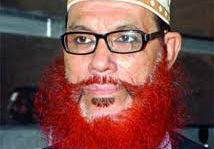 The death sentence handed down by the International Crimes Tribunal today against Delwar Hossain Sayeedi (photo) violates international standards of due process and fair trial, and, if carried out, would violate his right to life, says the ICJ.
“The ICJ wholly condemns the atrocities committed in Bangladesh’s war of liberation in 1971, notably the widespread and systematic use of rape as a form of torture and the unlawful killings. It is paramount that those responsible should be held accountable,” said Sam Zarifi, ICJ Asia Pacific Regional Director. “But even perpetrators of atrocities have rights. They should be brought to justice, not subjected to vengeance.”
Delwar Hossain Sayeedi, vice-president of the Jamaat-e-Islami party, was indicted on 3 October 2011 on 20 charges including genocide and crimes against humanity. He was arrested and brought before the War Crimes Tribunal for the first time on 2 November 2010. He was accused of working with the Al-Badr group during the independence struggle in the early 1970s.
The International Commission of Jurists opposes the death penalty as a violation of the right to life and a form of cruel and inhuman punishment. The United Nations General Assembly has called on all States to establish a moratorium on the death penalty with a view to universal abolition.
Today, crowds gathered outside the courthouse as the verdict was being read, demanding Delwar Hossain Sayeedi be sentenced to death for his role in the atrocities committed in the 1971 war of liberation. Earlier this month, widespread protests erupted across Bangladesh after the Tribunal imposed a life sentence on Abdul Qadar Mollah instead of the death penalty.
“The enormous demonstrations and the unfortunate violence that have accompanied each decision of the ICT demonstrate the passions still enflamed by the crimes of 1971. But it is in everyone’s interest to ensure that the rule of law and the path to justice are not subject to immediate political pressure,” Zarifi added. “The Government’s obligation to bring those responsible for the atrocities committed in 1971 to justice must not outweigh the presumption of innocence and the duty to ensure the security of all persons.”
The ICJ says that the International Crimes Tribunal does not adhere to international standards of a fair trial and due process.
According to the ICJ, there are serious procedure flaws at all stages: pre-trial release has been routinely and arbitrarily denied; witnesses have been abducted and intimidated; there have been credible allegations of collusion between the Government, prosecutors and judges.
On 14 February 2013, a draft amendment was tabled in Parliament, retroactively changing the International Criminal (Tribunals) Act 1973 to enable prosecutors to appeal a life sentence and seek the death penalty.
This amendment came after protests for a death sentence in the 5 February 2013 verdict against Abul Qadar Mollah.
As a State party to the International Covenant on Civil and Political Rights, Bangladesh is obligated to guarantee due process and fair trial rights to all suspects, even those accused of war crimes.
Such obligations include the right to an public hearing before a competent, independent and impartial tribunal; the right to be tried in one’s presence; the right to counsel and the right to a full defence; and the right not to be punished again for an offence for which there has already been a final conviction in accordance with the law.
“Failing to abide by minimum standards of due process will cast doubt on the Tribunal’s findings and undermine victims’ hard-fought battle for justice,” Zarifi said. “The Bangladesh Tribunal is one of very few transitional justice mechanisms that have imposed the death penalty.”
This verdict is the third issued by the tribunal. Earlier this month, Abdul Qader Mollah, the assistant secretary-general of the Jamaat-e-Islami was found guilty and sentenced to life imprisonment for committing crimes against humanity during the 1971 liberation war.
On 21 January, Abul Kalam Azad, a former leading member of the Jamaat-e-Islami party, was tried and convicted in absentia and sentenced to death for crimes committed during Bangladesh’s war of liberation in 1971. He was convicted on six counts of a crime against humanity and one count of genocide.
The government established the Bangladesh International Crimes Tribunal in 2010, after amending the International Crimes (Tribunals) Act 1973. The International Crimes Tribunal has jurisdiction to try crimes against humanity, crimes against peace, genocide, violations of the Geneva conventions and any other crimes under international law.
The ICJ supports the right of victims to seek truth and justice for the atrocities committed in the 1971 Liberation War.
However, any such process must adhere to international human rights standards, including full guarantees for a fair trial.
CONTACT:
Sam Zarifi, ICJ Asia-Pacific Regional Director, t: +66 26198477; email: sam.zarifi(at)icj.org
Sheila Varadan, ICJ Legal Advisor, South Asia Programme, t: +66 857200723; email: sheila.varadan(at)icj.org
Jan 21, 2013 | News
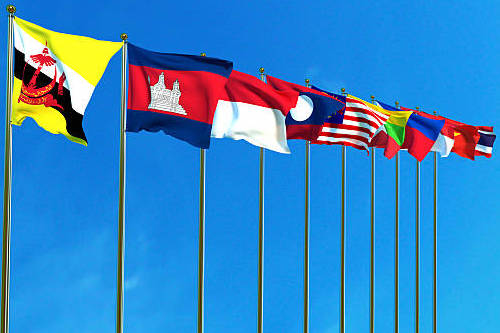
 The ICJ calls on the ASEAN Intergovernmental Commission on Human Rights (AICHR) to take an active role in determining the fate and whereabouts of Sombath Somphone, a community leader in Laos.
The ICJ also calls on the AICHR to fulfill its mandate under Article 4, paragraph 1.11 of its Terms of Reference, and develop a common position and strategy for tackling the serious problem of enforced and involuntary disappearances in the ASEAN region.
This position must aim towards hastening the resolution of cases of enforced and involuntary disappearances in the region, as well as effectively preventing these violations in the future.
Sombath Somphone is the founder and former director of the Participatory Development Training Center (PDTC) and 2005 recipient of the prestigious Ramon Magsaysay Award for Community Leadership.
He also led Laos’ civil society groups in participating at the Asia-Europe People’s Forum (AEPF) held in October 2012.
He was last seen being stopped by local police at the Thadeau police station on 15 December 2012, at around 5:00pm.
His family has no information on his fate or whereabouts to this day.
“It should be an urgent concern for the AICHR to give sustained priority to this case and it should vigorously encourage the government of Laos to make every effort to locate him,” said Sam Zarifi, Regional Director of the ICJ for Asia and the Pacific.
“The AICHR should seize this case as a chance to address the issue of enforced and involuntary disappearances in the ASEAN,” Zarifi added. “It should use its mandate to formulate a common position on this issue, to push governments to resolve cases of enforced and involuntary disappearances in the region.”
Following his “disappearance”, the AEPF requested ASEAN parliamentarians to conduct a mission to Laos to investigate the case.
To that end, three parliamentarians from the Philippines, Indonesia, and Malaysia traveled to Laos from 13 to 15 January 2013 and spoke to high-level representatives of government about the “disappearance” of Sombath Somphone.
One of the parliamentarians, Mr. Charles Santiago, observed that the government of Laos had evinced no political will to resolve this case.
He noted the half-hearted efforts of police in investigating this case, as illustrated by the fact that they had only called in twice Ng Shui Meng, Sombath Somphone’s wife, since her husband had been missing.
On both occasions, she was asked questions irrelevant to the case, such as how long they had been married, whether or not they had children, and where they reside.
The parliamentarians made it clear that finding Sombath Somphone, a well-known civil society leader, is crucial.
As pointed out in a public statement by Mr. Walden Bello, the parliamentarian from the Philippines, “the immediate surfacing of Mr. Sombath is in the interest of all parties, of Mr. Sombath and his family, of the Lao PDR, and of the ASEAN.”
The ICJ recalls that all States, including Laos, have an obligation to conduct a prompt, thorough and independent investigation wherever there are reasonable suspicions of enforced or involuntary disappearance.
The ICJ also emphasizes that resolving the case of Sombath Somphone is important not only for Laos, but also for the ASEAN as a region.
His citation for the Ramon Magsaysay Award for Community Leadership indicates he is recognized for “his hopeful efforts to promote sustainable development in Laos by training and motivating its young people to become a generation of leaders.”
His work not only benefits the people of Laos, but also contributes to the aspiration of ASEAN as expressed in its Charter, which is that of ensuring “sustainable development for the benefit of present and future generations and to place the well-being, livelihood and welfare of the peoples at the center of the ASEAN community building process.”
Sombath Somphone is the kind of leader integral to the realization of this vision of the ASEAN.
Contact:
Emerlynne Gil, International Legal Advisor, International Commission of Jurists, Bangkok; m: +66 840923575, email: emerlynne.gil@icj.org
Dec 12, 2012 | Multimedia items, News, Video clips
 The ICJ 17th World Congress closed today with the adoption of a landmark Declaration on Access to Justice and Right to a Remedy in international human rights systems.
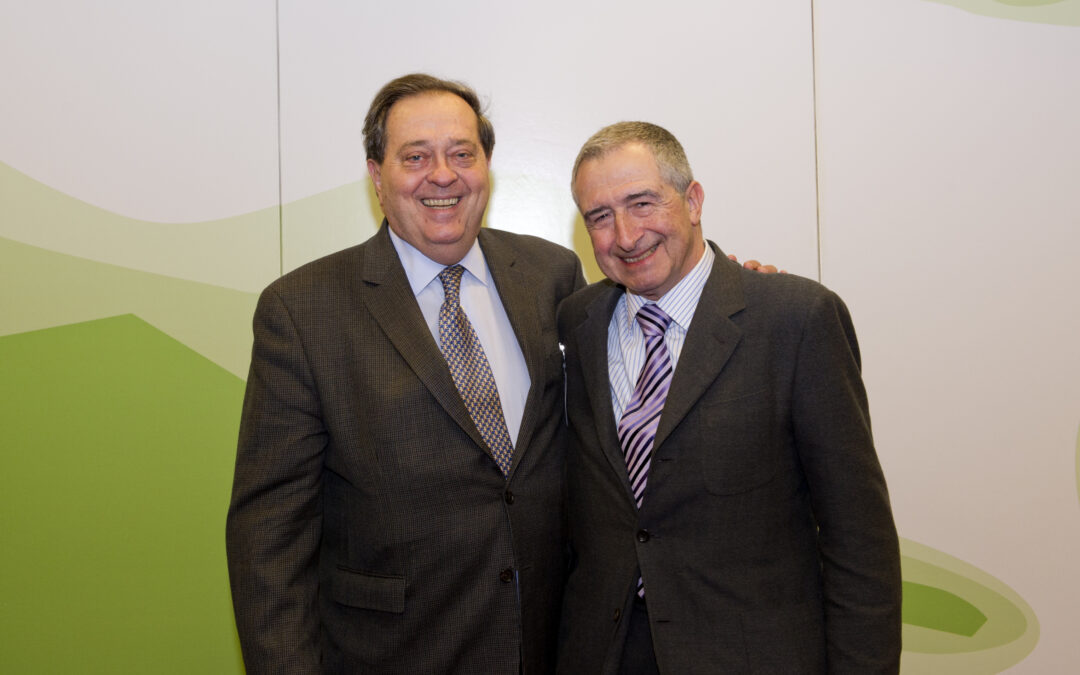
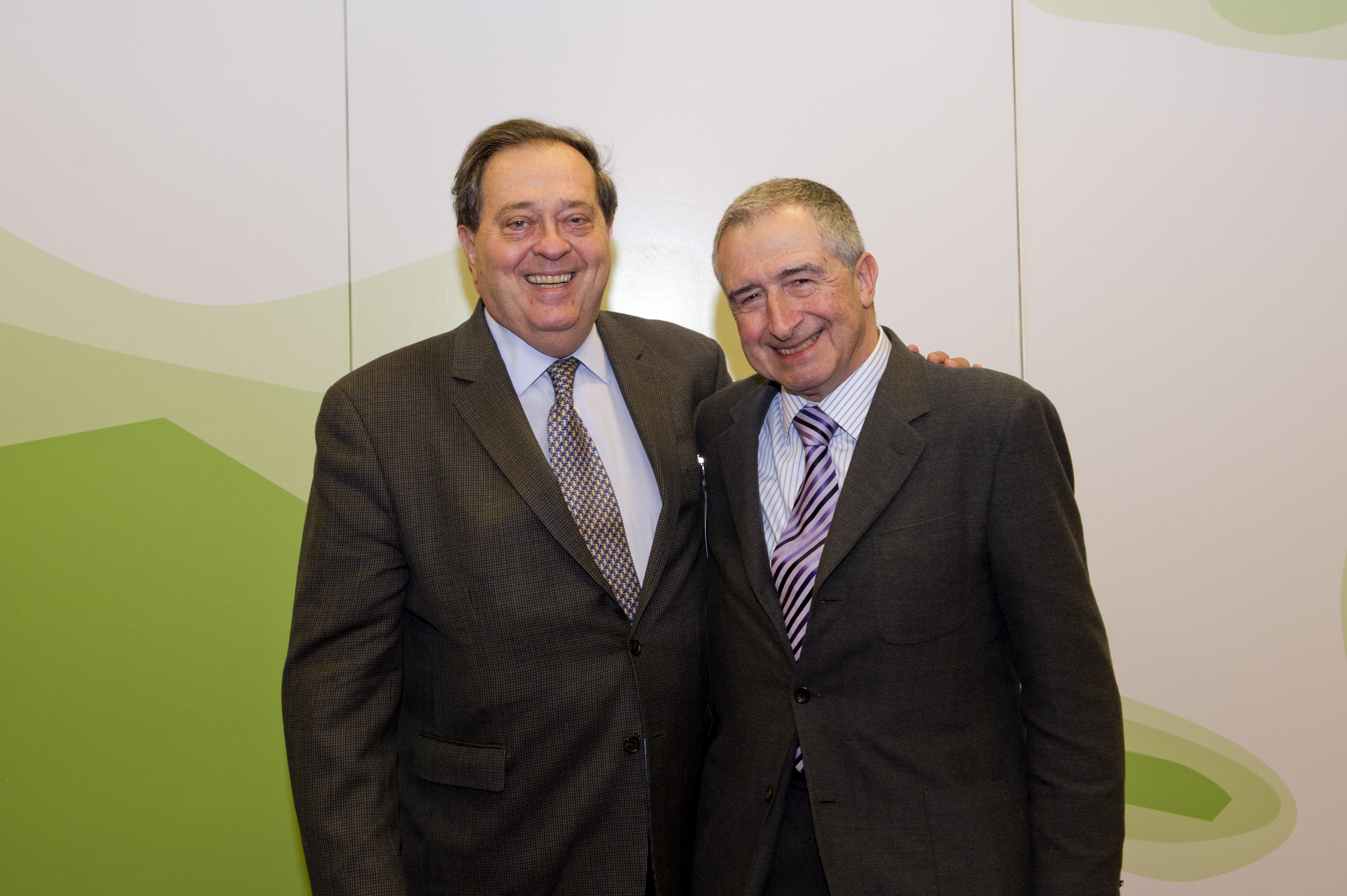
In his final speech at the closing of the Congress, Sir Nigel Rodley, the new ICJ President (photo above, on the right, with Pedro Nikken, outgoing ICJ President) said:
“The ICJ has always been the world’s leading organization of lawyers working for the Rule of Law and human rights. At the ripe young age of 60, it is at the height of its prestige and authority.”
“Led by one of the world’s most experienced international human rights lawyers, Wilder Tayler, of Uruguay, the ICJ is now on a firm footing with a strong secretariat in Geneva – the city of human rights – and an increasing number of offices in key countries and regions of the world.”
“So, the ICJ is well-placed to make an even more significant contribution meeting such challenges as the serious problem of assaults on the independence of judges, lawyers, and prosecutors.”
“There is no justice if people don’t have access to it. The ICJ Congress, with its vast range of eminent expertise, from the ICJ Commissioners, national sections representatives, and guests, adopted a landmark Declaration on Access to Justice and Right to a Remedy in international human rights systems.”
“The focus was how to make international regional human rights systems more able to respond to the needs of those who cannot secure justice at home. There was special urgency bearing in mind the attempts of governments to weaken the systems’ ability to call these same governments to account.”
Sir Nigel Rodley, ICJ President, talks about the Declaration:
To download the text of the full declaration click on the links below:
ICJ 17th World Congress-Declaration and opening speeches-2012 (full text in pdf)
ICJ 17th World Congress-Declaration-2012 (full text in pdf)
ICJ 17th World Congress-Declaration-2012-FR (full text in pdf)
Photo by David Rouge
Dec 11, 2012 | Events, News
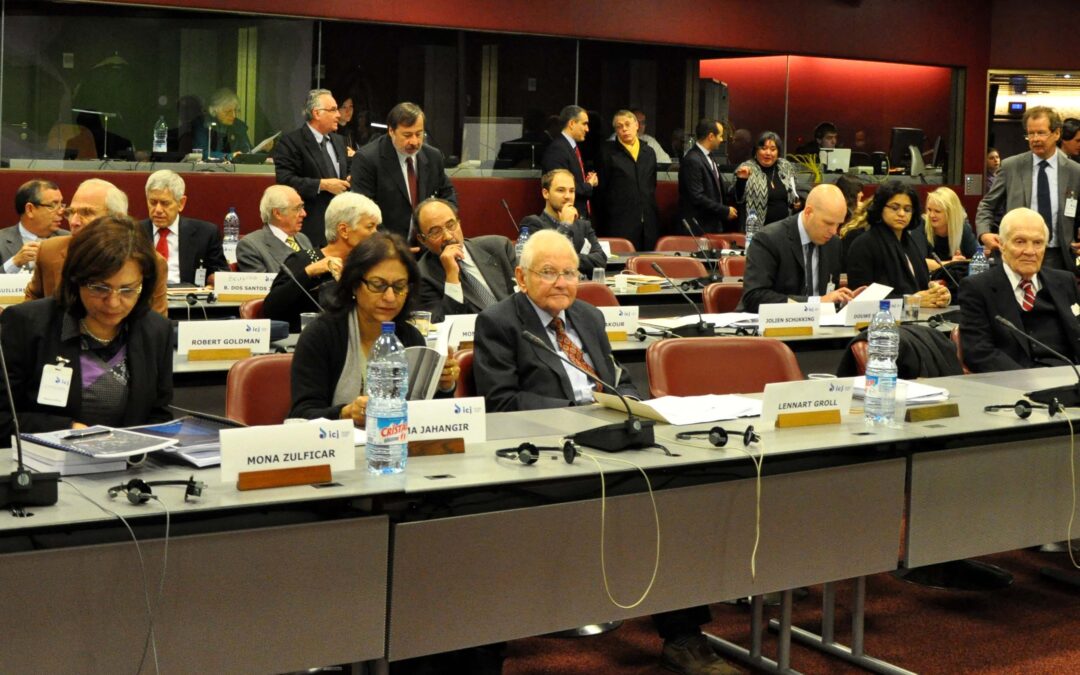
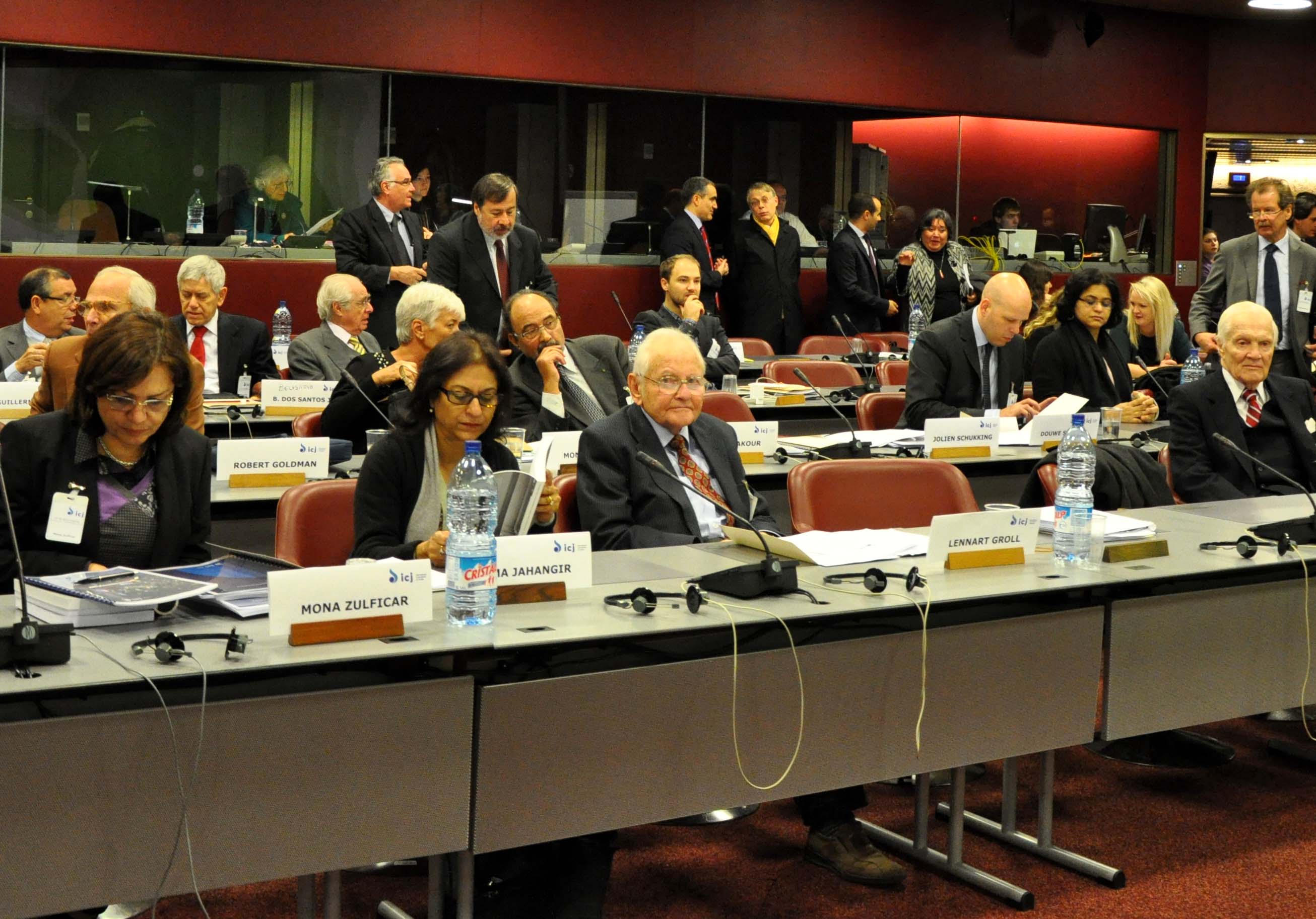 Leading jurists gather at ICJ World Congress to work on international legal remedies to human rights violations.
![Arthur Chaskalson mourned]()
Dec 3, 2012 | News
 It was with great sadness that the ICJ learned of the death of its former President Arthur Chaskalson at the age of 81 this weekend.
A renowned human rights lawyer and a tenacious opponent of the apartheid government, Arthur Chaskalson was part of Nelson Mandela’s defence team in the 1963 Rivonia Trial, which saw Mandela and other ANC leaders sentenced to life.
He then helped establish the Legal Resources Centre, a non-profit organization seeking to use the law to pursue justice and human rights around South Africa. He ran the Centre from 1978 until 1993.
President of South Africa’s Constitutional Court (1994-2001), Chaskalson became Chief Justice of the same court from 2001 to 2005, after which he retired.
He was elected as an ICJ Comissioner in 1995 and served as President of the organization from 2002 to 2008.
In 2005, the ICJ convened the Eminent Jurists Panel, comprising eight leading international experts who spent three years conducting a worldwide investigation into the impact of counter-terrorism laws and practice on human rights globally.
Arthur Chaskalson chaired the panel, which held 16 hearings covering forty countries in all regions of the world.
Chaskalson also played a major role in the panel’s report, which concluded that many States had confronted the threat of terrorism with ill-conceived measures undermining the Rule of Law and human rights, which has proved to be an important reference for the post 9/11 era.

![Smoke rises after an Israeli air strike on the village of Taybeh in southern Lebanon [Source: Al Jazeera]](https://www.icj.org/wp-content/uploads/2026/03/Screenshot-2026-03-20-at-15.56.24-300x200.png)