Jan 26, 2017 | News
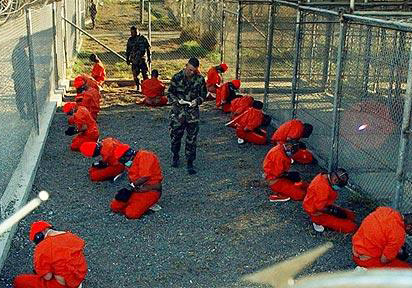
The ICJ deplores comments made last night by the United States President Donald Trump, expressing approval for the practice of torture in counter-terrorism operations.
The ICJ is also alarmed at reports that the US administration is considering resurrecting the most abusive policies and practices during the early 2000s, including prolonged arbitrary detention in CIA-administered secret “black site” facilities, enforced disappearance, and rendition to other countries for torture and ill-treatment.
“These practices of torturing detainees and ‘disappearing’ them in black sites are serious crimes which must never be repeated,” said Ian Seiderman, ICJ Legal and Policy Director.
“Even President Bush, despite his administration’s appalling record, publicly denounced torture as being against the laws and values of the United States,” he added.
Contact:
Ian Seiderman, ICJ Legal and Policy Director, t: +41 22 979 3837 ; e: ian.seiderman(a)icj.org
Background:
During an interview on US television last night, President Trump repeated his support for torture practices such as waterboarding (near-drowning) and declared that “torture works.”
A number of media reports have indicated that the Trump Administration may issue an Executive Order to review “whether to reinitiate a program of interrogation of high-value alien terrorists to be operated outside the United States” and whether the CIA should be in charge of such a programme.
Counter-terrorism abuses during the Bush administration from 2001-08 involving torture, enforced disappearance, secret detention and rendition were widely condemned as unlawful, morally unacceptable, and ineffective, both internationally and in the US, leading to the abandonment of such practices.
A report by the Eminent Jurists Panel of the ICJ on Terrorism, Counter-terrorism and Human Rights, issued in 2009 conducted after a four-year study concluded that “such practices are not a legitimate response to the threat of terrorism. Such practices are not only inconsistent with established principles of international law, and undermine the values on which free and democratic societies are based, but as the lessons of history show, they put the possibility of short term gains from illegal actions, above the more enduring long term harm that they cause.”
The Obama administration definitively abolished the practices of torture and secret detention upon taking office in 2009, although they had already been substantially wound down in the later years of the second Bush administration.
Jan 17, 2017 | News
Leading human rights organizations, including the ICJ, have hailed a landmark decision of the UK Supreme Court to hold the UK Government accountable for its role in human rights abuses overseas.
The country’s highest court issued today a long-awaited judgment in the two joined appeals in Belhaj and Others v. Jack Straw & Others and Rahmatullah v. Ministry of Defence and Another.
The Court ruled that the UK Government could not rely on the legal doctrines of sovereign immunity and foreign act of state to escape claims in the two cases alleging UK involvement in breaches of human rights by foreign governments.
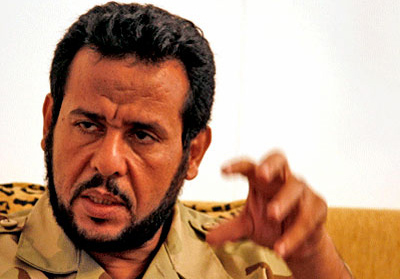
The first case, brought by the former Libyan opposition leader Abdul-Hakim Belhaj (photo) and his wife, Fatima Boudchar, alleges that UK Government officials were complicit in the couple’s kidnap and rendition to Gaddafi’s Libya, where they were arbitrarily imprisoned and tortured.
The second case was brought by Yunus Rahmatullah, who was detained by UK forces in Iraq before being handed over to US forces and allegedly tortured and imprisoned without charge for over ten years.
The Government argued before the Supreme Court that the claimants’ cases should be dismissed because, under the doctrines of sovereign immunity and foreign act of state, the UK courts were not permitted to rule on the legality of acts by foreign governments.
The claimants argued in response that the doctrines only applied in certain limited situations, and that they did not extend to the circumstances in Belhaj and Rahmatullah.
The claimants’ position in Belhaj was supported by several prominent human rights organizations – the ICJ, Amnesty International, JUSTICE and REDRESS – who intervened in the case.
The intervening organizations submitted that dismissing the claims would effectively grant impunity for torture to UK officials, violating international human rights law and weakening international commitments to an effective remedy for torture and other ill-treatment, enforced disappearance, arbitrary detention and other human rights breaches.
The Supreme Court found unanimously in favour of the claimants and dismissed the Government’s appeal.
It ruled that the doctrine of sovereign immunity did not apply because the foreign governments were not parties to the cases and their legal interests were not affected by the claims put forward.
In respect of foreign act of state, while the judges differed in their reasoning, they agreed that the doctrine could not be invoked for such serious violations of law as torture, unlawful detention and enforced disappearance.
The Belhaj and Rahmatullah cases will now proceed to full trials, where the courts will examine the facts of the claims and determine whether the UK Government and its officials were complicit in the claimants’ torture and other human rights abuses.
“The UK Supreme Court has spoken forcefully in affirming that the public interest in ensuring access to justice for victims of serious human rights abuses is paramount,” said Ian Seiderman, ICJ Legal and Policy Director.
“Human rights are universal and their effective enforcement must not be blocked by misapplied juridical doctrine that contrives to deny victims a remedy,” he added.
Contact
Ian Seiderman, ICJ Legal and Policy Director, t: +41 22979 3800 ; e: ian.seiderman(a)icj.org
UK-Belhaj case-News-press releases-2017-ENG (full version of press release, in PDF)

Jan 6, 2017 | News
As Pakistani military courts once again cease to have jurisdiction over civilians for terrorism-related offences, the Government must urgently reform the country’s criminal justice system, the ICJ said today.
Perpetrators of terrorist attacks must be brought to justice pursuant to fair credible trials and in accordance with due process, the human rights organization added.
The 21st Amendment and corresponding amendments to the Army Act 1952 are scheduled to lapse today, as their respective two-year sunset clauses expire. So far, the Pakistani Government has not proposed any legislation to extend the jurisdiction of military courts to conduct trials of civilians, the ICJ says.
The Geneva-based organization has published an updated list of people convicted by military courts, the charges against them, and their alleged organizational affiliations.
“The lapse of the jurisdiction of military courts over civilians is a step in the right direction, but unsurprisingly, there is no sign of the promised reforms to strengthen the ordinary criminal justice system to effectively handle terrorism-related cases,” said Sam Zarifi, ICJ’s Asia Director.
The National Action Plan envisioned military courts as a short-term “exceptional” measure to try “terrorists”, to be operational only for a two-year period during which the Government would bring about necessary “reforms in criminal courts system to strengthen the anti-terrorism institutions.”
“The Pakistani Government must not re-enact legislation to continue secret military trials of civilians, nor resort to more short-term, short-sighted security measures that are contrary to human rights protections,” Zarifi added.
Instead, the Government should urgently invest in enhancing the capacity and security of judges, investigators and prosecutors to make the regular criminal justice system more effective in conducting fair, credible terrorism trials and bringing perpetrators to account, the ICJ says.
According to military sources and ICJ’s monitoring of military trials in Pakistan since January 2015, military courts have convicted 274 people for their “involvement” in terrorism-related offences, 161 of whom have been sentenced to death.
Twelve out of the 161 people sentenced to death have been hanged, 113 people have been given prison sentences. Details of only seven people given life imprisonment have been made public. The names, charges, and duration of prison terms for the remaining 106 people have not been disclosed.
Contact
Sam Zarifi, ICJ Asia Pacific Regional Director (Bangkok), t: +66 807819002; e: sam.zarifi(a)icj.org
Reema Omer, ICJ International Legal Adviser for Pakistan (Lahore), t: +923214968434; e: reema.omer(a)icj.org
Read also
Pakistan: stop military trials for civilians
Pakistan: ICJ urges Government not to extend oppressive counter-terrorism law
Additional information
At least 159 out of 168 people (95 per cent) whose convictions have been publicly acknowledged by the military had allegedly “admitted” to the charges, raising serious questions about the possibility of torture or other coercive measures being used to secure these confessions.
The ICJ’ 2009 global study on state responses to security threats examined in detail the dangers of the “exceptionalism doctrine”, which justifies a departure from the normal legal processes and human rights protections on the basis of the “exceptional” character of the threat.
In time, many of these measures became permanently incorporated into ordinary law, blinding governments to the actual reasons behind the lack of accountability for terrorism and serious crime.
Dec 15, 2016 | News
The Pakistani Government must not extend legal provisions that empower military courts to try civilians for terrorism-related offences, the ICJ said today.
The 21st Amendment and corresponding amendments to the Army Act, 1952, are scheduled to lapse on 6 January 2017, when their respective two-year sunset clauses expire.
“These military trials of civilians has been a disaster for human rights in Pakistan,” said Sam Zarifi, ICJ’s Asia Director.
“The conduct of these tribunals over the last two years has demonstrated that military trials are secret, opaque, violate even basic fair trials rights —and don’t do anything to protect people from acts of terrorism,” he added.
In a question-and-answer briefing paper released today, the ICJ provides answers to key questions regarding the conduct of military courts and the issues that have arisen in their operation.
The military has acknowledged the convictions of at least 144 people by military courts for their “involvement” in terrorism-related offences, 140 of whom have been sentenced to death.
Twelve out of the 140 people sentenced to death by military courts have been hanged.
The military has announced that least four people have been given life imprisonment sentences, but the actual number could be much higher.
Some 135 out of 144 people (94 per cent) convicted by military courts had allegedly “confessed” to the charges, raising serious questions about the possibility of torture or other coercive measures being used to secure these convictions.
The ICJ has documented how proceedings before Pakistani military courts fall short of national and international standards requiring fair trials before independent and impartial courts:
- Judges are part of the executive branch of the State and continue to be subjected to military command;
- The right to appeal to civilian courts is not available;
- The right to a public hearing is not guaranteed;
- A duly reasoned, written judgment, including the essential findings, evidence and legal reasoning, is denied;
- The procedures of military courts, the selection of cases to be referred to them, the location and timing of trial, and details about the alleged offences are kept secret; and
- The death penalty is implemented after unfair trials.
In addition to these concerns, the ICJ has also received reports that suspects tried by military courts have been subjected to torture and ill-treatment in detention and their family members have been harassed and intimidated by military authorities.
Allegations of torture and ill-treatment are not effectively investigated and information alleged to have been obtained by means of torture or other ill-treatment is not excluded as evidence in trial, the ICJ says.
In at least two cases, the petitioners have also alleged that the convicts were children under the age of 18 at the time they were arrested by law enforcement agencies.
Military courts were empowered to try civilians pursuant to the National Action Plan against terrorism, in contravention of international standards.
The National Action Plan envisioned military courts to be a short-term “solution” to try “terrorists”, to be operational only for a two-year period during which the Government would bring about necessary “reforms in criminal courts system to strengthen the anti-terrorism institutions”.
With less than one month left before military courts cease to be in effect, there is little sign of the promised reforms to strengthen the ordinary criminal justice system to effectively handle terrorism-related cases, the ICJ adds.
“Pakistan has not used the period of using military courts to reform and strengthen the criminal justice system,” said Zarifi.
“On the contrary, military courts have only further undermined the legitimacy of the ordinary courts and weakened the rule of law in Pakistan.”
The ICJ urges the Pakistan Government to not extend the 21st Amendment and ensure that all counter-terrorism laws and procedures are in accordance with Pakistan’s human rights obligations.
Contact
Sam Zarifi, ICJ Asia Pacific Regional Director (Bangkok), t: +66 807819002; e: sam.zarifi(a)icj.org
Reema Omer, ICJ International Legal Adviser for Pakistan (Lahore), t: +923214968434; e: reema.omer(a)icj.org
pakistan-military-courts-qa-advocacy-2016-eng (full Q& A on Military Courts, in PDF)
pakistan-list-of-convicted-advocacy-2016-eng (full list of convicted people, in PDF)

Nov 30, 2016 | Advocacy, News, Non-legal submissions
European Union Member States must ensure that a new effort to standardise counterterrorism laws does not undermine fundamental freedoms and the rule of law, a group of international human rights organisations said today.
Amnesty International, the European Network Against Racism (ENAR), European Digital Rights (EDRi), the Fundamental Rights European Experts (FREE) Group, Human Rights Watch (HRW), the International Commission of Jurists (ICJ) and the Open Society Foundations (OSF) are warning that the overly broad language of the new EU Directive on Combating Terrorism could lead to criminalising public protests and other peaceful acts, to the suppression of the exercise of freedom of expression protected under international law, including expression of dissenting political views and to other unjustified limitations on human rights. The directive’s punitive measures also pose the risk of being disproportionately applied and implemented in a manner that discriminates against specific ethnic and religious communities.
The groups call on EU Member States to ensure that implementation of the directive in national law includes additional safeguards to guarantee compliance with regional and international human rights obligations. These safeguards are especially important to ensure that any new laws passed, which will remain in place for years to come, cannot be used abusively by any government, including any that may be tempted to sacrifice human rights and due process in the name of pursuing security.
‘States must effectively address the threat of terrorism. But the EU has rushed to agree a vaguely worded counterterrorism law that endangers fundamental rights and freedoms,’ said Róisín Pillay, Europe Programme Director at the ICJ. ‘Time and again we’ve seen governments adopt abusive counterterrorism laws without assessing their effectiveness, and then implement them in ways that divide and alienate communities. We worry this directive will reinforce this trend and leaves too much leeway for governments to misuse the directive to violate rights.”
The groups also noted that the legislative process for adopting this directive lacked transparency and opportunity for critical debate. There was no impact assessment of the proposal, negotiations moved forward without parliamentary-wide review of the text, and the proposal was rushed through behind closed doors and without any meaningful consultation of civil society.
Despite the inclusion of a general human rights safeguarding clause and repeated caution from our organisations the final text fails to fully protect human rights within the EU:
• The directive repeats the EU’s already overly broad definition of ‘terrorism,’ which permits states to criminalise, as terrorism, public protests or other peaceful acts that they deem ’seriously destabilise the fundamental political, constitutional, economic or social structures of a country or an international organisation.’
• Significantly, the directive requires states to criminalise a series of preparatory acts that may have a minimal or no direct link to a violent act of terrorism, and may never result in one being committed. For example the offences of participating in a terrorist group, travelling or receiving training for terrorist purposed are not adequately defined. Unless these broadly outlined offences are subject to careful drafting and strong safeguards in national law, they are likely to lead to violations of rights, including the right to liberty and freedoms of expression, association, and movement.
• The directive criminalises the public distribution of messages, including messages that ‘glorify’ terrorist acts, if the distribution is intentional and causes a danger that a terrorist offence may be committed. However, such a low threshold likely to lead to abuse if not limited as the UN recommends ‘to incitement that is directly causally responsible for increasing the actual likelihood of an attack’. The directive should have incorporated this language to avoid unjustified interference with freedom of expression.
We welcome the directive’s protection of activities of recognised humanitarian organisations. However we remain concerned that the protection does not expressly extend to all individuals providing medical or other life-saving activities that international humanitarian law (IHL) protects during times of armed conflict.
States should take the directive as an opportunity to reassess their counterterrorism laws, policies and practices and engage with civil society and other stakeholders. We welcome the European Commission’s commitment to formally include civil society organisations in their activities to support transposition of the directive.
Contact:
Roisin Pillay, ICJ Europe Director, at roisin.pillay(a)icj.org or +32 2 734 84 46
eu-press-release-flawed-counterterrorism-directive-2016-eng (download the statement)