Mar 10, 2014 | Agendas, Events
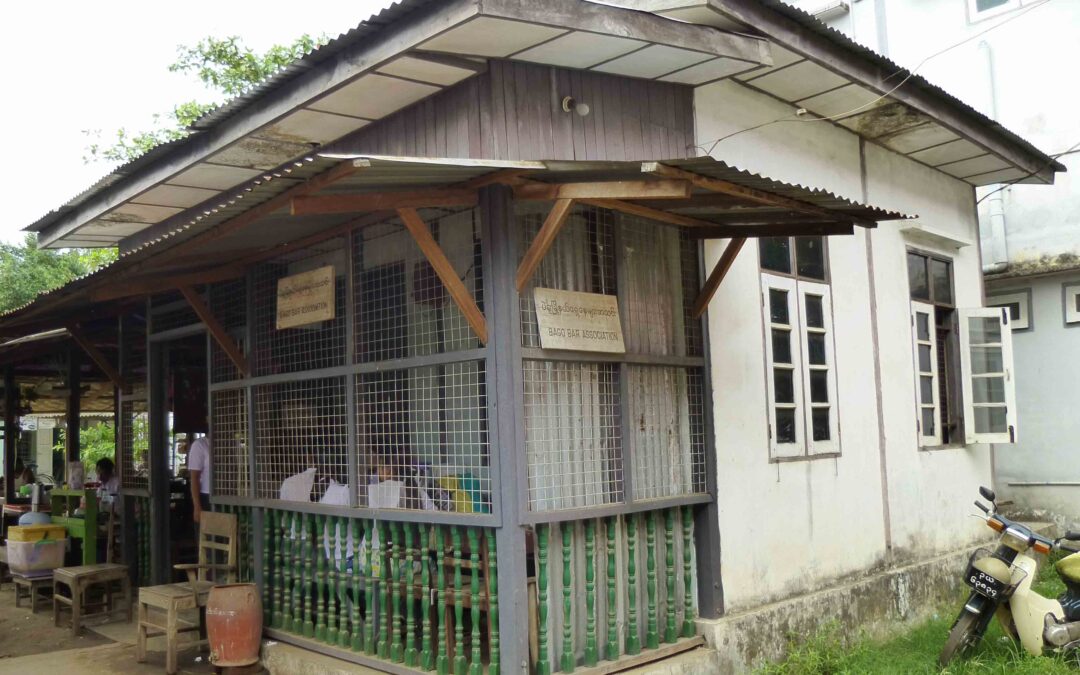
This side event to the 25th Human Rights Council session will take place on Wednesday, 12 March 2014, 16.00 – 18.00 pm, in Geneva, Palais des Nations, Room XXII.
The members of this panel are in a unique position to highlight on-going challenges to the rule of law in Myanmar and their impact on the enjoyment of human rights.
They will provide personal insight into the important international presence for human rights monitoring, practical challenges facing lawyers concerning the rule of law, and link these issues to sustainable economic development on the ground in Myanmar today.
This panel argues that it is crucial to maintain a robust engagement with the UN human rights mechanisms in order to support and facilitate the reform process in Myanmar and improve the country’s human rights situation.
Speakers:
Tomás Ojea Quintana, UN Special Rapporteur on the situation of human rights in Myanmar
Kyaw Min San, Myanmar lawyer, Pyoe Pin and Justice For All
Daniel Aguirre, International Commission of Jurists, Myanmar
Chair/moderator:
Carlos Lopez, International Commission of Jurists
The presentations by panellists will be followed by an open interaction with the audience. Copies of the recent ICJ report Right to Counsel: The Independence of Lawyers in Myanmar will be available.
Myanmar – HRC25 Side event – March 2014

Mar 8, 2014 | News
The ICJ today condemned as a miscarriage of justice, Malaysian opposition leader Anwar Ibrahim’s conviction on sodomy charges.
The ICJ said the overturning of his 2012 High Court acquittal — following an appeal by the Malaysian government — by a Court of Appeal panel contravenes international human rights standards and the rule law.
“The ICJ condemns the use of the colonial-era Article 377B of the Malaysian Penal Code, which prohibits consensual same-sex sexual conduct, in conflict with international standards regarding respect for the right to privacy,” said Sam Zarifi, ICJ’s Regional Director for Asia and the Pacific.
“This article is seldom used in Malaysia, but this is the second time it has been used to convict Anwar, and both times its use seemed clearly motivated to hobble his ability to challenge the government as a politician.”
The sodomy charges against Anwar, which date back to 2008, were dismissed by the High Court on 9 January 2012, but the Court of Appeal today overturned that acquittal and instead sentenced Anwar to five years’ imprisonment. The Court of Appeal ruling took less than two hours.
The ICJ has been observing the proceedings in what has been called Anwar’s ‘Sodomy 2’ trial. ICJ Commissioner Justice Elizabeth Evatt AC, from the Australian High Court and a former member of the United Nations Human Rights Committee, was at the Court of Appeal today on behalf of the ICJ.
“This decision certainly casts doubts on the independence and impartiality of the Malaysian judiciary and tarnishes the reputation of the country’s legal system,” said Zarifi.
The judgement means Anwar will not be able to run for election in a local state seat later this month.
After sentencing, Anwar’s lawyers were successful in arguing for a stay in execution and bail, pending appeal.
CONTACT
Sam Zarifi, ICJ Asia-Pacific Regional Director, (Bangkok), t:+66 807819002, e-mail: sam.zarifi(a)icj.org
Craig Knowles, ICJ Media & Communications, (Bangkok), t:+66 819077653, e-mail: craig.knowles(a)icj.org

Mar 7, 2014 | News
The ICJ expressed concern at the arrest and detention, on 28 February, of lawyer Taisiya Baskayeva, who represents a significant number of victims of human rights violations before the European Court of Human Rights.
Taisiya Baskayeava was arrested on charges of large-scale fraud under article 159.3 of the Russian Criminal Code, based on allegations by investigators that she misappropriated reparations awarded to victims she represented in the case of Salkazanov and others v. Russia before the European Court.
The arrest followed repeated attempts by the investigator to place her in detention in connection with the case.
A previous request to the Court by the investigator for her arrest, on 14 February, had been based partly on the allegation that she was in hiding in the United Arab Emirates and the fact that she had been “put on an international missing list.”
However the Court on that occasion denied the request, saying that it “received no reliable information that Baskayeva T.S. had left the territory of Russia” and that she had sent an urgent telegram from the Moscow region to prove her presence in the territory of Russia.
Taisiya Baskayeva was detained in Moscow region while undergoing a medical check and driven some 1200 km in a car to North Osetia.
At a hearing on 4 March 2014 the Soviet District Court of Vladikavkaz decided to grant the motion to detain the lawyer for two months pending trial. The Court ruled out other less restrictive measures.
The ICJ has received information indicating that the investigation presented no evidence that Taisiya Baskayeva had left Russia, except for an allegation made by the investigator in the motion for her arrest.
The ICJ is unaware of the reasons for declaring the lawyer missing, since her whereabouts were clearly known.
Moreover, the fact that she was detained while undergoing a medical check, of which the investigative authorities were duly informed by the Central City Hospital, contradicts her inclusion on a “international missing list”.
According to the official letter of the Deputy Head Physician at the disposal of the ICJ, the schedule of her visits was also made known to the investigative authorities.
The ICJ is concerned at that the detention may be arbitrary, and may have been ordered for the improper motive of subjecting Taisiya Baskayeva to persecution, harassment or intimidation in regard to her representation of her clients before the European Court of Human Rights.
If so, the Russian Federation would be in breach of obligations in respect of the right to liberty under article 9 of the International Covenant on Civil and Political Rights and article 5 of the European Convention on Human Rights.
The ICJ recalls that for lawyers to be able to fulfill their role and duties effectively, and independently, the State authorities must ensure that they are able to discharge their functions without any intimidation, harassment or improper interference.
According to the UN Basic Principles on the Role of Lawyers, lawyers must not be threatened with prosecution or any other form of sanctions for any action taken in accordance with professional duties or standards and ethics (Principle 16).
Under these principles when lawyers are threatened as a result of discharging their functions, the state authorities must take adequate steps to protect them (Principle 17).
The ICJ is concerned that the detention may constitute a form of a reprisal for an effective representation of the interests of a significant group of victims before the European Court of Human Rights.
Any such reprisal would be incompatible with Russia’s obligations under article 34 of the European Convention for Human Rights guaranteeing an effective exercise of the right to bring lodge applications claiming violations under the ECHR.
Approximately 200 other cases submitted by Ms. Baskayeva are currently pending before the European Court of Human Rights.
The ICJ will continue to monitor the criminal prosecution of lawyer Taisiya Baskayeva.
Contacts:
Róisin Pillay, Director, Europe Programme, t + 32 273 48 46, roisin.pillay(a)icj.org
Temur Shakirov, Legal Adviser, Europe Programme, t + 41 22 979 38 32, temur.shakirov(a)icj.org
Russia-Concerns over Baskayeva-news-web story-2014-rus (full text in pdf)

Mar 7, 2014 | News
The ICJ expressed concern at today’s arrest of Fakhriddin Zokirov, a prominent defence lawyer who had represented the former Minister of Industry, Zaid Sayidov.
The former Minister was recently convicted for a number of crimes including polygamy, receiving a bribe, rape, fraud, illegal confinement and sentenced to 26 years of imprisonment.
The ICJ is concerned at reports that the arrest of the lawyer may be related to his active and robust defence of the former Minister in court.
Lawyer Zokirov was arrested by the State Finance Control and Anti-Corruption Agency on charges of fraud in banking transactions, which allegedly took place several years ago.
Two other lawyers who defended the former Minister, Shukhrat Kudratov and Iskhok Tabarov, announced at a press conference that they had recently faced various threats and intimidation in connection with the case.
The lawyers reported that the pressure on them had significantly increased in relation to a lawsuit which they brought against the head of the State Finance Control and Anti-Corruption Agency, Fattokh Sayidov.
They alleged that the head of the Agency threatened that if they did not drop the case, they would “share the dock” with their client, the former Minister.
“Abusive prosecutions of lawyers and threats against them in connection with their work are contrary to international standards on the independence of lawyers and undermine the integrity of the justice system”, Róisín Pillay, Director of the Europe Programme, said today. “In the exercise of their profession, lawyers must remain free from intimidation, harassment, fear and arbitrary prosecution and arrest. The ICJ calls on the authorities of Tajikistan to ensure that lawyers’ integrity is protected, and that the criminal justice system is not misused to intimidate them.”
Under the UN Basic Principles on the Role of Lawyers, lawyers must not be identified with their clients’ causes, and must be protected against attacks and intimidation, including prosecutions or administrative or other sanctions for action taken in accordance with their recognized professional duties.
Contacts:
Róisin Pillay, Director, Europe Programme, t + 32 273 48 46, roisin.pillay(a)icj.org
Temur Shakirov, Legal Adviser, Europe Programme, t + 41 22 979 38 32, temur.shakirov(a)icj.org
Tajikistan-arrest of lawyer-news-web story-2014-rus (full text in pdf)
Mar 3, 2014 | News
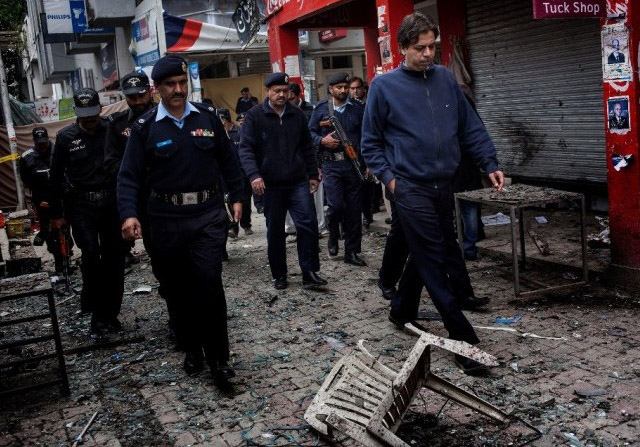
The shooting and bombing at an Islamabad Court today should be condemned as a presumed attack against the judicial officials and the independence of the judiciary in Pakistan, says the ICJ.
The attack resulted in the killing of Additional Sessions Judge Rafaqat Ahmad Khan Awan and at least ten other persons, including several lawyers.
According to reports, armed gunmen forced their way into a court complex in Islamabad, openly firing on judges and lawyers before at least two of the men blew themselves up inside the court complex.
One of the attackers detonated himself outside the door of a judge’s office, while the other targeted the office of the Lawyers’ Union President.
Another gunmen entered Judge Rafaqat Awan’s courtroom, where he shot and killed him.
“An intentional killing of a member of the judiciary can be seen as nothing other than an attack against the independence and impartiality of the judiciary as a whole,” said Sam Zarifi, ICJ Asia Pacific Regional Director.
“In addition to personal tragedy that has befallen the slain victims and their families, this attack and those like it are devastating for the people of Pakistan,” he added. “Courthouses, which should be places where justice is administered, are instead becoming slaughterhouses.”
This is the third armed attack against members of the judiciary in Pakistan in under a year. In March 2013, a judicial compound was attacked in Peshawar, killing four people.
In June 2013, a Sindh High Court judge’s convoy was attacked in Karachi, killing nine people.
As set out in the UN Principles on the Independence of the Judiciary, Pakistan must take steps to protect and ensure the safety of members of the judiciary from threats and violence from any quarter for any reason.
The Beijing Statement of Principles on the Independence of the Judiciary in the LAWASIA region further elaborates that the executive branch must at all times ensure the security and physical protection of judges and their families.
As a State party to the International Covenant on Civil and Political Rights, Pakistan is under a general obligation to ensure the safety of all persons within its territory at all times.
“If judges are under constant fear of violence from insurgent groups, they cannot function as an independent and impartial judiciary – an indispensible requirement for preserving rule of law and democracy,” Zarifi said.
The ICJ calls on the Government of Pakistan to take steps to immediately investigate and bring to justice those persons responsible for the armed attack on the Courthouse.
Contact:
Sam Zarifi, ICJ Asia-Pacific Regional Director, (Bangkok), t:+66(0) 807819002; email: sam.zarifi(a)icj.org
Reema Omer, ICJ Legal Advisor, Pakistan (London), t: +447889565691; email: reema.omer(a)icj.org
Photo credit: MYRA IQBAL