Mar 23, 2019 | News
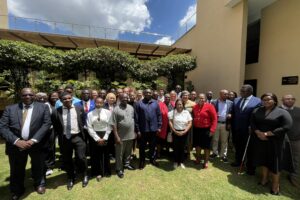
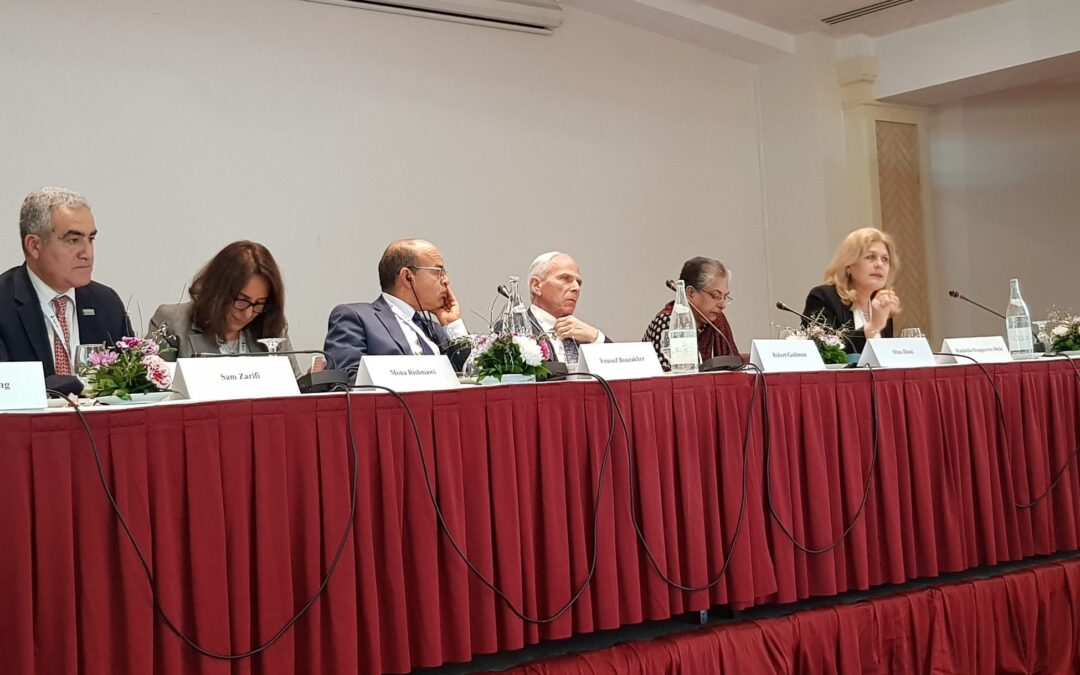
Some 100 distinguished judges and lawyers from around the world commit to expanding the reach of human rights and rule of law principles, in the face of a global backlash against human rights values. The Tunis Congress is the ICJ’s 18th Global Congress since 1952.
The ICJ World Congress, consisting primarily of jurists serving as Commissioners, ICJ National Section and affiliates, and the ICJ Secretariat, is discussing strategy for concerted action and issue a final Declaration reflecting the outcome.
“Since its founding 1952 the ICJ has been steadfast in its belief in the primacy of human rights grounded in rule of law principles as indispensable for well being of all people, as well as for peaceful and just international order,” said Sam Zarifi, ICJ Secretary General.
“Cynical manipulation by authoritarian populists positions the rule of law and human rights as obstacles to the popular will. But as the ICJ’s experience over the past six decades has shown, the rule of law is inextricably bound with the proper functioning of democracy and to the protection and promotion of human rights,” he added.
The ICJ Congress will focus on five key areas of concern: the independence of judges and lawyers and administration of justice; access to justice and accountability for human rights violations; global security and counter-terrorism; equality and non-discrimination; and fundamental freedoms and civil society space.
“The international human rights legal framework has allowed for huge improvements in the lives of people around the world since the Universal Declaration of Human Rights 70 years ago, and the ICJ has played an important role in the development of this legal framework,” Zarifi said.
“But we are now witnessing a resurgence of some of the dangerous, insidious ideas and practices that have led the world to carnage and chaos in the past: the scapegoating of groups such minorities, refugees and migrants; the undermining of multilateral institutions; and the silencing of civil society and those who are giving voice to those who are marginalized on the basis of their gender, religion, ethnicity, physical capacity or sexual orientation,” he added.
“Global powers such as the United States, Russia, and China are actively attacking the rule of law and respect for human rights around the world, while the European Union is distracted by the politics of xenophobia and fearmongering,” he further said.
“It is now crucial for other States, and for people around the world, to show that respect for the rule of law and human rights are universal values and global demands, and the ICJ is proud to pull together the community of jurists from all regions of the world to support these values and demands,” he added.
In the face of these threats and challenges, the Congress will consider means to defend and strengthen the rule of law and legal protection of human rights globally, regionally and in individual countries.
The ICJ is made up of around 60 distinguished judges and legal practitioners from all parts of the world and diverse, works on all five continents and addresses human rights protection in dozens of countries.
Mar 12, 2019 | News
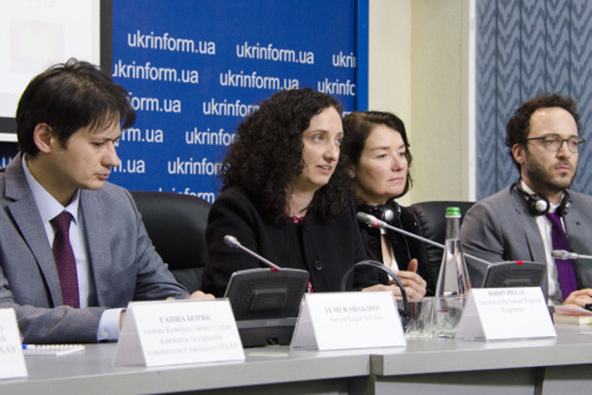
Following its mission to Ukraine on 4-8 March, the ICJ has called on the Ukrainian authorities to take urgent steps to ensure the physical safety of lawyers and to bring to justice those responsible for a series of violent attacks against them.
During its visit, the ICJ delegation heard consistent testimony of attacks on lawyers by private persons, ranging from acts of intimidation to use of firearms against them.
Several lawyers have been attacked physically and verbally by individuals or organized groups, including in court. At least six lawyers have recently been killed in relation to the exercise of their professional duties.
These attacks take place in an environment where legislative reforms directed at governance of the legal profession, which would have grave consequences for freedom of association and the functioning of the bar association and civil society, have been proposed by the Presidential Administration without consultation with lawyers.
Without urgent and significant efforts to prevent attacks and combat impunity, the independence of the legal profession, and the ability of lawyers to protect human rights, will be increasingly jeopardized, the ICJ concluded at the end of its mission to the country.
It is of concern that violent attacks against lawyers, many of which have been credibly attributed to extreme right-wing groups, often result in impunity of the perpetrators, despite evidence and despite specific provisions in the criminal law which protect lawyers against attacks.
The ICJ heard that the law enforcement bodies often fail to investigate these cases in a prompt and impartial manner even where the identity of perpetrators is known.
The ICJ stresses that these attacks on lawyers, which are often related to the defence of clients in politically sensitive criminal cases, undermine the ability of lawyers to exercise their duties and protect the human rights of their clients, free from intimidation, hindrance, harassment or improper interference.
Furthermore, the ICJ recalls that under international human rights law, the State must take steps to protect the security of persons who the authorities know or ought to know are under threat, and they must ensure an independent, prompt, and thorough investigation of any attacks on the life or physical integrity of individuals.
In this regard, the ICJ stresses that a well-functioning, independent legal profession is essential to any justice system that upholds the rule of law. International standards recognize the importance of lawyers in protecting human rights and the contribution they make to maintaining the rule of law and the fair administration of justice.
The UN Basic Principles on the Role of Lawyers emphasize the importance of the independence of bar associations in ensuring the fair and effective administration of justice. Such associations must be institutionally independent, both in law and in practice, from all external actors, including the government, other executive agencies, parliaments and outside private interests.
In light of these standards, the ICJ is concerned about the process of adoption of draft law No 9055 “On the Bar Association and Lawyers’ Activity”, which was drafted without the necessary level of consultation and participation of a main stakeholder, the National Bar Association of Ukraine, which strongly opposes it.
It is unacceptable that in this context the draft law had been submitted to the Parliament through an urgent procedure, the need for which appears to be dubious, the ICJ says.
If adopted without the necessary consultation and endorsement by the Bar Association, this law may pose a threat to the independence of the legal profession in Ukraine and the capacity of civil society, including human rights defenders, to carry out their critical work, the Geneva-based organization adds.
The ICJ is particularly concerned that according to the draft law, lawyers would not be able to be employed by NGOs while being members of the Bar Association.
While international practice may differ, in the context of Ukraine specifically, this may undermine the ability of human rights NGOs to provide qualified legal representation or assistance to those whose human rights have been violated.
The ICJ further noted consistent allegations of corruption and lack of integrity of lawyers including in the context of legal aid system.
It also appears that the examination process for qualification as a lawyer, especially in some regions, is not free from corruption. Until now, the Bar Association has not been able to effectively resolve this problem which must be addressed as a matter of urgency.
The mission to Ukraine included members of the ICJ Secretariat as well as representatives of the Amsterdam and Geneva Bar Associations. It met with leading human rights NGOs, IGOs, the members of the Ukrainian National Bar Association as well as representatives of the Ministry of Justice of Ukraine.
The ICJ wishes to thank all those whom its representatives met in Kyiv. A final report based on the key findings of the mission will be published later this year.
Mar 12, 2019 | Advocacy, Non-legal submissions
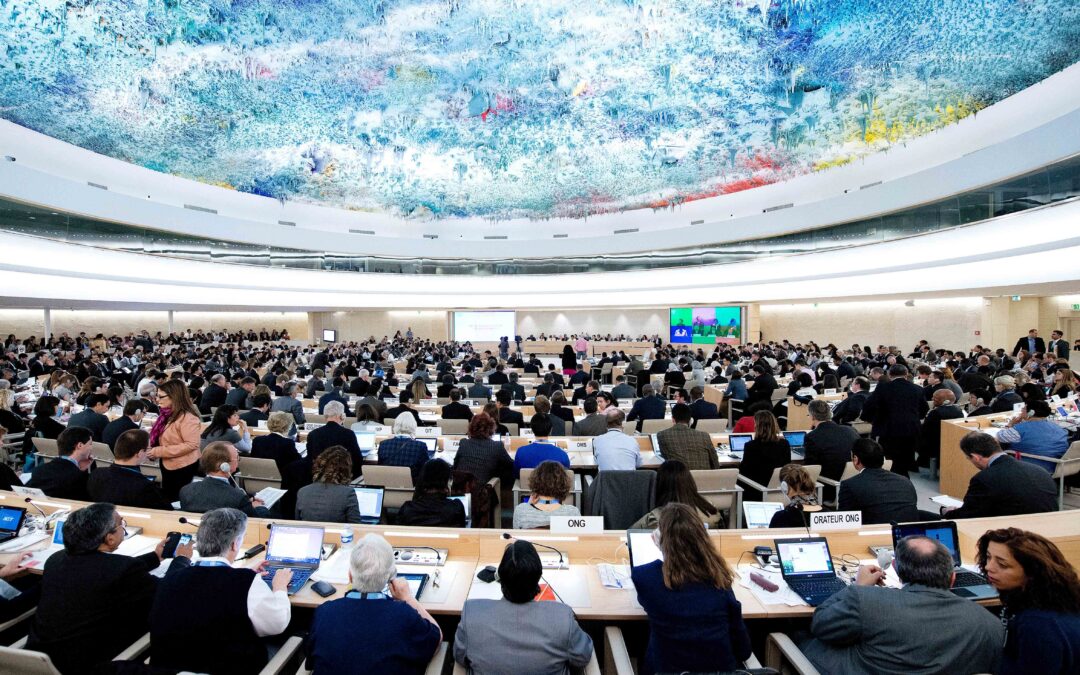
The ICJ today highlighted threats to the rule of law in Turkey, Poland, Hungary and Azerbaijan, and the need to address corporate complicity in South Sudan, at the UN Human Rights Council in Geneva.The statement, delivered during general debate, read as follows:
“The situation remains grave for the rule of law and legal protection of human rights in Turkey and Poland.
In Turkey, constitutional reforms in 2017 that undermined the independence of the judiciary should be abolished. Civil society members are prosecuted under overbroad and vague terrorism offences.
In Poland, the Legislature is trying arbitrarily to remove one third of the Supreme Court, a measure that is on hold only temporarily. Unjustified disciplinary proceedings are also being pursued against Polish judges for having sought a ruling of the Court of Justice of the EU.
Elsewhere, in Hungary civil society is ostracized and subject to legislation that risks criminalizing their legitimate activities. In Azerbaijan, as one example of a broader pattern of interference with lawyers and other human rights defenders, lawyer Elchin Sadigov was reprimanded for advising in a confidential manner to his client in detention to complain about torture to which he allegedly had been subjected.
The ICJ is also concerned at the findings by the Commission on Human Rights in South Sudan (A/HRC/40/69, A/HRC/40/CRP.1) that point to the oil industry as a “major driver” in the continuation of the armed conflict and resulting human rights violations. Potential corporate complicity with crimes under international law demand investigation and a strong monitoring mechanism for the use of oil revenues should be established.”
Mar 4, 2019 | News
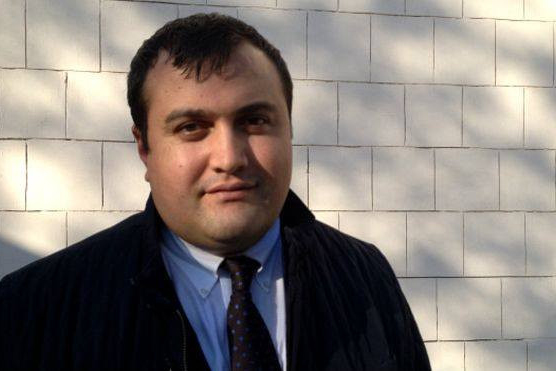
Today, the ICJ expressed concern at the disciplinary proceedings against lawyer Elchin Sadigov who was sanctioned with a reprimand on 25 February 2019 by the Presidium of the Bar Association of Azerbaijan.
The ICJ called on the Bar Association to reverse this sanction and take measures to end interference with the independent exercise of the representation of victims of human rights violations.
The decision to hold the lawyer accountable for actions taken in accordance with professional ethics and responsibilities jeopardizes the independence of lawyers and their capacity to protect human rights, and is likely to have a chilling effect on the independent exercise of lawyers’ duties in Azerbaijan, the ICJ said.
Elchin Sadigov represented Yunis Safarov, who was charged with the attempted murder of Elmar Valiyev, former mayor of Ganja City in Azerbaijan. According to Sadigov, he informed his client in a confidential conversation in detention, of the right to complain about torture or ill treatment.
Shortly afterwards, he was told that he had violated the law by persuading his client to complain about the ill-treatment which, the Prosecutor General’s Office officials “decided” in an official document, never took place.
On 5 September 2018, the Prosecutor General’s Office removed Elchin Sadigov as Safarov’s representative and complained to the Bar Association, seeking disciplinary action against the lawyer, among others, on the basis of “[…] creating false grounds to file a complaint to the European Court of Human Rights […], clearly knowing that it is not true, proposed his client to complain about torture inflicted by the police and investigative authorities, despite the fact that the accused told him that he had not been tortured, Sadigov continued psychological influence on his client again – as if he had been tortured – to refuse giving testimony, to refuse services of the State appointed lawyer […]”.
The complaint referred to the confidential conversation between the lawyer and his client, which was apparently overheard and possibly recorded by law enforcement officials. It also refers to a letter which appeared during the disciplinary proceedings, in which Sadigov’s client complained that his lawyer had tried to convince him to complain about use of torture in custody.
According to Elchin Sadigov, however, this letter may have been signed by his former client under pressure from the detention authorities.
The ICJ recalls that according to the UN Basic Principles on the Role of Lawyers, it is indispensable that lawyers “always loyally respect the interests of their clients.”
The Principles specify that they assist their clients “in every appropriate way, and taking legal action to protect their interests”. In the present case, as submitted by Elchin Sadigov and evident from the publicly available materials including photos and videos of Safarov with clear and multiple signs of severe beatings, the lawyer had every reason to believe that his client had been subjected to torture and ill treatment in custody.
Therefore, he had not only the right, but an affirmative professional duty to advise his client to use available remedies for this violation of human rights through procedural means such as a complaint. A failure to do this would be a breach of professional ethics and duties on the part of the lawyer as a trusted representative of his client. The ICJ is concerned that in this case a lawyer was held accountable for attempting to discuss with his client, in a confidential manner, issues related to the human rights of his client.
The ICJ is furthermore concerned that the principle of lawyer-client confidentiality has been violated in this case.
This principle is a fundamental component of the right to a fair trial, as protected under the International Covenant on Civil and Political Rights and the European Convention of Human Rights, to both of which Azerbaijan is a party.
According to the UN Basic Principles on the role of lawyers “[a]ll arrested, detained or imprisoned persons shall be provided with adequate opportunities, time and facilities to be visited by and to communicate and consult with a lawyer, without delay, interception or censorship and in full confidentiality…”
The ICJ is also concerned that lawyer Sadigov’s conversations may have been monitored in violation of the guarantees of professional secrecy with his client and contrary to international law and national procedure.
The ICJ considers it essential that the Bar Association send a strong signal in support of independent lawyers by lifting the sanction against lawyer Sadigov and consider legislative and practical improvements to ensure that confidentially of lawyers and their clients in detention is effectively guaranteed in practice.
Azerbaijan-Statement Sadigov-News-web stories (full story with additional information, in PDF)
Feb 6, 2019 | News
The ICJ today expressed its grave concern over amendments to Egypt’s 2014 Constitution proposed by the House of Representatives yesterday, which could increase President el-Sisi’s control over the judiciary, extend his rule for 15 more years, expand the jurisdiction of military courts’ to prosecute civilians and broaden the military’s powers.
The amendments were proposed by one-fifth of the House of Representatives on 4 February, and reported to Parliament by its General Committee yesterday.
“The proposed amendments are a flagrant assault on the independence of the judiciary, and would expand the powers of presidency and further facilitate el-Sisi’s subordination of judicial and prosecutorial authorities,” said Said Benarbia, ICJ’s MENA Programme Director.
The amendments would grant the President authority to choose the Supreme Constitutional Court’s (SCC) President and its new members, chairs of all other judicial authorities, and the Public Prosecutor.
The President would also have authority to select the Chair and members of the Commissioners Authority, a judicial board that provides advisory opinions to judges on legal issues in cases pending before the SCC.
The General Committee’s report states the amendments are to “unify the mechanism of appointment” of these institutions.
The amendments would also establish a “High Council for Joint Judicial Affairs” chaired by the President to manage all common matters relating to the judiciary.
The amendment to Article 140 of the Constitution would extend presidential terms from four to six years.
Another “needed transitional article” would reportedly also permit President el-Sisi to run for re-election for another two terms, which, combined, could permit him to stay in office until 2034.
Article 140 of the Constitution currently imposes a two-term limit, and Article 226 prohibits amendments to “texts pertaining to the re-election of the president of the Republic…unless the amendment brings more guarantees.”
“This is an attempt to undermine constitutional safeguards aimed at protecting the right of the Egyptian people to freely choose their government and to take part in the conduct of public affairs,” said Benarbia.
“In accepting these amendments, the Parliament would abdicate its responsibility to uphold the Constitution and the rule of law,” he added.
Further amendments include the “redrafting and deepening the role of the Armed Forces” by expanding its mandate to include broad terms such as “safeguarding the constitution and democracy” and “preserving the basic elements of the state and its civilian character.”
The jurisdiction of military tribunals over civilians for “direct assault[s]” against military facilities, objects and personnel would also be expanded by the removing the requirement that the assaults be “direct.”
The amendment would make permanent a temporary constitutional provision requiring the Supreme Council of the Armed Forces—a military body—to approve the appointment of the Minister of Defense.
“The amendments effectively place the military above the law and the Constitution,” said Said Benarbia.
“They pave the way for the further entrenchment of the military in civilian affairs, which has already led to significant violations of civilian rights to participate in political life and express opinions critical of the regime,” he added.
Under international law, the jurisdiction of military courts must be limited to holding military personnel accountable for alleged violations of military discipline. No civilian should be prosecuted before military courts.
The amendments, which are still subject to parliamentary discussion and drafting by parliamentary committee, must eventually be approved in a two-thirds vote, and then by a majority in a referendum.
The ICJ expressed its concerns about the process for adoption of the 2014 Constitution, and its capacity to serve as a basis for the establishment of the rule of law in Egypt.
The ICJ made recommendations aimed at facilitating public participation in the legislative process in accordance with international standards and at ensuring constitutional provisions were consistent with international human rights law.
These concerns remain valid today.
Contact:
Said Benarbia, Director of the ICJ Middle East and North Africa Programme, t: +41-22-979-3817; e: said.benarbia(a)icj.org
Egypt-Constitution Statement-News-2019-ENG (full story with background infomation, in PDF)
Egypt-Constitution Statement-News-2019-ARA (full story in Arabic, in PDF)