Jun 9, 2016 | Agendas, News
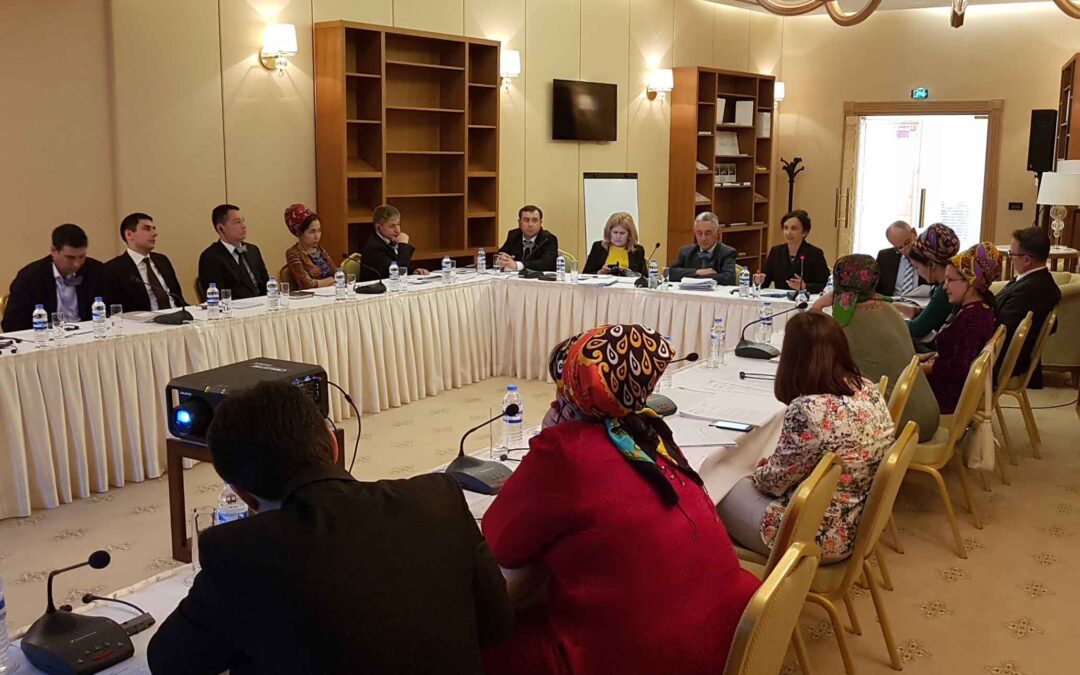
The ICJ today conducts a training seminar organized in Ashgabat on international human rights obligations and national courts.
The seminar will be attended by judges of the Supreme Court, representatives of the Prosecutor General’s office, the Ministry of Justice, lawyers as well as representatives of other institutions.
ICJ commissioners and staff members will participate event, including Justice Azhar Cachalia, Justice Radmila Dicic, Professor Andrew Clapham.
The seminar is organised in cooperation with the EU.
Contact
Róisín Pillay, Director, Europe Programme, roisin.pillay(a)icj.org
Temur Shakirov, Legal Adviser, Europe Programme, temur.shakirov(a)icj.org
May 31, 2016 | News
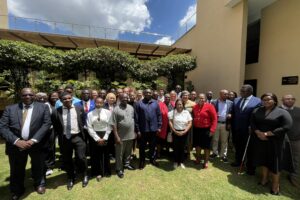
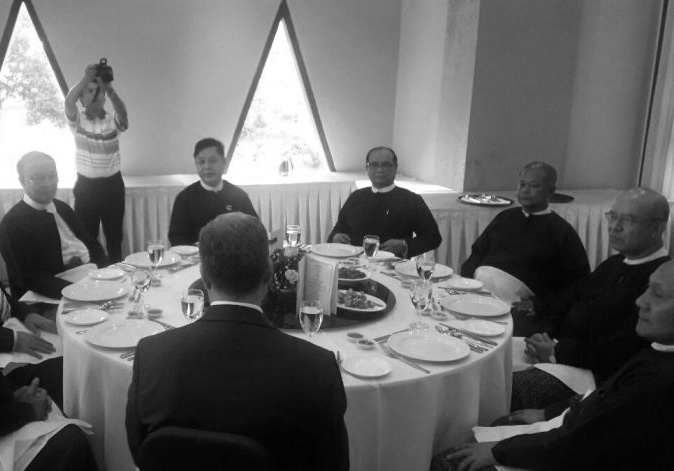
Myanmar’s Supreme Court engages in 2nd High Level Dialogue with the ICJ on Drafting and Implementing a New Judicial Code of Ethics and Accountability.
The ICJ, the United Nations Development Program and the Office of the Supreme Court of the Union (OSCU) held a High Level Dialogue on “Implementing a Code of Judicial Ethics” in Nay Pyi Taw on 30-31 May 2016.
This dialogue followed a commitment by the OSCU to draft a code and to ensure it is informed by and implemented in accordance with international best practice. The OSCU’s Judicial Ethics Review Committee, Supreme Court and High Court Judges and other senior court administrators participated in the dialogue.
Building on the previous dialogue’s focus on the contents of a code of ethics, the participants and their international counterparts from the ICJ and UNDP discussed international standards for accountability and implementation mechanisms to accompany a code of ethics.
In opening the dialogue, the Honourable Supreme Court Justice of the Union, U Mya Thien explained that the new code reflected international standards and would enhance public trust and promote accountability in the Judiciary.
In his opening remarks, ICJ Commissioner and Justice of the Supreme Court of South Africa, Azhar Cachalia, explained the importance of the code as a basis for legitimacy and independence.
He stressed that the judiciary must become accountable to the public.
“Myanmar has an historic opportunity to make decisions that will shape the judiciary for generations to come,” he said.
During the dialogue, the UNDP’s Elodie Beth outlined research on regional judicial accountability and its lessons for Myanmar.
Sam Zarifi, the ICJ’s Regional Director shared experience and international standards on implementing a code of ethics Zarifi explained that “in order for it to be effective, the Supreme Court must establish mechanisms and institutions to hold judges accountable to the code of ethics.”
All participants agreed that implementing a proper code of ethics would strengthen the accountability and independence of Myanmar’s judiciary.
Both the UNDP and the ICJ congratulated the OSCU for following its Strategic Plan for 2015-2018 and engaging in a dialogue designed to further this process.
Both expressed willingness to continue working with Myanmar’s judiciary on the issues of judicial independence, the rule of law and human rights.
May 12, 2016 | News
The ICJ is concerned at the reported resignations of federal judges in the Chechen Republic of the Russian Federation following apparent pressure by the acting Head of the Republic Ramzan Kadyrov who had suggested that resignation would be the “most correct decision of their lives”.
The ICJ considers these statements, which appear to have led directly to the resignations of federal judges, to be inappropriate interference with the functioning and independence of the judiciary.
The ICJ calls on the Russian Federation judicial authorities to take all measures within their power to ensure that all judges’ security of tenure is preserved and that any allegations of misconduct are addressed through appropriate disciplinary proceedings that respect the right to a fair hearing.
The ICJ further calls on the executive authorities to refrain from any comments which may undermine the independence of the judiciary.
On 5 May, Ramzan Kadyrov, currently acting Head of the Chechen Republic, recommended that several named judges should step down.
In his post on social media, Kadyrov identified as problems unfair decisions of courts, procrastination in criminal cases, decisions regarding housing and inconsistent decisions.
He mentioned that although examples of such decisions were sporadic, they did not help build trust in the judiciary.
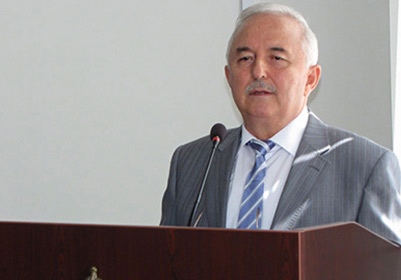
He then recommended that the President of the Supreme Court of the Chechen Republic, Magomed Karatayev (photo) and three other judges, Takhir Murdalov, Sulyan Yandarov and Zayndi Khusainov, should resign “if they had a notion of honour and professional ethics”.
It was reported that two judges of the Urus-Martan City Court and Grozny District Court, Sulyan Yandarov and Zayndi Khusainov, submitted their resignations on the same day.
The President of the Supreme Court of Chechnya, Magomed Karatayev, and his deputy Takhir Murdalov, are reported to have already filed a request for resignation.
The resignations, apparently in direct response to criticism by the executive, undermine the separation of powers and the independence of the judiciary in the Russian Federation.
Under international law, including the right to a fair trial protected, inter alia, by Article 6 of the European Convention on Human Rights and Article 14 of the International Covenant on Civil and Political Rights, the independence of the judiciary must be guaranteed.
The UN Basic Principles on Independence of the Judiciary enshrines “the duty of all governmental and other institutions to respect and observe the independence of the judiciary” and provides the judiciary shall not be subject to “any restrictions, improper influences…pressures, threats or interferences, direct or indirect from any quarter or for any reason.”
While judges have an obligation to adhere to judicial ethics and should be held accountable for professional misconduct, the representatives of the executive must refrain from statements which jeopardize the independence of the judiciary.
The Council of Europe’s Recommendation on judges specifies that “the executive and legislative powers should avoid criticism that would undermine the independence of or public confidence in the judiciary.”
Public pressure from the executive on judges to resign can nullify the security of tenure of judges protected under national and international law and standards.
According to Principle 12 of the Basic Principles on the Independence of the Judiciary, “[j]udges, whether appointed or elected, shall have guaranteed tenure until a mandatory retirement age or the expiry of their term of office, where such exists.”
Under international standards, allegations of misconduct against judges should be dealt with by the self-governing institutions of the judiciary, through fair disciplinary procedures.
Under the Basic Principles, the only basis for removal of judges is “incapacity or behaviour that renders them unfit to discharge their duties.
The comments by Ramzan Kadyrov also run contrary to the legislation of the Russian Federation, which spells out in detail the procedure for disciplinary measures against judges in case of alleged professional misconduct.
RUSSIA-Chechen judges statement-News-web story-2016-RUS (full text in Russian, PDF)
May 10, 2016 | News
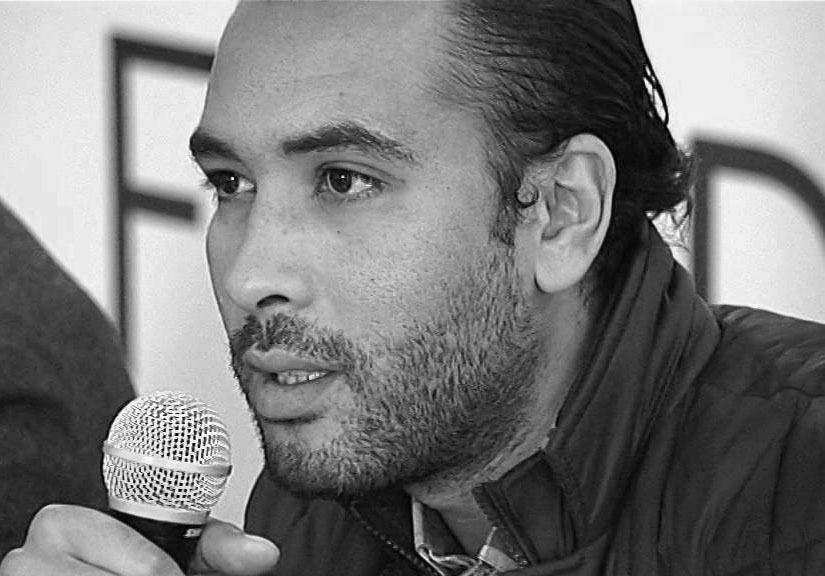
The ICJ today called on the Egyptian authorities to immediately release human rights lawyer Malek Adly and to drop all charges against him. He was arrested on Thursday 5 May 2016, pursuant to an arrest warrant.
Malek Adly has been charged with a number of offences, including “attempting to overthrow the regime,” “spreading false rumors,” and “using force against a public servant.”
The Prosecuting authorities have not provided information on specific behaviour that would constitute criminal conduct.
The ICJ is concerned that the charges may be in retaliation for Malek Adly’s work as a lawyer and human rights defender, and are aimed to chill him and others from engaging in work perceived as threatening to or disfavoured by Egyptian authorities.
They came at the backdrop of his work as a human rights lawyer, his critical views on the rule of law situation in Egypt, and his legitimate and peaceful exercise of freedom of expression and assembly in opposing transferring the sovereignty of Tiran and Sanafir islands from Egypt to Saudi Arabia, the ICJ says.
“Malek Adly’s arrest, detention and prosecution for carrying out his work as a lawyer and human rights defender and for peacefully expressing his views is yet another attempt by the Egyptian regime to muzzle lawyers, the last line of defence for victims of human rights violations in Egypt,” said Said Benarbia, Director of the ICJ Middle East and North Africa Programme.
“The regime’s crackdown on fundamental rights and freedoms has been worryingly extended to the very lawyers whose role is to challenge and protect against such crackdown,” he added.
Over the last three years, the ICJ has documented numerous cases of lawyers who have been subjected to human rights violations and reprisals in relation to the representation of their clients.
These include the cases lawyers Imam Afifi and Karim Hamdi who were allegedly subjected to torture and subsequently died while in police custody.
International standards aiming to safeguard the role of lawyers provide that States have a duty to ensure that lawyers are able to perform their functions “without intimidation, hindrance, harassment or improper interference” and that lawyers must not be subject to prosecution or other sanction for carrying out their professional responsibilities, the Geneva-based organization reminds.
International standards on human rights defenders require States protect human rights defenders from attacks, threats, retaliation and arbitrary action.
The Egypt 2014 Constitution guarantees the “independence of the lawyer’s profession and the protection of its interests as a guarantee to protecting the right to defence”. In addition, it prohibits the arrest of a lawyer while he or she is exercising the right to defence, except in flagrante delicto crimes.
“The Egyptian authorities must live up to their obligations under the Constitution and international law and put an immediate end to their attacks against lawyers,” concluded Benarbia.
Contact
Nader Diab, Associate Legal Adviser of the ICJ Middle East and North Africa Programme, t: +216 51727023; e: nader.diab(a)icj.org
Egypt-HR Lawyer MalekAdly-News-Press Releases-2016-ARA (full text in Arabic, PDF)
May 10, 2016 | News
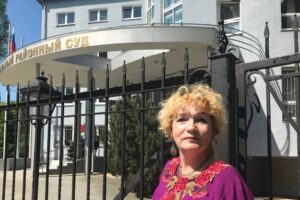
The ICJ today expressed concern at the disbarment proceedings against lawyer Muzaffar Bakhishov that are taking place before the Narimanov district court.
The ICJ calls for the disbarment proceedings to respect international standards on the role of lawyers and to ensure that no sanction is imposed contrary to the right to freedom of expression, as guaranteed under international law.
The ICJ understands that the proceedings against Mr Bakhishov, following a recommendation for disbarment by the Plenum of the Bar Association, are related to critical statements he made in a media interview with the news website moderator.az on the functioning of the Azeri judiciary with regard to judicial review of detention.
In the interview, he criticized the arrests of large number of persons by officers of the Ministry of National Security and the tendency of judges to approve orders of detention without proper scrutiny. He further raised concerns about lack of accountability of judges for failure to protect against arbitrary detention.
Under international law and standards, lawyers, like other individuals, enjoy the right to freedom of expression, including in regard to their professional role. Protection of lawyers’ right to freedom of expression is not only important to the individuals in question. It also serves to safeguard the important public function played by lawyers in a democratic society to comment on matters related to the rule of law and the administration of justice. Lawyers must be able to carry out these and their other professional functions without interference or intimidation.
The right to freedom of expression is protected in international human rights law, including by article 19 of the International Covenant on Civil and Political Rights (ICCPR) and article 10 of the European Convention on Human Rights (ECHR). Azerbaijan is party to both of these treaties.
The UN Basic Principles on the Role of Lawyers specify that lawyers “…shall have the right to take part in public discussion of matters concerning the law, the administration of justice and the promotion and protection of human rights …” The European Court of Human Rights has emphasized that lawyers are entitled to comment in public on the administration of justice, provided that their criticism does not overstep certain bounds, based on principles of dignity, honour, integrity, and respect for the fair administration of justice.
The ICJ considers that disciplinary proceedings against lawyers, solely for expressing criticism of the conduct or functioning of the judiciary, whether in the course of court hearings or elsewhere, constitute an unjustified interference with freedom of expression. As the European Court of Human Rights has noted in Maurice v. France, this is particularly the case where the allegations have been presented in good faith and are substantiated by evidence.
Azerbaijan-BakhishovDisbarment-Statement-2016-AZE (download statement in Azeri)
Contact:
Massimo Frigo, Legal Adviser of the ICJ Europe Programme, t: +41 22 9793805, e-mail: massimo.frigo(a)icj.org