Sep 22, 2020 | Advocacy, News
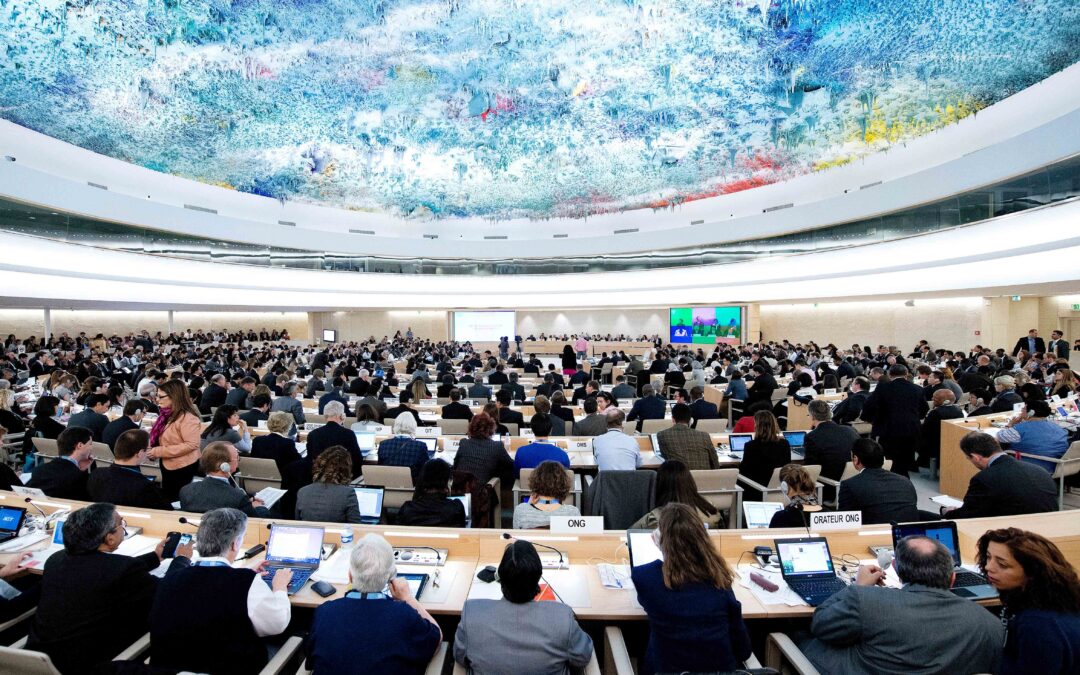
States should help pave the way towards credible accountability and redress for the people of Yemen by renewing and strengthening international investigations into war crimes, other serious violations of international humanitarian law, and grave human rights abuses during this 45th Session of the HRC, the ICJ and 23 other organizations said today.
Yemen is suffering from an “acute accountability gap,” according to the UN Group of Eminent Experts (GEE) on Yemen, which released its third report on September 9, 2020.
With COVID-19 threatening the lives and livelihoods of millions across Yemen, peace talks floundering, and airstrikes, shelling and attacks impacting civilians once again increasing, the reality for millions of Yemeni civilians is growing ever more bleak.
This session, the Human Rights Council has the opportunity to pave the way towards credible accountability and redress for victims and survivors in Yemen.
People in Yemen have experienced grave abuses since the conflict began in 2014, when Ansar Allah (the Houthi armed group) and military units loyal to former president Ali Abdullah Saleh took control of the capital, Sana’a, and escalated in 2015 when the Saudi/UAE-led coalition militarily intervened on the side of the Yemeni government.
With the conflict in its sixth year, millions of Yemenis are without adequate food, water, shelter or healthcare. The parties to the conflict impede the flow of life-saving goods into and around the country, attack critical infrastructure, and misdirect goods and their revenues to their own coffers and loyalists.
Thousands of civilians have been killed, wounded and otherwise harmed by airstrikes that violate international humanitarian law, indiscriminate shelling and the use of banned anti-personnel landmines.
The societal fabric has torn, with expression, speech, peaceful protest and movement increasingly restricted, and political and other identity-based divisions weaponized by those in power.
The human rights and humanitarian catastrophe in Yemen is man-made, and was avoidable. The parties to the conflict continue to hold the vast majority of power in and over Yemen.
For Yemen’s trajectory to change, the behavior of the parties to the conflict and their backers needs to change. As of September 2020, perpetrators have gone unpunished, states responsible for violations have faced no real consequences, parties have rarely acknowledged fault or taken measures to protect civilians, suppliers keep the arms used for international humanitarian law violations, and victims have been denied justice and redress.
In 2017, the Council established the GEE to report on violations of international law in Yemen and, where possible, to identify those responsible. The Council renewed the GEE’s mandate in 2018 and 2019, despite opposition from the Saudi/UAE-led coalition.
In its third report, the UN experts found the international community “can and should” do more to “help bridge the acute accountability gap” in Yemen.
The experts provided a list of specific recommendations, including for the Security Council to refer the situation in Yemen to the International Criminal Court and to expand the list of persons subject to Security Council sanctions.
The GEE supported the establishment of an investigative body, similar to the International, Impartial and Independent Mechanism for Syria, and specifically called on the Council to ensure the situation of human rights in Yemen remains on its agenda, including by ensuring adequate resources are provided to the GEE for the collection, preservation and analysis of information related to violations and crimes.
In the longer term, the Group encouraged “further dialogue about the creation of a special tribunal such as a ‘hybrid tribunal’ to prosecute cases of those most responsible,” reiterated the importance of victims’ right to a remedy, including reparations, and called for human rights to be “at the heart of any future peace negotiations,” including that “no steps are taken that would undermine respect for human rights and accountability, such as granting blanket amnesties.” 2
The GEE also reiterated concerns that states supplying arms to parties to the conflict, including to Saudi Arabia and the UAE, may be violating their obligations under the Arms Trade Treaty, and that this support may amount to aiding and assisting internationally wrongful acts.
Today, 24 Yemeni, regional, and international civil society organizations, including the ICJ, came together to call on the Council to endorse the GEE’s report, including its findings on accountability, and to take concrete steps this Council session to pave the way towards credible justice for Yemen.
The 24 organizations are calling on the Council to renew and strengthen the GEE’s mandate this September, including to collect, consolidate, preserve and analyze evidence related to, and clarify responsibility for, the most serious crimes under international law and violations of international law committed in Yemen since 2014.
The organizations are also calling on the Council to task the GEE with issuing a special report advising states on practical steps they can take to help ensure justice and redress for the tens of thousands of Yemeni civilians unlawfully harmed by the warring parties throughout this conflict.
Sep 17, 2020 | Advocacy, Non-legal submissions
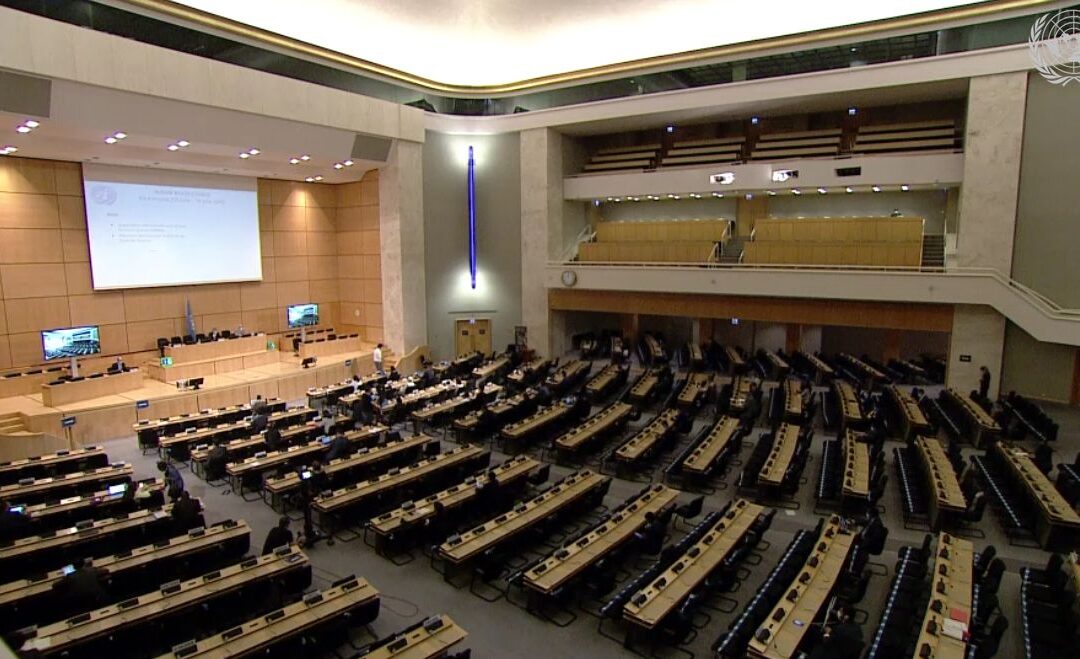
At the Human Rights Council, the ICJ highlighted deepening impunity for gross human rights violations in Sri Lanka, and the need for a UN investigative mechanism.
The oral statement was made in the interactive dialogue with the UN Special Rapporteur on the promotion of truth, justice, reparation and guarantees of non-recurrence, at which the current Rapporteur presented the report of his predecessor, Pablo de Greiff, on a visit to Sri Lanka in 2017.
The statement read as follows:
“The ICJ welcomes this opportunity to discuss the report of your predecessor’s 2017 visit to Sri Lanka.
We share the report’s assessment that “none of the constituent elements of a transitional justice policy are fully in place.” Indeed, the situation has only further deteriorated since 2017, further entrenching the denial of justice to victims.
Sri Lankan courts remain unable and unwilling to address the impunity of security forces for crimes under international law. We echo the report’s observation ‘in its current state, the criminal justice system in Sri Lanka is inadequate and flawed’.
This will only worsen if the proposed 20th Amendment to the Constitution is passed. The President, himself credibly accused of war crimes and crimes against humanity during his tenure as Defence Secretary from 2005-2015, would have unilateral power to appoint the judges of the superior courts, the Judicial Service Commission, Attorney General and the Inspector General of Police. This would further undermine any independence and impartiality in the already institutionally weakened judiciary.
Given the abject failure of Sri Lanka to implement a credible accountability mechanism, and its ongoing betrayal of the rule of law, the ICJ calls on the Council to establish an international accountability mechanism, and we urge you Mr Special Rapporteur to closely monitor and analyze the country situation in coordination with other mandate holders.
Thank you”
Sep 15, 2020 | Advocacy, Non-legal submissions
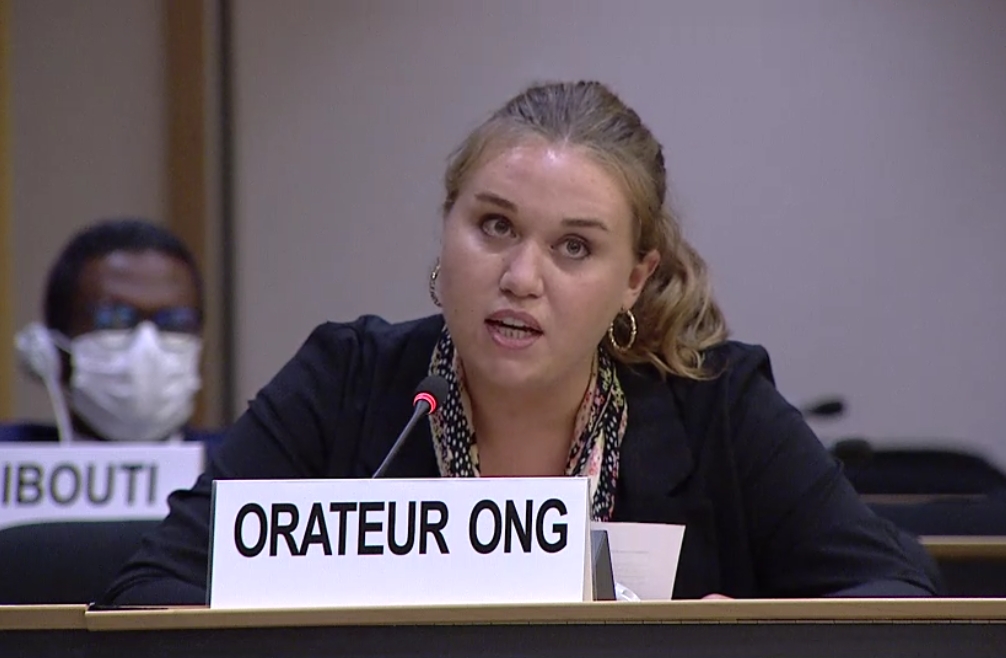
At the UN Human Rights Council in Geneva, the ICJ has urged States to ensure human rights and avoid discriminatory impacts, and for businesses to respect their human rights responsibilities, in responding to the COVID-19 pandemic.
The oral statement, delivered in a general debate on the update of the High Commissioner for Human Rights, read as follows:
“In our latest report, Living Like People Who Die Slowly: The Need for Right to Health Compliant COVID-19 Responses,[1] the International Commission of Jurists (ICJ) calls on States to ensure that their individual and collective responses to the COVID-19 pandemic comply with international human rights law, including the right to health.
Any abuse of pandemic measures to repress human rights defenders, dissenting voices, or civil society more generally, is unacceptable. Respect for freedom of expression, including the right to information, is essential to effectively addressing the pandemic.
The particularly acute impact of COVID-19 on already-marginalized people heightens the importance of equal access to health facilities, goods and services. The report documents disproportionate impacts on non-citizens, older persons, women and girls, LGBT persons, persons deprived of their liberty, persons with disabilities, sex workers and healthcare workers.
Businesses, and particularly private actors in the healthcare sector must meet their responsibility to respect human rights. This will be crucial in the development, production and distribution of any COVID-19 vaccine.
Madame President, the ICJ emphasizes the continuing importance and applicability of the 1984 Siracusa Principles on the Limitation and Derogation Provisions in the International Covenant on Civil and Political Rights,[2] and the recognition in the WHO International Health Regulations that implementing measures must be fully consistent with human rights.”
[1] https://www.icj.org/icj-new-global-report-shows-that-the-right-to-health-must-be-central-to-state-responses-to-covid-19/ (1 September 2020).
[2] https://www.icj.org/siracusa-principles-on-the-limitation-and-derogation-provisions-in-the-international-covenant-on-civil-and-political-rights/ and UN Doc E/CN.4/1985/4, Annex.
The full range of materials produced by the ICJ concerning the COVID-19 pandemic can be accessed at: https://www.icj.org/human-rights-in-the-time-of-covid-19-front-and-centre/
Sep 14, 2020 | Advocacy, Non-legal submissions
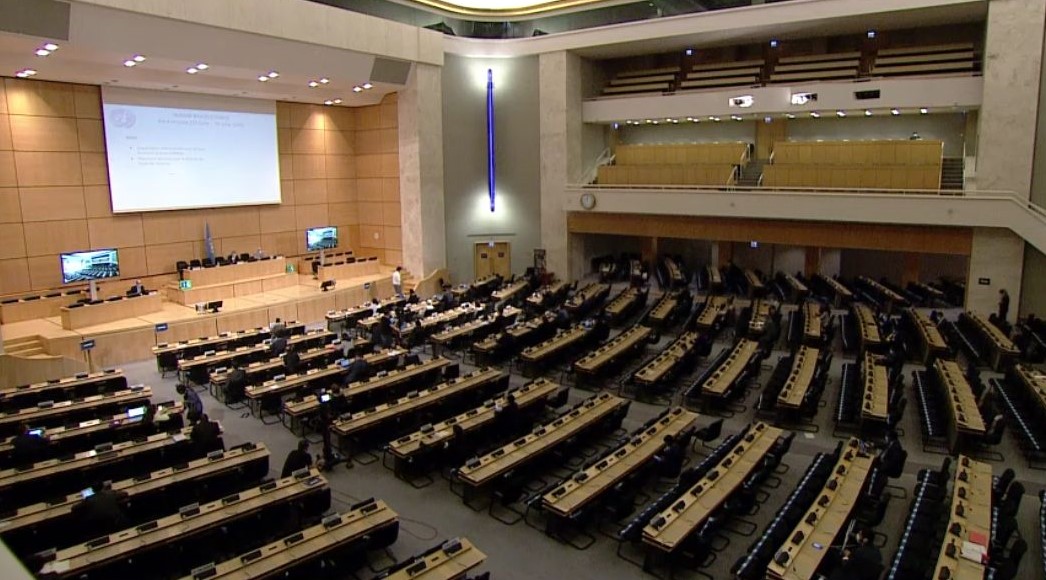
In a statement to the UN Human Rights Council in Geneva, the ICJ has welcomed the report of the Independent Investigative Mechanism for Myanmar (IIMM)
The oral statement was delivered in an interactive dialogue with the IIMM, and read as follows:
“The ICJ salutes the Mechanism in setting up the necessary infrastructure for its operation despite the challenges brought about by the COVID-19 pandemic. Given the lack of genuine and independent domestic investigation and prosecution of serious human rights violations in Myanmar, the efficient establishment of the Mechanism is welcomed.
The ICJ shares its concern over the Government of Myanmar’s lack of cooperation with the Mechanism. The ICJ recalls Myanmar’s obligation to ensure accountability for serious human rights violations occurring in Myanmar, including, but not limited to, the acts against ethnic Rohingya that were the subject of the report of the Government-appointed Independent Commission of Enquiry.
Given the Mechanism’s mandate to gather and preserve evidence of any serious human rights violations committed in Myanmar from 2011 to the present, the ICJ underscores the need to investigate the widely reported accounts of killings, serious physical injury, mass displacement and destruction of property in various parts of Rakhine and Chin states in the context of the ongoing conflict between Myanmar and the Arakan Army. The Myanmar Government still refuses to hold a ceasefire despite the onset of the COVID-19 pandemic in Rakhine. The parties to the conflict must be held accountable for any violation of international human rights and humanitarian law.
The ICJ would like to ask: how can States and inter-governmental organizations strengthen support for the mandate?”
For more information, contact: Kingsley Abbott, kingsley.abbott(a)icj.org
Sep 7, 2020 | News
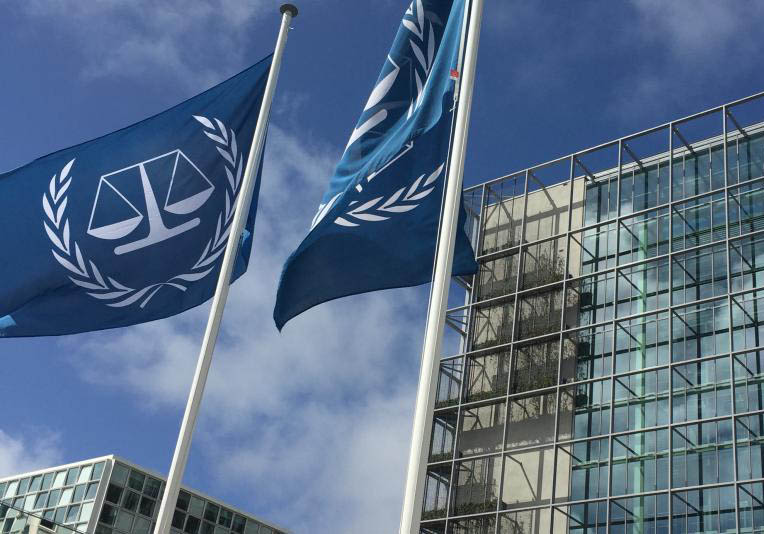
Ongoing attacks by United States officials on the International Criminal Court (ICC) and its staff amount to a full-frontal assault on international justice and the rule of law, said the ICJ, today.
On 2 September 2020, the US Secretary of State, Michael Pompeo, describing the ICC as a “thoroughly broken and corrupted institution,” indicated that the US would place on sanctions on ICC Prosecutor Fatou Bensouda, and the ICC’s Head of Jurisdiction, Complementary, and Cooperation Division, Phakiso Mochochoko, “for having materially assisted Prosecutor Bensouda” pursuant to the President’s 11 June 2020 Executive Order.
“The US must end these despicable and destabilizing attempts to interfere with the independence of the ICC and the functioning of its mandate to pursue justice for victims of the most serious crimes under international law,” said Kingsley Abbott, Coordinator of the ICJ’s Global Accountability Initiative.
“It is imperative that the 123 countries that are States Parties to the Rome Statute continue to work in solidarity to defend the Court and show the world that even individuals from a global superpower are subject to the rule of law.”
“Retaliating against individual ICC staff for merely working to fulfill the mandate of the Court sets a dangerous precedent and must be condemned specifically in the strongest possible terms,” added Abbott.
Background
On 21 September 2018, the ICJ, together with ten other organisations, sent a joint letter to UN Special Procedures regarding threats made by the then US National Security Adviser, John Bolton, against the ICC and its staff.
On 22 March 2019, the UN Special Rapporteur on the situation of human rights defenders, Michel Forst, and the Special Rapporteur on the Independence of Judges and Lawyers, Diego García-Sayán, issued a press release expressing concern at Bolton’s remarks, reaffirming the important mandate of the ICC and saying they were in contact with the US authorities on the issue.
On 11 June 2020, the ICC issued a statement expressing “profound regret at the announcement of further threats and coercive actions, including financial measures, against the Court and its officials, made earlier today by the Government of the United States.” The Court said the US action “represents an attack against the interests of victims of atrocity crimes, for many of whom the Court represents the last hope for justice.”
On 18 June 2020, the ICJ urged the United Nations Human Rights Council’s Special Procedures to act in response to steps taken by the United States against staff of the International Criminal Court (ICC) and their families.
On 25 June 2020, UN Human Rights Special Procedures experts issued a statement condemning US attacks on the ICC and its staff saying they “have been in contact with the US authorities on the issues.”
On 2 September 2020, the ICC issued a statement condemning the economic sanctions imposed on the Prosecutor and Phakiso Mochochoko, saying that the attacks “are unprecedented and constitute serious attacks against the Court, the Rome Statute system of international criminal justice, and the rule of law more generally.”
Contact
Kingsley Abbott, Coordinator of the ICJ’s Global Accountability Initiative, t: +66 94 470 1345; e: kingsley.abbott(a)icj.org