Mar 9, 2018 | Events, News
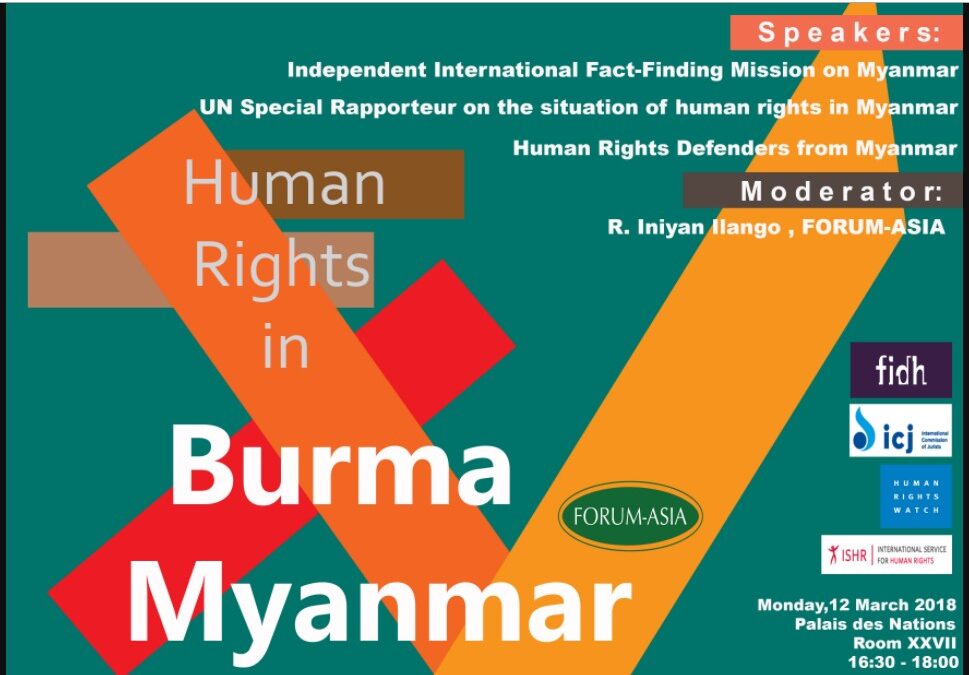
This side event at the Human Rights Council takes place on Monday, 12 March, 16:30-18:00, room XXVII of the Palais des Nations. It is organized by Forum-Asia, and co-sponsored by the ICJ.
Speakers:
Independent International Fact-Finding Mission on Myanmar
UN Special Rapporteur on the situation of human rights in Myanmar
Human Rights Defenders from Myanmar
Moderator:
R. Iniyan Ilango, Forum – Asia
Mar 5, 2018 | Advocacy, Non-legal submissions
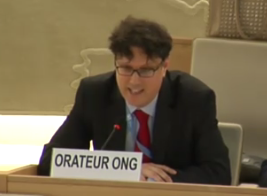
The ICJ today delivered an oral statement to the UN Human Rights Council, on transitional justice, prevention and impunity, highlighting the continuing problem of impunity in Nepal.
The statement, which was made during a clustered interactive dialogue with the Special Rapporteur on the promotion of truth, justice, reparation and guarantees of non-recurrence and the Special Adviser of the Secretary-General on the Prevention of Genocide, read as follows:
“The International Commission of Jurists (ICJ) remains deeply concerned by continuing impunity for gross human rights violations in many parts of the world, which undermines the potential for transitional justice to contribute to prevention as outlined in the Joint Study (A/HRC/37/65).
For example, in Nepal, more than ten years after the civil war, political expediency has trumped calls for justice and accountability. There has been near absolute impunity for those responsible for serious crimes under international law.
Transitional justice mechanisms – the Truth and Reconciliation Commission (TRC) and Commission on Investigation of Disappeared Persons (CoID) – have fallen short of international standards, both in their constitution and their operation, despite repeated orders by the Supreme Court of Nepal to enforce the standards.
The Commissions’ deeply flawed mandates, among other problems, allow them to recommend amnesties for gross human rights violations. In addition, their non-consultative, uncoordinated and opaque approach to their work has also created distrust with all major stakeholders, including conflict victims and members of civil society.
The Government continues to flout its obligation, both pursuant to the Supreme Court’s orders and under international law, to enact domestic legislation to criminalize serious crimes in accordance with international standards.
As highlighted by in the Joint study, turning a blind eye on past atrocities signals that some perpetrators are above the law, which further discredits State institutions and “breeds a (long-standing) culture of impunity in which atrocities may become ‘normalized’, rendering prevention significantly more difficult.” (para 43)
That, indeed, is the experience in Nepal: continuing impunity for gross human rights violations perpetrated during the conflict is one of the major obstacles to the creation of a stable and legitimate democratic government and lies at the heart of the rule of law crisis in the country. Ending impunity is essential to preventing further violations.”
Video of the statement is available here:
The delegation of Nepal exercised its right to reply later in the day. Its reply is here:
The ICJ oral statement complements a related written statement by the ICJ at the session.
Mar 2, 2018 | Advocacy, Non-legal submissions
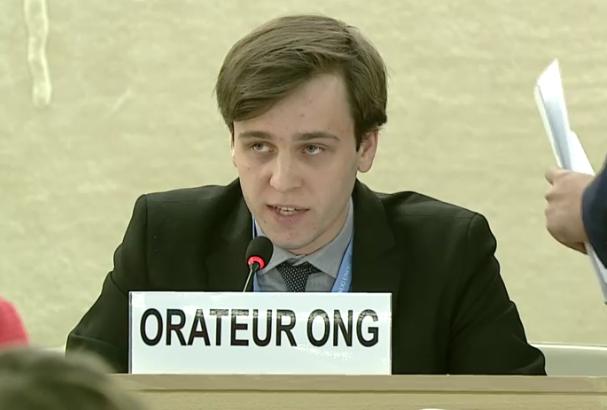
The ICJ today delivered an oral statement to the UN Human Rights Council urging it to take action on the situation in Eastern Ghouta in the Syrian Arab Republic.
The statement, which was made during an urgent debate at the UN Human Rights Council convened with a view to adoption of a resolution, read as follows:
“The International Commission of Jurists (ICJ) urges the Council to adopt a strong resolution today. The resolution should fully reflect the gravity, magnitude and character of the violations and abuses taking place, demand their immediate cessation, and set out specific measures for accountability of those responsible.
The ICJ highlighted these concerns in a statement one week ago. Every further day of delay costs lives. It is imperative that the Council act immediately and that the relevant forces move quickly to implement Security Council resolution 2401 and any resolution of the Human Rights Council. An immediate end to all attacks on civilians and civilian objects is paramount.
We welcome references to accountability, and urge the Council to explicitly call on States to make use of all means available in this regard, including in their national legal systems, as well as at the regional and international level.
All forces on the ground must respect international humanitarian law and human rights law and standards and be held accountable for failures in this regard. In particular, the Syrian Arab Republic and Russian Federation must comply with Security Council resolutions, ensure the effective protection of civilians, and create conditions in which rapid and unimpeded passage of humanitarian relief can actually take place.”
The Council did not complete the adoption of the resolution on 2 March, but ultimately did so on 5 March.
Mar 1, 2018 | Advocacy, Non-legal submissions
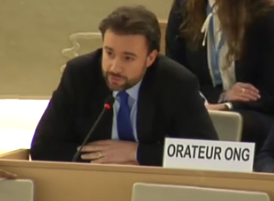
The ICJ today delivered an oral statement to the UN Human Rights Council, on attacks on lawyers and the legal profession in Turkey, Azerbaijan, Kazakhstan and China.
The statement, which was made during an interactive dialogue with the UN Special Rapporteur on human rights defenders and the UN Special Rapporteur on Torture, read as follows:
Our organizations welcome that the main report (A/HRC/37/51, para 13) and communications report (A/HRC/37/51/Add.1, e.g. paras 278-297, 431, 508-510) of the Special Rapporteur on Human Rights Defenders recognizes the role of lawyers as human rights defenders. In this regard, we would highlight the global problem of continued attacks on lawyers and threats to the independence of their profession, including for example as is well known in China (A/HRC/37/51/Add.1, paras 278-297), but also in Azerbaijan, Kazakhstan and Turkey.
In Azerbaijan, lawyers face criminal prosecution, suspension or disbarment for statements clearly constituting protected freedom of expression. The lack of independence of the Bar Association is a serious concern, even more so now that new legislation prohibits lawyers from representing clients before courts unless they become a member.
In Kazakhstan, a proposed new law threatens the independence of lawyers by providing for representatives of the executive to be included on disciplinary bodies of the legal profession, contrary to international standards.
Finally, the situation of lawyers in Turkey under the current state of emergency is of particular concern. In particular, echoing the recent statement of five UN special procedures mandate holders for his release, we expresses concern at the current detention of Taner Kılıç, lawyer and president of Amnesty International Turkey.
These arrests, trial and disbarments as well problematic legislative changes have a chilling effect on the work of lawyers. They undermine access to effective and independent legal assistance to protect human rights, in contravention of the rights of both the lawyers and their clients, including as mentioned in the report of the visit to Turkey by the Special Rapporteur on Torture (A/HRC/37/50/Add.1, paras 24, 26, 41, 63-66, 71, 101(d)(e)(h), 106(c)).
Our organizations urge the Council to address these worrying developments threatening the rule of law.
The following organizations joined the statement, in addition to the ICJ:
- International Bar Association’s Human Rights Institute (IBAHRI)
- Union Internationale des Avocats (UIA)
- Lawyers for Lawyers (L4L)
- the Law Society of England and Wales
- Lawyer’s Rights Watch Canada (LRWC), and
- the Bar Human Rights Committee of England and Wales (BHRC).
The statement can be downloaded in PDF format here: UN-HRC37-JointOralStatement-LawyersHRDsTorture-2018
Mar 1, 2018 | Events, News
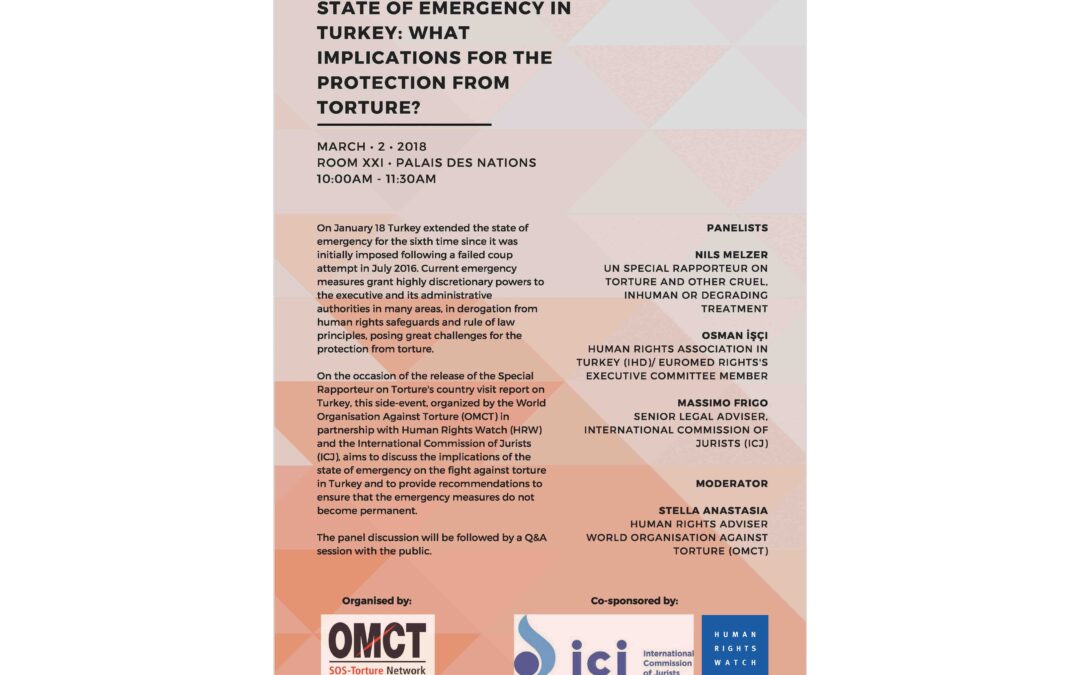
This side event at the Human Rights Council takes place on Friday, 2 March, 10:00-11:30, room XXI of the Palais des Nations. It is organized by the World Organization Against Torture (OMCT) and co-sponsored by the ICJ.
On January 18 Turkey extended the state of emergency for the sixth time since it was initially imposed following a failed coup attempt in July 2016.
Current emergency measures grant highly discretionary powers to the executive and its administrative authorities in many areas, in derogation from human rights safeguards and rule of law principles, posing great challenges for the protection from torture.
On the occasion of the release of the Special Rapporteur on Torture’s country visit report on Turkey, this side-event, organized by the World Organisation Against Torture (OMCT) in partnership with Human Rights Watch (HRW) and the International Commission of Jurists (ICJ), aims to discuss the implications of the state of emergency on the fight against torture in Turkey and to provide recommendations to ensure that the emergency measures do not become permanent.
The panel discussion will be followed by a Q&A session with the public.
Panelists:
UN Special Rapporteur on Torture and Other Cruel, Inhuman, or Degrading Treatment
Human Rights Association in Turkey (IHD)/Euromed Rights’s Executive Committee Member
Senior Legal Adviser, International Commission of Jurists (ICJ)
Moderator:
Stella Anastasia
Human Rights Adviser World Organization Against Torture (OMCT)
Turkey – Protection from Torture – News – Events – 2018 – ENG (flyer in PDF)