May 16, 2017 | News
Non-governmental organisations interested in participating in UN human rights mechanisms have until 1 June 2017 to submit an application for consideration during 2017.
The International Commission of Jurists, which itself has had consultative status with the UN since 1957, has been requested by the United Nations to disseminate the following information about the upcoming deadline for other interested NGOs to obtain UN consultative status:
1 June 2017 is the last day for Non-Governmental Organizations to apply for consultative status with the Economic and Social Council (ECOSOC), in order to have an opportunity to take part in UN deliberations. ECOSOC consultative status is governed by ECOSOC resolution 1996/31, which outlines the eligibility requirements for consultative status, rights and obligations of NGOs in consultative status, procedures for the withdrawal or suspension of consultative status, the role and functions of the ECOSOC Committee on NGOs, and the responsibilities of the UN Secretariat in supporting the consultative relationship. Consultative status is granted by ECOSOC upon recommendation of the ECOSOC Committee on NGOs, which is composed by Member States.
Who is eligible for applying?
Consultative relationships may be established with international, regional, sub regional and national non-governmental, non-profit public or voluntary organizations. NGOs affiliated to an international organization already in status may be admitted provided that they can demonstrate that their programme of work has direct relevance to the aims and purposes of the United Nations.
To be eligible for consultative status, an NGO must have been in existence (officially registered with the appropriate government authorities as an NGO/non-profit) for at least two years, must have an established headquarters, a democratically adopted constitution, authority to speak for its members, a representative structure, appropriate mechanisms of accountability and democratic and transparent decision-making processes. The basic resources of the organization must be derived in the main part from contributions of the national affiliates or other components or from individual members.
What are the benefits?
NGOs that are accredited with ECOSOC can participate in a number of events, including, but not limited to regular sessions of ECOSOC, its functional commissions and its other subsidiary bodies. NGOs may:
- Attend official meetings;
- Submit written statements prior to sessions;
- Make oral statements;
- Meet official government delegations and other NGO representatives;
- Organize and attend parallel events that take place during the session;
- Participate in debates, interactive dialogues, panel discussions and informal meetings.
Organizations established by governments or intergovernmental agreements are not considered NGOs.
Information about how to apply is available here: http://csonet.org/index.php?page=view&nr=377&type=230&menu=14
Please note that ICJ is not itself involved or in a position to assist with applications for UN consultative status and all queries should be directed to the UN.
May 10, 2017 | Advocacy, News, Non-legal submissions
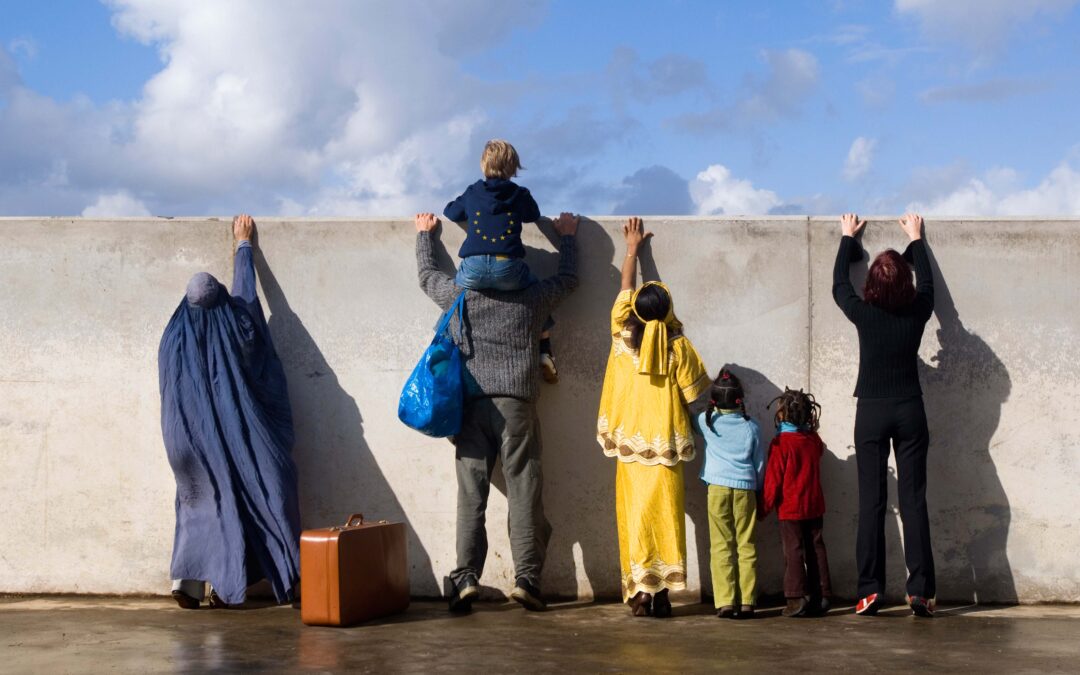
The ICJ emphasised the role of judges and lawyers in protecting human rights of migrants, during consultations at the UN in Geneva, as part of the preparatory process for a Global Compact on migration.
The informal consultation was convened by the UN General Assembly and held in Geneva on 8-9 May 2017. With a focus on human rights of migrants, it was the first thematic consultation to be held in connection with ongoing efforts by States to agree a UN global compact for safe, orderly and regular migration.
In addition to a written submission, the ICJ made statements during the main discussion, and as part of the concluding discussions.
The initial statement highlighted the recently published Principles on the Role of Judges and Lawyers in relation to Refugees and Migrants, developed by the ICJ in consultation with a wide range of relevant experts.
The concluding statement emphasised that effective protection of human rights, including of migrants, requires equal and effective access to impartial courts and independent lawyers, and urged States to ensure that the need for legal and practical guarantees for such access is reflected in the Global Compact eventually to be adopted. Indeed, the ICJ noted, access of individuals to a means of their enforcement is a key element distinguishing durable “rights” from, for instance, welcome but not necessarily permanent generosity.
For more information about the Principles on the Role of Judges and Lawyers in relation to Refugees and Migrants, click here.
May 5, 2017 | Advocacy, News, Publications
The ICJ has published a set of Principles on the Role of Judges and Lawyers in relation to Refugees and Migrants.
The Principles were developed by the ICJ on the basis of consultations with senior judges, lawyers, and legal scholars working in the field of international refugee and migration law (including at the 2016 Geneva Forum of Judges & Lawyers), as well consultations with States and other stakeholders on a draft version during the March 2017 Human Rights Council session, and other feedback.
The Principles seek to help judges and lawyers, as well as legislators and other government officials, better secure human rights and the rule of law in the context of large movements of refugees and migrants. They are intended to complement existing relevant legal and other international instruments, including the New York Declaration, as well as the Principles and practical guidance on the protection of the human rights of migrants in vulnerable situations within large and/or mixed movements being developed by the OHCHR.
The Principles address the role of judges and lawyers in relation to, among other aspects:
- determinations of entitlement to international protection;
- deprivation of liberty;
- removals;
- effective remedy and access to justice;
- independence, impartiality, and equality before the law;
- conflicts between national and international law.
The Principles, together with commentary, can be downloaded in PDF format by clicking here: ICJ Refugee Migrant Principles 2017.
They are also available in Spanish, French and Arabic.
The ICJ formally launched the published version of the Principles at a side event to the June 2017 session of the Human Rights Council (click here for details), where their importance and utility were recognised by the UN Special Rapporteur on the human rights of migrants, as well as representatives of UNHCR and the OHCHR.
The ICJ had earlier released the final text in connection with the Thematic Session on “Human rights of all migrants” for the UN General Assembly Preparatory Process for the Global Compact for Safe, Orderly and Regular Migration to be held in Geneva 8-9 May 2017, where in an oral statement the ICJ was able to highlight the potential utility of the Principles in the development of the Compact.
The ICJ further promoted consideration of the Principle, in an oral statement to the Human Rights Council.
More information about the process of development of the Principles, including the list of participants to the 2016 Geneva Forum, is available here.
The consultations, preparation and publication of the Principles was made possible with the financial support of the Genève Internationale office of the Republic and Canton of Geneva, for which the ICJ is grateful.
For further information, please contact ICJ Senior Legal Adviser Matt Pollard, matt.pollard(a)icj.org

Mar 30, 2017 | Advocacy, Non-legal submissions
Today, the ICJ made a submission to the Universal Periodic Review of Pakistan.
The submission brings to the attention of the members of the Human Rights Council’s Working Group on the UPR issues concerning:
- Trials of civilians by military tribunals;
- Enforced disappearances;
- Torture and other ill-treatment;
- Blasphemy laws; and
- International human rights instruments.
With respect to each of the above-mentioned concerns, the ICJ calls upon the Working Group on the UPR and the Human Rights Council to make a number of recommendations to the Pakistani authorities.
Pakistan-ICJ UPR-Advocacy-non-legal submissions-2017-ENG (full text in PDF)
Mar 30, 2017 | Advocacy
The ICJ submitted information to the UN Human Rights Council Working Group on the Universal Periodic Review (UPR) in advance of its review of Sri Lanka under the third cycle of the UPR mechanism during its 28th session in November 2017.
The ICJ submission focuses on concerns about Sri Lanka’s respect for its human rights obligations relating to ongoing issues of:
- Transitional justice;
- Enforced disappearance;
- Torture and other ill-treatment;
- Detention;
- Counter-terrorism; and
- Impunity.
SriLanka-UPR Submission March17-Advocacy-non legal submissions-2017-ENG (full text in PDF)




