Sep 23, 2016 | Advocacy, Non-legal submissions
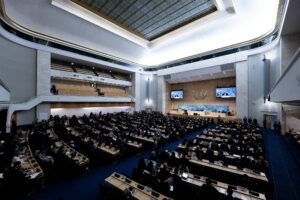
The ICJ, speaking at the UN Human Rights Council, highlighted concerns with criminalization of political gatherings, arbitrary detention, use of military for law enforcement, and trials of civilians before military courts, in Thailand.
The statement was made during discussion of the outcome of the Second Universal Periodic Review (UPR) of Thailand.
While congratulating Thailand on completion of the UPR, the ICJ oral statement continued as follows:
However, the ICJ is disappointed that several key recommendations concerning restrictions of civil and political rights in the country did not enjoy the support of Thailand.
The interim Constitution, put in place by the military government after the May 2014 coup, remains in force. Article 44 gives the government sweeping, unchecked powers inconsistent with the fundamental pillars of the rule of law and human rights.
The military government has issued numerous orders and announcements under the interim Constitution, including some that criminalize political gatherings, allow arbitrary detention for up to seven days without charge, and provide military officers broad powers of law enforcement.
At least 1,811 civilians have faced proceedings in military courts contrary to international law and standards, many merely for exercising their rights to free expression and peaceful assembly.
Thailand did not accept any of the recommendations to remove these restrictions on the rule of law and human rights.
While the ICJ welcomes the Order of 12 September 2016 ending the practice of prosecuting civilians in military courts for crimes committed after that date, approximately 500 civilian cases remain in military courts.
The ICJ is also concerned that in July the government charged three human rights defenders with criminal defamation for raising allegations of torture in the deep South.
The ICJ urges Thailand to accept and implement recommendations relevant to:
- revoking the interim Constitution and all NCPO orders and announcements that are contrary to the rule of law and respect for human rights;
- transferring all pending civilian cases to civilian courts and set aside the convictions of all civilians prosecuted in military courts since the 2014 coup; and
- ending all harassment of human rights defenders in Thailand.
The statement may be downloaded in English and in Thai in PDF here:
thailand-hrc33-upr-advocacy-non-legal submission-2016-eng
thailand-hrc33-upr-advocacy-non-legal-submission-2016-tha
Sep 22, 2016 | Advocacy, Non-legal submissions
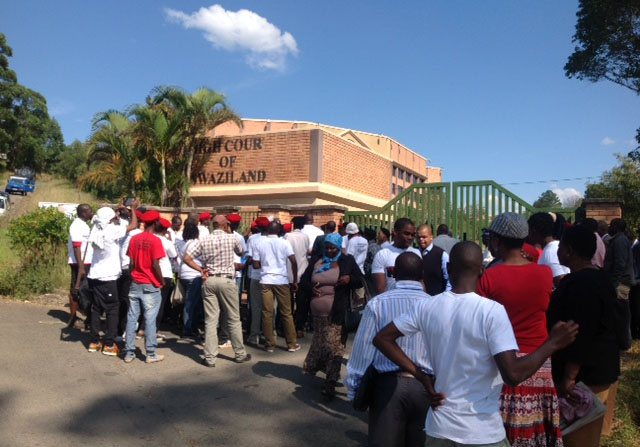
The ICJ today spoke to continuing concerns for human rights and the rule of law in Swaziland, during discussion at the UN Human Rights Council of the outcome of Swaziland’s Universal Periodic Review.
The statement read as follows:
The ICJ is concerned by the lack of implementation of recommendations accepted by the Government of Swaziland during the first UPR cycle.
The Swazi Government undertook to take concrete and immediate measures to guarantee the independence and impartiality of the judiciary. However judges continue to be appointed on the basis of corrupt patronage. The current Chief Justice and another Supreme Court judge are generally perceived to have been appointed on the basis of their traditional roles as former headman and chief, respectively, in the absence of any formal or transparent merit-based recruitment process.
Swaziland still has not ratified key international instruments, including the Rome Statute, the Optional Protocol to the Convention Against Torture, and the Convention for the Protection of All Persons from Enforced Disappearance, which they accepted during the last cycle.
The police have continued to ban and disrupt peaceful protests, relying on the Suppression of Terrorism Act, the Sedition and Subversive Activities Act and Public Order Act. Human rights defenders and political activists continue to be arrested and charged with criminal offences for exercising their rights to freedom of expression, association and assembly.
Swaziland has not enacted into law the Sexual Offences and Domestic Violence Bill, or any other law guaranteeing gender equality.
For these reasons, the ICJ calls upon the Government of Swaziland to accept and fully and promptly implement UPR recommendations from this cycle relevant to:
- Ensuring the independence and impartiality of the judiciary;
- Ratifying and domesticating the international instruments they accepted at the last cycle;
- Aligning national laws with international standards to guarantee freedom of expression, association and assembly;
- Enacting the Sexual Offences and Domestic Violence Bill into legislation.
The statement may be downloaded in PDF format here: hrc33-upr-swaziland-2016
Sep 19, 2016 | Advocacy, Non-legal submissions
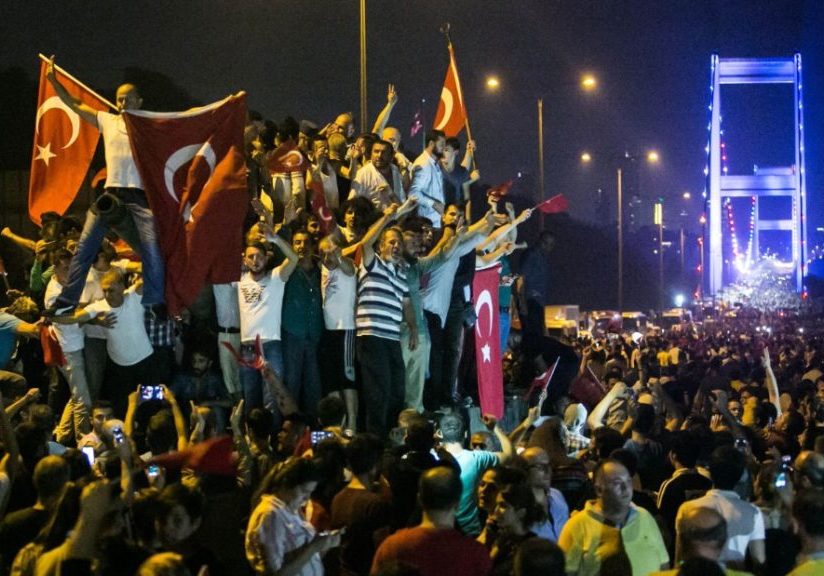
The ICJ today expressed concern at the UN for the independence of the judiciary, human rights, and the rule of law in Turkey, highlighting measures taken by the government, almost immediately after a failed coup in July, to suspend or dismiss thousands of judges and prosecutors.
The statement, which was delivered in General Debate on country situations, at the UN Human Rights Council in Geneva.
The statement read as follows:
The International Commission of Jurists (ICJ) wishes to draw the Council’s attention to the crisis of the rule of law in Turkey, and its serious consequences for the protection of human rights.
Within hours of the failed coup attempt in July, the Government initiated a purge of the judiciary on an unprecedented scale.
At least 3,300 judges and prosecutors have been dismissed or suspended, and hundreds have been arrested, including members of the High Council for Judges and Prosecutors.
Many of these measures appear to be arbitrary and fail to respect the right to a fair hearing before an independent authority.
These actions have done severe damage to the already fragile independence of the judiciary in Turkey, and threaten the right to a fair trial.
They represent a dramatic escalation of the attack on judicial independence that was already underway before the attempted coup, documented in an ICJ report published in June.
State-of-emergency decrees further undermine protection of human rights.
Periods for pre-trial detention have been extended and detainees’ confidential access to lawyers has been restricted. There are credible reports of ill-treatment of detainees, and of harassment of lawyers representing them.
The ICJ recalls that certain rights, including the prohibition on torture or other ill-treatment, and essential elements of the prohibition of arbitrary detention and right to a fair trial by an impartial tribunal, can never be derogated from, even in the most serious states of emergency.
The ICJ urges Turkey to take measures to restore the rule of law and ensure respect for human rights under the state of emergency.
The statement may be downloaded in PDF format here: hrc33-oralstatement-gditem4-turkey-2016
Sep 16, 2016 | News
Indian authorities have detained a Kashmiri human rights activist after stopping him from traveling to the United Nations Human Rights Council in Geneva, Human Rights Watch and the ICJ said today.
Khurram Parvez was arrested in his home on 15 September 2016, a day after being prevented from leaving the country with a group of rights activists who were traveling to Geneva to raise concerns about the security force crackdown in Jammu and Kashmir.
Human Rights Watch and the ICJ call on authorities to immediately release Parvez and allow him to attend the Human Rights Council session.
“Indian authorities seem to have missed the irony of blocking a rights activist on his way to the UN Human Rights Council,” said Sam Zarifi, Asia Director at the International Commission of Jurists.
“Monitoring and engage
ment by civil society is necessary to prevent human rights violations and ensure accountability. The Government should immediately release Khurram Parvez and begin working with him and other activists to address the difficult issues facing Jammu and Kashmir,” he added.
Parvez, 39 years of age, is chair of the Asian Federation Against Involuntary Disappearances (AFAD) and program coordinator of the Jammu Kashmir Coalition of Civil Society (JKCCS).
He has documented cases of enforced disappearances and investigated unmarked graves in Kashmir.
According to his lawyer, Parvez has been detained by Kashmir police under “preventive detention” provisions of the Code of Criminal Procedure, including section 151 (arrest to prevent the commission of cognizable offense).
The Government’s actions against Parvez violate his right to freedom of movement.
Under international human rights law, any restrictions on freedom of movement for security reasons must have a clear legal basis, be limited to what is necessary and be proportionate to the threat.
This is further supported by article 5 of the UN Declaration on Human Rights Defenders, which states that “[f]or the purpose of promoting and protecting human rights and fundamental freedoms, everyone has the right, individually or in association with others, at the national and international levels… to communicate with nongovernmental or intergovernmental organizations.”
“Instead of trying to silence human rights activists, India should be addressing the serious human rights problems in Jammu and Kashmir and holding perpetrators of abuses to account,” said Meenakshi Ganguly, South Asia Director at Human Rights Watch.
“Preventing open discussion of these issues, whether in India or in Geneva, sends a message to Kashmiris that the government has no interest in addressing their concerns,” she added.
Background
Violent protests broke out in Jammu and Kashmir state after the killing of Hizb-ul-Mujahedin militant Burhan Wani in an armed encounter on 8 July.
Since then, the authorities have placed large parts of the state under curfew restrictions to try to stop protesters who hurl stones at security forces and attack police posts.
Security forces have used unnecessary lethal force to contain the violence, which has resulted in the death of 80 protesters and 2 police officers, and thousands injured.
Some protesters, including children, lost their vision from pellets fired from riot-control guns.
While police have a duty to protect lives and property, under the UN Basic Principles on the Use of Force and Firearms by Law Enforcement Officials, they should use non-violent means as far as possible, only use force when unavoidable and in a proportionate manner, and use lethal force only when absolutely necessary to save lives, Human Rights Watch and International Commission of Jurists said.
The authorities have also attempted to censor news and restrict access to information.
The Government shut down local newspapers for three days, blocked mobile internet services temporarily, and ordered local cable operators to block the transmission of five news channels on television.
India has failed to address longstanding grievances in Jammu and Kashmir.
Numerous expert committees in India have recommended steps to address past human rights violations, including a repeal of the draconian Armed Forces Special Powers Act, but the Indian Government has ignored these recommendations.
Contact:
Sam Zarifi, ICJ Asia-Pacific Regional Director, (Bangkok); t:+66(0) 807819002; e: sam.zarifi@icj.org
Sep 16, 2016 | Advocacy, Non-legal submissions
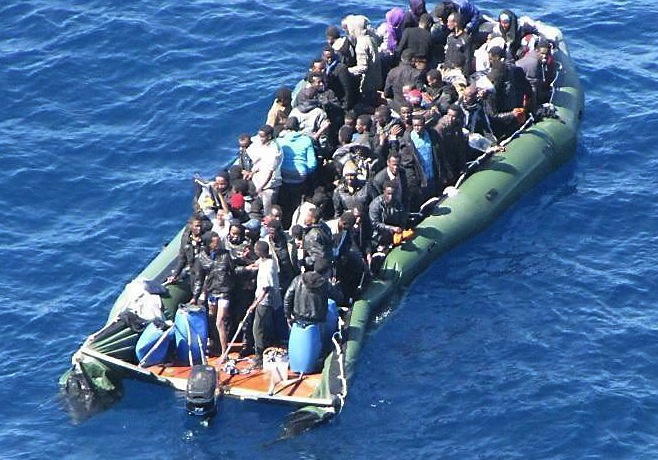
At the UN Human Rights Council, the ICJ today emphasized the role of judges and lawyers in securing human rights and the rule of law for refugees and migrants, including in situations of large-scale movements.The statement, delivered during a general debate, read as follows:
As the report of the High Commissioner for Human Rights, on Promotion and protection of the human rights of migrants in the context of large movements (UN doc A/HRC/33/67), recognizes, all such persons must have “access to justice”, including effective access to courts and lawyers.
This includes fair and effective individualized procedures in relation to key decisions such as: entitlement to refugee status or other international protection; detention or criminal proceedings based on entry or presence in the country; and expulsion or onward transfer.
The roles of the executive, legislature and judiciary in such situations has been debated in many countries. In some cases, governments have invoked the concept of “crisis” or “emergency” to justify radical departures from ordinary procedures, including reducing effective access to independent judges and lawyers.
In the experience of the International Commission of Jurists (ICJ), over many decades and in all regions of the world, the role of judges and lawyers in securing human rights and the national and international rule of law is in fact even more important in times and circumstances perceived to be “exceptional”, or of “crisis” or “emergency”. The ICJ is therefore deeply concerned about any reduction of the role of judges and lawyers in relation to large-scale movements of refugees and migrants.
The seventh annual ICJ Geneva Forum of Judges & Lawyers, 17-18 November 2016, will bring together judges, lawyers, and refugee and migration experts from around the world, as well as relevant UN, regional, and other agencies, to discuss the role of judges and lawyers in situations of large-scale movement of refugees and migrants. Based on the discussion, the ICJ will produce and disseminate guidance on the important role of judges and lawyers to protect human rights and the rule of law in all such circumstances.
The statement may be downloaded in PDF format here: hrc33-oralstatement-gditem3-migrantsrefugees-16092016