Nov 19, 2019 | News
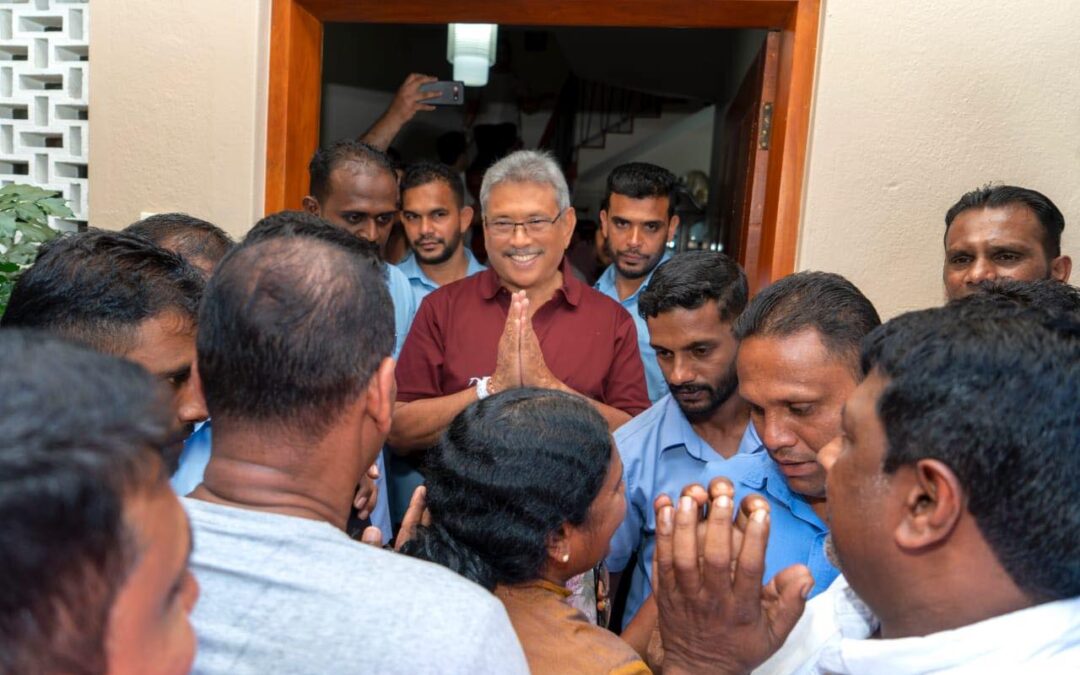
Sri Lanka’s newly elected president, Gotabaya Rajapaksa and his government must demonstrate that they will uphold human rights and rule of law, and ensure that Sri Lanka sustains its international obligations and commitments to justice and accountability, said the ICJ today.
Gotabaya Rajapaksa faces credible allegations of involvement in war crimes and crimes against humanity that took place during the country’s armed conflict.
“The election of Gotabaya Rajapaksa, after a highly polarizing campaign, has alarmed human rights defenders in Sri Lanka and abroad, who have little reason to believe that someone facing such serious allegations of perpetrating human rights violations can be relied upon to meet the country’s obligations under international law,” said Frederick Rawski, ICJ Asia Pacific Director.
Gotabaya Rajapaksa, who won the presidency with 52.25% of votes, served as Sri Lanka’s Secretary of the Ministry of Defence from 2005 to 2015 during the tenure of his brother Mahinda Rajapaksa, at the height of the armed conflict against the Liberation Tigers of Tamil Eelam (LTTE).
Both the military and LTTE perpetrated war crimes and gross human rights violations during the conflict, and particularly during its bloody final stages. As Defence Secretary, Gotabaya was accused of ordering the killing of surrendering LTTE fighters, ordering strikes on civilians and hospitals, and authorizing attacks on human rights defenders.
International condemnation of atrocities committed during the conflict led to the UN Human Rights Council demanding that the Sri Lankan government commit to a process of transitional justice, in view of the systematic failures of accountability mechanisms in Sri Lanka in the past, as documented by the ICJ in its submission to the Human Rights Council, and others. Despite commitments from the Sri Lankan government, the transitional justice process has effectively stalled and impunity has prevailed.
“The ICJ is deeply concerned that even the limited strides made over the past five years in Sri Lanka on transitional justice, positive constitutional amendments and institutional reform will be reversed,” said Rawski.
The ICJ urged the Government to deliver on its commitment to the transitional justice process, including by holding those responsible for human rights violations and abuses accountable, and complying with the obligations set out in United Nations Human Rights Council Resolutions 30/1, 34/1 and 40/1.
Contact:
Frederick Rawski, ICJ’s Asia Director, t +66 644781121; e: frederick.rawski(a)icj.org
Nov 18, 2019 | News
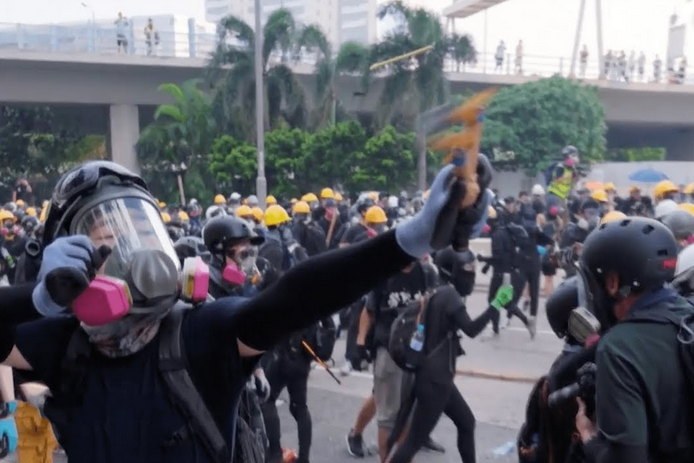
Authorities in Hong Kong must avoid using excessive force to respond to protesters as the political crisis in the city deteriorates, the ICJ said today.
Media reports today show scenes of spiraling violence as police try to force their way into the campus of Hong Kong Polytechnic University (PolyU) past barricades erected by students and demonstrators.
“Any police who use excessive force, particularly as they surround and attack student protesters inside PolyU, must be sanctioned,” said Frederick Rawski, ICJ’s Asia Director.
“The events of the past week mark a further deterioration in the situation in Hong Kong – one that can only be effectively addressed through genuine political dialogue, and a commitment to holding police who use unlawful force accountable,” he added.
This morning, more than 100 people were also arrested in Tsim Sha Tsui, hands zip-tied by police and detained in public.
The ICJ urges the Hong Kong SAR government to:
• Ensure that people are able to exercise their freedom of expression, assembly, association and right to political participation;
• Review the means and methods used for the policing of assemblies, including the use of water cannons, tear gas, batons and shields, to ensure that they are not applied indiscriminately and excessively or against peaceful protesters and that they do not result in an escalation of tension;
• Ensure that all victims of excessive use of force by law enforcement officials are provided with access to medical services;
• Ensure that the detained people’s rights to timely and confidential access to counsel;
• Undertake prompt, independent, impartial and thorough investigation of all allegations of unlawful use of force, with a view to holding accountable any responsible authorities including possibilities of criminal prosecution of police officers, and providing an effective remedy and reparation, including compensation and rehabilitation to victims.
Additional information
- Under the Bill of Rights Ordinance and Basic Law Article 39, the International Covenant on Civil and Political Rights is applicable in Hong Kong. Pursuant to the ICCPR, the Hong Kong SAR government has a duty to guarantee and protect the rights to freedom expression and freedom of assembly and freedom from torture and other cruel, inhuman or degrading treatment or punishment, including through the unlawful use of force.
- Under the Basic Principles on the Use of Force and Firearms by Law Enforcement Officials, “Law enforcement officials shall not use firearms against persons except in self-defence or defence of others against the imminent threat of death or serious injury, to prevent the perpetration of a particularly serious crime involving grave threat to life, to arrest a person presenting such a danger and resisting their authority, or to prevent his or her escape, and only when less extreme means are insufficient to achieve these objectives. In any event, intentional lethal use of firearms may only be made when strictly unavoidable in order to protect life.”
- Since June, large numbers of people have taken to the streets of Hong Kong to protest against the now-withdrawn extradition bill, which would have allowed case-by-case fugitive transfers to mainland China.
- Police have used excessive and indiscriminate force against protesters, in contravention of international standards, as well as arrested, harassed and attacked journalists. Police have regularly deployed tear gas against crowds and using water cannons, rubber bullets, pepper spray, and batons on protesters. On 15 November, hundreds of riot police fired more than 1,500 canisters of tear gas on the grounds of the Chinese University of Hong Kong (CUHK). On November 11, a police officer shot a protester with live ammunition.
Contact
Frederick Rawski, ICJ’s Asia Director, t +66 644781121 ; e: frederick.rawski(a)icj.org
Boram Jang, ICJ Legal Adviser, Asia & the Pacific Programme, e: boram.jang(a)icj.org
Oct 31, 2019 | Artículos, Noticias
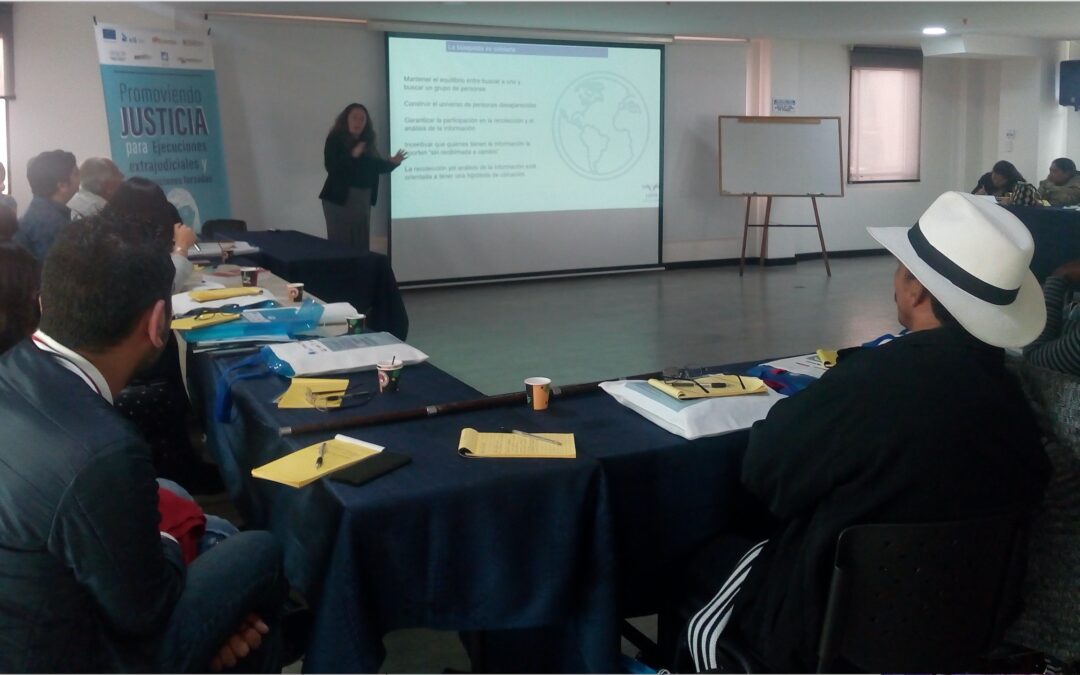
Los días 29 y 30 de octubre, la CIJ, en asocio con dhColombia y el Equipo Argentino de Antropología Forense (EAAF), organizó una capacitación sobre el marco legal sobre la desaparición forzada y las ejecuciones extrajudiciales en Bogotá (Colombia).
La capacitación tuvo como objetivo mejorar la comprensión de víctimas y abogados de derechos humanos sobre la legislación nacional sobre ejecuciones extrajudiciales y desapariciones forzadas en Colombia. La capacitación incluyó un análisis del sistema de justicia ordinario y de los mecanismos de justicia transicional. También exploró el papel de las ciencias forenses en la lucha contra la impunidad de esos crímenes.
La CIJ, en cumplimiento de su objetivo de promover la rendición de cuentas, la justicia y el estado de derecho en Colombia, ha estado monitoreando continuamente la investigación y el enjuiciamiento de violaciones y abusos graves de los derechos humanos, en particular las ejecuciones extrajudiciales y las desapariciones forzadas. Los autores de tales violaciones, que constituyen crímenes de derecho internacional, han disfrutado de un alto nivel de impunidad. Hay numerosos casos sin resolver que datan de la década de 1970 y las violaciones han continuado incluso después de la firma del Acuerdo Final de Paz en 2016.
En Colombia, lograr la rendición de cuentas por esos crímenes ha resultado difícil por varias razones, incluido el funcionamiento ineficaz del sistema de justicia. Las víctimas y sus abogados han enfrentado serios obstáculos para acceder a recursos efectivos. Además, la creación de nuevas instituciones por el Acuerdo Final de Paz ha cambiado algunas reglas y procedimientos básicos para la investigación y el enjuiciamiento de esos crímenes. En consecuencia, el sistema de justicia colombiano es más complicado de entender, no solo para las víctimas sino también para los abogados.
El taller de capacitación fue parte de un proyecto regional más amplio que aborda la justicia por ejecuciones extrajudiciales y desapariciones forzadas en Colombia, Guatemala y Perú. Los participantes fueron víctimas y abogados de derechos humanos de diferentes regiones del país, especialmente aquellos lugares donde hay menos oportunidades de acceder a capacitación legal y forense. Teniendo en cuenta que las actividades de creación de capacidad son esenciales para el logro efectivo de la rendición de cuentas, se espera que los participantes de la capacitación hayan obtenido herramientas valiosas para exigir justicia y reparación por violaciones graves de los derechos humanos.
Contactos:
Rocío Quintero M, Asesora Legal, América Latina. Correo electrónico: rocio.quintero(a)icj.org
Carolina Villadiego, Asesora Legal, América Latina y coordinadora regional del proyecto. Correo Electrónico: carolina.villadiego(a)icj.org
Oct 31, 2019 | News
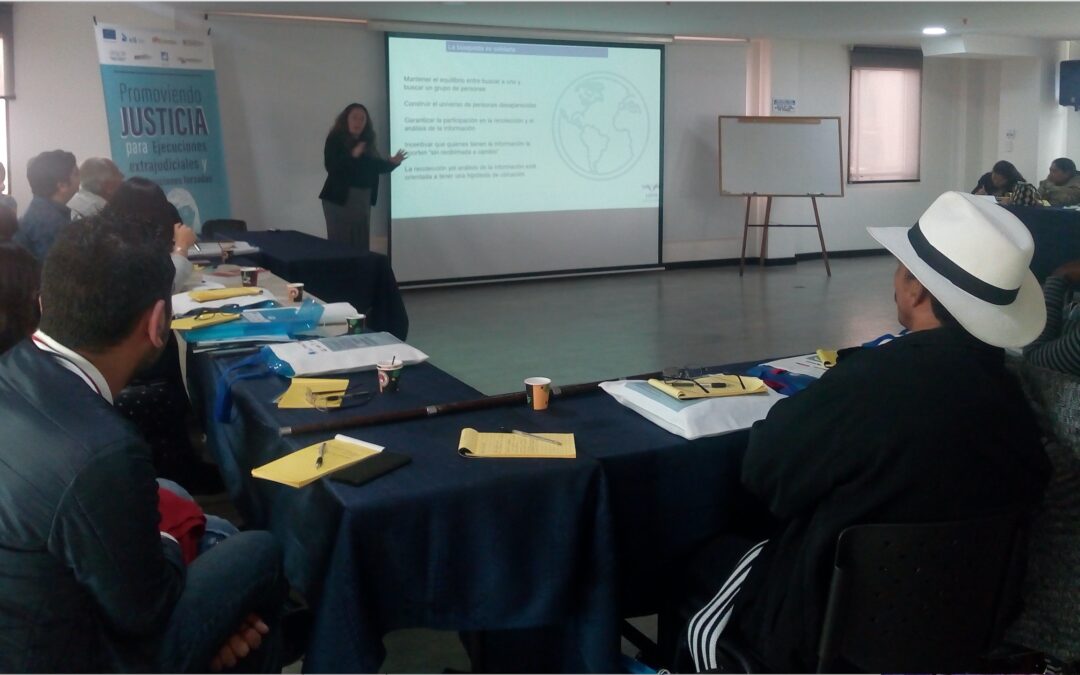
On 29-30 October the ICJ, in partnership with dhColombia and the Argentine Forensic Anthropology Team (EAAF), hosted a two-day training workshop in Bogotá on the legal framework around enforced disappearance and extrajudicial killings.
The training aimed to improve the understanding of victims and human rights lawyers of the domestic law on extrajudicial killings and enforced disappearances in Colombia. It included an analysis of both the ordinary justice system, as well as transitional justice mechanisms. It also explored the role of the forensic sciences in tackling impunity for those crimes.
The ICJ in furtherance of its objective to promote accountability, justice and the rule of law in Colombia, has been continuously monitoring the investigation and prosecution of serious human rights violations and abuses, particularly extrajudicial killings and enforced disappearances. Perpetrators of such violations, which constitute crimes under international law, have enjoyed a high level of impunity. While there are numerous unresolved cases dating back to the 1970s, violations have continued even after a comprehensive peace agreement was signed in 2016 following decades of armed conflict.
In Colombia, achieving accountability for those crimes has proven difficult for several reasons, including the ineffective functioning of the justice system. Victims and their lawyers have faced serious obstacles in gaining access to effective remedies. In addition, the creation of new institutions by the Peace Agreement has changed some basic rules and procedures for the investigation and prosecution of those crimes. Consequently, the Colombian justice system is more complicated to understand not only for victims but for lawyers.
The training workshop was part of a broader regional project addressing justice for extrajudicial killings and enforced disappearances in Colombia, Guatemala and Peru. Participants were victims and human rights lawyers from different regions of the country, especially those where that is less opportunity to access legal and forensic training. Considering that capacity building activities are essential to the effective achievement of accountability, it is expected that participants of the training will obtain valuable tools to demand justice and remedy and reparations for serious human rights violations.
Contacts:
Rocío Quintero M, Legal Adviser, Latin America. Email: rocio.quintero(a)icj.org
Carolina Villadiego, ICJ Legal and Policy Adviser, Latin America, and Regional Coordinator of the Project. Email: carolina.villadiego(a)icj.org
Oct 30, 2019 | News
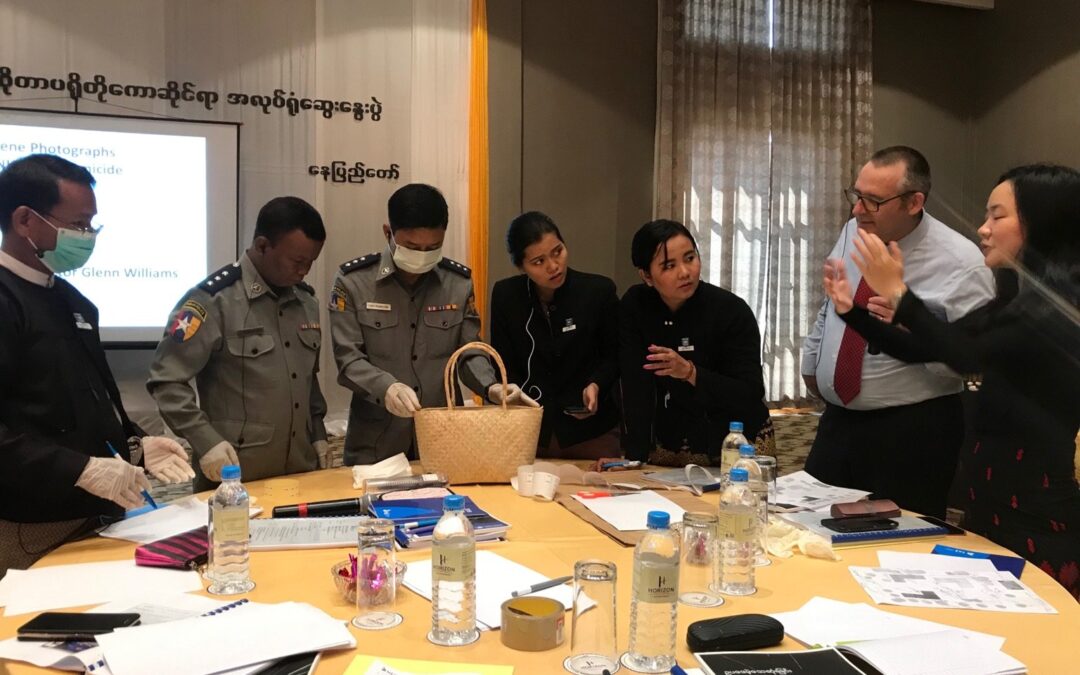
The ICJ hosted a two-day workshop on 28-29 October 2019 in Myanmar’s capital, Nay Pyi Taw. Organized jointly with the Union Attorney General’s Office (UAGO), 15 prosecutors and ten members of the Myanmar Police Force attended this event, entitled “Workshop on the Minnesota Protocol.”
Participants included persons involved in the conduct of criminal investigations, as well as senior members with oversight of their work. The workshop was opened with remarks by His Excellency U Win Myint, Deputy Attorney General of the UAGO, and Sean Bain, Legal Adviser for the ICJ in Myanmar. Both speakers underscored the importance of conducting effective investigations according to international standards.
The Minnesota Protocol provides guidance on the State’s implementation of its duty under international law to effectively, thoroughly and impartially investigate potentially unlawful killings, including when State actors may have been involved. It applies to deaths under custody, suspicious deaths, and suspected cases of enforced disappearance. The workshop takes place in a context in which Myanmar has experienced well documented and widespread incidences of such unlawful killings amounting to serious crimes under international law.
An overview of the international human rights law framework was provided by ICJ Associate Legal Adviser Jenny Domino, highlighting how the conduct of prompt, effective and impartial investigations into unlawful killings is a core component of the State’s obligation to uphold the right to life, binding on all States under international law. ICJ Legal Researcher Ja Seng Ing provided an overview of the contents of the Minnesota Protocol, including a discussion of its 2016 revision to align it with contemporary norms and practices.
Glenn Williams, an experienced international criminal investigator and Detective Inspector (Retired) of the New Zealand Police Force explained how to properly secure a crime scene and chain of custody in order to preserve the integrity of the evidence. Participants applied these skills in a group exercise based on a real-life case from the Solomon Islands. He also presented on the proper conduct of witness interviews, emphasizing the need to frame questions in a manner that would avoid the re-traumatization of victims. Glenn Williams further shared the investigative challenges of dealing with telecommunications evidence from his time at the Special Tribunal for Lebanon.
Dr. Porntip Rojanasunan, a forensic pathologist in Thailand and Member of the Expert Advisory Panel during the Minnesota Protocol revision process, shared her forensic expertise through illustrative cases that she had worked on in Southeast Asia in the past two decades. Dr Porntip stressed the importance of forensic pathology in determining the true cause of death. She also emphasized the importance of conducting an autopsy in potential cases of human rights violations.
The workshop is part of the ICJ’s ongoing promotion of international human rights law and standards globally. In Asia, this has included engagement with Myanmar authorities as well as authorities in neighboring countries.
See also:
Myanmar: ICJ discusses the Minnesota Protocol with prosecutors
ICJ Oral statement in the interactive dialogue with the fact finding mission on Myanmar
Report: Achieving Justice for Gross Human Rights Violations in Myanmar
Related material:
Minnesota Protocol (English)
Minnesota Protocol (unofficial Burmese translation)