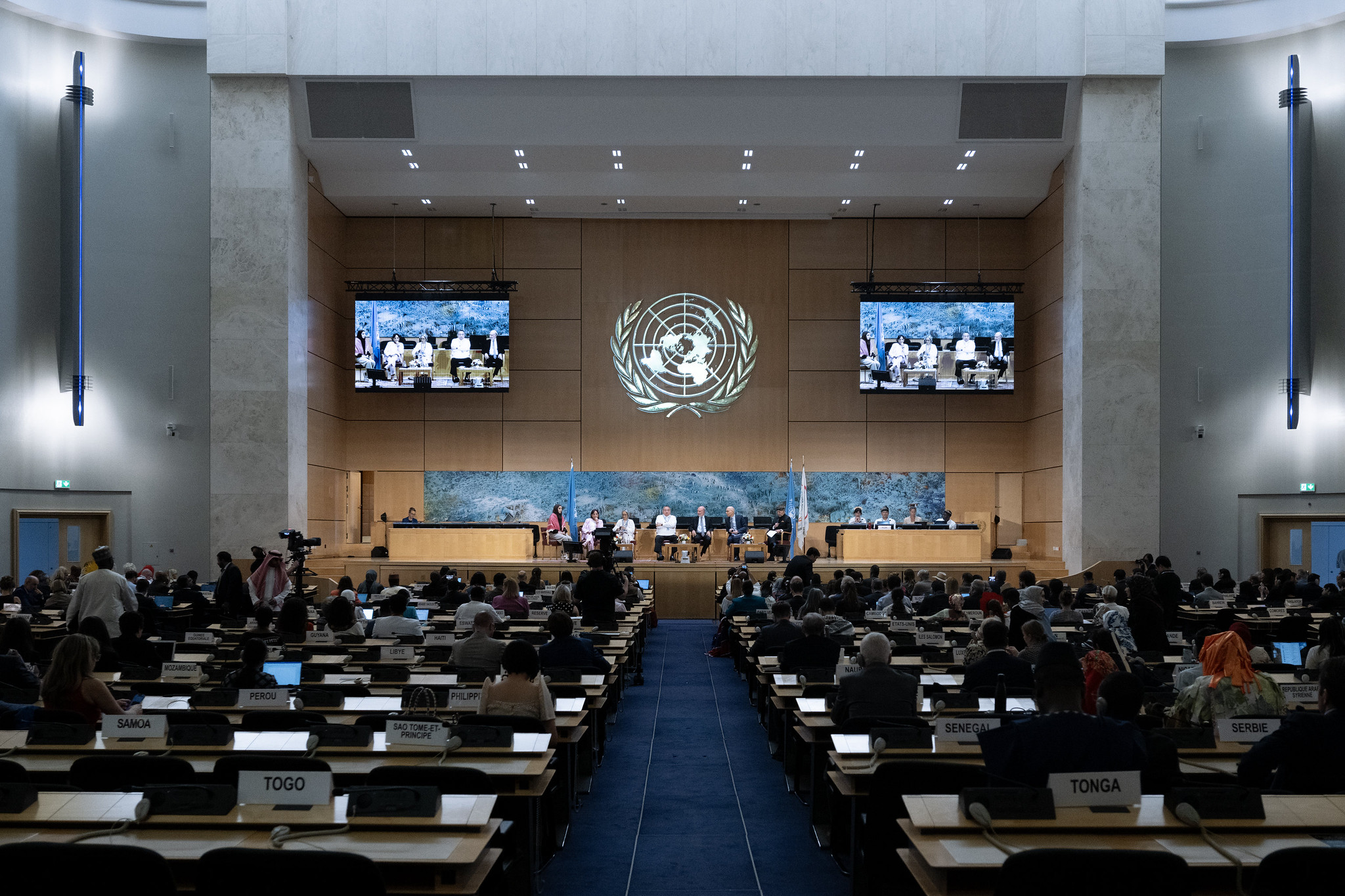
On the occasion of its presentation at the 62nd session of the UN Human Rights Council in Geneva, the International Commission of Jurists welcomes the Special Rapporteur’s report on the externalization of migration governance – a phenomenon whose catastrophic human rights impacts its operationalization in Libya and Tunisia starkly illustrates.
The report warns that “prevention of arrival” measures – such as those enacted in both countries – facilitate refoulements and collective expulsions and other egregious human rights violations, including of the right to life, to leave any country, including one’s own, to freedom from torture, arbitrary detention and enforced disappearance.
In Libya, the EU and its Member States continue to provide logistical and operational support to the Libyan Coast Guard, enabling dangerous interceptions at sea and forcible returns to Libya, where those intercepted face a real risk of arbitrary detention, torture, sexual violence, enslavement and onward refoulement.
In Tunisia, since the 2023 EU Memorandum of Understanding, the authorities have subjected Black Africans to a campaign of arbitrary detention and collective expulsions to the Libyan and Algerian borders without access to food or water. Systematic sexual violence by security forces has also been reported.
Recently, both countries have seen a dangerous escalation of hate speech and incitement to violence, leading to attacks on sub-Saharan migrants. Neither Libya nor Tunisia is a place of safety for migrants, asylum seekers, and refugees.
We urge States to stop pursuing policies exposing migrants, refugees, and asylum seekers to such egregious abuses and to uphold their human rights and the non-refoulement principle.