Jun 29, 2019 | Artículos, Noticias
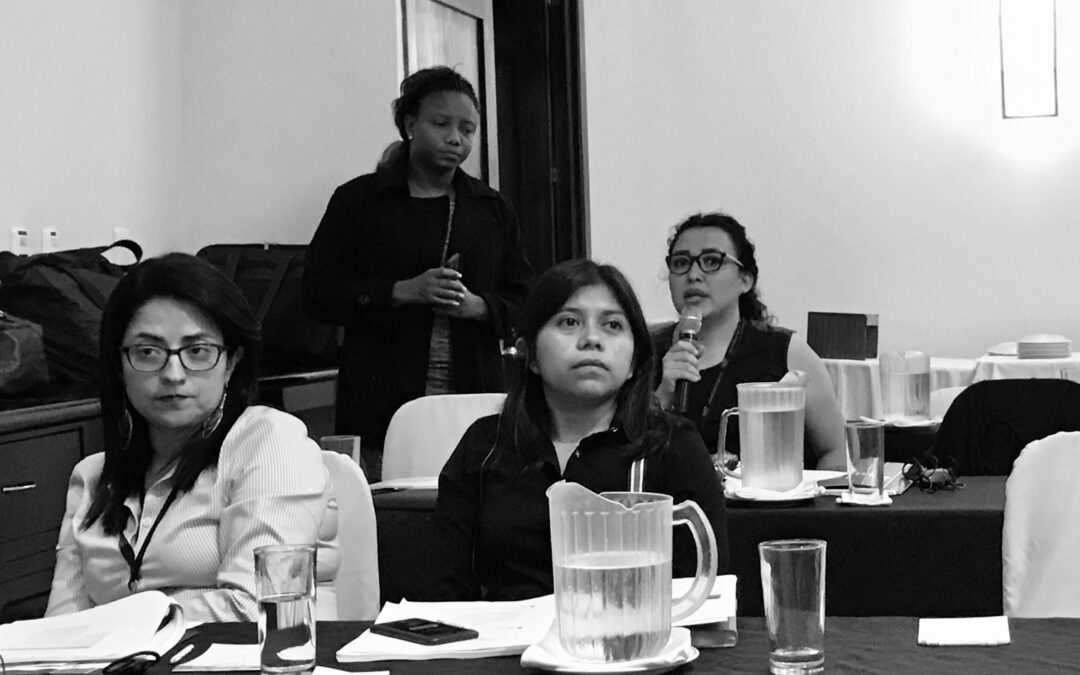
Entre el 26 y el 29 de junio de 2019, en la Ciudad de Guatemala, la CIJ, junto con la Fundación de Antropología Forense de Guatemala (FAFG), y el apoyo de la Asociación Guatemalteca de Jueces por la Integridad (AGJI) y el Bufete de Derechos Humanos (BDH), llevó a cabo actividades de capacitación dirigidas a más de 12 jueces y 20 fiscales, acerca de los estándares internacionales que se aplican en la investigación de las ejecuciones extrajudiciales y las desapariciones forzadas.
Las actividades se llevaron a cabo en el marco del proyecto “Promoviendo justicia para ejecuciones extrajudiciales y desapariciones forzadas en Colombia, Guatemala y Perú”, bajo la Iniciativa Global de rendición de cuentas de la CIJ, y con el apoyo del Instrumento Europeo para la Democracia y los Derechos Humanos (IEDDH).
Las actividades contaron con la presencia de Tomás Pallás Aparisi, Jefe de Cooperación de la Delegación de la Unión Europea en Guatemala; Delia Dávila, Magistrada de la Corte Suprema de Guatemala; y Haroldo Vásquez, Presidente de la Asociación Guatemalteca de Jueces por la Integridad (AGJI).
En estas actividades, Ramón Cadena, director de la Oficina de Centroamérica de la CIJ, se refirió a la importancia de los estándares internacionales aplicables a la investigación y al enjuiciamiento de las ejecuciones extrajudiciales y desapariciones forzadas. Además, Edgar Pérez, director del Bufete de Derechos Humanos (BDH), analizó la situación de las desapariciones forzadas en Guatemala y el valor y la aplicabilidad de los estándares internacionales en el país.
Asimismo, Marco García, miembro de la FAFG, describió el papel de la ciencia forense en la investigación de estas graves violaciones a los derechos humanos. Finalmente, Kingsley Abbott, asesor legal senior y coordinador de la Iniciativa Global de Rendición de Cuentas de la CIJ, proporcionó una visión general acerca de los contenidos del “Protocolo de Minnesota sobre la Investigación de Muertes Potencialmente Ilícitas” (versión revisada de 2016).
La CIJ aprovechó la realización de estas actividades de capacitación para visitar a la Asociación de Familiares de Detenidos-Desaparecidos de Guatemala (FAMDEGUA) y reunirse con la jueza Delia Marina Dávila, de la Corte Suprema de Justicia de Guatemala.
Contactos:
Kingsley Abbott, asesor legal senior y coordinador de la iniciativa global de rendición de cuentas de la CIJ. Correo electrónico: kingsley.abbott(a)icj.org
Carolina Villadiego, Asesora Legal, América Latina, y coordinadora regional del proyecto. Correo Electrónico: carolina.villadiego(a)icj.org
Jun 15, 2019 | News
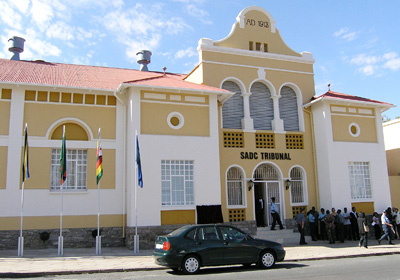
The ICJ welcomes the recent judgment of the Tanzanian High Court condemning the Tanzanian government’s actions leading to the suspension of the SADC Tribunal and the denuding of its crucial role in maintaining the rule of law and protecting human rights in the Southern African region.
Following on a decision of the South African Constitutional Court in December 2018, the decision brings increased scrutiny to the legality and legitimacy of the decision of the SADC Summit to effectively disband the SADC Tribunal in 2010 and thereby “eviscerate the possibility of the States ever being held to account for perceived human rights violations, non-adherence to the rule of law or undemocratic practices”.
“The Tanzanian court’s decision once again raises fundamental questions about the legality and legitimacy of the SADC Summit’s attempt to strip the SADC Tribunal of its powers, following on decisions relating to land reform in Zimbabwe that upset leaders of SADC states. The ICJ endorses the views of the Tanzanian and South African courts that all decisions taken by SADC States must comply with the SADC Treaty, the right of victims of human rights abuses to access justice and the rule of law,” said Arnold Tsunga, the ICJ’s Africa Director.
The Tanzanian Court’s decision is premised on the finding that the SADC Treaty is, in terms of the Vienna Convention on the Law of Treaties, binding on all SADC member States and obligations in terms of it must be performed in good faith by all executive officials.
Having set up and empowered the SADC Tribunal to adjudicate disputes in terms of the Treaty, the Court held that “State parties including Tanzania are obliged to give effect to the Tribunal, without which the existence of the Community itself remains doubtful”.
The Court likened the system of governance set out in the Treaty to a domestic doctrine of separation of powers, noting that the Tribunal is part of an intricate set of checks and balances set out in the Treaty.
The case was brought to Court by the Tanganyika Law Society in order to hold the Tanzanian government accountable to the Constitution, the SADC Treaty and “other international law human rights norms”.
The Law Society alleged that the Tanzanian government’s actions violate the right to access to justice and are therefore “inimical to the rule of law”.
The Court’s decision makes repeated reference to international human rights law norms including United Nations Basic Principles and Guidelines on the Right to a Remedy and Reparation, the Universal Declaration on Human Rights and the African Charter concluding that crucial commitments in terms of the standards set out in these documents were violated by the Tanzanian government.
The Court reasoned that in terms of international law the State is obliged to “ensure observance of [international human rights law principles] in the conduct of its international relations”.
This, crucially, meant that State parties to the SADC Treaty must, in their conduct pertaining to international relations “ensure protection of fundamental human rights of the individual” (emphasis in original).
The SADC Summit’s attempts to protect individuals from accessing the SADC Tribunal for the purposes of vindicating their rights therefore amounted to an unlawful encroachment on individuals’ rights in terms of domestic and international human rights law.
“The Court’s decision is a strong endorsement of the universality of international human rights principles as well as the need for strong checks and balances on power in all domestic, regional and international platforms established to ensure access to remedies for rights violations. The ICJ encourages the SADC leaders to individually and collectively take note of the decisions of the Tanzanian and South African courts and take immediate action to ensure full and effective operation of an independent SADC Tribunal capable of receiving and adjudicating individual complaints,” Tsunga added.
Contact:
Arnold Tsunga, ICJ Africa Director, t: +263777283249 ; e: arnold.tsunga(a)icj.org
Timothy Fish Hodgson, ICJ Legal Adviser, t: +27828719905 ; e: timothy.hodgson(a)icj.org

May 15, 2019 | News
The ICJ today condemned a series of the acts of violence directed against the Muslim community in the aftermath of the Easter attacks on 21 April in Sri Lanka directed at churches and other places.
In the most recent attacks on 13 May, at least one person was killed in anti-Muslim mob violence in Nattandiya. In addition, various attacks have resulted in the looting and destruction of mosques, Muslim-owned businesses and houses in several parts of the island including Negombo, Chilaw, Kurunegala and Gampaha.
The ICJ called upon the State authorities to conduct independent, impartial and effective investigations into the attacks and bring all perpetrators to justice in line with international standards. Furthermore, the ICJ urges the Government of Sri Lanka to send a clear public message that acts of violence against any religious minorities are not tolerated.
“Attacks perpetrated against religious minorities are more likely to occur in a climate of impunity” said Fredrick Rawski, ICJ’s Regional Director for Asia and the Pacific. “The fact that Sri Lanka has a history of serious violations of human rights of religious minorities makes it even more urgent that the Government act to safeguard the human rights of all persons and take immediate measures to protect members of religious minorities from further violence.”
Delayed action or inaction on the part of law enforcement authorities during and in the immediate aftermath of the attacks has further exacerbated the situation. Given the recurring patterns of mob violence against religious minorities in Sri Lanka, a handful of arrests will not suffice. It must be followed up by independent and impartial investigations and, where warranted, prosecutions as part of an effective preventive strategy to counter such collectively organized violence.
Under international human rights law, including the International Covenant on Civil and Political Rights, to which Sri Lanka is a party, States have a duty to protect freedom of religion, which includes persons from religious minorities against abuses committed against them by any person or group.
The Government of Sri Lanka must take appropriate security measures in response to the worst terror attack in recent years. However, it must ensure that the volatile situation is not made worse by inaction to prevent anti-Muslim violence and vigilantism. Moreover, the State must ensure that any counter-terrorism measure is adopted and implemented in line with its international human rights law obligations and does not explicitly or implicitly target a particular community.
Apr 29, 2019 | News
On 27 and 28 April 2019, the ICJ held a workshop on “Ensuring accountability through the Specialized Criminal Chambers” in coordination with the Association des Magistrats Tunisiens (AMT).
Participants in the workshop included 28 Tunisian judges attached to the Specialized Criminal Chambers (SCC).
The workshop aimed to reinforce the capacity of SCC judges to effectively exercise their role in adjudicating crimes under international law, in line with international law and standards.
ICJ legal advisers and Tunisian experts gave presentations on State the obligations of State actors to respect and apply international law, the legal framework governing the application of international law in Tunisia, and the principle of legality and statutory limitations to crimes under international law. They also spoke on the international and domestic definitions of crimes under international law and modes of liability.
Through working group and plenary sessions, the participants discussed options for applying international law and standards at the national level.
Expert speakers included Judge Brahim Weslati, Judge Radhouane Werthy and Imen Soussi.
Apr 25, 2019 | News
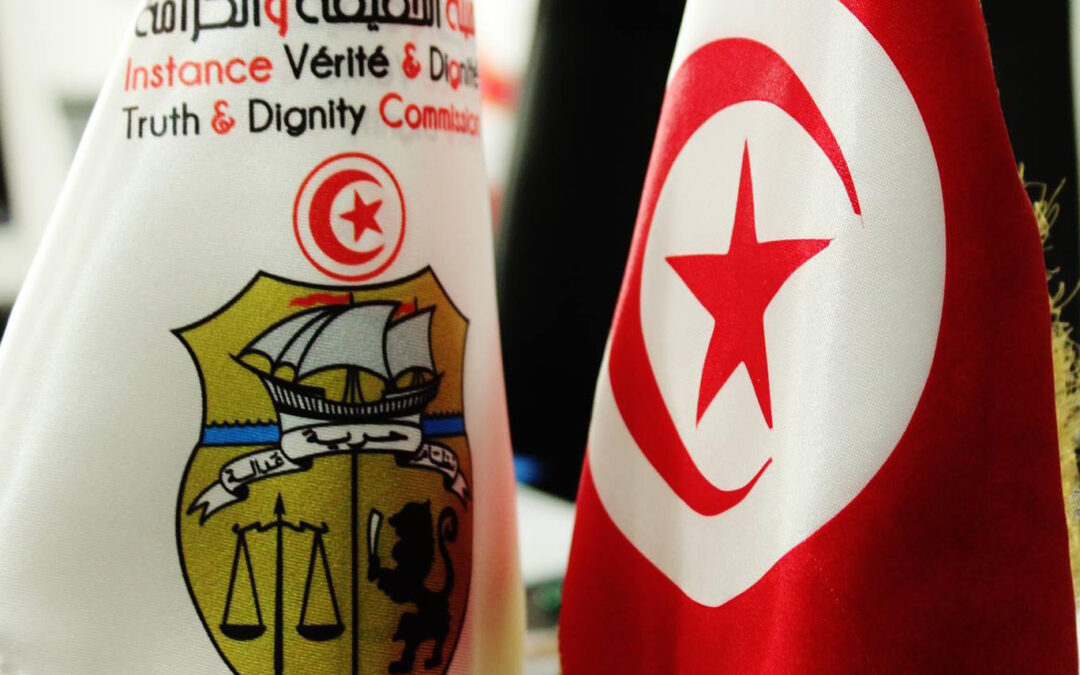
The statement alerts the public of the danger of a bill which dismantles the specialized criminal chambers in Tunisia and replaces them with an institution which would guarantee impunity for those who committed gross violations of human rights in Tunisia between 1955 and 2013.
The statement has been signed by the ICJ as well as other members of the Coalition for Transitional Justice
The statement can be downloaded here:
Link to French Version
Link to Arabic Version