Dec 20, 2017 | News
Legal Advisers from the International Commission of Jurists addressed a locally-initiated forum on human rights held in Yangon in December.
Participants who attended from across the country heard from more than twenty presenters and panelists, speaking on topics including: freedom of religion and belief; human rights in armed conflict; freedom of assembly and expression; and economic, social and cultural rights.
The ICJ’s International Legal Adviser Sean Bain joined a panel discussing ongoing human rights violations in areas of conflict and insecurity.
In November the ICJ published a report, “Questions and Answers on Human Rights Law in Rakhine State,” which lays out applicable national and international law in the human rights crisis there, and steps necessary to improve the situation.
Sean Bain emphasized that rights violations against Rohingya Muslims should also be examined with reference to the overall patterns of violations throughout the country, too often perpetrated by security forces with impunity against peoples of many ethnicities and religions, particularly in conflict areas.
On a panel discussion on religious freedom, Advocate Daw Zar Li Aye outlined relevant provisions in national and international law that protect freedom of religion and belief.
She noted, however, that in practice ambiguous and vague provisions of national laws have been applied in a discriminatory manner against members of minority groups.
Zar Li Aye also suggested that any legislative amendments incorporate clearly stated objectives to protect religious freedom, in line with the State’s international law obligations.
Many participants in the forum noted the emergence of a backlash against the language of human rights in recent months, linked to the crisis in northern Rakhine State.
Asked how human rights defenders in Myanmar may continue their work in this context, Sean Bain responded, “To be truly effective in protecting human rights for all we must stay true to our values and not accept violations against any people in any context.”
The ICJ’s involvement in this Forum is part of ongoing engagement with civil society groups in Myanmar.
Dec 20, 2017 | Artículos, Noticias
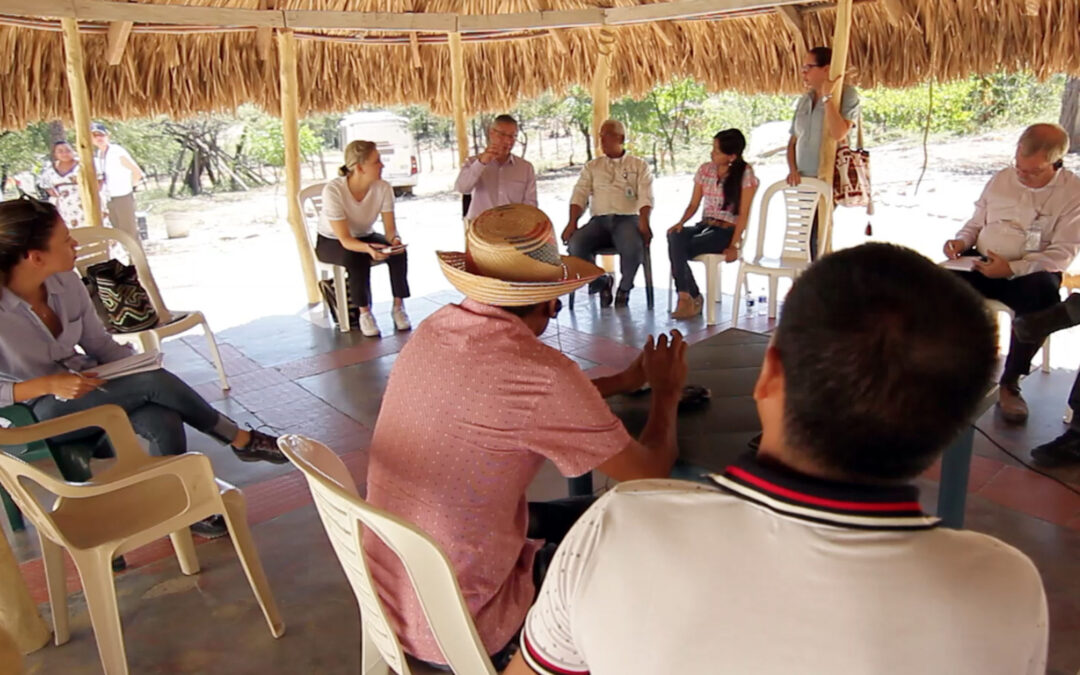
Entre el 9 y el 13 de diciembre, una delegación de la CIJ visitó el departamento de La Guajira para analizar el funcionamiento y eficacia del mecanismo de quejas de la empresa Carbones del Cerrejón LLC (El Cerrejón), propiedad de Glencore plc, Anglo American y BHP Billiton.
La visita se realizó en el marco de la iniciativa de la CIJ sobre la eficacia de mecanismos de reclamación establecidos por empresas para remediar impactos negativos y abusos de derechos humanos.
Los miembros de la delegación eran: Comisionado de la CIJ Marco Sassoli, accompañado con Sr. Carlos Lopez, Asesor Legal Senior de la CIJ, y Sra Laura Knopfel, Investigadora.
El texto de la declaración: Declaracion final
Ver la video:
Dec 18, 2017 | Multimedia items, News, Video clips
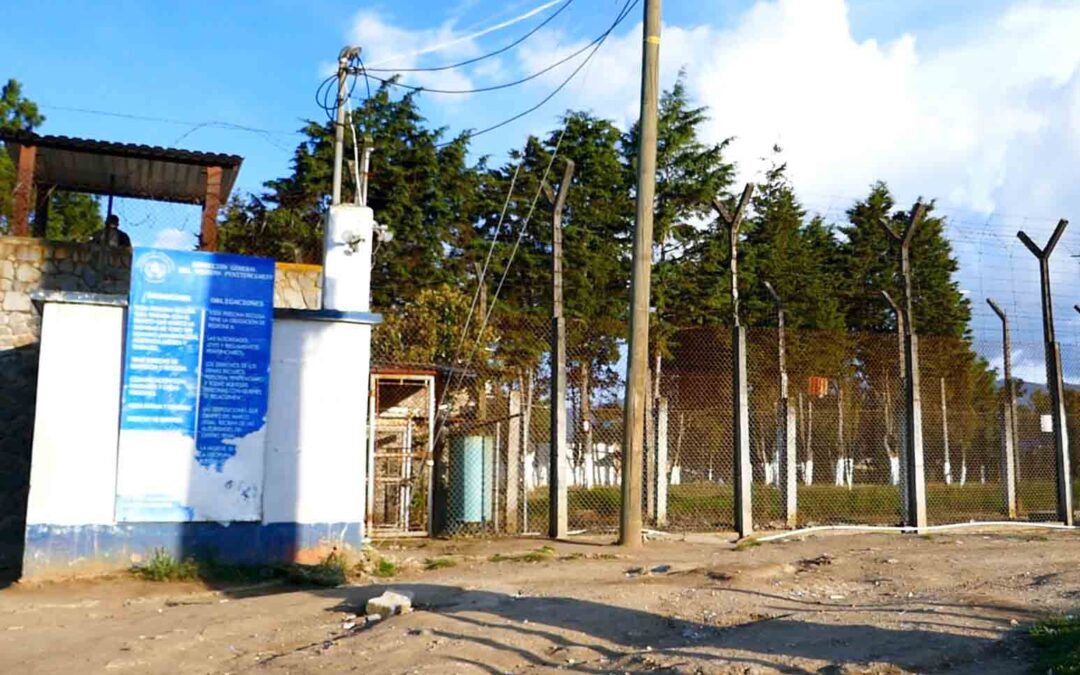
Leaders of indigenous communities in Guatemala, seeking to protect their lands and natural resources from the negative impacts of business operations and infrastructure projects, have been charged with alleged criminal offences and in some instances arbitrarily detained.
This response is designed to silence voices of protest and legitimate demands for free, prior and informed consent for infrastructure or other projects in indigenous communities.
The video includes interviews with Ramón Cadena, ICJ Director for Central America, two indigenous traditional leaders, who have been the victims of arbitrary detention, and a women community leader, explaining the impact of the detention on the family and the whole community.
The criminalization of human rights work is a phenomenon whereby community leaders are charged with different criminal activities because of their opposition to a development model based on extractive industries or the privatization of essential social services.
This development model affects the natural resources (water, land and the environment) on indigenous peoples’ territories.
This is a global phenomenon and is particularly acute in Guatemala.
The exploitation of natural resources, such as open-cast mining and the operations of extractive industries in the territories of indigenous peoples, is one of the main reasons which are behind the crackdown on social protest and human rights work.
The different communities that have been affected seek to defend their territories and oppose the different forms of exploitation of the natural resources found on their territories or in the surrounding areas because it can affect the water supply, the land and the environment.
A number of leaders have been killed because of their opposition to these projects.
Some family members of those killed have in turn taken on the task of opposing these projects and they have also been charged with criminal offences.
In Guatemala, there is also an intense social conflict because of the way in which electricity services are delivered.
As a result of the privatization of the service in 1996, the Guatemalan State has granted concessions to national and international companies to provide electricity services.
Over the years, many users have complained about the poor quality and high cost of the services that these private companies provide.
The National Electricity Commission has failed to respect its legal duty to “ensure that the obligations of the concessionaries and contractors are fulfilled and to protect the rights of users,” which many discontented users have demanded.
The social protests concern the three different phases of electricity production: the generation of electricity, involving the construction of hydroelectric dams by multinational companies that impact on indigenous peoples’ territories, the electricity transmission grids, and the electricity services.
Because of this situation, many electricity users have declared that they are in resistance, citing article 45 of the Guatemalan Constitution that states: “It is legitimate for the people to resist in order to protect and defend the rights and guarantees enshrined in the Constitution.”
Acting on this Constitutional protection has led to human rights attacks on many community leaders, lawyers and human rights defenders.
The ICJ supports access to justice for persons who are victims of these human rights violations.
The ICJ supports lawyers who defend these victims of the criminalization of social protest; it carries our trial observations in significant cases; it promotes dialogue between the communities and the relevant State authorities as well as the local Mayors; and in some cases, it supports submissions before the Constitutional Court.
Nov 30, 2017 | News
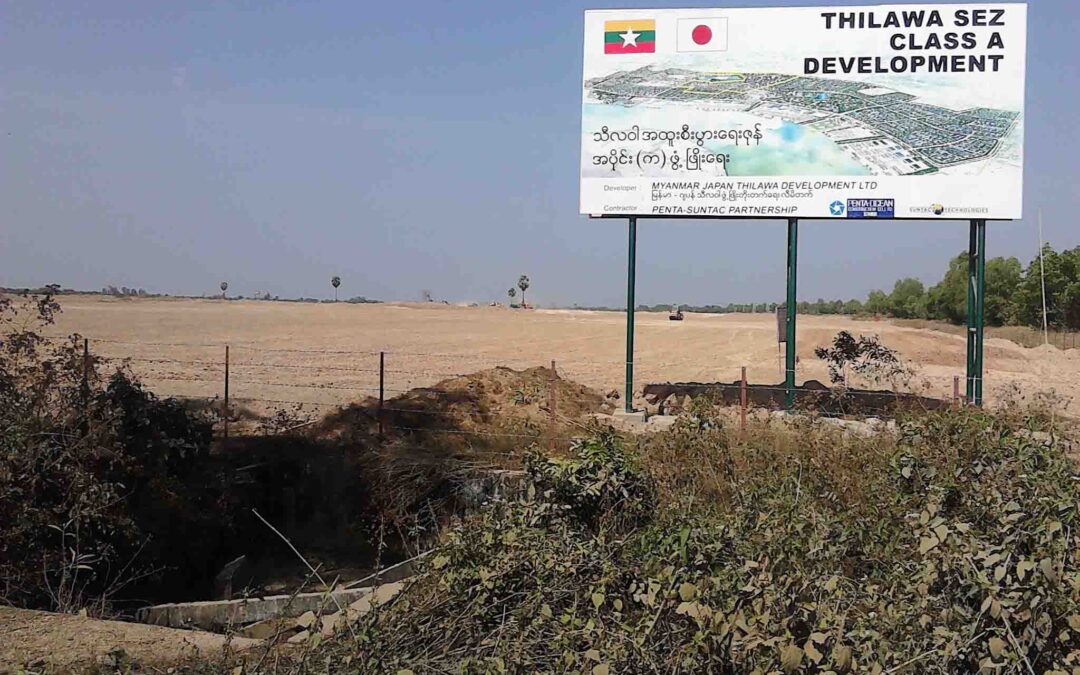
The ICJ addressed representatives of over 400 civil society organizations from all 14 states and regions of Myanmar at the MATA Forum held in the township of Pyin Oo Lwin, close to Mandalay.
Hosted from 28 to 30 November by the Myanmar Alliance for Transparency and Accountability (MATA), the Forum featured seminars and discussions on the ‘The Role of Civil Society Organizations related to Democracy, Federalism, Human Rights and Natural Resource Governance.’
MATA facilitated presentations and discussions by a range of actors on these topics – including by Sean Bain, an International Legal Adviser from the ICJ.
The ICJ’s presentation began with a reflection about key legal concepts, noting the differences between ‘rule by law’ and ‘rule of law’ as understood in the Myanmar context.
MATA members helped facilitate discussion on the application of law in Myanmar, and on key rule of law principles of democracy, human rights, accountability, transparency and justice.
Participants in the Forum were presented with an overview of Myanmar’s laws governing land and investment, assessed in relation to the State’s international legal obligations to respect and to protect human rights.
In particular, Myanmar ratified the International Covenant on Economic, Social and Cultural Rights in October 2017 and its obligations under this treaty will enter into force on 6 January 2018.
It was noted that many national laws – including a proposed new Land Acquisition Bill – fall short on fulfilling the State’s international human rights law obligations.
There was also discussion about how applying the principle of non-discrimination in law and practice is critical for Myanmar’s NLD-led government to meet its international obligations and fulfill its stated commitment to rule of law.
Historical examples were given of legal regimes in South Africa and Australia that legalized discriminatory practices of apartheid and the dehumanization of indigenous peoples. The law must no longer be used in Myanmar as a justification for discrimination.
The ICJ’s involvement in this Forum is part of ongoing engagement with civil society groups in Myanmar.
Nov 22, 2017 | News
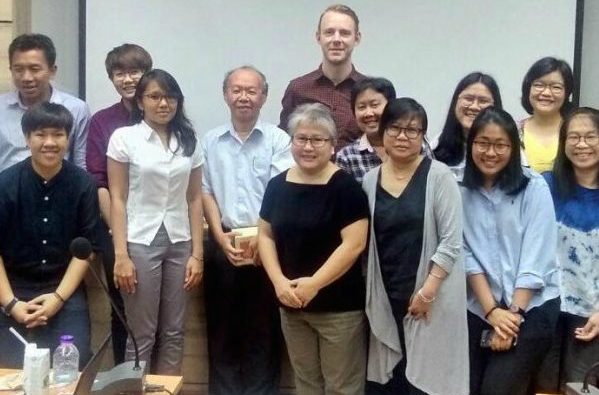
On 22 November, the ICJ, in collaboration with the Legal Research and Development Center under Chiang Mai University’s Faculty of Law, held a roundtable discussion on “Human Rights Litigation concerning the Special Economic Zones in Myanmar and Thailand”.
The objective of the discussion, held on campus at Chiang Mai University, was to identify legal issues and to share experiences regarding strategic litigation and advocacy strategies concerning human rights violations associated with the development of Special Economic Zones (SEZs) in Thailand and Myanmar.
In recent years, both the Thai and Myanmar governments have been trying to attract foreign direct investment into their countries by demarcating specific areas where special regulations concerning, inter alia, public administration, the environment, land or labour rights might be applied.
Proponents of SEZs tend to link their development with jobs and economic growth, however, there is generally limited publicly available information about their economic or public purpose rationale.
The development of SEZs, which requires a lot of land, can undermine the protection of human rights and the rule of law by creating governance structures and permitting processes less stringent than that required under national and international law.
Participants at the discussion included postgraduate students and lecturers from Chiang Mai University’s Faculty of Law, lawyers and representatives from Thai civil society organisations.
The ICJ shared with participants its report analysing the legal framework of SEZs in Myanmar and human rights concerns arising from a case study of Kyauk Phyu SEZ, ‘Special Economic Zones in Myanmar and the State Duty to Protect Human Rights’, during the discussion.
The speakers at the discussion were:
· Sean Bain, ICJ International Legal Advisor, Myanmar
· Sumitchai Hattasan, Director, Center for Protection and Revival of Local Community Rights
· Supaporn Malailoy, EEC Watch, Human Rights and Environmental Lawyer