Mar 9, 2015 | Advocacy
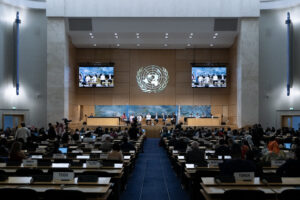
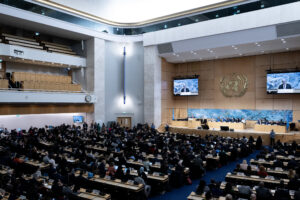
The ICJ supported a statement commenting on the respective reports by the Independent Expert on the Environment and Human Rights and the Independent Expert on Foreign Debt and its impact on Human Rights.
In the context of the Interactive Dialogue with the Independent Experts in the 28th Session of the Human Rights Council, Franciscans International and the Center of Concern, with the support of the ICJ, noted that the reports address, from different perspectives, a wide range of connections between the private sector and governments that many times result in human rights abuses.
The report by the Independent Expert on human rights and the environment, presented an encouraging set of good practices to mitigate environmental damage and its human rights impact.
The report by the Independent Expert on Foreign Debt and its impact on human rights highlighted the links between private lending and the abuses committed by authoritarian regimes.
This report will be followed by another report on applicable legal standards and analysis of whether additional international standards are needed.
Universal-Statement on BHR at HRC28-Advocacy-2015-ENG (full text in PDF)
Feb 9, 2015 | News
Myanmar should continue working with all stakeholders, including affected communities and civil society, to promote a legal framework that balances investors’ needs with human rights, said the ICJ today.
The call comes as the government enters a critical phase of establishing its new law governing investments in the resource-rich country.
“This is a critical moment for the economic development of Myanmar. The laws it implements now will shape investment, economic development and, in turn, human rights for the foreseeable future,” said Daniel Aguirre, ICJ International Legal Advisor. “It is imperative that drafting is not rushed and that laws take into account international human rights laws and standards.”
ICJ has been working directly with Myanmar’s Directorate of Investment and Company Administration (DICA), as well as with Myanmar civil society, on investment law and their potential impact on the human rights of all people in Myanmar.
The International Finance Corporation, in support of DICA, has produced a Draft Investment Law designed to consolidate the Foreign Investment Law (2012) and the Myanmar Citizen Investment Law (2013) to create a level playing field for both local and foreign investors. DICA has now opened the process to civil society consultation.
ICJ conducted a workshop with DICA on bilateral investment treaties in July of 2014. In November, the ICJ submitted feedback on the Draft Investment Law providing expert analysis and flagging issues of concern.
An initial consultation on the Draft Investment Law took place on 29 January 2015. The ICJ along with other civil society organizations met with the IFC and DICA.
“The ICJ is encouraged by DICA’s willingness to consult civil society, including international non-governmental organizations, and hear concerns about investment laws and their potential to curtail important regulations designed to protect, promote and fulfill human rights,” said Aguirre. “The ICJ looks forward to formal engagement in a consultation process that will include both national and international civil society.”
The ICJ remains concerned that the Draft Investment Law establishes significant rights for investors without protecting the rights of those affected by business activity.
The Draft Investment Law would require investors to follow national laws without acknowledging that the existing national legal framework does not adequately protect human rights or provide remedies for those whose rights have been violated.
Furthermore, the Draft Investment Law does not establish or protect Myanmar’s ‘right to regulate’ to protect human rights or other social or environmental needs.
Investment law should indicate Myanmar’s obligation to enact necessary regulations for the protection of human rights, including economic and social rights such as the right to health, in the future in order to avoid legal disputes when adopting these regulations.
“The Draft Investment Law’s proposed legal framework would provide all investors the right to be consulted and challenge any new national law or regulation that may impact their profits,” said Aguirre. “This framework would allow businesses to challenge government policies aimed at addressing legitimate needs within the country, and it could create a regulatory chilling effect in which Myanmar’s government would find itself in the troubling position of evaluating whether the passage of new social policies would lead to costly lawsuits from investors.”
“The draft Law as currently formulated runs the risk of hindering progressive regulation to protect human rights in Myanmar,” said Aguirre. “The ICJ is encouraged that DICA has begun meeting with non-governmental groups and believes that an effective and meaningful consultation will help address key concerns about the Draft Investment Law. The ICJ looks forward to working with the Myanmar Government, with the IFC, and with all other concerned groups in order to promote a law that balances investors’ needs with human rights.”
Feb 2, 2015
An opinion piece by Daniel Aguirre, ICJ’s International Legal Adviser in Myanmar, and Irene Pietropaoli, an independent consultant and researcher on Business and Human Rights based in Yangon.
Jan 20, 2015
Ahead of the upcoming review of the 4th periodic report of Morocco on its implementation of the International Covenant on Economic, Social and Cultural Rights, the ICJ has submitted an information to the UN Committee in charge of monitoring the Covenant.
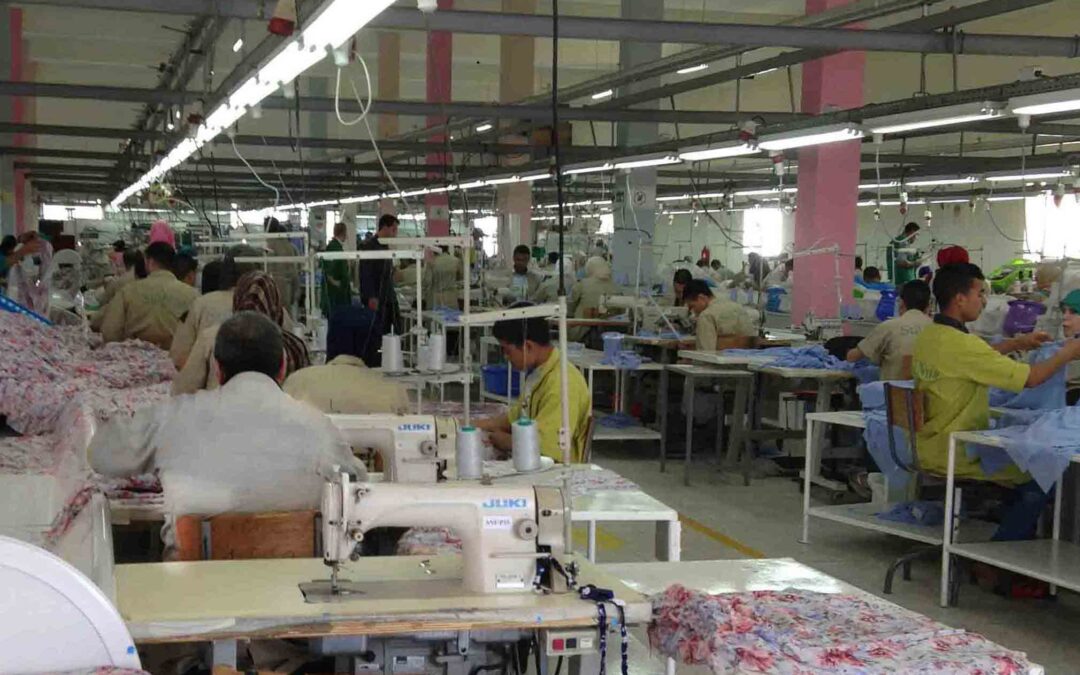
The ICJ submission to the UN Committee on Economic, Social and Cultural Rights draws the Committee’s attention to major concerns over the protection of rights in the country, including the right to just and favourable conditions, the right to an adequate standard of living or the right to health.
The ICJ submission aims at contributing to the development of a list of issues that the Committee will address to the State of Morocco to obtain further information on specific aspects dealt with in the State report.
The Committee will examine Morocco’s fourth periodic report and the State’s response to its list of issues before issuing recommendations at the 56th session in September 2015.
Morocco-ICJ submission to CESCR-Advocacy-legal submission-2015-FRE (full text in PDF)
Read also:
Report: impact of special economic regimes on social rights in Morocco
Morocco: ICJ concludes mission on access to justice for social rights
Morocco: access to justice for economic, social and cultural rights

Dec 3, 2014 | News
Vani Sathisan, ICJ’s International Legal Adviser in Myanmar, and Carlos Lopez, ICJ Senior Legal Adviser on Business and Human Rights made presentations at the annual Business and Human Rights Forum.
Vani Sathisan’s statement highlighted the State duty to protect human rights and provide access to remedies; the need for greater cooperation between businesses and local communities; and possibilities for home governments to cooperate on business and human rights issues.
She underscored that the State duty to protect, respect and fulfil human rights is one that is already grounded in international human rights law and accordingly, Myanmar must adopt and enforce laws – including policies, legislation, and regulations – that are preventative and remedial, and to regulate business conduct and protect the economic, social and cultural rights of its people.
Without proper investment, land and environmental laws, as well as an effective judiciary to enforce these laws and provide appropriate judicial remedies, development projects risk being counterproductive for sustainable development and the protection of human rights in Myanmar.
This panel discussion can be viewed on the UN’s Web TV.
Carlos Lopez Carlos Lopez focused on the work of the Committee on the rights of the child on business and human rights through the adoption of General Comment 16 on States obligations regarding the impact of business on the rights of the child.
The Guiding Principles on Business and Human Rights do not establish legal obligations, but elaborate on the practical implications of those obligations. The legal obligations for States to protect, respect and fulfil human rights are contained in international human rights treaties. One of them is the Convention on the Rights of the Child.
Besides examining State reports and providing conclusions and recommendations, the Committee elaborates General Comments to assist States in their implementation of their legal obligations under the Convention. In February 2013 the Committee adopted General Comment 16 on States obligations regarding the business impacts on the rights of the child. This General Comment was necessary:
· First, because in the Committee’s examination of State reports the issue of impacts of economic actors had arisen repeatedly. The General Comment is a more organized response to these practical and recurrent issues.
· Second, the Committee considered that the existing instruments and guidance did not sufficiently address the particular situation and needs of children. GC16 aims at fulfilling that gap in relation with States while the UNICEF Child Rights and Business Principles does so in relation to business enterprises.
The Committee, with the support of a core group comprising UNICEF, ICJ, Save the Children and OHCHR started a process of reflection, research and global and regional consultations (these took place in Kenya, India and Argentina and an international seminar was held in Sion, Switzerland.
This panel discussion can be viewed on the UN’s Web TV.
Carlos Lopez also moderated a Panel on the rights of the child and business enterprises, under the title Measures for implementing the Convention on the Rights of the Child in the context of business operations.