Dec 1, 2012
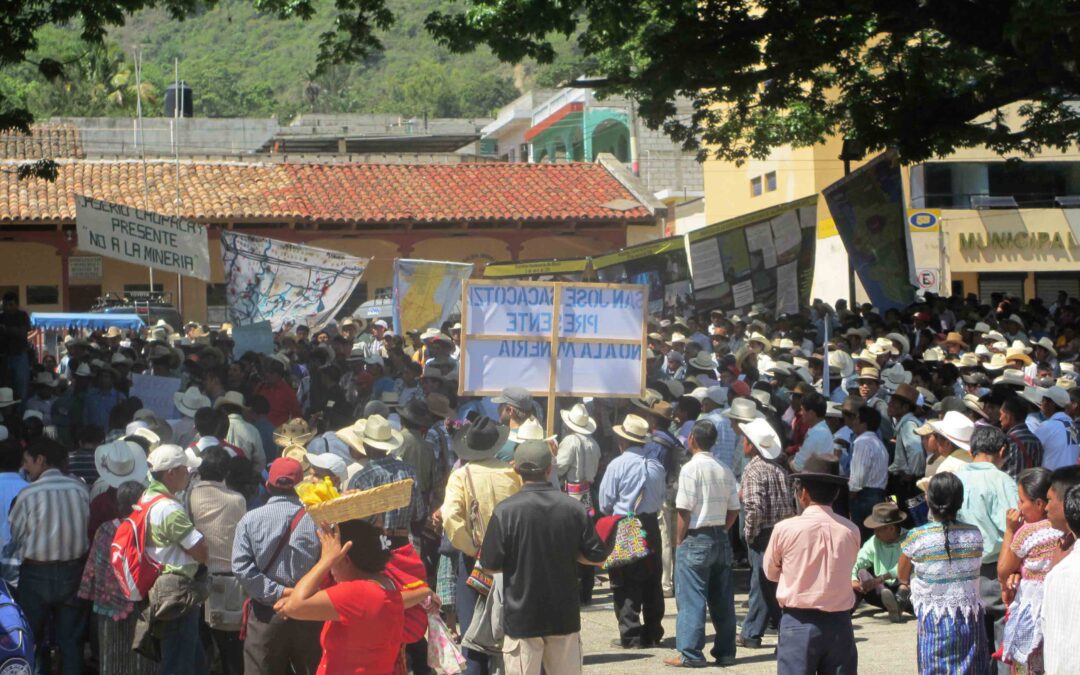
La criminalización de la protesta social en Guatemala es un fenómeno recurrente, con el objeto de deslegitimar a sus actores y anular el impacto político de las organizaciones sociales a través del uso del Derecho Penal como un instrumento de represión.
La región latinoamericana se ha caracterizado por una serie de confl ictos armados durante las últimas décadas del siglo XX y persisten las políticas discriminatorias que han generado descontento en la sociedad.
Las demandas sociales no han encontrado los canales adecuados para materializarse y la protesta social cada vez encuentra más represión por parte de agentes estatales y no estatales.
Con este fin se reprimen las libertades de pensamiento, expresión y reunión fuera de los límites establecidos por el derecho internacional de los derechos humanos.
La presente publicación aborda la criminalización de la protesta social en Guatemala y de sus actores a través del análisis de diferentes conceptos que se relacionan con la temática y de varios casos vinculados a la defensa de los derechos humanos.
En el primer capítulo se aborda la conceptualización de la protesta social y el rol que desempeñan los defensores y defensoras de derechos humanos que deriva en la penalización de sus acciones.
En el segundo capítulo se aborda el contenido de las libertades de pensamiento, expresión y reunión que pueden se objeto de determinadas limitaciones acordes a la normativa internacional de derechos humanos.
En el tercer capítulo se establecen los mecanismos de protección para defensores y defensoras de derechos humanos, tanto en el ámbito internacional como nacional.
En el cuarto capítulo se analizan los patrones de criminalización de la protesta social en algunos casos paradigmáticos en Guatemala, vinculados a la defensa de los recursos naturales de pueblos indígenas.
Guatemala-Criminalizacion de la protesta social-publications-2012-spa (full text in pdf)

Nov 25, 2012
 The commentary on the Maastricht Principles on Extraterritorial Obligations of States in the area of Economic, Social and Cultural Rights was published in the latest issue of the Human Rights Quarterly of November 2012.
This new document provides an analysis of each of the Maastricht Principles as well as the legal sources on which the latter are based.
As such, it will represent an important resource for practitioners and activists who want to protect human rights in a globalized and complex world in which traditional territorial borders have lost their primacy.
In September 2011, the Maastricht Principles had been adopted by 40 international law and Human Rights Experts during a conference convened by the Maastricht Centre for Human rights and the ICJ. They establish a set of Principles defining obligations and responsibilities for the realization of ESCR in the context of the extraterritorial acts and omissions of States.
The Principles build on the Limburg Principles on the Implementation of the International Covenant on Economic, Social and Cultural Rights (1986) and on the Maastricht Guidelines on Violations of Economic, Social and Cultural Rights (1997).
HRQMaastricht-Maastricht Principles on ETO (Full text in pdf)
Maastricht ETO Principles-booklet-2012 (Full text in pdf)
Maastricht ETO Principles-booklet-2012-Fr (Full text in pdf)
Maastricht ETO Principles-booklet-2012-Sp (Full text in pdf)
Nov 22, 2012 | News
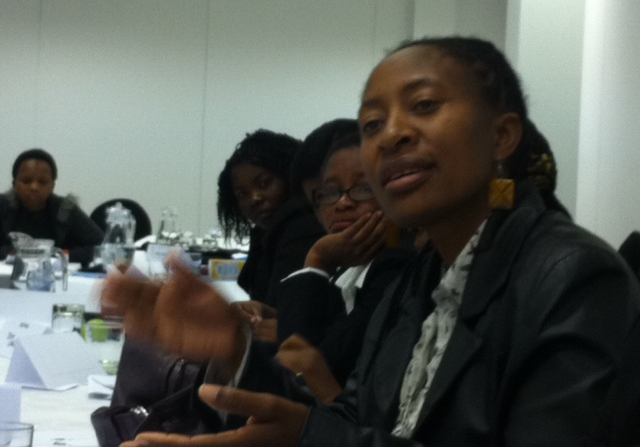
The ICJ, Metlhaetsile and Friedrich-Ebert-Stiftung (FES) held a multi-stakeholder roundtable dialogue on women’s access to justice in Gaborone, Botswana from 20-21 November 2012.
The event, which is a key step in an ongoing ICJ initiative on women’s access to justice in Botswana, brought together a group of experts to discuss and review a draft ICJ/Metlhaetsile/FES report on the obstacles to justice women continue to face in Botswana.
Participants included attorneys, representatives of NGOs and government agencies, human rights defenders, and members of the judiciary.
The forthcoming report will capture and explore the accounts of barriers received from stakeholders accross Botswana through field research during 2011-2012.
It will include information on the relationship between the gaps in the realization of economic and social rights and the obstacles faced by women to access justice.
It will also identify a series of responsive recommendations elaborated by roundtable participants.
Nov 19, 2012 | Agendas, Events
The ICJ is holding the second part of a seminar on Human Rights and the Rule of Law in a Cross-Cultural Setting from 22 – 23 November 2012 in Bangkok, Thailand. The first part was held last June 2012.
This seminar is organized in collaboration with the Department of Rights and Liberties Protection of the Ministry of Justice Thailand. It is aimed at mid-level government officers so that they may develop a deeper knowledge of the Rule of Law and human rights. This seminar also aims to encourage Thai civil servants across the justice sector to effectively address conflict and crisis within Thailand through a Rule of Law-based approach.
Speakers include Mr. Colin McLean, former Chief Inspector from the Police Service of Northern Ireland, and Mr. Ciaran O’Maolain, former head of policies of the Northern Ireland Human Rights Commission.
Nov 15, 2012 | Incidencia
El presente informe sistematiza las consideraciones principales relativas al respeto de los derechos humanos en los municipios de San Andrés y La Libertad, así como aquellas relativas al derecho de acceso a la justicia.
El informe cubre el período de enero de 2010 a julio de 2011.
El informe ha sido preparado en el marco del proyecto sobre Reforma a la Justicia y Fortalecimiento del Estado de Derecho en Guatemala (EIDHR/2,009/224-504) que la CIJ implementó con apoyo de la Unión Europea; una de las actividades de dicho proyecto consistió en brindar asesoría puntual a las comunidades indígenas en materia de derechos económicos, sociales y culturales.
La CIJ ha estado llevando a cabo varias actividades relacionadas con la situación de los derechos humanos en el departamento de Petén, sobre todo en los municipios de San Andrés y La Libertad, en donde radican diferentes comunidades que enfrentan serias violaciones a los derechos humanos, mismas que están generando un delicado confl icto social que afecta a los hombres, mujeres y niños que habitan esas zonas.
Además, en el marco de dicho proyecto, era necesario elaborar un informe sobre el derecho de acceso a la justicia, partiendo de un caso concreto.
La CIJ decidió llevar a cabo este informe, tomando como caso paradigmático la situación que viven las comunidades del departamento de Petén.
En el contexto de este proyecto, a partir de enero de 2010 la CIJ asesoró a varias personas con el objeto de presentar una acción de inconstitucionalidad en contra de la prórroga del Contrato Petrolero 2-85, que el Estado de Guatemala autorizó aún en contra de la legislación constitucional y ambiental.
La compañía petrolera PERENCO ha operado en el departamento de Petén desde 1985; la zona en donde está dicha compañía fue declarada “zona protegida” por la legislación ambiental aprobada en la década de los años noventa.
Ante el vencimiento de su contrato de operaciones petroleras veinticinco años después, el Estado de Guatemala llevó a cabo una reforma legal que permitió la prórroga por quince años más de todo contrato petrolero; dicha reforma debería entenderse para todos aquellos futuros contratos petroleros o sea que a partir de dicha reforma, todos los contratos que se aprobasen en el futuro, podrían prorrogarse por 15 años más.
Sin embargo, mediante la aplicación retroactiva de la ley y de otras ilegalidades como la violación al debido proceso y a otras garantías, se aprobó la prórroga del contrato mencionado.
La CIJ presentó la acción de inconstitucionalidad referida con anterioridad, que fue rechazada in limine, o sea que la Corte de Constitucionalidad ni siquiera entró a conocer el fondo del asunto.
Por otro lado, mientras que a la compañía PERENCO se le prorrogaba el contrato 2-85 aún en contra de disposiciones constitucionales, a las comunidades se les venía calificando permanentemente como “población invasora” de la zona protegida.
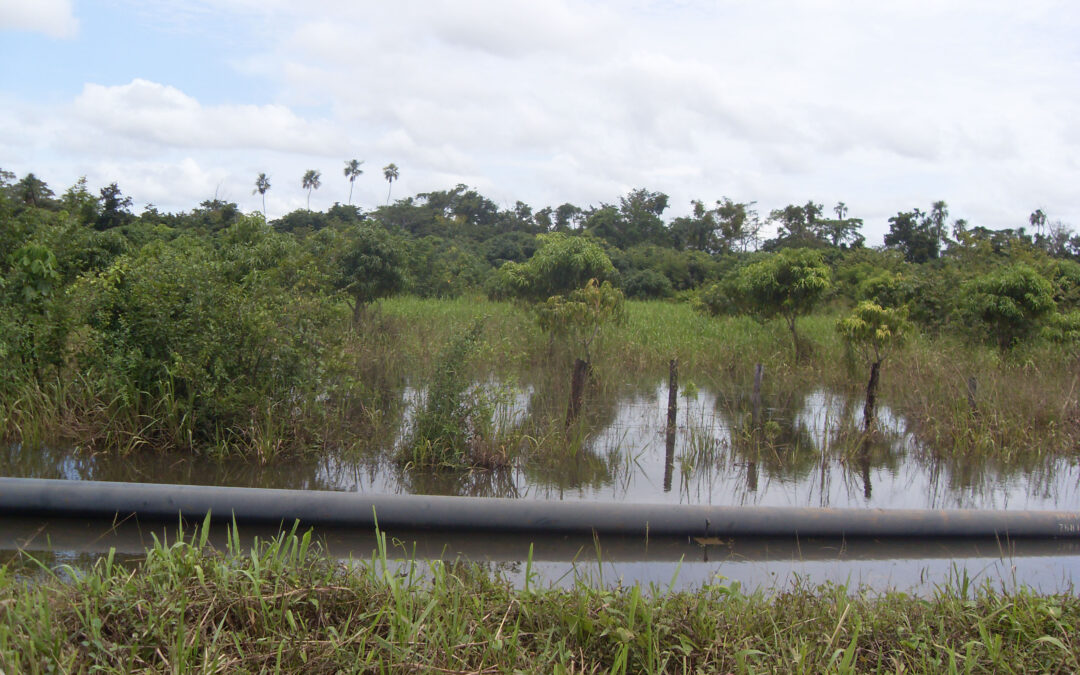
Tanto las comunidades como la compañía PERENCO, se encuentran dentro de la zona protegida por el Estado, zona que se considera debe ser protegida por existir una de las reservas de humedales más importantes de Latinoamérica. Según dirigentes de diferentes comunidades, la compañía petrolera está perforando pozos en la zona central del área protegida causando daños irreparables al medio ambiente.
Los techos de lámina de sus viviendas también han sido afectados por los gases que emanan de dicha actividad, daño que se extiende a la salud de los pobladores.
En general, la situación de las comunidades que viven en los municipios de San Andrés y La Libertad es de suma vulnerabilidad.
La CIJ ha constatado que entre las causas principales de esta vulnerabilidad se cuentan la negación por parte del Estado de toda posibilidad de acceso a la justicia, la extrema pobreza en que viven, la falta de certeza jurídica sobre sus tierras, la política de desalojos que el Estado ha venido implementando desde el segundo semestre de 2010, la presencia del narcotráfico en sus zonas o regiones, la política de remilitarización y las consecuencias de la exploración y explotación petrolera que afectan su salud y otros derechos.
A esto debe sumarse la falta de respeto al derecho a la consulta. A estas comunidades se les niegan sus derechos con el argumento que son “invasoras” y que están ilegalmente en una zona protegida, mientras que a la compañía PERENCO se le prorroga el contrato petrolero.
El presente informe sistematiza las consideraciones principales relativas al respeto de los derechos humanos en los municipios mencionados, así como aquellas relativas al derecho de acceso a la justicia.
Guatemala-Informe Acceso a la Justicia-Caso SA y LT Peten-publications-2012-spa (full text in pdf)