Mar 10, 2016 | Advocacy, Non-legal submissions
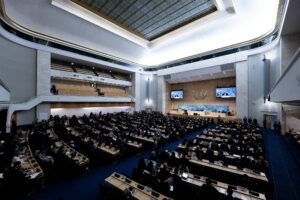
The ICJ today delivered an oral statement on counter-terrorism legislation in these countries, in an interactive dialogue at the UN Human Rights Council with the the Special Rapporteur on the promotion and protection of human rights and fundamental freedoms while countering terrorism.
The text of the statement follows:
COUNTER-TERRORISM LEGISLATION IN EGYPT, TUNISIA AND PAKISTAN
10 March 2016
Mr President,
The International Commission of Jurists (ICJ) welcomes the attention given by Special Rapporteur Ben Emmerson, to defective counter-terrorism legislation that facilitates violations of human rights, as reflected for example by communications on Egypt, Tunisia and Pakistan in the Communications Report of Special Procedures (A/HRC/31/79).
Numerous counter terrorism laws promulgated or applied in these and other countries include overly broad or imprecise definitions of terrorism-related offences. These extend the laws’ reach beyond acts of a truly terrorist character. Such laws can be and are abused or misapplied to criminalize the legitimate and peaceful exercise of fundamental rights and freedoms.
Further, these laws provide sweeping immunities that contribute to pervasive impunity for unlawful killings by security forces.
These laws also facilitate violations of the right to liberty and fair trial rights and insufficiently safeguard against abuses in detention. In Tunisia a person can be held in police custody without being brought before a judge for up to 15 days. In Pakistan, suspects can be held in preventive detention without charge, and without being brought before a judge, for up to 90 days.
Egypt and Pakistan continue to use military courts to conduct unfair trials of civilians in terrorism cases, contrary to international standards. At least eight civilians sentenced to death in secretive trials by military courts in Pakistan have been hanged since January 2015. “Expedited” procedures in terrorism circuit courts in the Egyptian civilian system also give rise to fair trial concerns.
The ICJ invites the Special Rapporteur to comment on measures or mechanisms that states, inter-governmental organisations, and civil society can take to help ensure that states such as Tunisia, Egypt and Pakistan repeal or amend counter-terrorism legislation to bring it into line with their international human rights obligations and commitments.
Mar 4, 2016 | Advocacy, Non-legal submissions
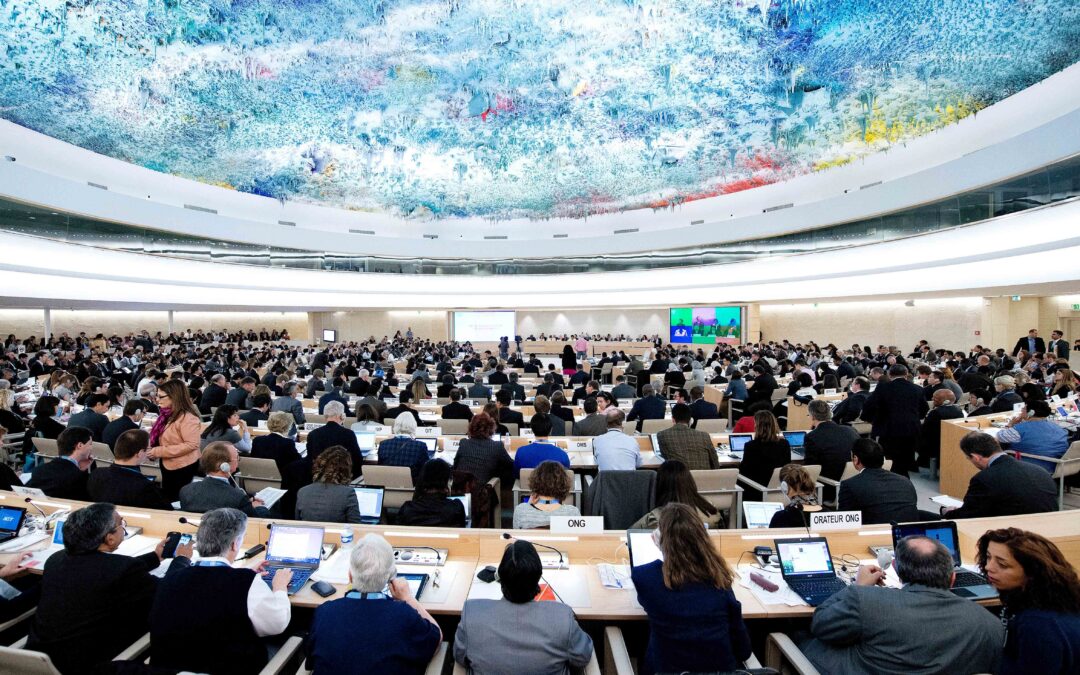
The ICJ prepared an oral statement on the situation of human rights defenders in Malaysia, for today’s interactive dialogue at the Human Rights Council with the UN Special Rapporteur on the situation of human rights defenders.
The statement could not be delivered in the limited time available for civil society statements; its text is set out below:
ICJ Oral Statement in the Interactive Dialogue with the Special Rapporteur on the situation of human rights defenders, Mr. Michel Forst
SITUATION OF HUMAN RIGHTS DEFENDERS IN MALAYSIA
3 March 2016
“The International Commission of Jurists (ICJ) welcomes the report of the Special Rapporteur on the situation of human rights defenders.
The work of human rights defenders is particularly under challenge in States where governments have conferred on themselves sweeping powers to restrict human rights on grounds of national security. One example, as reflected in the Special Rapporteur’s “Observations on communications” (UN Doc A/HRC/31/55/Add.1), is the situation of human rights defenders in Malaysia.
The ICJ welcomes the Attorney General’s decision to drop sedition charges against law lecturer Dr. Azmi Sharom; however, the Sedition Act and the Peaceful Assembly Act are still being abused to harass human rights defenders and others. Most recently, the High Court of Malaysia sentenced activist Hishamuddin Rais to nine months in jail for sedition, for calling for peaceful protest against the results of the 2013 general election on the basis that it was not transparent. Maria Chin Abdullah and Jannie Lasimbang, organizers of the Bersih 4.0 peaceful assembly calling for good governance, were charged under the Peaceful Assembly Act for allegedly omitting to inform the police about the assembly. There have reportedly been at least 91 cases of arrests, charges or investigations for sedition during 2015, and more than 30 cases of arrests under the Peaceful Assembly Act since 2013. Most, if not all, of these people are human rights defenders, including Eric Paulsen, the Director of Lawyers for Liberty, Adam Adli, a human rights activist, and Mandeep Singh, the Secretariat Manager of Bersih.
Unless repealed or drastically revised, these laws will continue to facilitate sweeping and arbitrary repression of freedoms of expression, assembly and association of human rights defenders, under the flag of national security. This contravenes the UN Declaration on Human Rights Defenders and numerous other resolutions of the Human Rights Council and General Assembly, including General Assembly resolution 70/161, adopted by the General Assembly in December with Malaysia voting in favor. Among other things, resolution 70/161 urged States ensure that human rights defenders are able to exercise the rights to freedom of opinion, expression, peaceful assembly and association, which are essential for the promotion and protection of human rights; and it emphasized that national security measures must not hinder the work and safety of individuals engaged in promoting and defending human rights.
In this context, the ICJ would like to ask the Special Rapporteur to comment on the obligations of governments to repeal or amend legislation that allows for abusive arrest or prosecution of human rights defenders on grounds such as “national security”, “sedition” or for not giving prior notice of assemblies.”
Mar 1, 2016
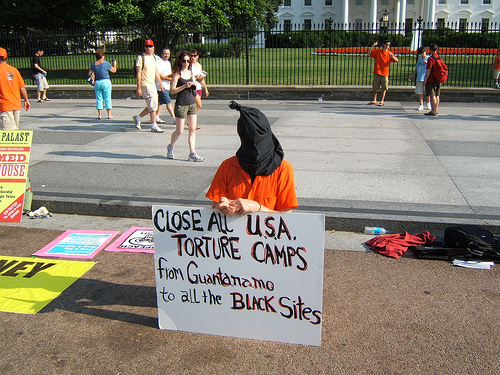
On 1 March 2016, the ICJ, REDRESS and the World Organisation against Torture (OMCT) made a joint submission to the UN Committee against Torture in light of the United States of America’s One-Year Follow-up response to the Committee’s Recommendations.
The joint submission focuses on two of the “principal subjects of concern and recommendations” identified by the Committee for follow up in its December 2014 Concluding Observations and Recommendations following its review of the USA’s implementation of the Convention against Torture and Other Cruel, Inhuman or Degrading Treatment or Punishment.
The two topics are “Inquiries into allegations of torture overseas” and “Guantánamo Bay detention facilities” and they are most closely linked to the original submission the ICJ, REDRESS and OMCT made jointly in advance of the State party’s examination in October 2014, entitled “Rendered Silent: Ongoing violations arising from the denial of “High Value Detainees”’ right to complain of torture and other ill-treatment”.
Given the US Government’s inadequate response, in today’s joint submission, the ICJ, REDRESS and OMCT urge the Committee to request it to provide additional information within six months in relation to compliance with the Committee’s recommendations concerning the two topics mentioned above.
USA-CATFollowUp-Advocacy-Legal submissions-2016-ENG-rev1 (full text, in PDF)

Feb 19, 2016
The ICJ, with other NGOs, today published comments on the proposed EU counter-terrorism Directive, which addresses the “foreign fighters” phenomenon.
The briefing paper analyses the compliance of the proposed Directive with international law, including international human rights law.
In particular, it raises concerns regarding the wide definition of terrorism, and the inclusion of broadly-defined offences of participation in the activities of a terrorist group, public provocation to commit a terrorist offence, receiving training for terrorism, and travelling abroad for terrorism.
The paper makes recommendations for amendment to the text to guard against arbitrary or discriminatory interference with human rights in the implementation of such offences, and to ensure compliance with the principle of legality.
EU-Directive terrorism-Advocacy-Analysis Brief-2016-ENG (full text, in PADF)

Feb 9, 2016
Today, the ICJ intervened before the European Court of Human Rights in two cases against the United Kingdom challenging the compliance of mass surveillance programmes with the European Convention on Human Rights.
The ICJ submitted third party interventions in the cases Big Brother Watch and others v. the United Kingdom and Bureau of Investigative Journalism and Alice Ross v. the United Kingdom.
In its interventions, the ICJ addressed:
- the scope of the rights to privacy and freedom of expression within the meaning of articles 8 and 10 ECHR and of their limitations in relation to metadata;
- the attribution of State responsibility under international law for Convention violations caused via mass or ‘bulk’ surveillance programmes, in particular those involving the gathering of metadata and the related positive obligations of states, and
- the application of the Convention to the extra-territorial dimensions of mass surveillance programmes on the enjoyment of these rights.
UK-ICJ-AmicusBrief-BBW&others-ECtHR-legalsubmission-2016 (download the intervention in BBW and others v UK)
UK-ICJ-AmicusBrief-BIJ&Ross-ECtHR-legalsubmission-2016 (download the intervention in BIJ and Ross v UK)

![Smoke rises after an Israeli air strike on the village of Taybeh in southern Lebanon [Source: Al Jazeera]](https://www.icj.org/wp-content/uploads/2026/03/Screenshot-2026-03-20-at-15.56.24-300x200.png)