Mar 31, 2015 | News
The present form of the recently tabled draft Prevention of Terrorism Act, also known as POTA, violates international standards and seeks to reintroduce detention without trial, said the ICJ.
The Malaysian government claims that the draft POTA, which was tabled yesterday in Parliament for its first reading, together with 7 other amendments, is aimed at curbing terrorist threats in the country.
“The draft law, as it is now, is susceptible to abuse,” said Emerlynne Gil, ICJ’s International Legal Adviser for Southeast Asia. “It is very disturbing that the POTA has very similar elements that were in the problematic and now repealed 1960 Internal Security Act that was previously used to silence government opposition and curtail freedom of expression in the 1980s.”
For example, the ICJ notes with concern that the draft law allows a “board” that is not a court to order and extend detention for up to four years.
Only one of the members of the board is required to have any legal training at all.
Detention orders issued by the “board” cannot be challenged in any court, except on procedural issues.
The ICJ urges members of Parliament in Malaysia to amend the existing draft law so that it will not reintroduce draconian preventive detention measures, as in the repealed Internal Security Act.
The Parliament of Malaysia should either reject the draft law or amend its provisions to respect human rights.
CONTACT:
Emerlynne Gil, ICJ International Legal Adviser, e: emerlynne.gil(a)icj.org or m: +668 4092 3575

Mar 26, 2015 | News
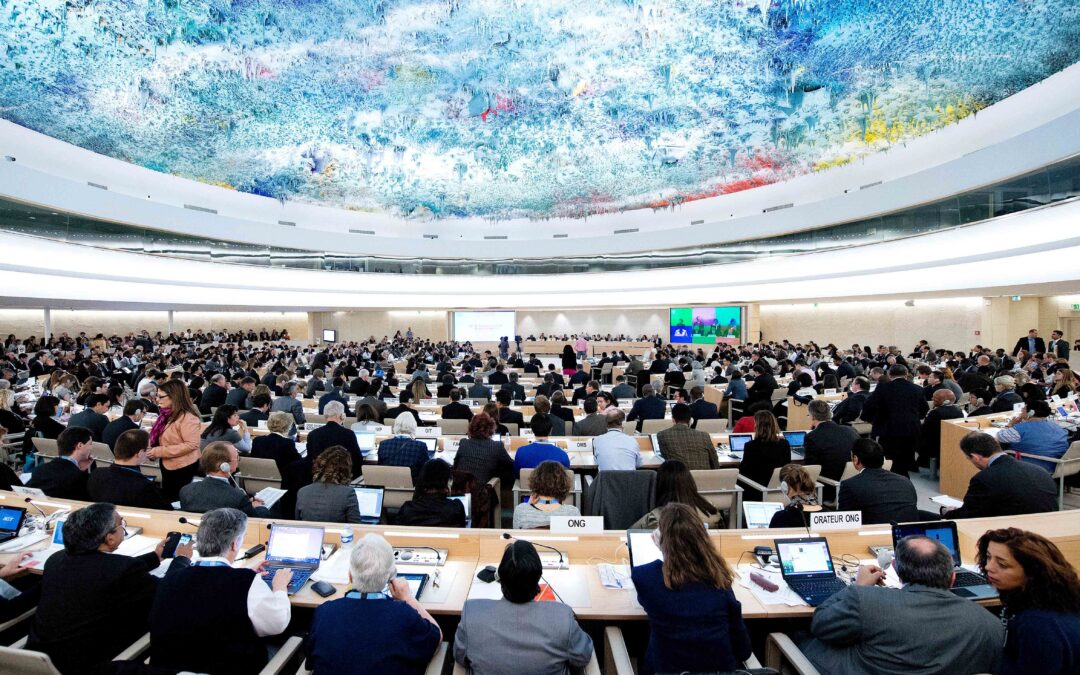
The UN Human Rights Council today adopted a landmark resolution on “the right to privacy in the digital age” that will establish for the first time a UN Special Rapporteur on the Right to Privacy.The resolution faced some challenges during negotiations, but was adopted without a vote (i.e. by consensus).
The Rapporteur will be appointed later this year. The Council has invited him or her to include in initial reports to the Council and UN General Assembly, a focus on the challenges to the right of privacy arising from developments in digital and communications technology in “the digital age”. However, the mandate is able to deal with all aspects of the right to privacy.
The initiative has been strongly supported by civil society organisations including the ICJ, including in the form of a joint open letter, and a joint oral statement on behalf of some 92 NGOs from around the world.
The draft resolution, as adopted, may be downloaded here: HRC28-Privacy-DraftRes-2015
Mar 20, 2015 | Advocacy
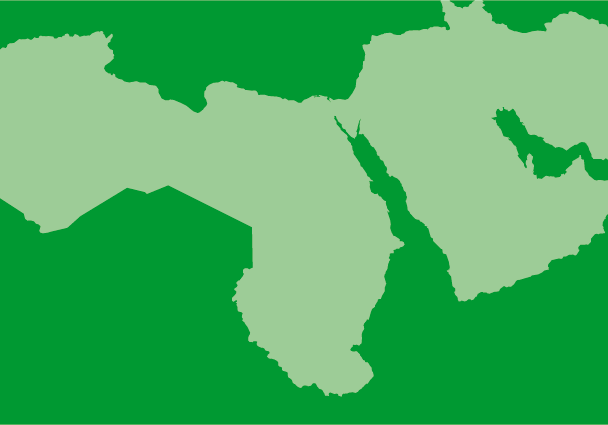
The ICJ today joined a call with Libyan, regional and other international NGOs for the Human Rights Council to create an independent inquiry mechanism into serious human rights and humanitarian law violations in Libya.
The escalating armed conflict and significantly deteriorating human rights situation in Libya requires a strong and urgent response from the Human Rights Council.
The statement calls for the creation of an independent inquiry mechanism with the mandate to investigate and ensure accountability for gross human rights and humanitarian law violations occurring throughout the country including attacks on civilians, the widespread use of torture, arbitrary detention, enforced disappearances and unlawful killings.
The statement outlines the ongoing impunity for those responsible for violations, the inability of the Libyan criminal justice system to deal with such crimes and it calls on the Human Rights Council to encourage Libya’s cooperation with the ICC.
Libya-HRC joint Statement-Advocacy-2015-ENG (full text in PDF)
Libya-HRC joint Statement-Advocacy-2015-ARA (full text in PDF)
Mar 19, 2015 | Advocacy, Legal submissions, News
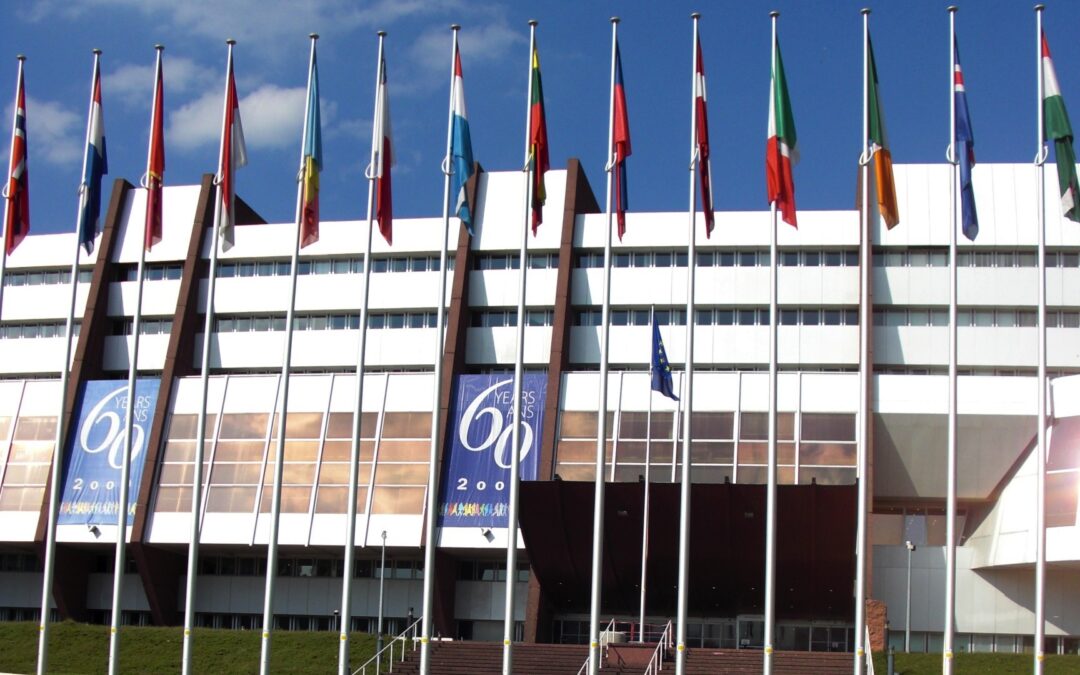
The ICJ and Amnesty International have presented a submission on the draft of an Additional Protocol supplementing the Council of Europe Convention on the Prevention of Terrorism.
In their submission, the ICJ and AI outlined before the Committee on Foreign Terrorist Fighters and Related Issues (COD-CTE) of the Council of Europe the general principles of human rights law related to the issue of foreign fighters and the implementation of Security Council resolution 2178(2014) and made observations on the draft criminal offences contained in the draft protocol.
The submission outlines positions and concerns with relation to:
- The lack of definition of central concepts like “terrorism”, “terrorist acts”, and “foreign fighters”
- The risk of introducing criminal offences lacking the clarity, accessibility and foreseeability required by the principle of legality
- The risk of conflation of of different legal regimes, notably of international humanitarian law and ordinary criminal law
- The need to investigate and prosecute existing crimes under international law
- The need to ensure that any criminalisation of acts or omissions must have a close connection to the commission of the principal criminal offence, with a real risk that such a principal criminal act would in fact take place
- Specific comments on the draft offences of participation in an association or group for the purpose of terrorism; receiving training for terrorism; travelling abroad for the purpose of terrorism; funding travelling abroad for the purpose of terrorism; organizing or otherwise facilitating travelling abroad for the purpose of terrorism.
CouncilofEurope-Submission-ForeignFighters-Advocacy-Legal Submission-2015-ENG (download the observations)
Mar 13, 2015 | Advocacy, Non-legal submissions
The Colombian Commission of Jurists, an affiliate of the ICJ, today called for the UN Human Rights Council to uphold the use of civilian courts, rather than military tribunals, to try civilians and to adjudicate claims for human rights violations.
An oral statement to the UN Human Rights Council highlighted that:
- military tribunals should as a matter of principle have no jurisdiction to try civilians or to adjudicate claims of serious human rights violations;
- These matters should be the domain of civilian courts; and
- The jurisdiction of military tribunals should be restricted to specifically military offenses committed by military personnel.
The oral statement emphasised to the global reach of the issue, referring by way of example to the military commissions established by the United States of America at Guantánamo Bay, as well as recent negative developments in Colombia, Egypt, Thailand and Pakistan.
The statement noted that the Principles Governing the Administration of Justice Through Military Tribunals presented to the Commission on Human Rights by Emmanuel Decaux in 2006 (UN Doc E/CN.4/2006/58), are widely referenced, but have yet to receive full recognition by the Human Rights Council. The statement added its support to the calls by the Special Rapporteur on Independence of Judges and Lawyers, the Working Group on Arbitrary Detention, and others, for the Council to endorse and seek implementation of the Principles without further delay.
The statement responds to an expert consultation on the administration of justice through military tribunals convened by the Council (UN Doc A/HRC/28/32).
The full oral statement can be downloaded in pdf format here: Advocacy-HRC28-MilitaryCourts-OralStatement-2015
Said Benarbia, Director of ICJ’s Middle East North Africa Programme participated in the expert consultation.
His statement can be found here: MENA-Military Courts HRC28-Advocacy-2015-ENG (full text in PDF).
Thailand exercised its right of reply, which can be viewed in the UN webcast archive, here.

![Smoke rises after an Israeli air strike on the village of Taybeh in southern Lebanon [Source: Al Jazeera]](https://www.icj.org/wp-content/uploads/2026/03/Screenshot-2026-03-20-at-15.56.24-300x200.png)