Jul 22, 2015
The ICJ has joined with lawyers’ organisations and other NGOs in an open letter to China’s leaders expressing concern about a recent wave of arrests and other interference with lawyers in the country.The letter can be downloaded in PDF format here:
China-Lawyers-Advocacy-OpenLetter-2015-Eng (English)
China-Lawyers-Advocacy-OpenLetter-2015-Chi (Chinese)
Jul 8, 2015 | News
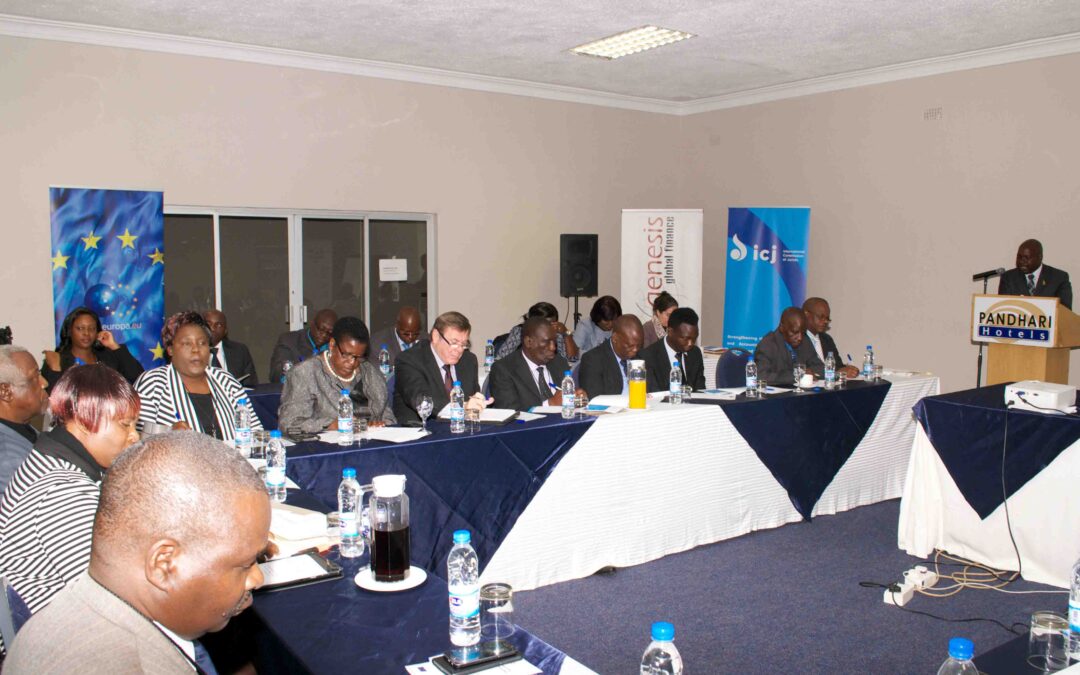
The National Prosecuting Authority (NPA) of Zimbabwe convened its first strategic planning workshop with technical support from the ICJ, under recently launched European Union (EU) funded project to contribute to an improvement in administration of justice in Zimbabwe.
The strategic planning workshop took place in Harare from 6 to 8 July 2015.
The NPA is established under section 259 of the 2013 Constitution as a separate, independent and accountable institution responsible for instituting and undertaking criminal prosecutions on behalf of the State, promoting a just and fair system for all persons approaching the courts and protecting the rights of the arrested and detained persons as provided for by the Constitution.
The strategic plan will allow the NPA to set its vision, objectives and including stakeholders’ expectations as guided by the Constitution and the National Prosecuting Authority Act for the next 5 years.
The NPA held this strategic plan as its first ever strategic stakeholder’s engagement since its establishment under the Constitution in May 2013.
To validate and ground the strategic plan and outputs, the NPA invited civil society organizations, law based institutions, human rights advocates, women lawyers associations, legal aid institutions, the Parliament Thematic and Standing Committee representatives, law enforcement agencies, and law professors, among others.
The Judicial Service Commission and Law Society of Zimbabwe, ICJ’s partners in EU funded project on improvement in the administration of justice, also attended the NPA strategic planning session.
The strategic plan will inform further interventions and activities for strengthening the observance of the rule of law, fair trial and access to justice by the NPA with support from ICJ’s EU funded project.
Once developed and adopted, the strategic plan will further open opportunities for other technical partnerships and funding opportunities for the NPA.
Contact:
Arnold Tsunga, ICJ Regional Director for Africa, t: +27 73 131 8411, e: arnold.tsunga(a)icj.org

Jul 2, 2015 | News
The Royal Thai Government must immediately end its harassment and intimidation of human rights lawyer, Sirikan Charoensiri, the ICJ said today.
Sirikan Charoensiri (photo), a lawyer with Thai Lawyers for Human Rights (TLHR), has been providing legal aid to 14 students who were arrested on 26 June 2015 after carrying out peaceful protests calling for democracy and an end to military rule.
Since then, the Royal Thai Police have threatened Sirikan Charoensiri with legal action, publically announced they are considering charging her with a crime, and visited her home and questioned her family.
“The government must immediately end its harassment and intimidation of human rights lawyer Sirikan Charoensiri,” said Matt Pollard, Head of the ICJ’s Centre for the Independence of Judges and Lawyers in Geneva. “The case against her clients clearly violates Thailand’s obligations under international law, and cannot be a valid basis for the police to take any action against her for defending their rights.”
On 30 June 2015, the ICJ met in Geneva with staff members of the United Nations Special Rapporteurs on the Independence of Judges and Lawyers, and on the Situation of Human Rights Defenders, in order to bring Sirikan Charoensiri’s case to their attention.
“The ICJ has been repeatedly warning of Thailand’s steady slide away from open democracy and the rule of law,” added Pollard. “These actions of the police, targeting peacefully protesting students with prosecution in a military court, and then targeting the lawyer who comes to their defence, underscores the urgent need to restore respect for human rights in Thailand.”
Contact:
Matt Pollard, Senior Legal Adviser, ICJ’s Centre for the Independence of Judges and Lawyers, t: +41 22 979 38 12, e: matt.pollard(a)icj.org
Background
The 14 students were arrested during the evening of 26 June 2015 and were brought to a police station in Bangkok and then to the Bangkok Military Court for a hearing on pre-trial detention, which proceeded until midnight.
The students have been charged with violating order 3/2015 of the National Council for Peace and Order (which prohibits the public assembly of more than five people for political purposes) and a ‘sedition’-type offence under section 116 of Thai Criminal Code, which carries a maximum sentence of seven years imprisonment.
Upon hearing of the students’ arrest, Sirikan Charoensiri and three other lawyers drove in her car to the Bangkok Military Court in order to provide legal aid to the students.
Following the hearing and during the early morning of 27 June 2015, the police asked Sirikan Charoensiri for her permission to search her car for the student’s phones, without a warrant. She refused to consent to the warrantless search. As a result, the Police impounded her car, which contained the lawyers’ case files and personal computers, and five phones belonging to the students.
At 12:45pm, Sirikan Charoensiri went to the police station to file a complaint of malfeasance regarding the seizure of her car. The police refused to accept the complaint and in the meantime another police team searched her car with a warrant. Five phones belonging to the students were seized as evidence.
At 18:00pm, Sirikan Charoensiri again attempted to file a complaint at the police station for malfeasance. A senior investigator told her that the police had power to search her car and suggested that if she filed a complaint, it would not finish there and that the police would consider countering with some form of legal action against her. The police finally accepted the complaint at 11:00pm.
On 28 June 2015, a senior police officer told the media that they had found “important evidence” in Sirikan Charoensiri’s car and are considering whether to charge her with a crime.
On 29 June 2015, the police visited Sirikan Charoensiri’s family home and asked her parents to identify her in photos and questioned them about her background.
The International Covenant on Civil and Political Rights (ICCPR), to which Thailand is a State Party, guarantees the right to peaceful assembly; the right to freedom of expression; the prohibition of arbitrary arrest or detention and the right to a fair and public hearing by a competent, independent and impartial tribunal established by law (including the right of prompt access to a lawyer and precluding jurisdiction of military courts over civilians in circumstances such as these); and the prohibition of arbitrary or unlawful interference with privacy, family, home and correspondence (which includes arbitrary searches or seizures).
The UN Declaration on Human Rights Defenders affirms the right of everyone peacefully to oppose human rights violations. It prohibits retaliation, threats and other harassment against anyone who takes peaceful action against human rights violations, both within and beyond the exercise of their professional duties. It protects the right of persons to file formal complaints about alleged violations of rights. The UN Basic Principles on the Role of Lawyers provide that governments are to ensure that lawyers are able to perform their professional functions without intimidation, hindrance, harassment or improper interference.
Sirikan Charoensiri formerly served as a National Legal Consultant with the ICJ.
Thailand-Sirikan case-News-press releases-2015-THA (full text in PDF, Thai version)

Jun 20, 2015 | Artículos, Noticias
La CIJ pide que el Ministerio Público lleve a cabo una investigación rápida y eficaz en el caso del asesinato de la defensora de los Derechos Humanos de las personas lesbianas, gays, bisexuales, trans e intersex (LGBTI).
La CIJ expresa su profunda preocupación por los ataques y discriminación que sufren defensores y defensoras de los derechos humanos de la comunidad LGBTI en El Salvador.
Es necesario, para prevenir la impunidad, que las autoridades investiguen los más de 500 asesinatos que, según las organizaciones que defienden los derechos humanos de la comunidad LGBTI, han ocurrido desde el año 1996.
Especial conmoción ha causado el asesinato de Francela Méndez, mujer trans y activista defensora de los derechos humanos de la comunidad transgénero en El Salvador, quien formaba parte de la red salvadoreña de Defensoras de Derechos Humanos. Francela fue asesinada el pasado 30 de mayo cuando se encontraba en casa de una amiga, quien también murió en el ataque.
Ante esta situación, la CIJ exige que el Ministerio Público lleve a cabo una investigación pronta y eficaz, que permita identificar a los culpables.
El asesinato de Francela Méndez no debería quedar en la impunidad; es necesario que se identifique a los culpables, para evitar que hechos similares se sigan cometiendo en el futuro.
La CIJ insta al Sector Justicia a investigar de oficio estos crímenes, y a procesar y sancionar a quienes resulten responsables.
La CIJ considera que El Salvador debe adoptar un enfoque diferenciado para garantizar los derechos a la vida e integridad de la comunidad LGBTI y de defensores y defensoras de los derechos humanos de las personas LGBTI.
En tal sentido, urge implementar una campaña pública en medios de comunicación masiva, a favor del respeto a sus derechos.
Ramón Cadena, Director del programa de la CIJ para Centroamérica expresó: “Pedimos al Fiscal General de la República, que lleve a cabo una investigación objetiva para esclarecer el caso de Francela Méndez. Además, el Organismo Legislativo del Estado de El Salvador debería aprobar una Ley de Identidad de Género para poder hacer efectivos los derechos de la comunidad LGBTI, así como abstenerse de aprobar leyes o reformas constitucionales que vayan en detrimento de sus derechos. ”
Jun 19, 2015 | News
The ICJ today called on the Moroccan authorities to amend the draft laws on the High Judicial Council, the Conseil supérieur du pouvoir judiciaire (CSPJ), and on the Statute for Judges, to ensure their full compliance with international law and standards on judicial independence.
The ICJ called on the authorities to ensure that: the CSPJ is institutionally and organizationally independent; is exclusively competent to manage the career of judges, including the selection of trainee judges; is involved in determining the budget for the judiciary; and is empowered to administer the allocation of judicial resources.
This statement comes following the conclusion of a high-level mission to Morocco from 12 to 18 June 2015 to engage with members of the executive, legislative and judicial branches, as well as representatives of civil society, on the judicial reforms initiated by the Moroccan authorities.
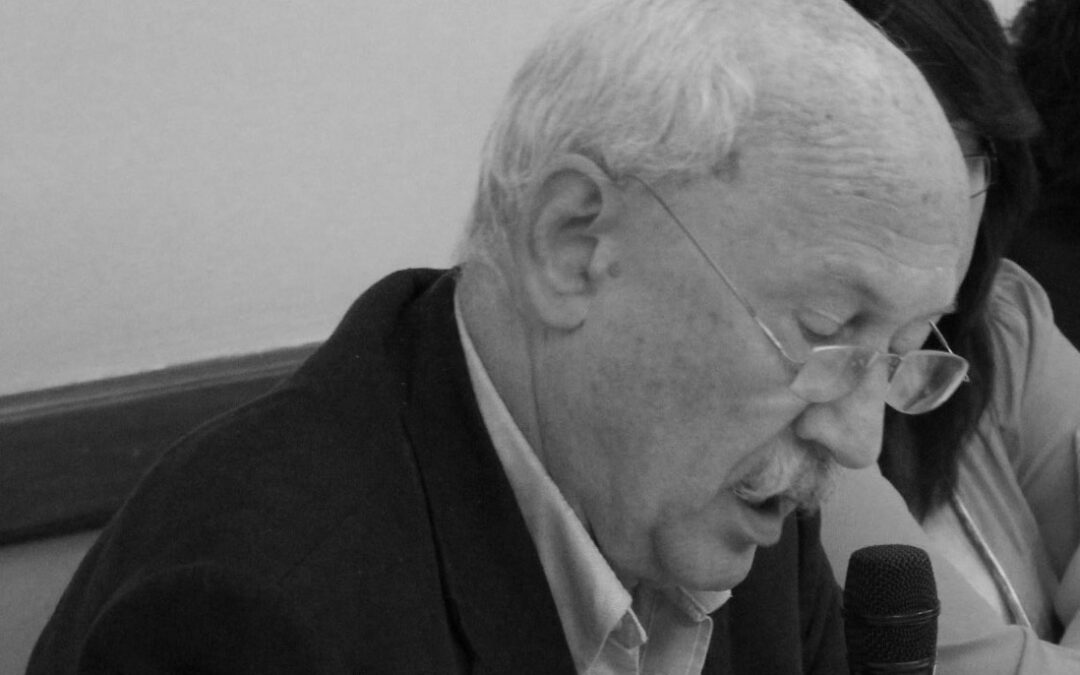
“The Draft Law on the CSPJ should enhance and expand the guarantees of judicial independence provided for by the 2011 Constitution, including by ensuring that the General Inspection Service (GIS) is under the authority of the CSPJ, that the organic law on the CSPJ sets out the GIS composition, competencies, and areas of intervention, and that the CSPJ oversees all issues pertaining to judicial administration,” said Philippe Texier, ICJ Commissioner and a former judge of the French Cassation Court (photo).
During this mission, the ICJ submitted to the authorities two memos analyzing the draft laws in light of international law and standards and formulating recommendations for amendments and reform.
In particular, the ICJ called for the majority of the members of the CSPJ to be judges who are chosen by their peers, for the selection and appointment of the President and the General Prosecutor of the Cassation Court to be based on objective criteria and made through transparent procedures, and for the grounds and procedure for dismissal of members of the CSPJ to be prescribed by the Law.
The ICJ is also deeply concerned that the draft law on the Statute for Judges does not contain any provisions on the criteria and procedure for selecting trainee judges.
Under the current framework, the process of selecting trainee judges is under the effective control of the Ministry of Justice.
Furthermore, while the Draft Laws entrusts the CSPJ to draft a Code of Judicial Conduct, they do not specify that, once adopted, the Code should be the basis on which judges will be held to account professionally, the Geneva-based organization says.
“The Draft Law should be amended to set out fair and transparent procedures for selecting trainee judges, to ensure that the CSPJ is fully competent to oversee the entire selection process, and to provide for the code of ethics and judicial conduct to be established in the law as the basis on which judges will be held to account professionally, including by clearly and precisely defining disciplinary offences,” said Said Benarbia, ICJ Director of the Middle East and North Africa Programme.
Contact:
Theo Boutruche, Legal Adviser of the ICJ Middle East and North Africa Programme, t: +96 170 888 961, e: theo.boutruche(a)icj.org
Additional information:
The ICJ delegation was led by Mr. Philippe Texier, former judge of the French Cassation Court and ICJ Commissioner.
The delegation met with Mr. Driss Dahak, Secretary General of the Government; Mr. Abdelilah Lahkim Bennani, Secretary General of the Ministry of Justice; Mr. Mustapha Farès, First President of the Cassation Court; Mr. Mohamed Meddah, Prosecutor General of the Cassation Court; Mr. Mohamed Cheikh Biadillah, President of the Chamber of Counsellors; Mr. Omar Adkhil, President of the Commission of Justice, Legislation and Human Rights of the Chamber of Counsellors; Mr. Mohamed Zerdali, President of the Commission of Justice, Legislation and Human Rights of the Chamber of Deputies; Mr. Abdellatif Chentof, President of the Judges Club; Mr. Mohamed Khadraoui, vice-President of the Amicale Hassania; and Mr. Mohamed Akdim, President of the Bar Associations of Morocco (ABAM).
Morocco-Draft Law CSPJ-News-press releases-2015-ARA (full text of statement, in PDF, Arabic)
Morocco-Memo on the CSPJ-Advocacy-Briefing paper-2015-ENG (full text of memo 1 in PDF)
Morocco-Memo on the CSPJ-Advocacy-Briefing paper-2015-ARA (full text of memo 1 in PDF, Arabic)
Morocco-Memo on Statute for Judges-Advocacy-Briefing paper-2015-ENG (full text of memo 2 in PDF)
Morocco-Memo on Statute for Judges-Advocacy-Briefing paper-2015-ARA (full text of memo 2 in PDF, Arabic)

![Smoke rises after an Israeli air strike on the village of Taybeh in southern Lebanon [Source: Al Jazeera]](https://www.icj.org/wp-content/uploads/2026/03/Screenshot-2026-03-20-at-15.56.24-300x200.png)