Jan 8, 2015 | News
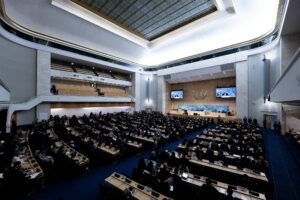
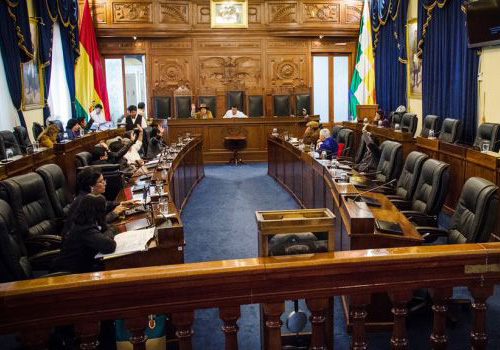
Reacting to the Bolivian Senate’s “judgment” removing Constitutional Court judge Soraida Rosario Chanez Chire from office, the ICJ condemned the proceedings as fundamentally flawed and in violation of international standards for the independence of judges.
Dec 19, 2014 | News
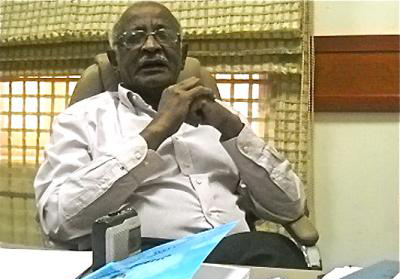
Prominent human rights lawyer Dr Amin Mekki Medani, and lawyer and political opposition leader Farouk Abu Issa, remain in detention at an unknown location. The two men were arbitrarily arrested by the Sudanese authorities in early December.
Dec 18, 2014 | News
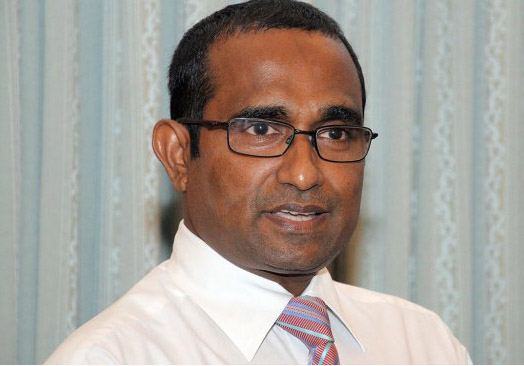
The arbitrary and unlawful removal of the Chief Justice Ahmed Faiz Hussain (photo) and Supreme Court judge Justice Muthasim Adnan, constitutes an assault on the independence of the judiciary, the ICJ said today.
Dec 17, 2014 | News
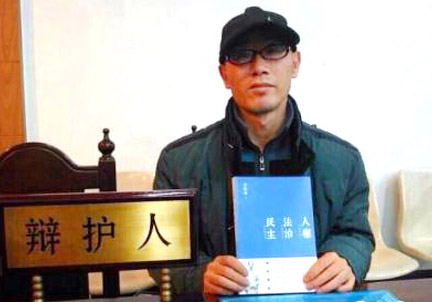
Mr Chang Boyang, whose case ICJ raised in a letter to Chinese President Xi Jinping in September calling for his release, has been released on bail.
Mr Boyang, a lawyer working among other things to promote the rights of persons with disabilities in China, had been arrested and charged for activities that should have been recognized to be well within the scope of his professional role and his freedom of expression and association. The ICJ was informed today that Chang Boyang was released on bail on 29 November.
In another update, the ICJ has also been informed that Beijing-based lawyer Pu Zhiqiang, whose case was also raised in the letter to President Xi Jinping, has had additional charges brought against him. He remains in detention while his case has been sent back to police for further investigation, which is in turn likely to prolong his pre-trial detention. His lawyer reportedly said that Pu has already been interrogated 60 to 70 times, with each session lasting more than 10 hours.
The ICJ has not received any reply to its letter of 1 September 2014 to Chinese President Xi Jinping.
The ICJ remains deeply concerned about the situation of lawyers who raise human rights issues or otherwise act on cases the Chinese government deems to be sensitive. Those held in detention should be immediately released, and all criminal proceedings based on lawyers’ due discharge of their professional functions, or exercise of freedom of expression, association or assembly, must be dropped.
The ICJ Practitioner’s Guide no 1 on independence of judges, lawyers and prosecutors is available here in a variety of languages, including Chinese.

Nov 28, 2014
A new ICJ report concludes that a comprehensive reform of the system judicial appointments and promotions, as well as of other aspects of the judicial system, is essential to ensure that the judiciary in Russia is independent and able to be an effective guardian of the Rule of Law.
Following a mission to the Russian Federation, the report examines issues of judicial selection, the appointment and promotion of judges, considers the institutional, procedural and practical aspects of judicial appointments and promotions.
The Supreme Court and the High Arbitration Court of the Russian Federation merger and a process of re-appointment of judges to the new Supreme Court, which was highly relevant to the mission’s more general concern with judicial appointments, are addressed in the report.
The report concluded that weaknesses in the judicial appointments process have contributed to shortcomings in the independence of the Russian judiciary, which the ICJ has highlighted in previous reports of 2010, the State of the Judiciary in Russia and of 2012 Securing Justice: the Disciplinary system for judges in the Russian Federation.
A gap between law and practice in the selection process and “extra procedural” influences and “shortcuts” used by those tasked with navigating the complex multistage process of selection and appointment of judges are mentioned among main problems in the procedure.
The report offers a number of specific recommendations regarding different aspects of the selection procedure, institutions that play a major role in the process and the judicial reform which needs to be undertaken.
The report was based on the findings of the Mission in May 2014, which met with a number of stakeholders in Moscow, including judges, independent experts and NGOs.
Two expert round-table discussions were held during the mission.
The round-table discussions were organized in cooperation with the Institute of Law and Public Policy and the Independent Council for Legal Expertise.
The Mission included Justice Azhar Cachalia, Judge of the South African Court of Appeal and Chair of the ICJ Executive Committee, Judge Jolien Schukking, Judge of the Administrative High Court for Trade and Industry of the Netherlands, Vidar Stromme, Chair of the ICJ-Norway, Róisín Pillay, Director of the ICJ Europe Programme, Temur Shakirov, Legal Adviser of the ICJ Europe Programme and Mari Gjefsen, member of the ICJ-Norway. The mission benefited from the advice of Justice Tamara Morshakova, ICJ Commissioner and former justice of the Constitutional Court of the Russian Federation.
Contact:
Róisín Pillay, Director, Europe Programme, roisin.pillay(a)icj.org
Temur Shakirov, Legal Adviser, Europe Programme, temur.shakirov(a)icj.org
RUSSIA-Selecting the judges-News-2014-Rus (full text in PDF)
RUSSIA-Selecting the judges-Publications-Reports-2014-Eng (full text in PDF)
RUSSIA-Selecting the judges-Publications-Reports-2014-Rus (full text in PDF)

![Smoke rises after an Israeli air strike on the village of Taybeh in southern Lebanon [Source: Al Jazeera]](https://www.icj.org/wp-content/uploads/2026/03/Screenshot-2026-03-20-at-15.56.24-300x200.png)