
Nov 14, 2013 | News
The International Bar Association’s Human Rights Institute (IBAHRI) and the ICJ urge the Commonwealth Heads of States meeting in Colombo this week to make Sri Lanka accountable to Commonwealth values.
The IBAHRI and the ICJ recall that the Commonwealth Charter, passed in March 2012, sets out 16 core values, which include safeguarding the independence of the judiciary, protecting the rule of law, respecting the separation of powers and promoting democratic rule.
But the two organizations point out numerous examples where these values have not been respected by the Government of Sri Lanka.
The IBAHRI and the ICJ were holding a press conference in Bangkok Thailand today after a high-level IBAHRI delegation was blocked from entering Sri Lanka late last week to attend a conference on the rule of law and independence of the legal profession hosted by the Bar Association of Sri Lanka.
Giving a statement remotely, Gabriela Knaul, UN Special Rapporteur on the Independence of Judges and Lawyers, expressed “serious concerns about acts of reprisals against judges, prosecutors, lawyers and other actors of the judicial system who cooperate, or seek to cooperate, with UN and regional human rights mechanisms.”
“Reprisals against judicial actors and legal professionals are a kind of attack to their institutional and functional independence,” she added.
Earlier this year, the IBAHRI conducted a remote fact-finding mission on the politically motivated impeachment of Chief Justice Banadranayake in January 2013, after being denied entry into Sri Lanka.
The IBAHRI Mission concluded that the Chief Justice’s removal was unlawful, undermined public confidence in the rule of law and threatened to eviscerate the country’s judiciary as an independent guarantor of constitutional rights.
In an open letter signed by 56 eminent jurists and senior judges from around the world, the ICJ also expressed its grave concern over the disregard for international standards on the independence of the judiciary and the removal of judges.
“This weakening of rule of law and independence of the judiciary is accompanied by an equally deteriorating human rights situation,” said Sheila Varadan, ICJ Legal Adviser for South Asia.
The United Nations High Commissioner of Human Rights, Navi Pillay, in her recent visit to Sri Lanka expressed concern over the curtailment or denial of personal freedoms and human rights, the persistent impunity and the failure of rule of law.
“The state of affairs in Sri Lanka sits uneasily with the aspirations set out in the Commonwealth Charter,” said Human Rights Barrister and IBAHRI Sri Lanka Mission Rapporteur, Sadakat Kadri. “The Government of Sri Lanka has spent years undermining the values and principles of the Commonwealth.”
“If the Commonwealth is to remain a relevant and effective international organization, it is paramount that those heads of State who have chosen to attend this week’s summit take measures to make Sri Lanka accountable to the core values and principles of the Commonwealth,” said IBAHRI Senior Programme Lawyer Alex Wilks.
Contact:
Sheila Varadan, ICJ Legal Advisor, South Asia Programme (Bangkok), t: +66857200723; email: sheila.varadan(a)icj.org
Notes:
- The IBAHRI delegation blocked from entering Sri Lanka included UN Special Rapporteur on the Independence of Judges and Lawyers, Ms Gabriela Knaul, former UN Special Rapporteur on the Independence of Judges and Lawyers and ICJ Commissioner Dato’ Param Cumaraswamy, and IBAHRI senior programme lawyer Alex Wilks, had intended to travel to Colombo to attend a conference on the rule of law and independence of the legal profession hosted by the Bar Association of Sri Lanka. IBAHRI Mission Rapporteur Sadakat Kadri was also unable to enter Sri Lanka as he was denied a visa.
- The Bar Association of Sri Lanka with the International Bar Association’s Human Rights Institute had planned a conference for 13 November 2013 on ‘Making Commonwealth values a reality: the rule of law and independence of the legal profession’. The 13 November 2013 conference was cancelled when the Government of Sri Lanka revoked visas for the UN Special Rapporteur and the IBAHRI delegation on 7 November 2013.
- In March 2013, a delegation of the IBAHRI undertook a remote fact-finding mission to investigate the impeachment proceedings of Chief Justice Bandaranayake, the independence of the legal profession and rule of law in Sri Lanka. The mission was conducted remotely following the cancellation of visas by the Government of Sri Lanka for the IBAHRI delegation. A report was released in April 2013 A Crisis of Legitimacy: The Impeachment of Chief Justice Bandaranayake and the Erosion of the Rule of Law in Sri Lanka.
- The ICJ released a report, Authority without Accountability: The crisis of impunity in Sri Lanka in November 2012 documenting the systemic erosion of rule of law and accountability mechanisms in Sri Lanka. The ICJ report described how decades of Emergency rule and legal immunities granted to the President and other government officials weakened the checks and balances in the Sri Lankan government, while political interference has increasingly led to attacks on the independence of the judiciary and rule of law.

Nov 14, 2013 | Events, News
The International Bar Association Human Rights Institute (IBAHRI) and the ICJ urge Commonwealth Heads of States meeting in Colombo this week to make Sri Lanka accountable to Commonwealth values.
The IBAHRI and the ICJ are holding a press conference in Bangkok, Thailand, this morning after a high-level IBAHRI delegation was blocked from entering Sri Lanka late last week.
You can watch the event here: http://www.ustream.tv/recorded/40754120
Further reading:
Sri Lanka-Muttur killings-ICJ-ACF Q&A-briefing paper-2013 (full text in pdf)
ICJ open letter signed by 56 eminent jurists and senior judges from around the world
ICJ report Authority without Accountability: The crisis of impunity in Sri Lanka

Nov 5, 2013 | News
The ICJ welcomes the release on 1 November of lawyer Zinaida Mukhotorova, from a psychiatric facility in Astana, Kazakhstan.
The lawyer was forcibly detained in the psychiatric facility, the “Medical Centre of the Problems of Psychiatric Health”, for almost three months.
Despite her release, the results of the psychiatric examination were said to be pending.
“While this release is welcome, the ICJ remains concerned that Zinaida Mukhotorova’s detention represented a reprisal for her legitimate exercise of her professional duties as a lawyer, in violation of her right to liberty as well as the UN Basic Principles on the Role of Lawyers,” said Róisín Pillay, Director of the ICJ Europe Regional Programme. “It must now be ensured that Zinaida Mukhotorova can challenge the legality of her detention through fair procedures, and receive appropriate measures of reparation for any violation of her human rights” she added.
Zinaida Mukhtorova was placed in the psychiatric facility on 9 August after she was forcibly taken from her house by several police officers and medical personnel.
Among the reasons given for her detention were her “possibly querulous” and “litigious” activity.
The ICJ previously raised concern that her psychiatric detention was being justified on grounds consisting in the exercise of her legitimate professional functions as a lawyer.
The ICJ continues to monitor the case, including ongoing legal challenges in the Kazakhstan courts to the lawfulness of Zinaida Mukhtorova’s detention in psychiatric facilities on this and another previous occasion.
In this regard, the ICJ calls on the government to ensure fairness of the proceedings challenging her detention.
Contact:
Róisín Pillay, Director, ICJ Europe Programme, roisin.pillay(a)icj.org
Temur Shakirov, Legal Adviser, ICJ Europe Programme, temur.shakirov(a)icj.org
Kazakhstan-Mukhtorova statement-news-webstory-2013-Rus (full text in pdf)
Nov 1, 2013 | News
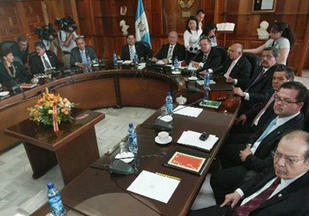
Jueces europeos y centroamericanos expresaron en Tegucigalpa su preocupación por la falta de independencia del sistema judicial en países como Honduras, Guatemala y El Salvador.
Instaron a los Estados a tomar medidas para garantizar la autonomía de esa rama del poder público.
El 31 de octubre y 1 de noviembre se llevó a cabo en la ciudad de Tegucigalpa (Honduras) el foro denominado “Encuentro de Juristas Europeos y Centroamericanos: experiencias sobre la defensa de la independencia judicial”.
Durante el mismo, se tuvo la oportunidad de intercambiar experiencias en torno a las amenazas que hoy día persisten en contra de la independencia judicial y las medidas que los estados de Centroamérica deben tomar para fortalecer los diferentes sistemas de justicia en la región.
El foro reconoce el papel fundamental que tienen todos los jueces y juezas en la construcción y consolidación de la Democracia y el Estado de Derecho en Centroamérica; las y los participantes expresan su preocupación porque aún existen serias amenazas a la independencia judicial, entendiéndose dicha independencia como una garantía para los ciudadanos y ciudadanas.
En tal sentido, los estados centroamericanos deben respetar plenamente la independencia del Poder Judicial.
Honduras-Foro Jueces Independencia en CA-news-web story-2013-spa (full text in pdf)
Nov 1, 2013 | Artículos, Noticias
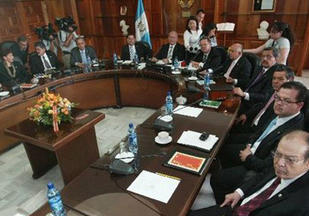
Jueces europeos y centroamericanos expresaron en Tegucigalpa su preocupación por la falta de independencia del sistema judicial en países como Honduras, Guatemala y El Salvador.
Instaron a los Estados a tomar medidas para garantizar la autonomía de esa rama del poder público.
El 31 de octubre y 1 de noviembre se llevó a cabo en la ciudad de Tegucigalpa (Honduras) el foro denominado “Encuentro de Juristas Europeos y Centroamericanos: experiencias sobre la defensa de la independencia judicial”.
Durante el mismo, se tuvo la oportunidad de intercambiar experiencias en torno a las amenazas que hoy día persisten en contra de la independencia judicial y las medidas que los estados de Centroamérica deben tomar para fortalecer los diferentes sistemas de justicia en la región.
El foro reconoce el papel fundamental que tienen todos los jueces y juezas en la construcción y consolidación de la Democracia y el Estado de Derecho en Centroamérica; las y los participantes expresan su preocupación porque aún existen serias amenazas a la independencia judicial, entendiéndose dicha independencia como una garantía para los ciudadanos y ciudadanas.
En tal sentido, los estados centroamericanos deben respetar plenamente la independencia del Poder Judicial.
Honduras-Foro Jueces Independencia en CA-news-web story-2013-spa (Texto completo en PDF)


![Smoke rises after an Israeli air strike on the village of Taybeh in southern Lebanon [Source: Al Jazeera]](https://www.icj.org/wp-content/uploads/2026/03/Screenshot-2026-03-20-at-15.56.24-300x200.png)