May 10, 2013 | Comunicados de prensa, Noticias
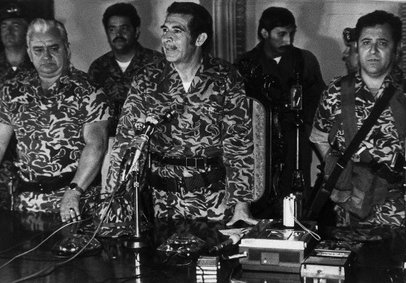
La CIJ celebra que el proceso contra el General Efraín Rios Montt (centro de la foto) por Genocidio y Delitos contra los Deberes de Humanidad haya concluido el viernes 10 de mayo en la ciudad de Guatemala.
La CIJ observó el debate por medio del abogado Miguel Moerth y apoyó proceso y el debido cumplimiento del Derecho Internacional de los Derechos Humanos y del Derecho Internacional Humanitario por medio del peritaje presentado por el Director de su oficina para Centroamérica.
Dicha oficina se ha mantenido atenta y ha abogado por el derecho de las víctimas a la verdad y la justicia.
Durante el proceso la CIJ llamó la atención sobre el uso abusivo de la figura del amparo, recusaciones, incidentes y otros recursos presentados por la defensa que pretendieron en diferentes momentos anular u obstaculizar el desarrollo del juicio.
La CIJ respalda decididamente al Tribunal de Mayor Riesgo “A” por haber llevado a cabo su difícil tarea, con respeto a las normas del debido proceso y la garantía del derecho de defensa de los acusados y, por haber resistido con las presiones recibidas durante el juicio, que incluyeron amenazas contra integridad personal de miembros del Tribunal.
La CIJ considera que el derecho de las víctimas a un juicio justo e imparcial y a conocer la verdad de los hechos, ha sido respetado con las acciones llevadas a cabo durante el juicio por dicho Tribunal.
Wilder Tayler, Secretario General de la Comisión Internacional de Juristas expresó: “Celebramos este triunfo de la Justicia sobre la Impunidad. Después de 30 años y de tanto esfuerzo, el derecho a la justicia de las víctimas ha sido respetado; la sociedad guatemalteca ha dado un primer y muy importante paso en el camino hacia la reconciliación. Esta sentencia fortalece el Sistema de Justicia en Guatemala y constituye un importante precedente para evitar que crímenes tan graves puedan repetirse. Constituye igualmente un ejemplo para toda la región americana en su combate contra la impunidad”.
Foto: Bettman/Corbias

May 3, 2013 | Advocacy, News
Today, the ICJ sent a letter to the Tunisian Minister of Interior and the Minister of Justice requesting them to take immediate action in order to ensure the security and physical integrity of Justice Kalthoum Kennou.
Justice Kalthoum Kennou is a Tunisian judge on the Court of Cassation, President of the Tunisian Association of Magistrates, and ICJ Commissioner.
This call comes as Justice Kennou received a letter containing serious death threats, demanding her withdrawal from the judiciary. Justice Kennou is active in the establishment of an independent judiciary and the protection of human rights.
The ICJ strongly condemns these threats and all acts of intimidation against the judiciary and human rights defenders in Tunisia, and calls on the Tunisian authorities to initiate the necessary investigations and inquiries in order to find, prosecute, and punish the individuals behind these brutal threats.
Tunisia-Lettre Kalthoum Kennou – MoI-advocacy-2013 (full text in pdf)

May 3, 2013 | Articles, Nouvelles, Plaidoyer
Aujourd’hui, la CIJ a adressé une lettre au ministre tunisien de l’intérieur et au ministre de la justice pour leur demander de prendre des mesures immédiates afin d’assurer la sécurité et l’intégrité physique du juge Kalthoum Kennou.
Le juge Kalthoum Kennou est un juge tunisien à la Cour de cassation, présidente de l’association tunisienne des magistrats et commissaire de la CIJ.
Cet appel intervient alors que le juge Kennou a reçu une lettre contenant de graves menaces de mort, exigeant son retrait de la magistrature.
Le juge Kennou est active dans la mise en place d’un pouvoir judiciaire indépendant ainsi que pour la protection des droits de l’Homme.
La CIJ condamne fermement ces menaces et tous les actes d’intimidation contre le système judiciaire et les défenseurs des droits de l’Homme en Tunisie.
La CIJ appelle également les autorités tunisiennes à ouvrir les enquêtes nécessaires pour trouver, poursuivre et punir les individus derrière ces menaces brutales.
Tunisia-Lettre Kalthoum Kennou – MoI-advocacy-2013 (Lettre complète en pdf)

Apr 24, 2013 | CIJL Newsletter, News
This newsletter informs you on recent activities and ongoing situations related to the ICJ’s work on the independence of the legal profession.

Apr 19, 2013
An opinion editorial by By Ketil Lund, ICJ Commissioner, former Supreme Court Judge of Norway