Mar 27, 2013 | Agendas, Events
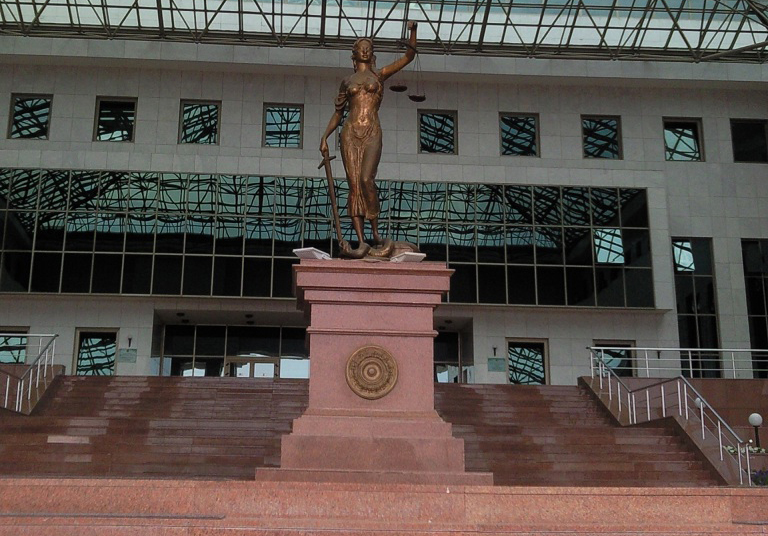 Lawyers from all five Central Asian countries participate in the seminar (28-29 March 2013) to discuss the independence of bar associations and problems faced by lawyers in working independently and effectively.
This ICJ roundtable seminar, organized in cooperation with the Central Asian League of Lawyers and to be held in Almaty, Kazakhstan, will address issues including the self-governance and organization of bar associations, their relationships with state bodies, lawyers and the public, entrance to the legal profession, lawyers’ codes of ethics, and disciplinary proceedings against lawyers.
It will also discuss problems faced by lawyers in criminal cases, in both the pre-trial and trial stages, and incidents of harassment or intimidation of lawyers.
Europe-CIS-ICJ Seminar Central Asia-event-agenda-2013 (full text in pdf)

Mar 25, 2013 | News
Beatrice Mtetwa was eventually released today after mounting pressure from human rights groups and legal bodies, including the ICJ.
High Court Judge Joseph Musakwa finally decided to grant bail to Beatrice Mtetwa, under three conditions: that she deposits $500, that she resides at the given address and that she does not interfere with the ongoing investigations.
The ICJ believes that the politically-motivated harassment against Mtetwa is a threat to the legal profession in Zimbabwe – intended to alarm lawyers and intimidate them from providing independent representation.
Beatrice Mtetwa was arrested after attempting to come to the aid of her clients, Thabani Mpofu, Felix Matsinde, Anna Muzvidziwa and Worship Dumba, all MDC-T members, the opposition party.
The government has cracked down hard on dissidents as Zimbabwe approaches presidential elections.

Mar 22, 2013 | News
The ICJ and other legal groups have expressed their outrage at the continued detention of Zimbabwean lawyer and human rights activist, Beatrice Mtetwa, after she was denied bail.
This was despite the fact that Mtetwa was improperly held before the court after the police had refused to comply with a High Court order to release her, the Pan African Lawyers Union (PALU), SADC Lawyers Association (SADC LA) and Southern Africa Litigation Centre (SALC) and the ICJ said.
It is perturbing that the Police would use a lower Court, to undermine a standing decision of a higher Court, and that the lower Court would allow itself to be so used, they also said.
Moreover, it is absurd that Mtetwa, a lawyer of 30 years’ standing in Zimbabwe, could be denied bail on the basis that she would interfere with police investigations, they added.
While the ICJ, PALU, SADC LA and SALC have learnt with disappointment of the postponement of Mtetwa’s bail appeal hearing from the 22nd of March 2013 to the 25th of March 2013, they have faith that Mtetwa will be vindicated and released by the High Court.
The concerted efforts to keep Mtetwa behind bars represent a calculated attempt by sections of the Zimbabwean Government to break her spirit and deter her from representing the many Zimbabweans who daily face harassment and intimidation from the state’s security services.
Over the years, Mtetwa has stood by these victims of government and police repression and is regarded as a hindrance by the police and security sector to their illegal activities.
The action against Mtetwa is a threat to the legal profession in Zimbabwe – intended to alarm lawyers and intimidate them from providing independent representation.
As the country edges towards elections, the persecution of lawyers and other actors can only be expected to escalate, judging from the number of civil society representatives and human rights defenders who have fallen victim to police harassment in the past few weeks.
The police’s actions stand in marked contrast to calls by the most senior political authorities in Zimbabwe for peace and tolerance as the country moves towards elections.
That no heed is paid to these calls by the police force is indicative of the widespread and endemic impunity enjoyed by the security sector. It is the clearest indication that, as matters stand, there exists little prospect for free and fair elections.
The ICJ, PALU, SADC LA and SALC urge the Southern African Development Community (SADC) as the Guarantor of Zimbabwe’s Global Political Agreement and President Jacob Zuma as the mediator in Zimbabwe’s political crisis to take action and urge the Government of Zimbabwe to release Mtetwa from prison and end the politically-motivated persecution of her.
The legal groups also urge the African Union and the international community to prevail upon the Zimbabwean Government to release Mtetwa.
They also call on the police and the judiciary in Zimbabwe to discharge their duties in an independent and impartial manner if the people of Zimbabwe are to have confidence in the judicial system as the country moves towards elections.
Contact:
Arnold Tsunga, ICJ Africa Director, +27 73 131 8411; e-mail: arnold.tsunga(at)icj.org

Mar 18, 2013 | News
 The ICJ and other legal groups express their deepest concern at the unlawful arrest and detention of prominent Zimbabwean human rights lawyer, Beatrice Mtetwa and officials of the MDC-T party.
Beatrice Mtetwa was arrested after attempting to come to the aid of her clients, Thabani Mpofu, Felix Matsinde, Anna Muzvidziwa and Worship Dumba. Mtetwa had sought to ensure that the search of the communications office of the MDC-T and the arrest of the four complied with legal requirements, demanding that the police produce a search warrant. She was instead arrested and charged with “obstructing the course of justice.”
Thereafter, she and the four MDC-T officials were taken to Rhodesville police station in Harare. Lawyers from Zimbabwe Lawyers for Human Rights (ZLHR) worked late into the night of Sunday, 17 March, urgently petitioning the High Court of Zimbabwe to secure Mtetwa’s release. The order was granted just before midnight.
At present it appears that police are seeking to elude compliance with the order as reports indicate that Mtetwa is being transferred from one Harare police station to another as lawyers for Mtetwa seek to serve the court order on different police stations.
The arrest of Mtetwa and the four MDC-T officials is in itself alarming, but that it comes on the heels of a referendum to endorse a new constitution which, whatever its other limitations, contains strong protection of the rights of those arrested and detained, is more distressing still.
Without a clear and unambiguous departure from a past characterized by harassment and intimidation of human rights defenders and of impunity for Zimbabwe’s police and security sector, the promise of the new Constitution will be laid to waste.
The ICJ, Pan African Lawyers Union (PALU), SADC Lawyers Association (SADC LA) and Southern Africa Ligitation Centre (SALC) urge the Zimbabwean police and authorities to respect the Zimbabwean High Court order, to release Mtetwa from detention and to allow her and other human rights defenders to conduct their work unhindered.
Contact:
Arnold Tsunga, ICJ Africa Director, +27 73 131 8411; e-mail: arnold.tsunga(at)icj.org

Mar 18, 2013 | News
The ICJ strongly condemns today’s suicide attack on the Peshawar court complex in Pakistan.
“An independent judiciary, free from violence, threats of violence or intimidation is a basic precondition to a functioning democracy under the rule of law,” said Alex Conte, Director of ICJ’s International Law and Protection Programmes.
“The suicide attack drives home the failure of the Pakistani government to fulfill its obligation to protect the right to personal security of the millions of people living in northwest Pakistan who have to face the daily threat of suicide bombings or unlawful killings,” said Sam Zarifi, ICJ’s Asia & Pacific Regional Director.
Under the United Nations Basic Principles on the Independence of Judges, the State must take steps to protect the judiciary from threats, violence or any other interference from any quarter for any reason.
Under international law, notably the International Covenant on Civil and Political Rights, Pakistan must take active steps to ensure the safety of all persons within its territories.
Under the Beijing Statement of Principles on the Independence of the Judiciary in the LAWASIA Region, the executive authorities must at all times ensure the security and physical protection of judges and their families.
“Insurgent groups in northwest Pakistan have a long record of human rights abuses, including the use of suicide bombers to commit unlawful killings,” Zarifi added. “If this bombing was perpetrated by militants as part of a widespread or systematic attack against civilians, it constitutes a crime against humanity and must be treated as such.”
Earlier today, two suicide bombers detonated heavy explosives inside a Peshawar courthouse killing four people and injuring thirty others, including lawyers, police officers and civilians.
One of the bombers detonated the explosives in the courtroom of Judge Kulsoom Nawaz.
The Peshawar courthouse complex was attacked in November 2009, killing 19 people.
CONTACTS:
Laurens Hueting, ICJ Associate Legal Adviser, Centre for the Independence of Judges and Lawyers (Geneva), t: +41 229793848, email: laurens.hueting(a)icj.org
Sam Zarifi, ICJ Asia-Pacific Regional Director, (Bangkok); t:+66 807819002; email: sam.zarifi(a)icj.org
Sheila Varadan, ICJ Legal Advisor, South Asia Programme (Bangkok), t: +66 857200723; email: sheila.varadan(a)icj.org