Mar 14, 2013 | News
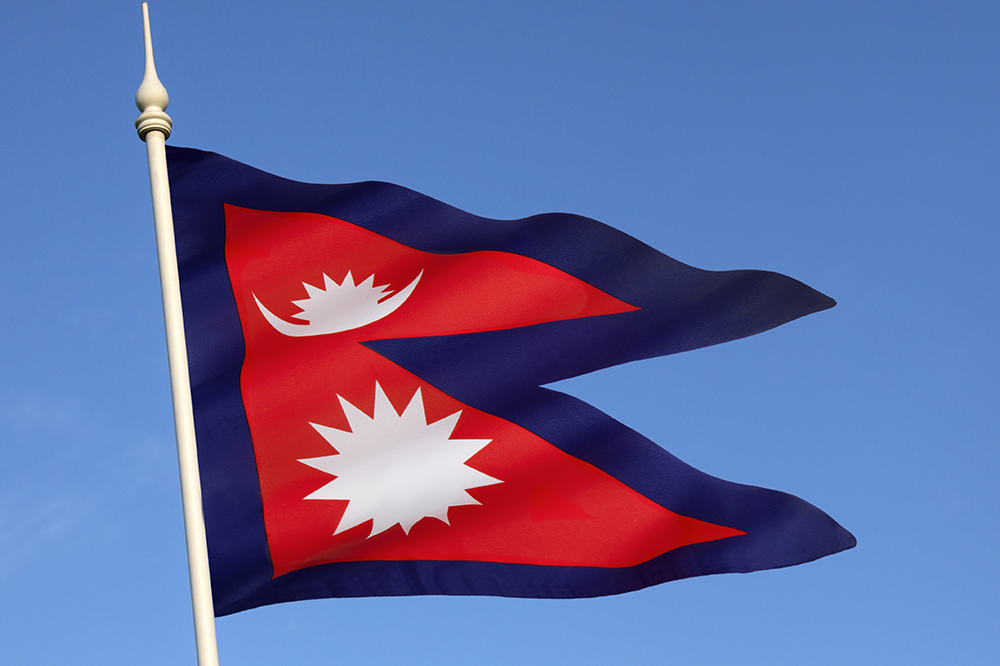
 Chief Justice Khil Raj Regmi should not keep his position on the Supreme Court after he was appointed today as the country’s interim prime minister so as to preserve the independence of the judiciary and the rule of law.
“The Supreme Court under the leadership of Chief Justice Khil Raj Regmi, has demonstrated a strong commitment to upholding the rule of law and protecting human rights in Nepal,” said Ben Schonveld, ICJ’s South Asia Director in Kathmandu. “To preserve the Nepali judiciary’s hard-won independence, the Chief Justice should step down from his post as soon as he assumes his position at the top of the Executive Branch.”
The Chief Justice Khil Raj Regmi was appointed as Chairperson of the Council of Ministers – effectively the country’s Prime Minister – today.
The country’s four key political parties agreed on an arrangement whereby Chief Justice Khil Raj Regmi will refrain from participating in his duties as Chief Justice of the Supreme Court while exercising powers of the Prime Minister conferred by the Interim Constitution, in brokering an election of the Constituent Assembly.
After the election is held, the agreement provides that the Chief Justice will resume his power and regular duties as Chief Justice.
In the interim, the senior-most judge of the Supreme Court will act as Chief Justice.
“Appointing the serving Chief Justice to act as Chairperson of the Council of Ministers throws the country into uncharted constitutional waters,” Schonveld added. “This agreement obliterates the line between the executive and the judiciary.”
A petition challenging the constitutional validity of the Agreement is currently before the Supreme Court.
The interim Constitution of Nepal guarantees the independence of the judiciary and the separation of powers.
Article 106 bans sitting and retired judges from assuming any appointment in government service apart from a role in the national human rights commission.
To enable the Chief Justice’s appointment as Prime Minister, the President under the recommendation of the Council of the Ministers amended several provisions of the Interim Constitution, including Article 106.
These amendments were made in contravention of the requirements of the Interim Constitution, which calls for a mandatory two-thirds majority of Parliament.
Under international law and standards, including the United Basic Principles on the Independence of the Judiciary, States are required to ensure an independent judiciary at all times.
Under the Bangalore Principles on Judicial Conduct, judges must be free, and be seen to be free, from inappropriate connections with the executive and legislative branches of government.
The Beijing Statement of Principles on the Independence of the Judiciary stresses the importance of the independence of the judiciary in a free society observing the rule of law.
Judges must uphold the integrity and independence of the Judiciary by avoiding impropriety and the appearance of impropriety in all of their activities.
CONTACTS:
Ben Schonveld, ICJ South Asia Director, (Kathmandu); t: 977 9804596661; email: ben.schonveld(at)icj.org
Govinda Bandi Sharma, ICJ Senior Legal Advisor, Nepal (Kathmandu), t: +977 9851061167; email: govinda.sharma(at)icj.org
Sheila Varadan, ICJ Legal Advisor, South Asia Programme (Bangkok), t: +66 857200723; email: Sheila.varadan(at)icj.org
Photo by Bikash Dware

Mar 12, 2013 | News
The ICJ today condemned the blatant disregard by the UAE of the right to a fair and public trial, after its international observers were prohibited from attending the first two hearings of criminal proceedings against 94 individuals.
The detainees include judges, lawyers and human rights defenders. The hearings took place before the State Security Chamber of the United Arab Emirates (UAE) Federal Supreme Court.
The ICJ observers were turned away on 4 and 11 March 2013 by police officers before they reached the court.
“The ICJ deplores the decision of the UAE authorities to conduct the trial of the 94 detainees behind closed doors and to deny access to all international observers for both the opening and second hearing of this trial”, said Ketil Lund, ICJ Commissioner, former Supreme Court Judge of Norway and one of the two ICJ observers who was denied access to the court.
“This denial, combined with consistent and credible reports that detainees have been subjected to torture and other ill-treatment, including prolonged solitary confinement, and denied full access to defence counsel, both during questioning and in preparation for the trial, are inconsistent with fair trial standards and cast serious doubts about the fairness and the outcome of the process.”
Under international law and standards and UAE law, all criminal trials must be open to the public, subject to narrow exceptions not apparently applicable in this trial.
The denial of access to international observers itself constitutes a serious violation of the right to a fair trial.
The ICJ calls on the UAE authorities to fully investigate reports of torture and ill-treatment of the detainees and ensure that information obtained through such practices are not used as evidence in the criminal proceedings.
The UAE authorities must also ensure that as long as the accused remain in detention, their right to have full and unrestricted access to lawyers, including the right to consult in private, medical personnel and family members are fully guaranteed.
The ICJ notes that the accused are charged with “establishing, founding and administering an organization, Da’wat Al Islah, with the aim of challenging the basic principles upon which the government of the State is based, taking control of the government and establishing a secret structure for the organization” (Decision of referral No.79 of 2012 (State Security) of 27 January 2013).
“These ill-defined charges, which fail to meet international law requirements of legal certainty, criminalise the enjoyment and exercise of the rights of all UAE citizens to freedom of expression and association, and to fully take part in the conduct of public affairs. The UAE authorities must therefore drop these charges and put an immediate end to this unfair judicial process,” Lund added.
Contact:
Said Benarbia, ICJ Senior Legal Adviser of the Middle East and North Africa Programme, tel: 41 22 979 38 17, e-mail: said.benarbia(at)icj.org
UAE-right to a fair trial-press release-2013-Arabic (full text, pdf)

Mar 12, 2013 | Artículos, Noticias
La CIJ llevará a cabo una misión a Uruguay (12-16 marzo de 2013) para interiorizarse de los acontecimientos que recientemente interesaran aspectos de la independencia del poder judicial en el país.
También se evaluará su impacto sobre el ejercicio del derecho de las víctimas a contar con remedios efectivos para las violaciones de los derechos humanos.
La delegación de la CIJ ha solicitado reuniones con la Suprema Corte de Justicia, ex magistrados, el Poder Ejecutivo, el Colegio de Abogados del Uruguay, organizaciones de la sociedad civil y defensores de los derechos humanos, representantes de los partidos políticos, y otros actores relacionados con la administración de justicia y la independencia del poder judicial.
La visita se enmarca dentro de los esfuerzos que la CIJ lleva a cabo en distintos países con el objetivo de velar por e impulsar la primacía, coherencia e implementación del derecho internacional de los derechos humanos a través de la vigencia del Estado de Derecho, y promover el respeto a la independencia judicial.
Integrarán la misión los siguientes delegados:
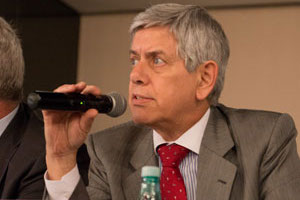
Belisario dos Santos Junior (foto) – Jurista brasileño, Comisionado de la Comisión Internacional de Juristas. Secretario de Estado de Justicia y Defensa de la Ciudadanía del Estado de San Pablo (1995 – 2000) y ex Presidente de la Asociación de Abogados Latinoamericanos para la Defensa de los Derechos Humanos.
Alejandro E. Salinas Rivera – Jurista chileno, Asesor del Centro para la Independencia de Jueces y Abogados. Ex director de la Dirección de Derechos Humanos del Ministerio de Relaciones Exteriores de Chile y ex asesor de la Comisión Presidencial para Políticas de Derechos Humanos de la Presidencia de la República de Chile.
Mar 12, 2013 | News
The ICJ is undertaking today a five-day mission to Uruguay to gather information concerning recent developments affecting the independence of the judiciary in the country.
The mission members will meet with a broad group of stakeholders in Uruguay.
The mission will also look at the impact that these developments have on the exercise of the right of victims to effective remedies for human rights violations.
The two-member mission will consist of ICJ Commissioner Belisário dos Santos Junior (picture) and Alejandro E. Salinas Rivera, member of the Advisory Committee of the ICJ Centre for the Independence of Judges and Lawyers.
Uruguay-CIJL mission-Nota de prensa-2013-Spa (full text, pdf)

Feb 21, 2013
Through this letter the ICJ is asking the Cambodian Bar Association to clarify its views on a few issues related to freedom of expression of the country’s lawyers.
The full text of the letter can be found here:
Cambodia-ICJ letter to bar association- advocacy open letters – 2014