Mar 9, 2021 | Advocacy, Non-legal submissions
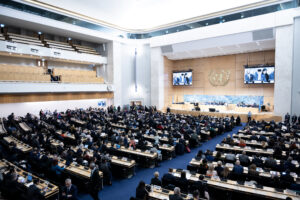
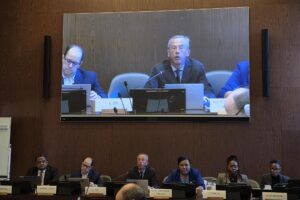
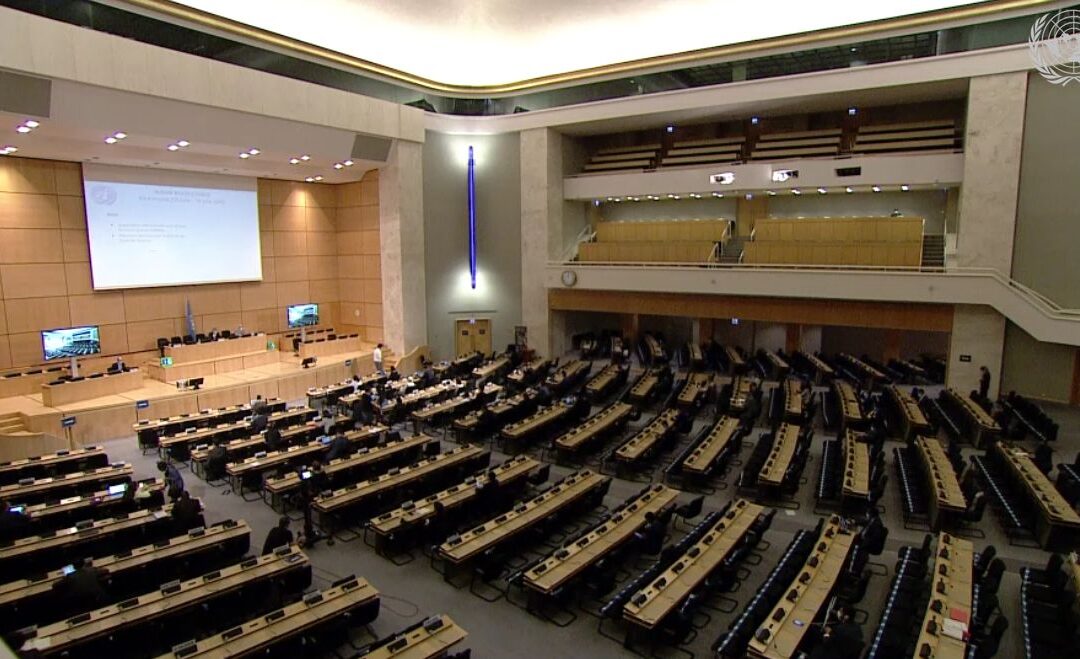
Today, the ICJ joined an oral statement at the UN Human Rights Council denouncing attacks on lawyers occurring in Iran.
The statement was delivered by IBAHRI on behalf also of ICJ, Lawyers for Lawyers, Lawyers’ Rights Watch Canada and The Law Society, during the interactive dialogue with the UN Special Rapporteur on the ISlamic Republic of Iran.
The statement reads as follows:
“The International Bar Association’s Human Rights Institute (the IBAHRI), the International Commission of Jurists (the ICJ), Lawyers for Lawyers, Lawyers’ Rights Watch Canada, and The Law Society express deep concerns at the arbitrary arrests and detention of lawyers and others sentenced to exorbitant prison terms for legitimately carrying out their professional activities. We draw special attention to the cases of lawyers Nasrin Sotoudeh and Amirsalar Davoodi, who remain imprisoned and were excluded from Covid-19 prisoner release programmes.
Their imprisonment means that access to justice for citizens in Iran is restricted. We are alarmed by the widespread violation of fair trial guarantees, including the denial of access to a lawyer of one’s own choosing, as well as the recent application of the death penalty in Iran. We also condemn Iran’s non-compliance with international standards on conditions of detention and reports of torture of those critical of the regime.
We urge the Iranian authorities to:
- Immediately and unconditionally release Nasrin Sotoudeh, Amirsalar Davoodi and other lawyers who remain in prison after conviction in an unfair trial;
- Pending release, ensure compliance with international standards on conditions of detention;
- Ensure that lawyers and others can carry out their profession free from undue interference, including judicial harassment;
- Establish an immediate moratorium on the death penalty, pending abolishment; and
- Comply with its international legal obligations in respecting, guaranteeing, and protecting human rights.”
Find the statement here: Iran-UN-JointStatement-Lawyers-Advocacy-NonLegal-HRC46-2021-ENG
Contact:
Massimo Frigo, ICJ UN Representative, e: massimo.frigo(a)icj.org, t: +41797499949
Feb 17, 2021 | News, Non-legal submissions
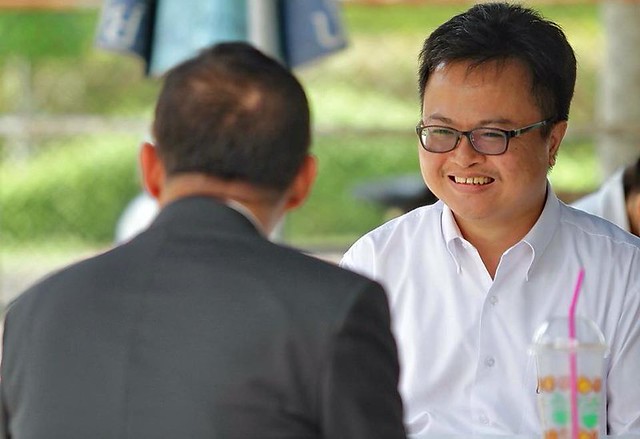
In a joint letter to the President of the Lawyers Council of Thailand, the ICJ and Lawyers for Lawyers raised concerns on the disbarment proceeding against Mr. Anon Nampha, a lawyer and human rights defender. The organisations believe that the proceedings unduly interfere in his work as a lawyer and serves to impair the exercise of his human rights, including the right to freedom of expression.
Dear President of the Lawyers Council of Thailand,
Re: Disbarment Proceedings Against Mr. Anon Nampha
Lawyers for Lawyers is an independent and non-political foundation that seeks to promote the proper functioning of the rule of law by pursuing freedom and independence of the legal profession.
International Commission of Jurists (ICJ), a global non-governmental organization composed of 60 eminent judges and lawyers, works to advance understanding and respect for rule of law as well as the legal protection of human rights throughout the world.
We write to your office concerning the disbarment proceeding against Mr. Anon Nampha, a lawyer and human rights defender, that is taking place before the Investigative Committee that was established by the Committee on Professional Ethics of the Lawyers Council of Thailand during the Meeting No. 1/2564 on 13 January 2021. We are concerned that the proceeding unduly interferes in his work as lawyer, including in representation of clients, and serves to impair the exercise of his human rights, including the right to freedom of expression.
According to our information, we understand that the proceeding against lawyer Anon Nampha is related to a complaint motion filed to the Lawyers Council of Thailand on 7 August 2020 by Mr. Aphiwat Khanthong, Assistant Minister in the Office of the Prime Minister, claiming to be acting in his capacity as a private attorney at Or Amporn Na Takua Tung and Friends Law Office. Mr. Aphiwat Khanthong alleged that lawyer Anon Nampha’s behaviour violated the Lawyers Council of Thailand’s disciplinary rules as, he claims, it would “incite, intend to cause unrest, distort information and insult on the monarchy”. The alleged speech in question apparently called for reform of the monarchy, during a Harry Potter-themed protest at the Democracy Monument on Ratchadamnoen Avenue on 3 August 2020.
Under international law and standards, lawyers, like other individuals, enjoy the right to freedom of expression, belief, association and assembly. A lawyer should be able to draw the public’s attention to issues relating to public affairs in their official capacity as well as in their private capacity. Suspensions or revocations of lawyer licenses as a result of exercise of their legitimate rights and freedoms do not only impact on the exercise of the rights of the lawyers, but also on the rights of their clients to be represented by the lawyer of their choosing.
Download the full letter in English and Thai.
Jan 26, 2021 | News
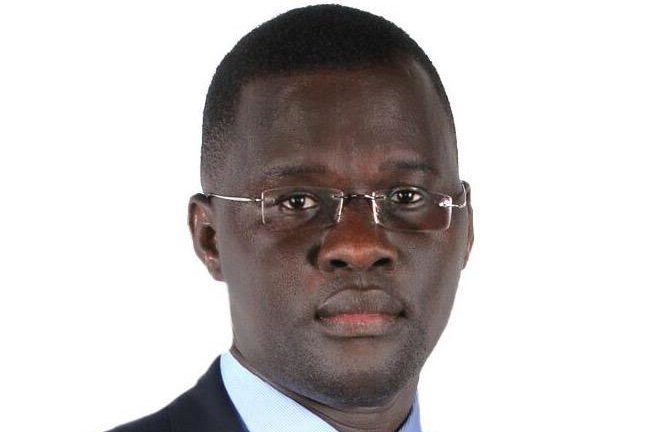
Lawyers for Lawyers (L4L) and the ICJ condemn the spurious charges under the Anti-Money Laundering brought against Ugandan lawyer and human rights defender Nicholas Opiyo and call for them to be dropped.
The organizations consider that this action stands to impede work of lawyers in the country of carrying out their professional functions, particularly regarding human rights work.
There do not appear to be legitimate grounds for these charges or the ongoing prosecution. The organizations are further concerned at numerous alleged violations surrounding the arrest, detention and pre-trial proceedings.
Nicholas Opiyo, Executive Director of Chapter Four Uganda, a civil rights charity working to defend human rights and civil liberties, was arbitrarily arrested on 22 December 2020, not informed of the reason for his arrest and effectively held in incommunicado detention for a prolonged period.
On 22 December 2020, plain clothed law enforcement officers who did not identify themselves seized Mr. Opiyo from a restaurant, along with four other individuals, including three lawyers.
He was later charged under section 3 (c) of the Anti-Money Laundering Act on allegations that he acquired USD 340,000 through the bank account of Chapter Four Uganda, knowing that “the said funds were proceeds of crime”.
Chapter Four Uganda have confirmed that these are legitimate donor funds for lawful purposes.
Sophie de Graaf, the Director of Lawyers for Lawyers, said:
“Lawyers play a vital role in the protection of the rule of law and human rights. It is the responsibility of lawyers to protect and establish the rights of citizens from whatever quarter they may be threatened. Their work is indispensable for ensuring effective access to justice for all. To fulfil their professional duties effectively, lawyers should be able to practice law freely and independently, without any fear of reprisal.”
Kaajal Ramjathan-Keogh, ICJ’s Africa Director, added:
“Uganda is required under its Constitution and under its international legal obligations, to respect and protect the independence of lawyers. These baseless charges seek to intimidate and harass Mr. Opiyo and interfere with his work as a lawyer”.
Lawyers for Lawyers and the ICJ call on the Ugandan authorities to drop the spurious charges against Mr. Opiyo and to ensure that his rights to due process and fair trial are fully respected.
The organizations emphasize that the responsibilities authorities must comply with Uganda’s international legal obligations to ensure that members of the legal profession can carry out their professional functions without harassment and improper interference, including arbitrary arrest and incommunicado detention.
Background
Article 23 of Uganda’s Constitution stipulates that suspects under detention should be brought before a court of law within 48 hours from the time of arrest. Article 27 of Uganda’s Constitution requires that a person charged with a criminal offence should be informed immediately of the charges against them. Article 28 of the Ugandan Constitution guarantees for every person the right to a fair hearing and the right to legal representation. These rights are protected under the International Covenant on Civil and Political Rights and the African Charter on Human and Peoples Rights, to which Uganda is a party.
International and regional standards on ensuring the independence of lawyers are set out in the UN Basic Principles on the Role of Lawyers (UN Basic Principles) and the Principles and Guidelines on the Right to a Fair Trial and Legal Assistance in Africa.
Contact:
Kaajal Ramjathan-Keogh, ICJ Africa Director Kaajal.Keogh(a)icj.org +27 84 5148039
Tanveer Jeewa, Media and Legal Consultant Tanveer.Jeewa(a)icj.org
Jan 18, 2021 | News
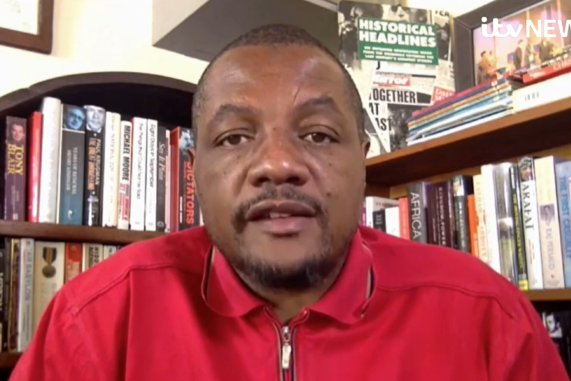
The ICJ today condemned the arbitrary arrests in recent days of prominent Zimbabwean human rights defenders Hopewell Chin’ono, Fadzayi Mahere and Job Sikhala, who have been critical of the government led by President Emmerson Mnangagwa.
The ICJ is concerned that their arrests and potential prosecutions are based solely on their exercise of protected human rights, including freedom of expression. The ICJ calls for their immediate release and the dropping of the charges against them.
The three have been charged with contravening section 31 of the Criminal Code which prohibits “publishing or communicating false statements prejudicial to the state”.
The alleged offences arise from posts made on social media and comments issued by all three in connection with an incident at a Harare taxi rank in which a police officer is alleged to have assaulted a mother with a baby on her back.
ICJ’s Africa Director Kaajal Ramjathan-Keogh said:
“The use of judicial processes to silence these three human rights defenders constitutes a continuing assault on members of the bar and journalists and is a clear attempt to chill others from carrying out their professional functions when these activities offend government authorities. Of concern is the continued use of criminal defamation (section 31) charges which were declared unconstitutional in 2014 yet continues to be weaponised against human rights defenders.”
Chin’ono, a journalist, was arrested on 8 January and had his application for bail rejected on 14 January. He has been handcuffed and held in leg irons during court appearances, despite a Magistrate’s ruling on 12 January that forcing Chin’ono to be shackled in leg irons and handcuffing him amounts to inhumane and degrading treatment.
Mahere is a lawyer and spokesperson of the opposition political party Movement for Democratic Change (MDC) Alliance. She was arrested on 11 January. On 15 January Magistrate Trynos Utahwashe failed to hand down his ruling on her application for bail as required.
Bail was however granted today. Mahere did raise concerns about the absence of essential COVID-19 measures in her detention, including the lack of temperature checks or sanitisers at the entrance to the police station; the failure to practice social distancing in the waiting area or holding cells; the unavailability of masks in the cells and use of old masks by cellmates; as well as the failure to provide sanitary materials to female inmates.
Sikhala is a human rights lawyer, the MDC Alliance Vice National Chairperson, and MP for Zengeza West.
He was part of Chin’ono’s legal team. On 15 January Magistrate Ngoni Nduna dismissed his bail application stating that there was overwhelming evidence against him not to grant it. He remains in prison custody while he awaits trial. Sikhala has also been handcuffed and held in leg irons during court appearances.
Ramjathan-Keogh added:
“The courts have unlawfully employed the denial of bail as well as the repeated prolonged bail proceedings as a punitive tool in these cases. Pre-trial detention without the opportunity for bail, with exceptions not applicable here, is a violation of the right to liberty. The government has an obligation to provide safe and humane conditions of detention.”
The ICJ recalls that that Zimbabwe’s Constitution guarantees the rights to freedom of expression and freedom of the media (Article 61); freedom from arbitrary detention (Article 50). Zimbabwe has an international legal obligation to protect these rights under the International Covenant on Civil and Political Rights (Article 9 and 19) and the African Charter on Human and Peoples’ Rights (Articles 6 and 9).
Contact:
Kaajal Ramjathan-Keogh, Director of ICJ Africa Programme, e: Kaajal.Keogh(a)icj.org ; t: +27845148039
Tanveer Jeewa, Legal and Communications Consultant, e: Tanveer.Jeewa(a)icj.org
Background Information:
Hopewell Chin’ono has been arrested on three separate occasions. He has been denied bail on each occasion and those bail proceedings have been unduly and unfairly prolonged. He was initially arrested in July 2020 after he expressed support on Twitter for an anti-corruption protest, which was planned for 31 July. He was charged with incitement to participate in public violence and breaching anti-corona virus health regulations.
He appeared in court three times to apply for bail and was only granted bail in September 2020, nearly two months after his arrest. On 3 November 2020, he was re-arrested for contempt of court for allegedly violating section 182(1)(a) or (b) of the Criminal Code because of a tweet he posted. His tweet stated: “On day of bail hearing CJ was seen leaving court in light of what has been said by judges what does this say.” The arrest violates Zimbabwe’s constitutional provisions, in particular, section 61, which provides for freedom of expression and the right of a journalist to practice his profession. He was again arrested on 8 January 2021 for allegedly communicating falsehoods by tweeting that police beat a baby to death.
Chin’ono was in 2020 denied access to the legal representative of his choice. The magistrate’s order barring lawyer Beatrice Mtetwa from continuing as defence legal counsel for Chin’ono violated his right to a fair trial and Mtetwa’s right to express her opinions freely. See ICJ’s statement of 21 August 2020.
Jan 15, 2021 | Advocacy, Cases, Legal submissions
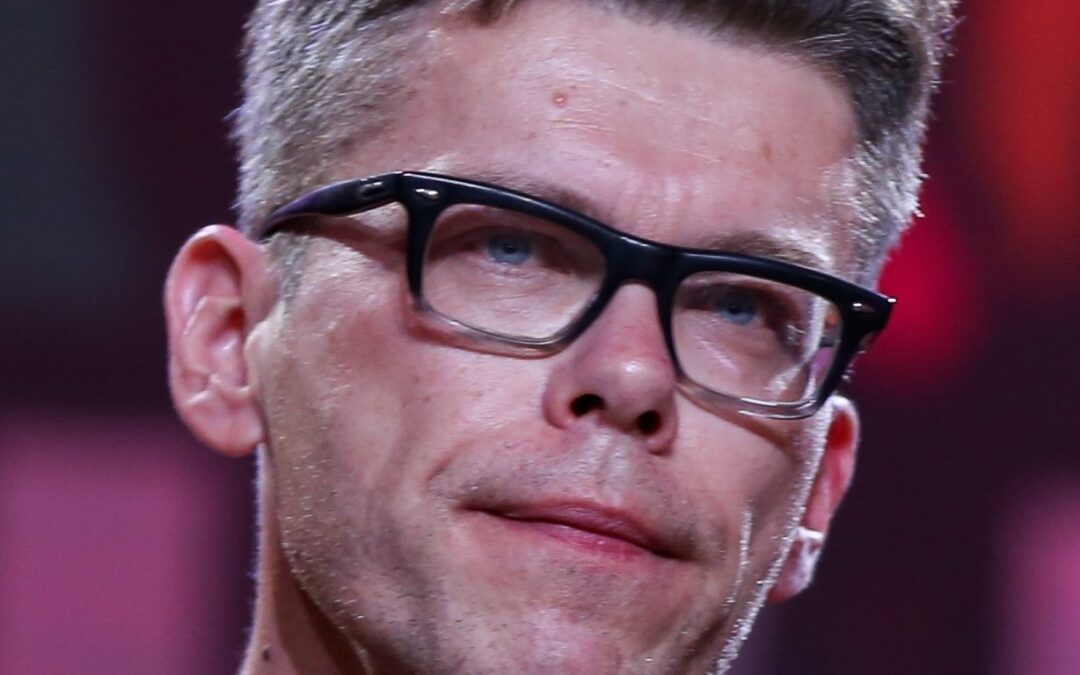
The ICJ and Amnesty International have submitted today to the European Court of Human Rights their intervention in the case of Judge Igor Tuleya who alleges that the seven disciplinary proceedings brought against him have affected his reputation as a judge and undermine the authority of the judiciary.
Judge Igor Tuleya contests that the disciplinary proceedings brought against him were in violation of his right to respect for private life and of his right to an effective remedy against violation of human rights.
The case takes place in the context of the “reform” of the judiciary in Poland, involving policy measures and legislative changes approved between late 2015 and 2020, which have seriously compromised the independence of the judiciary.
The intervention focuses on three main issues:
- The scope of application of Article 8 and Article 13 in cases relating to disciplinary proceedings against judges, in light of international standards on disciplinary proceedings and measures and effective domestic remedies; of the Court’s Convention jurisprudence; and of general principles on the rule of law and the role and independence of the judiciary.
- The situation of the independence of the judiciary in Poland as the context in which to assess the application of Articles 8 and 13.
- The scope of Article 10 as applied to judges, including those engaged in the administration of the judiciary.
ECtHR-AmicusBrief-Tuleya_v_Poland-Advocacy-Legal-Submission-2020-ENG (download the third party intervention)