Oct 12, 2020 | Incidencia
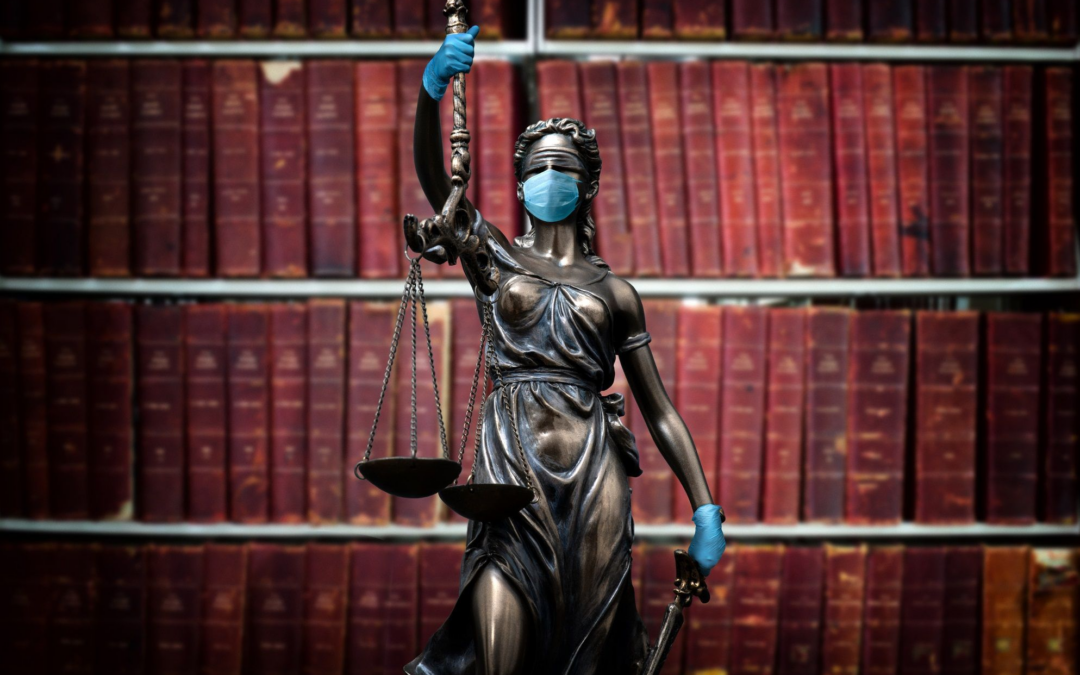
En marzo de 2020, la CIJ junto con un grupo de organizaciones de la sociedad civil y varias personas defensoras de derechos humanos de América Latina, iniciaron un proceso de seguimiento al funcionamiento de los sistemas de justicia durante la pandemia en la región.
En el marco de esta iniciativa se analizaron las medidas adoptadas por los sistemas judiciales para continuar la prestación del servicio de justicia y proteger los derechos a la salud y a la vida de las personas que intervienen en los procesos judiciales, así como los impactos que dichas medidas tuvieron en el acceso a la justicia y en la independencia judicial.
Así, entre abril y julio de 2020 se organizaron 11 webinars de alcance regional para analizar los desafíos enfrentados en materia de justicia virtual y de litigio estratégico, así como, respecto de la protección de los derechos de las personas migrantes, de las mujeres en prisión y de la búsqueda de las personas dadas por desaparecidas, entre otras cuestiones.
Igualmente, en mayo de 2020 se presentó una comunicación y un informe ante la Comisión Interamericana de Derechos Humanos (CIDH), con el propósito de analizar las medidas adoptadas por los órganos del sistema de justicia, y presentar las principales preocupaciones en torno al acceso a la justicia, al respeto al debido proceso y a la protección de la independencia judicial durante la pandemia. Adicionalmente, se realizó una infografía que resumía las medidas adoptadas y las preocupaciones comunes.
Las organizaciones que participaron en estas actividades fueron además de la CIJ, la Fundación para el Debido Proceso Legal (DPLF), la Asociación Civil por la Igualdad y la Justicia (Argentina), la Fundación Construir (Bolivia), la Fundación Tribuna Constitucional (Bolivia), el Observatorio de Derechos y Justicia (Ecuador), la Fundación Salvadoreña para el Desarrollo Económico y Social (El Salvador), la Fundación para la Justicia y el Estado Democrático del Derecho (México) y el Instituto de Defensa Legal (Perú).
Posteriormente, dichas organizaciones solicitaron una audiencia pública ante la CIDH, con el objetivo de aportar información actualizada acerca de los desafíos y obstáculos para el funcionamiento de los sistemas de justicia y la reactivación de sus servicios. A esta petición se sumó la Asociación Nacional de Magistradas y Magistrados del Poder Judicial de Chile.
La audiencia pública se llevó a cabo de manera virtual el 09 de octubre de 2020 en el marco del 177 Período de Sesiones de la CIDH. En esta, se presentaron los obstáculos comunes identificados a partir de la experiencia de 9 países de la región (Argentina, Bolivia, Colombia, Chile, Ecuador, El Salvador, Guatemala, México y Perú), y se resaltó la obligación internacional de los Estados de reorganizar su institucionalidad y de remover de manera activa, los obstáculos de cualquier naturaleza que impidan o dificulten el acceso a la justicia, especialmente de aquellas personas y grupos en situación de vulnerabilidad.
El informe presentado en la audiencia pública puede ser consultado aquí: Colombia-Informe de audiencia CIDH-Advocacy-2020-SPA
Contacto
Carolina Villadiego Burbano, Asesora Legal para América Latina de la CIJ: carolina.villadiego@icj.org

Oct 8, 2020 | News
Proposed legislation to regulate the operations and functions of the legal profession in Eswatini does not comply with international and regional standards and would severely undermine the right to an independent lawyer, the ICJ said today.
A Bill that the Government of Eswatini is reportedly seeking to introduce in Parliament would establish a Legal Services Regulatory Authority which would be responsible for issuing practising certificates to lawyers, disciplining lawyers in case of unethical conduct, developing and enforcing performance standards for legal practitioners in Eswatini, the ICJ said.
The proposed Legal Services Regulatory Authority would constitute up to 10 members of which only one would be appointed by the legal bar association (Law Society of Eswatini).
If enacted into law, the bill would severely undermine the independence of lawyers in Eswatini and may set a dangerous precedent for other countries in the SADC region, especially at this time when lawyers in other parts of the region are being persecuted by their governments, the ICJ added.
When discharging their functions, legal practitioners must be independent of control and undue influence in order for them to be able to represent their clients more effectively.
“The Legal Services Regulatory Authority proposed under the Eswatini Bill does not qualify as a self-governing professional body or an independent statutory authority because all but one of its members will be appointed by government,” said ICJ Africa Director Kaajal Ramjathan-Keogh.
“The establishment of this regulatory authority is likely to have a chilling effect on the freedom of lawyers to discharge their functions without being afraid of potential retribution through disciplinary proceedings based on frivolous charges,” she added.
The ICJ calls upon the Government of Eswatini to honour its domestic and international legal obligations to respect the independence of lawyers.
In this case, the ICJ urges the government to withdraw this bill and respect the independence of the lawyers to regulate themselves.
Background:
Eswatini has an obligation, in terms of its domestic constitution as well as regional and international law and standards, to respect and protect the independence of lawyers. Section 21 of the Constitution of Eswatini and regional and international human rights treaties and standards guarantee for every person the right to a fair hearing and the right to legal representation. These rights cannot be enjoyed effectively, unless lawyers are guaranteed the freedom to represent their clients and perform all their other duties without harassment, intimidation and undue interference.
The right of everyone to access to a lawyer as an essential element of a fair trial is recognized in, among other sources, the International Covenant on Civil and Political Rights (ICCPR), to which Eswatini has been a party since 2004. International and regional standards on ensuring the independence of lawyers are set out in the UN Basic Principles on the Role of Lawyers (UN Basic Principles) and the Principles and Guidelines on the Right to a Fair Trial and Legal Assistance in Africa.
Principle 16 of the United Nations Basic Principles, for instance, enjoins all governments to “ensure that lawyers are able to perform all of their professional functions without intimidation, hindrance, harassment or improper interference”.
Principle 24 affirms that, “Lawyers shall be entitled to form and join self-governing professional associations to represent their interests, promote their continuing education and training and protect their professional integrity. The executive body of the professional associations shall be elected by its members and shall exercise its functions without external interference.”
Principle 28 states that “Disciplinary proceedings against lawyers shall be brought before an impartial disciplinary committee established by the legal profession, before an independent statutory authority, or before a court, and shall be subject to an independent judicial review.”
In a recent unanimous resolution, the UN Human Rights Council recognized that “an independent legal profession” is among the “prerequisites for the protection of human rights and the application of the rule of law and for ensuring fair trials and the administration of justice without any discrimination”.
The Human Rights Council specifically expressed its concern “about situations where the entry into or continued practice within the legal profession is controlled or arbitrarily interfered with by the executive branch, with particular regard to abuse of systems for the licensing of lawyers.” It recommended that any domestic legislation should “provide for independent and self-governing professional associations of lawyers” and should “recognize the vital role played by lawyers in upholding the rule of law and promoting and protecting human rights”.
Contact:
Kaajal Ramjathan-Keogh, Director of ICJ’s Africa Regional Programme, c: +27845148039, e: Kaajal kaajal.keogh(a)icj.org

Oct 8, 2020 | News
The ICJ today called for reinstatement of Tanzania lawyer Fatma Karume, characterizing a permanent prohibition from her practicing law as a violation of her rights and the independence of the legal profession.
In September 2019, the High Court of Tanzania issued an order suspending senior lawyer Fatma Karume from practising law in mainland Tanzania.
The High Court directed the Advocates’ Disciplinary Committee of Tanzania to conduct a disciplinary hearing and make a final determination on whether Fatma Karume, a former president of Tanganyika Law Society, which is the Bar association of mainland Tanzania, should be allowed to practice law.
Allegations of misconduct against Fatma Karume arose from her written submissions in a constitutional challenge to President Magufuli’s appointment of Professor Adelardus Kilangi as the Attorney General of Tanzania.
The State’s counsel complained that the language used by Fatma Karume in her submissions was unprofessional and disrespectful of the Attorney General, who was the subject of the constitutional challenge.
A year later, on 23 September 2020, the Advocates’ Disciplinary Committee found Fatma Karume guilty of the alleged misconduct and directed that she be permanently disbarred from practising law in Tanzania.
“The ICJ views the decision to permanently disbar Fatma Karume from legal practice, as a grave violation of Tanzania’s domestic, regional and international legal obligations relating to Fatma Karume’s right to be heard, her right to work and a violation of the independence of lawyers,” said ICJ Africa Director, Kaajal Ramjathan-Keogh.
“Fatma Karume’s right to be heard was violated in many ways. First, the complaint of misconduct was made in the State’s rejoinder submissions and Ms Karume was not afforded an opportunity to respond on record, before the High Court made the decision to temporarily suspend her from practice. Secondly, her right to a speedy hearing was violated because it took the Advocate’s Disciplinary Committee of Tanzania a year to make a final determination in her case,” she added.
The ICJ also considers that the substance of the charges of misconduct against Fatma Karume was inconsistent with international and regional standards, in so far as they were based on written submissions made in good faith as part of the due discharge of her professional functions.
The ICJ urges the authorities in Tanzania to rescind the decision to disbar Fatma Karume from legal practice and restore her right to work and in particular, her right to practice law.
In the meantime, ICJ welcomes the decision of the Tanganyika Law Society to support Fatma Karume to appeal against her disbarment.
Background
Articles 21 and 13 (6) (a) of the Constitution of Tanzania guarantee every person with the right to work and the right to a fair hearing respectively. In terms of regional law, Article 7(1) of the African Charter on Human and People’s Rights obliges governments to respect and protect the right of every individual to be presumed innocent until proven guilty by a competent court or tribunal; the right to present a defense; and, the right to be tried within a reasonable time by an impartial court or tribunal. Similar rights are recognised in Article 14 of the International Covenant on Civil and Political Rights (ICCPR). In addition, Principle 27 of the United Nations Basic Principles on the Role of Lawyers (UN Basic Principles) states that “Charges or complaints made against lawyers in their professional capacity shall be processed expeditiously and fairly under appropriate procedures. Lawyers shall have the right to a fair hearing, including the right to be assisted by a lawyer of their choice.”
Principle 20 of the UN Basic Principles provides that “Lawyers shall enjoy civil and penal immunity for relevant statements made in good faith in written or oral pleadings or in their professional appearances before a court, tribunal or other legal or administrative authority.” Similar provisions are included in Part I of the African Principles and Guidelines.
Contact
Kaajal Ramjathan-Keogh, Director of ICJ’s Africa Regional Programme, c: +27845148039, e: Kaajal kaajal.keogh@icj.org
Sep 30, 2020 | News
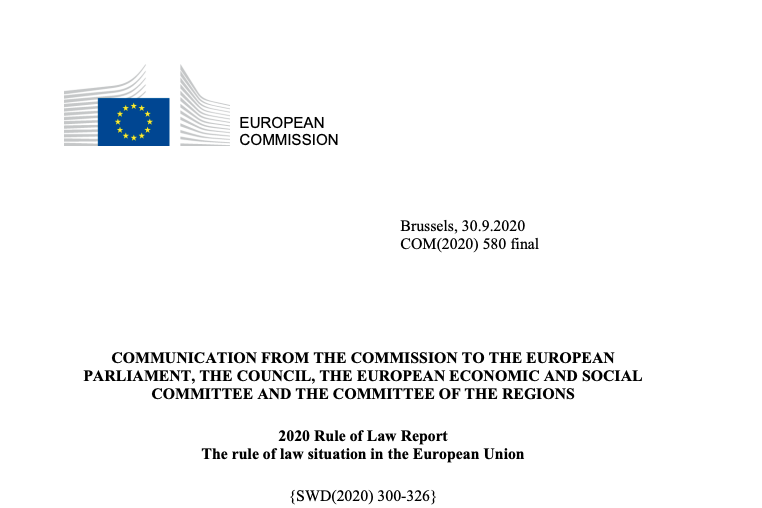
The ICJ today welcomed the first annual rule of law report of the European Commission, which analyses the compliance of all EU Member States with rule of law standards, including on judicial independence, freedom of the media and civil society.
The report is a welcome recognition that rule of law guarantees cannot be taken for granted in any European country, and that all EU institutions must be particularly vigilant in their defence.
But the ICJ warns that the report is only valuable if it leads to strengthened EU enforcement action to address the serious rule of law crises in Poland and in Hungary.
“This report is further testimony to the actions of governments of Poland and Hungary, to deliberately and systematically dismantle protections for judicial independence and other essential rule of law protections,” said Róisín Pillay, ICJ Europe and Central Asia Programme Director.
“We need the EU to use its powers of enforcement promptly and to the full, to defend these fundamental guarantees, including through prompt progression of Article 7 and enforcement proceedings. It is welcome that the European Commission calls on Member States to accelerate the resolution of problems raised under the Article 7 proceedings against Poland and Hungary. This report should lead to renewed efforts of all the institutions to urgently progress these proceedings,” she added.
Additional information
The full text of the European Commission report is available here: https://ec.europa.eu/info/publications/2020-rule-law-report-communication-and-country-chapters_en
The International Commission of Jurists has repeatedly expressed serious concern at the deteriorating rule of law situation in both Poland and Hungary, see for example:
https://www.icj.org/poland-judges-and-lawyers-from-around-the-world-condemn-rapidly-escalating-rule-of-law-crisis/
And here: https://www.icj.org/european-union-icj-joins-call-for-urgent-eu-response-to-hungarys-covid-19-emergency-law/
Contact:
Róisín Pillay, ICJ Europe and Central Asia Programme Director, t: +32 476 97 42 63; e: roisin.pillay@icj.org
Karolina Babicka, Legal Adviser, ICJ Europe and Central Asia Programme, t: +32 475 46 20 67; e: karolina.babicka@icj.org
Sep 25, 2020 | Advocacy, Non-legal submissions
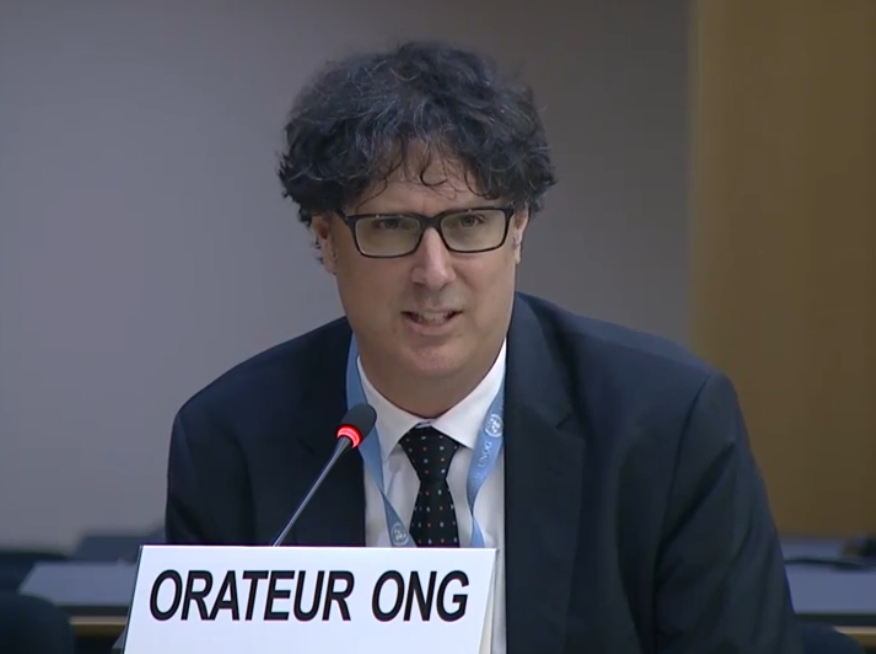
Today at the UN Human Rights Council, the ICJ together with the Tahrir Institute for Middle East Policy, drew attention to ongoing attacks on the independence and role of lawyers in Egypt.
The ICJ made the oral statement during the general debate on country situations of concern, speaking on behalf also of the Tahrir Institute for Middle East Policy. The statement read as follows:
“The International Commission of Jurists (ICJ) and the Tahrir Institute for Middle East Policy draw the Council’s attention to the continuing deterioration of the situation for human rights and the rule of law in Egypt.
Today our organizations published a new report, Targeting the Last Line of Defense: Egypt’s Attacks against Lawyers, to be followed by a virtual side event on 30 September.
As the last line of defense against the government’s sustained and broad crackdown on human rights and fundamental freedoms, Egypt’s lawyers have been increasingly and systematically targeted by authorities. Since 2018, at least 35 lawyers have been arrested and arbitrarily detained for their legal defense work and exercise of fundamental freedoms.
Lawyers have been subject to arbitrary arrest and detention, physical assault, torture and other ill-treatment, and enforced disappearances, as well as unfounded and politicized criminal proceedings based on charges under grossly overbroad criminal laws on “terrorism,” “spreading false news,” and “misusing social media.” Arrests of lawyers spiked in the wake of the September 2019 protests. Arrests continue despite the risk of a COVID-19 outbreak in detention facilities.
The ICJ and Tahrir Institute call on Egyptian authorities to end these violations of the rights and role of lawyers, to take measures to protect the independence of the Bar Association, and to amend all relevant legal frameworks in line with Egypt’s constitution and international human rights law and standards.
Thank you.”
The full statement can be downloaded (PDF) here: UN-Advocacy-Egypt-HRC45-2020
For more information, contact: un@icj.org