Sep 25, 2020 | Advocacy, Non-legal submissions
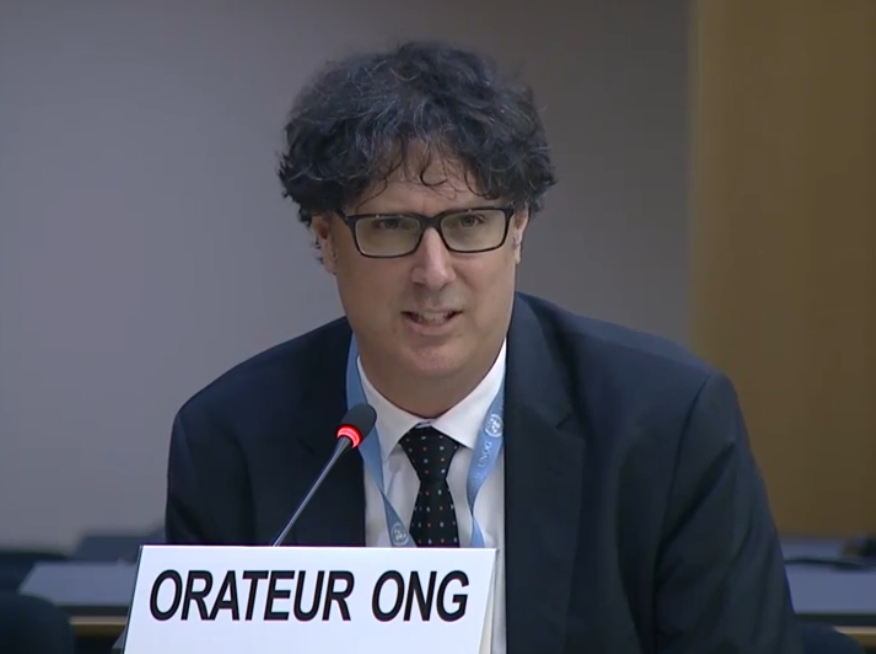
Today at the UN Human Rights Council, the ICJ together with the Tahrir Institute for Middle East Policy, drew attention to ongoing attacks on the independence and role of lawyers in Egypt.
The ICJ made the oral statement during the general debate on country situations of concern, speaking on behalf also of the Tahrir Institute for Middle East Policy. The statement read as follows:
“The International Commission of Jurists (ICJ) and the Tahrir Institute for Middle East Policy draw the Council’s attention to the continuing deterioration of the situation for human rights and the rule of law in Egypt.
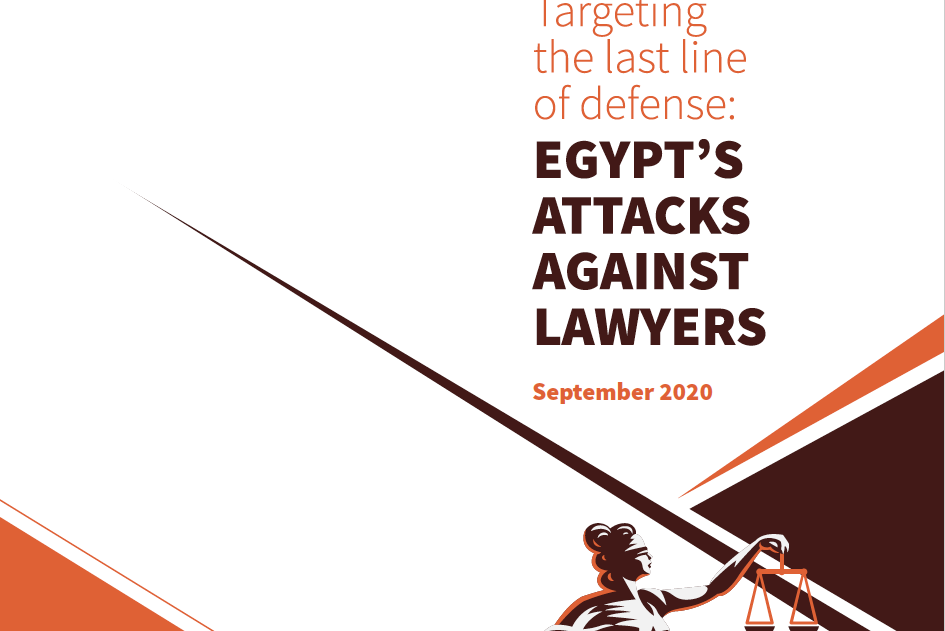
Today our organizations published a new report, Targeting the Last Line of Defense: Egypt’s Attacks against Lawyers, to be followed by a virtual side event on 30 September.
As the last line of defense against the government’s sustained and broad crackdown on human rights and fundamental freedoms, Egypt’s lawyers have been increasingly and systematically targeted by authorities. Since 2018, at least 35 lawyers have been arrested and arbitrarily detained for their legal defense work and exercise of fundamental freedoms.
Lawyers have been subject to arbitrary arrest and detention, physical assault, torture and other ill-treatment, and enforced disappearances, as well as unfounded and politicized criminal proceedings based on charges under grossly overbroad criminal laws on “terrorism,” “spreading false news,” and “misusing social media.” Arrests of lawyers spiked in the wake of the September 2019 protests. Arrests continue despite the risk of a COVID-19 outbreak in detention facilities.
The ICJ and Tahrir Institute call on Egyptian authorities to end these violations of the rights and role of lawyers, to take measures to protect the independence of the Bar Association, and to amend all relevant legal frameworks in line with Egypt’s constitution and international human rights law and standards.
Thank you.”
The full statement can be downloaded (PDF) here: UN-Advocacy-Egypt-HRC45-2020
For more information, contact: un@icj.org
Sep 24, 2020 | Incidencia
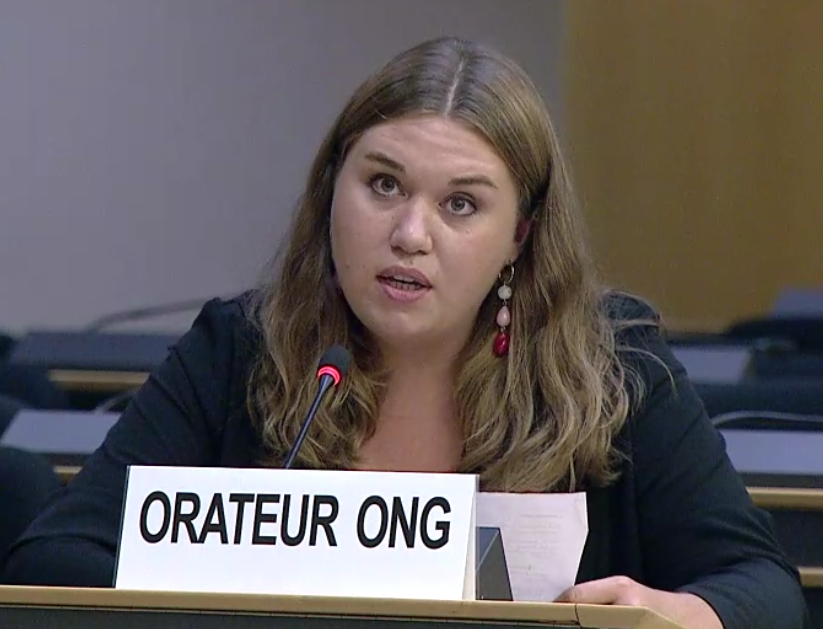
La CIJ denunció hoy la continua impunidad en Venezuela, reforzada por la falta de independencia judicial, en el Consejo de Derechos Humanos de la ONU en Ginebra.
La declaración oral, emitida en un diálogo interactivo con la Misión Internacional para la Determinación de los Hechos establecida por el Consejo, decía lo siguiente:
Señora presidenta,
La Comisión Internacional de Juristas (CIJ) agradece el informe de la Misión y los esfuerzos que permitieron su elaboración y presentación teniendo en cuenta los retos derivados de la pandemia de la COVID-19.
La CIJ comparte las preocupaciones relativas a la falta de cooperación del gobierno con la Misión de Determinación de los Hechos. La CIJ recuerda que, conforme al derecho internacional, Venezuela tiene la obligación de asegurar la rendición de cuentas sobre las graves violaciones de derechos humanos que ocurren en el país.
La CIJ resalta que las violaciones documentadas en este informe se produjeron en medio de una ruptura gradual de las instituciones democráticas y del estado de derecho en Venezuela.
La CIJ ha documentado desde hace varios años la falta de independencia judicial y la ausencia de rendición de cuentas en el país por violaciones de derechos humanos, lo cual ha profundizado la impunidad.
La CIJ destaca la importante contribución de la Misión de Determinación de los Hechos a la rendición de cuentas por graves violaciones de derechos humanos en Venezuela, y urge al Consejo a extender y fortalecer el mandato de la Misión. La CIJ alienta a la Misión a examinar y ahondar con mayor detalle en las causas de las violaciones, los obstáculos de larga data que han impedido obtener rendición de cuentas en el nivel nacional, e incluir un análisis del rol y la responsabilidad de los individuos e instituciones del sistema de justicia por las violaciones y la impunidad.[1]
Finalmente, la CIJ invita a los expertos a ahondar en la recomendación realizada en el informe a los Estados respecto de “iniciar acciones legales contra los individuos responsables de las violaciones y los crímenes identificados”.
Gracias.
[1] Véase, CIJ, Practitioners Guide no. 13: Judicial Accountability, Disponible en: https://www.icj.org/icj-launches-new-practitioners-guide-on-judicial-accountability/
Sep 24, 2020
The ICJ and the Tahrir Institute for Middle East Policy (TIMEP) call on the Egyptian authorities to immediately end their crackdown on lawyers and unconditionally release all lawyers who are detained or convicted solely on the basis of the peaceful exercise of their...
Sep 23, 2020 | News
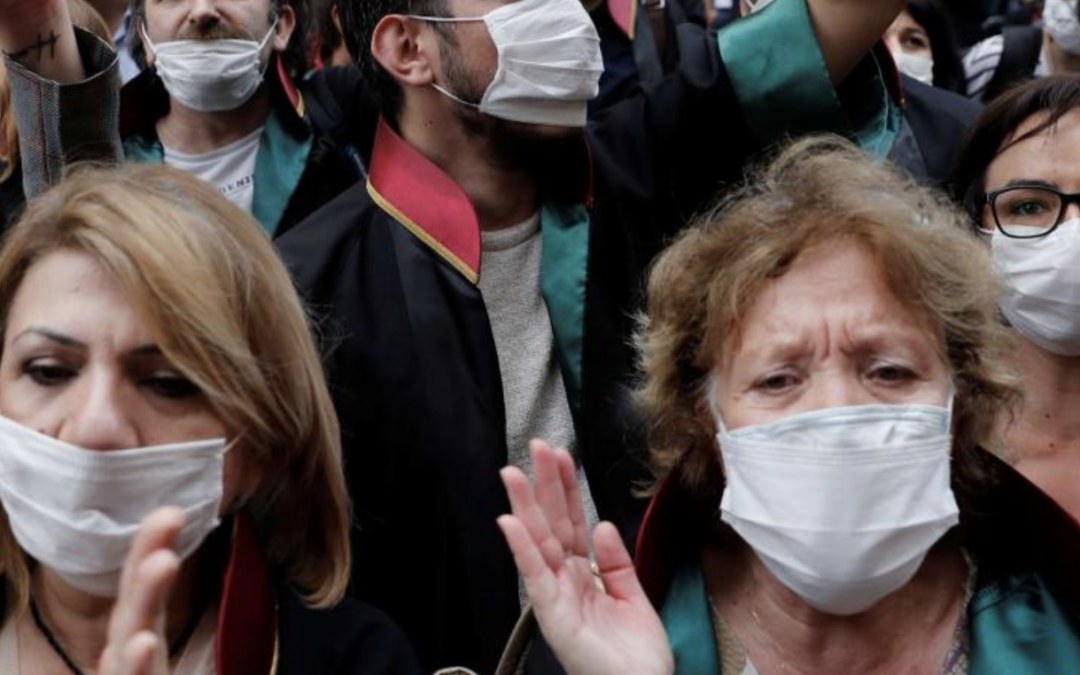
The ICJ called today on the Public Prosecutor Office of Istanbul to drop criminal charges and investigations against the President and Board Members of the Istanbul Bar Association for having publicly displayed a photograph of lawyer Ebru Timtik, who died following a hunger strike while in detention.
“These charges have been brought as a direct result of the lawyers’ exercise of their freedom of expression,” said Massimo Frigo, Senior Legal Adviser with the ICJ Europe and Central Asia Programme. “ They should be dropped immediately.”
On 21 September, the Chief Public Prosecutor’s Office of Istanbul notified to the 11 members of the board of the Istanbul Bar Association, including its President Mehmet Durakoğlu, that they were under criminal investigation.
The charges are not yet known but it is confirmed that the investigation concerns their hanging of a large picture of lawyer Ebru Timtik out of the window of the Istanbul Bar Association’s headquarters.
Lawyer Ebru Timtik died last 27 August on the 238th day of her hunger strike, while in detention on remand. She was a lawyer in the Progressive Lawyers Association and was under trialto answer to the unfounded accusation of being a member of a terrorist organisation. She undertook the hunger strike to protest against these accusations, which are often used in Turkey to silence political opposition and human rights defenders.
Following the bar association’s display of Ebru Timtik’s photograph, Minister of Interior Süleyman Soylu targeted the İstanbul Bar, saying, “I strongly condemn the ones who hung the photograph of a terrorist organization member on the İstanbul Bar Association.” Minister of Justice Abdulhamit Gül also said, “It is unacceptable that the bar association has become a backyard for illegal and marginal structures.” President Erdoğan also stated in the opening speech of the new legal year that “In the next period, we will do what is necessary to cut the bloody road extending from being attorneys to terrorists.”
“It is particularly worrying that these investigations were triggered after statements by the Minister of the Interior and the President, besmirching the legitimate work of lawyers and bar associations as linked to ‘terrorism,” added Massimo Frigo.
International standards
The UN Basic Principles on the Role of Lawyers state:
18. Lawyers shall not be identified with their clients or their clients’ causes as a result of discharging their functions.
23. Lawyers like other citizens are entitled to freedom of expression, belief, association and assembly. In particular, they shall have the right to take part in public discussion of matters concerning the law, the administration of justice and the promotion and protection of human rights and to join or form local, national or international organizations and attend their meetings, without suffering professional restrictions by reason of their lawful action or their membership in a lawful organization. In exercising these rights, lawyers shall always conduct themselves in accordance with the law and the recognized standards and ethics of the legal profession.
24. Lawyers shall be entitled to form and join self-governing professional associations to represent their interests, promote their continuing education and training and protect their professional integrity. The executive body of the professional associations shall be elected by its members and shall exercise its functions without external interference.
Contact
Massimo Frigo, Senior Legal Adviser, e: massimo.frigo(a)icj.org, t: +41797499949; twitter: @maxfrigo
Sep 18, 2020 | Advocacy, Non-legal submissions
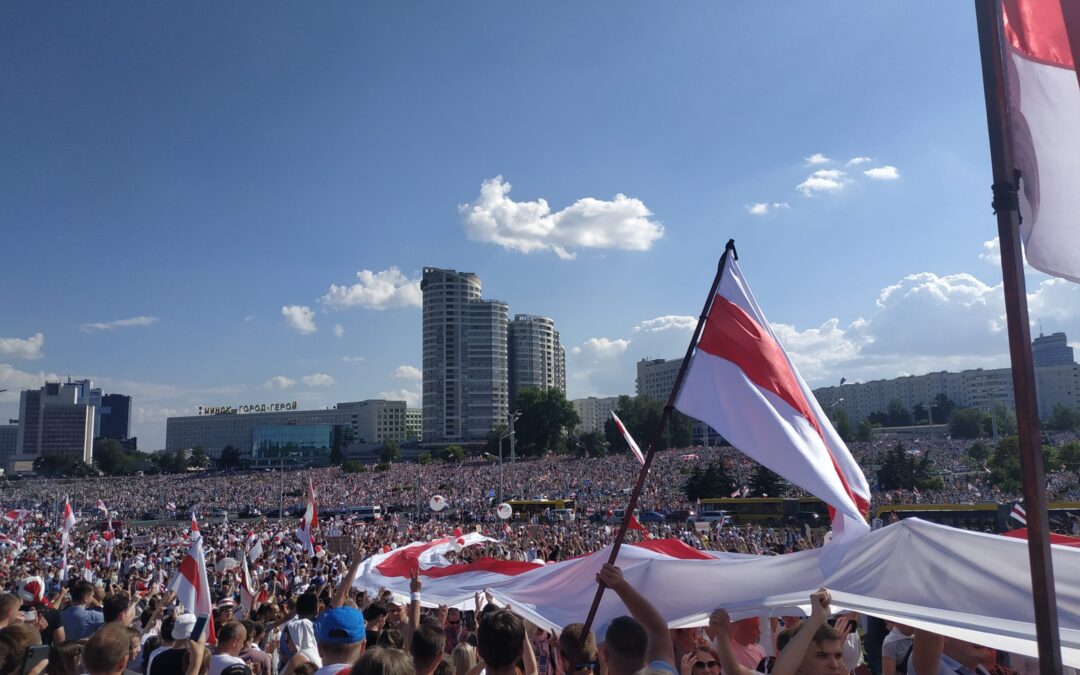
At a special session of the UN Human Rights Council in Geneva, the ICJ and IBAHRI have called on Belarus to comply with its international human rights obligations, including by releasing those arbitrarily detained and ceasing abusive prosecutions as well as harassment of lawyers.
The oral statement read as follows:
“Madame President,
The International Commission of Jurists (ICJ) and the International Bar Association’s Human Rights Institute (IBAHRI) are concerned at the continuing human rights violations in Belarus following the Presidential election. Widespread arbitrary arrests, police violence against peaceful protesters, torture and other ill-treatment of detainees and allegations of enforced disappearances, violate Belarus’s international law obligations, and require accountability.
Our organizations are particularly concerned about reports that these violations are accompanied by widespread denial of detainees’ access to a lawyer. Lawyers face harassment and obstacles in carrying out their professional duties.
We highlight the recent arrests and detention of two prominent lawyers, Ilya Salei and Maxim Znak, on politically motivated charges on 9 September 2020. According to official information, the lawyers are charged with the crime of “calls for actions aimed at causing harm to the national security of the Republic of Belarus”.
We urge the Council to call on Belarus to:
- comply with its international human rights obligations, including by releasing those arbitrarily detained and ceasing abusive prosecutions;
- provide detainees with confidential access to lawyers of their choice;
- end harassment of lawyers and ensure accountability and reparations for those whose human rights have been violated; and
- request OHCHR to monitor and report to the Human Rights Council on the human rights situations in Belarus.
Thank you”