Jun 9, 2020 | News
As of 9 June, at least ten prominent lawyers have been arrested and criminally charged in Zimbabwe.
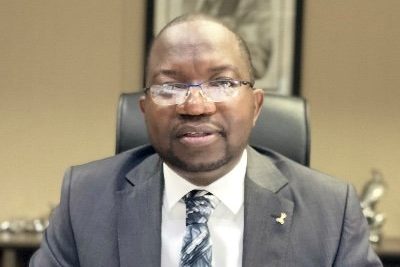
Among them, Advocate Thabani Mpofu (photo), Advocate Choice Damiso, Mr Tapiwa Makanza and Mr Joshua Chirambwe have been arrested and charged with the crime of defeating or obstructing the course of justice.
These lawyers are alleged to have falsified information in the papers filed in a legal matter in which they were representing a citizen, who was challenging the legality of President Mnangagwa’s decision to appoint Mr Kumbirai Hodzi as the Prosecutor General.
Mr Dumisani Dube was arrested on similar charges but his charges arise from a different case.
Mr Patrick Tererai was charged with disorderly conduct after he demanded access to his client who had been detained at a police station.
The ICJ notes that the criminal charges laid against all the six lawyers are linked to the performance of their duties as legal practitioners.
The ICJ reminds the Government of Zimbabwe of its domestic and international obligations pertaining to the right to fair trial and protection of the independence of lawyers, as underscored in the United Nations Basic Principles on the Role of Lawyers and the African Commission on Human and Peoples’ Rights Principles and Guidelines on the Right to a Fair Trial and Legal Assistance in Africa
These elaborate standards relevant to the right to a fair trial including under article 14 of the International Covenant on Civil and Political Rights (ICCPR) and article 7 of the African Charter on Human and Peoples’ Rights.
Of particular significance is Principle 16 of the UN Basic Principles which states that “Governments shall ensure that lawyers are able to perform all of their professional functions without intimidation, hindrance, harassment or improper interference;…. and [lawyers] shall not suffer, or be threatened with, prosecution or administrative, economic or other sanctions for any action taken in accordance with recognized professional duties, standards and ethics.”
In addition, Principle 20 provides that “Lawyers shall enjoy civil and penal immunity for relevant statements made in good faith in written or oral pleadings or in their professional appearances before a court, tribunal or other legal or administrative authority.” Similar provisions are included in Part I of the African Principles and Guidelines.
A lawyer would not generally be immune from criminal proceedings where allegations of perjury or intentionally providing false information to a court were well-founded.
In relation to this recent group of cases, the Law Society of Zimbabwe has expressed the concern that the arrests appear calculated to hinder the members of the profession from undertaking their professional duties.
In this context, the ICJ calls upon the Government of Zimbabwe to ensure that the right to fair trial for these lawyers is fully respected and that the criminal charges brought against these lawyers are not abused to subvert the independence of the legal profession.
“The arrest of ten lawyers within one week on criminal allegations arising from the performance of their duties as legal practitioners is a cause of concern. The state must ensure that these cases are handled fairly and that the criminal justice system is not abused to harass and intimidate lawyers who represent clients who are perceived as political opposition to the sitting government,” said ICJ Africa Director Arnold Tsunga.
Of late, Advocate Thabani Mpofu has represented opposition leader Mr Nelson Chamisa in a series of cases. These include the presidential election petition and the cases in which Mr Chamisa’s rise to the leadership of the opposition party has been challenged.
Contact
Arnold Tsunga, Director of the ICJ Africa Regional Programme, t: +263 77 728 3248, e: arnold.tsunga(a)icj.org
Jun 5, 2020 | News
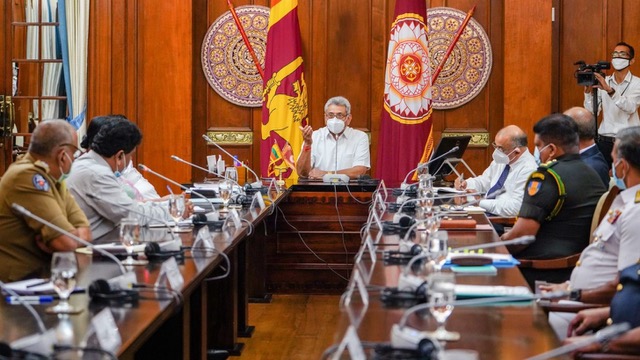
The ICJ today condemned the proclamation by the Sri Lankan president to establish a Presidential Task Force dominated by the security forces and called for the proclamation to be rescinded.
On June 2, 2020, Sri Lankan President Gotabaya Rajapaksa issued an extraordinary gazette establishing a 13-member “Presidential Task Force to build a Secure Country, Disciplined, Virtuous and Lawful Society.” The Task Force is composed entirely of military, intelligence and police officials. It is to be headed by Defence Secretary, Retired Major General Kamal Gunaratne.
“This Presidential Task Force constitutes another act of over-reach by a government seeking to take advantage of the COVID-19 pandemic to further expand its powers,” said Frederick Rawski, ICJ’s Regional Director for Asia and the Pacific. “Its mandate is overbroad, and it empowers its military and police membership – including alleged war criminals – at a time when strong, independent, civilian-led policy-making is what is needed.”
The Task Force is given a sweeping mandate which includes:
- “taking necessary immediate steps to curb the illegal activities of social groups which are violating the law”
- “taking measures for prevention of the drug menace…”
- “taking legal action against persons responsible for illegal and antisocial activities conducted in Sri Lanka while locating in other countries”
- “investigating and preventing any illegal and antisocial activities in and around prisons.”
The task force also has the power to “conduct investigations and to issue directions as may be necessary in connection with the functions entrusted to it.” This includes issuing instructions to government officials to comply with its directives or be reported to the President.
The ICJ raised concerns that the task force has not been established on proper legal foundations. It is apparently pursuant to the broad, but ill-defined presidential powers under Article 33 of the Constitution.
The ICJ said that the task force could effectively usurp the powers and functions normally reserved for civilian authorities, under rule of law principles and as established by the Constitution and relevant enabling legislations.
Article 42 (1) of the Constitution provides that the “Cabinet of Ministers shall be charged with the direction and control of the Government.” Law enforcement and public officials under the direction of the relevant Minister have been designated under existing laws to specifically address drug-related offences and any other illegal and/ or criminal activity that seemingly fall within the mandate of this Task Force. The independence of public officials will be compromised if they are compelled to report to a military-dominated body. The Gazette provides no detail on how this reporting process would operate, or the legal consequences of refusing to act as instructed.
“Few doubt that this task force will be used as another tool to suppress speech and target critics of the Sri Lankan government. It is disturbing that such a potentially consequential body has been formed pursuant to broad presidential powers, with no reference to judicial or parliamentary oversight,” said Rawski. “Vague and overbroad language such as ‘anti-social activities’ could effectively criminalize expression protected under international law. Such provisions are inconsistent with the rule of law and contravene the principle of legality.”
The task force’s military and police membership follows a pattern of recent military appointments to civil administrative positions by the incumbent President. The military personnel appointed include officials credibly accused of war crimes. Chairman Major General Kamal Gunaratne was the commander of the 53rd division and Major General Shavendra Silva was the commander of the 58th Division of the Sri Lankan Army. Both units were identified by multiple UN investigatory bodies as having been involved in the commission of serious crimes and human rights violations during the last stages of Sri Lanka’s decades-long armed conflict which ended in 2009.
The ICJ called upon President Gotabaya Rajapaksa to rescind the extraordinary gazette establishing the Presidential Task Force. The role of the military in public life must be strictly circumscribed and matters pertaining to civil administrcation should be executed by elected and public officials in respect of the rule of law and principles of democratic governance.
Contact
Frederick Rawski, ICJ’s Asia Pacific Regional Director, t: +66 2 619 84 77; e: frederick.rawski(a)icj.org
Jun 4, 2020 | News
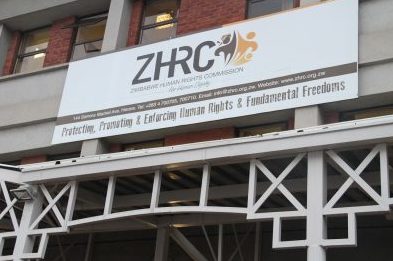
The ICJ today urged the country’s authorities to take immediate measures to fully reconstitute the Zimbabwe Human Rights Commission (ZHRC) after its operations were effectively suspended following the expiry of the terms of office of four of its Commissioners on 7 May 2020.
One Commissioner had already resigned in 2018 meaning that the ZHRC no longer has the constitutionally required quorum for it to make certain decisions that are fundamental to the protection of human rights in Zimbabwe.
“The inability by the ZHRC to fully execute its constitutional mandate has serious implications on the ability of individuals -in particular victims of human rights violations -to access justice,” said Arnold Tsunga, Director of the ICJ Africa Programme.
“The role of ZHRC, as Zimbabwe’s national human rights institution is critical in providing an avenue for redress to victims of human rights violations and the general public,” he added.
Zimbabwe has been witnessing an escalation of human rights violations requiring investigation by a fully functioning and effective Commission.
This spate of human rights violations has had a disproportionate impact on the poor and economically vulnerable in the context of the Covid-19 lockdown measures.
There have been an increase in targeting of human rights defenders, civil society leaders and political opposition, which have included acts of enforced disappearance and torture and other ill-treatment.
The ICJ underlined that while redress for such violations required strong and independent judiciary as a guarantor of human rights, the role of fully functional ZHRC was critical to complement that of the judiciary.
The ICJ called upon the authorities in Zimbabwe, and in particular the Parliamentary Committee on Standing Rules and Orders, to act expeditiously to ensure that the vacant positions are filled without any further delay to enable the ZHRC effectively perform and discharge its constitutional mandate.
The ICJ said that failure by the responsible authorities to act expeditiously to fill the vacant positions violated the core values and principles the Constitution of Zimbabwe, in particular section 324 of the Constitution which provides that “all constitutional obligations must be performed diligently and without delay”.
In addition, the President to fill in any vacant position within three months of death or resignation of a Commissioner. The position of Commissioner Khombe became vacant on the 30 October 2018, and has not been filled to date.
Additional Information
The ZHRC is established as an independent institution under Chapter 12 of the Zimbabwe constitution with the general objective to “support and entrench human rights and democracy; to promote constitutionalism; to promote transparency and accountability in public institutions; to secure the observance of democratic values and principles by the State and all institutions and agencies of government, and government-controlled entities; and to ensure that injustices are remedied.”
On 26 May the Chairperson of the ZHRC, Dr. E.H Mugwadi, wrote a letter notifying “partners and stakeholders” of the retirement of four Commissioners, namely Dr Ellen Sithole (former Deputy Chairperson), Dr Joseph Kurebwa, Kwanele M. Jirira and Japhet Ndabeni-Ncube with effect from 7 May. The Chairperson noted that the retirement had left the Commission lacking the quorum to fulfil its constitutional obligations, particularly with respect to make policy resolutions and the adoption of monitoring and investigation reports. The Commission had also been unable to adopt Commission reports its activities.
International standards for effective and credible National Human Rights Institutions (NHRIs) are contained in the United Nations Principles relating to the Status of National Institutions (Paris Principles), which provide that NHRIs must be adequately resourced with sufficient institutional capacity to perform and discharge their responsibilities.
Contact:
Arnold Tsunga, ICJ Africa Director, t: +263 777 283 249; e-mail: arnold.tsunga(a)icj.org
Blessing Gorejena, ICJ Senior Legal Adviser, t: +263 772 151 989, e-mail: Blessing.Gorejena(a)icj.org

Jun 2, 2020 | News
The ICJ has called on the Russian authorities to institute a prompt, independent and thorough investigation into the recent use of physical force against lawyers Natalia Magova, Diana Sipinova and Liudmila Kochesokova and detention of Diana Sipinova by officers of the Ministry of Interior in the Kabardino-Balkaria Republic.
Those responsible should be held accountable, the ICJ stressed.
According to the lawyers and as corroborated by video recordings available online, they arrived in the Department of the Ministry of Interior in the Kabardino-Balkaria Republic to represent their client Ratmir Jilokov, another lawyer who was detained on 20 May 2020, also following alleged violence against him by the police.
Despite the lawyers’ requests to have access to their client, they were not allowed to meet him. Instead, they were removed from the building of the Department of the Ministry of Interior with the use of physical force by several officers, which resulted in an altercation.
Moreover, Diana Sipinova was detained in the building of the Department for several hours. Both she and Ratmir Jilokov were later released.
“The use of physical force against the lawyers to prevent their meeting their client was clearly contrary to international human rights law and standards, including those on the role of lawyers,” said Temur Shakirov, Senior Legal Adviser of the ICJ Europe and Central Asia Programme.
The ICJ also raised concerns at the criminal proceedings against lawyer Diana Sipinova, following the incident of 21 May 2020, and Ratmir Jilokov, who was detained on 20 May 2020 apparently in connection with having tried to defend a client’s premises from what he considered to be an unlawful search by the authorities.
Both are accused of having used violence against police officers.
Reportedly, the criminal proceedings against Diana Sipinova and Ratmir Jilokov were instituted following their complaints of being subjected to physical attack by the officers of the Ministry of Interior of the Kabardino-Balkaria Republic.
The ICJ highlights that as provided by the UN Principles on the Role of Lawyers, States must ensure that lawyers are able to perform all of their professional functions without intimidation, hindrance, harassment or improper interference and that they do not suffer, or be threatened with prosecution for any action taken in accordance with recognized professional duties, standards and ethics.
International human rights law further guarantees the right of a person deprived of liberty to meet with his or her lawyer.
The authorities should take effective measures to prevent such acts against lawyers in the future, and to ensure that lawyers are not prevented from representing their clients in accordance with law, the ICJ said.
The ICJ furthermore calls on the authorities to terminate the criminal investigations against the lawyers in connection with their attempts to meet with and defend their clients’ interests, and for any other action they have taken in relation to the representation of their clients that was in accordance with their professional duties, standards and ethics.
Background information:
Natalia Magova, Diana Sipinova and Liudmila Kochesokova are lawyers based in Kabardino-Balkaria Republic in the North Caucasus part of the Russian Federation.
According to the official website of the Investigative Department of the Investigative Committee of Kabardino-Balkaria, Diana Sipinova and Ratmir Jikolov are charged with the criminal offence provided for by Article 318.1 (use of violence which does not endanger life or health against the public officials in connection with the performance of their duties) of the Criminal Code of the Russian Federation.
In particular, Diana Sipinova is charged with having used violence against officers of the department of the Ministry of Interior of Kabardino-Balkaria Republic when she requested access to her client on 21 May 2020. Ratmir Jilokov is charged with having used violence against the police officers who arrived in the office of his client to conduct a search on 20 May 2020.
On 30 May 2020, the first instance court imposed the preventive measure for Diana Sipinova of prohibition of certain activities for two months.
Lawyer Ratmir Jilokov, who was detained on 20 May and released on 21 May 2020, claims that the officers who arrived in his client’s office for a search failed to provide him with any legal grounds or the document authorising the search, and that he was subjected to violence when he had challenged the unlawfulness of the officers’ actions. The first instance court imposed the preventive measure of prohibition of certain activities for two months in respect of him.
The Federal Chamber of Lawyers of Russian Federation expressed their support to the lawyers and criticized the interference with their professional functions and actively participated in the defence of the lawyers.
The ICJ has previously raised concerns at violence and intimidation against Russian lawyers.

May 11, 2020
The ICJ called today on the Ukrainian authorities to take urgent measures to ensure that lawyers in Ukraine are able to work in an atmosphere free of threat, harassment or any other improper interference.
An ICJ mission report published today, Between the Rock and the Anvil: Lawyers under Attack in Ukraine, documents an alarming level of violence against Ukrainian lawyers relating to their work, and makes recommendations to the Ukrainian authorities to better uphold the security and independence of lawyers, and ensure that they are able to protect human rights.
“While the ICJ notes repeated attempts to the reform the justice system, it is highly alarming that lawyers continue to be subjected to attacks, including murder and physical abuse,” said Temur Shakirov, ICJ Senior Legal Adviser for the Europe and Central Asia Programme.
“Lawyers must be able to work in an atmosphere free of fear of reprisal for their work in defence of their clients, as required by international human rights law and international standards on the role of lawyers,” he added.
The ICJ report finds that the security of lawyers and their ability to protect the rights of their clients are under constant threat in Ukraine.
In particular, lawyers who work on politically sensitive cases or in the conflict zone face risks of attacks and harassment.
Lawyers who are subject to such attacks do not have access to effective legal remedies against the interference with their work. Even in case of killings of lawyers, the perpetrators have not been brought to justice.
The report also analyses the institutional organization and self-governance of the legal profession, the disciplinary procedure, the persecution of lawyers through legal mechanisms and the problems lawyers face in protecting human rights.
The report notes some positive developments in Ukraine, including the independence of the Ukrainian National Bar Association, as an important achievement.
“Despite recent reforms Ukraine has not yet become free from the pattern of having ‘good laws and poor practice’, which often renders the justice system dysfunctional, and undermines reforms,” Shakirov said.
“As it is possible that Ukraine may experience another whirlwind of reforms, the risk of the legislative initiatives which may aim or result in undermining the security and independence of the legal profession remains,” he added.
The report makes comprehensive recommendations for addressing the problems of attacks and harassment of lawyers and taking measures as a matter of urgency. Among the measures, the ICJ recommends measures to ensure that:
- The independence and role of lawyers is respected by all State institutions: the executive, legislative and the judiciary, by all other public authorities including law enforcement authorities, and by all participants in legal proceedings;
- Sufficient staff with adequate professional training and capacity to be able to ensure safety and security in courts is provided;
- Relevant law enforcement agencies investigate promptly and effectively all killings and attacks on lawyers with the aim of identifying those responsible and bringing them to justice in proceedings which fully respect international fair trial standards.
Background:
The report is based on research and analysis of Ukrainian law in light of international law and standards as well as the findings and conclusions of an ICJ mission (2019) to Ukraine to assess the situation of security and independence of lawyers. During the mission, the ICJ met with a range of relevant actors-individual lawyers and legal experts, non-governmental and State representatives, human rights defenders and journalists who cover legal issues.
Download:
Ukraine-Between the rock and the anvil-Publications-Reports-Mission report-2020-ENG (Report in English, PDF)
Ukraine-Lawyers under attack report-News-press releases-2020-UKR (News story in Ukrainian, PDF)
Ukraine-Between the rock and the anvil-Publications-Reports-Mission report-2020-UKR (Report in Ukrainian, PDF)
Ukraine-Between the rock and the anvil-Publications-Reports-Mission report-2020-RUS (Report in Russian, PDF)