Sep 14, 2020 | News
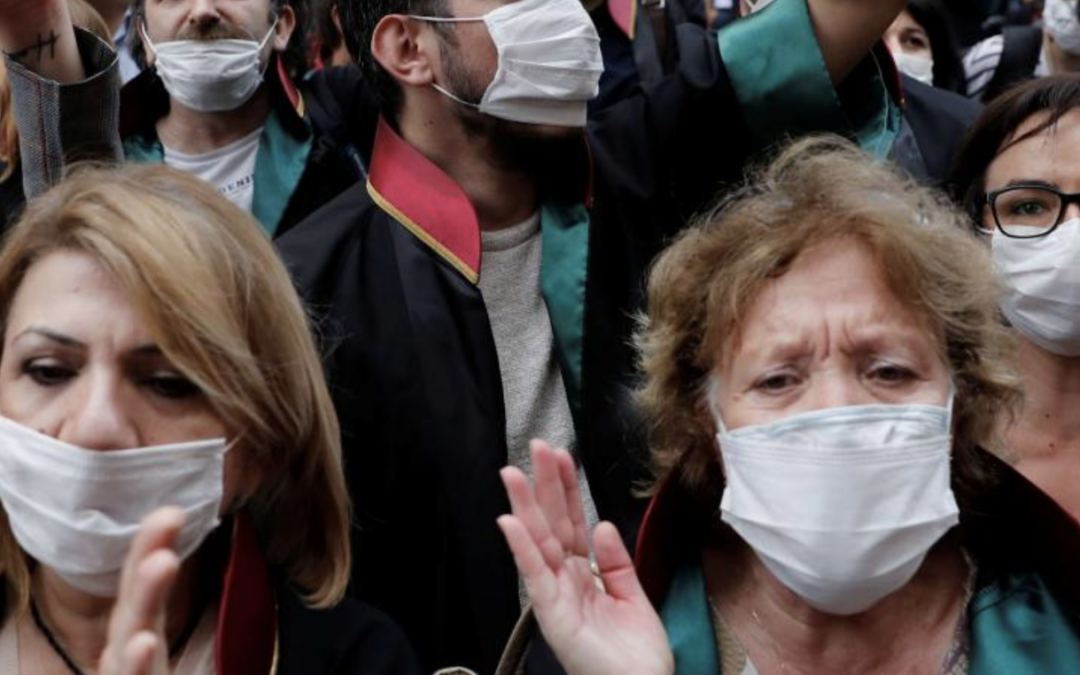
The ICJ expressed today its deep concern at the arrest order of some 60 lawyers in Turkey on grounds allegedly linked to the representation of their clients, in breach of Turkey’s international law obligations.
The ICJ understands that around 47 lawyers have been arrested on 11 September in Turkey while 13 others are being searched by police for allegedly acting on behalf of clients accused of participation in the Gülenist movement, called by Turkish authorities the “Fetullahist Terrorist Organisation” (FETO). It has been reported that lawyers were interrogated about their professional activities.
“Lawyers should never be arrested or sanctioned for representing their clients, or identified with their clients causes,” said Roisin Pillay, Director of the ICJ Europe and Central Asia Programme,
“This is a basic principle of the independence of the legal profession and international law and its respect is essential to ensure that everyone has the right to a fair trial.”
The ICJ will follow the case closely to ensure that international law and standards are respected concerning any action against the lawyers arrested.
“If the sole charges against the lawyers arrested are related to their work as lawyers representing their clients, they should be immediately released,” added Roisin Pillay.
The ICJ stressed that they should not be subject to arrest for the legitimate exercise of any human rights and fundamental freedoms. In the event that any of them are subject to charges for cognizable crime consistent with Turkish and international law, they must be brought immediately before a court to consider whether any continued detention is lawful. If charged, they must be in ensured all rights of fair trial by independent and impartial courts.
The UN Basic Principles on the Role of Lawyers say that “lawyers shall not be identified with their clients or their clients’ causes as a result of discharging their functions” (article 18).
Contact:
Roisin Pillay, e: roisin.pillay(a)icj.org
Massimo Frigo, e: massimo.frigo(a)icj.org – t: +41797499949
Sep 14, 2020 | News
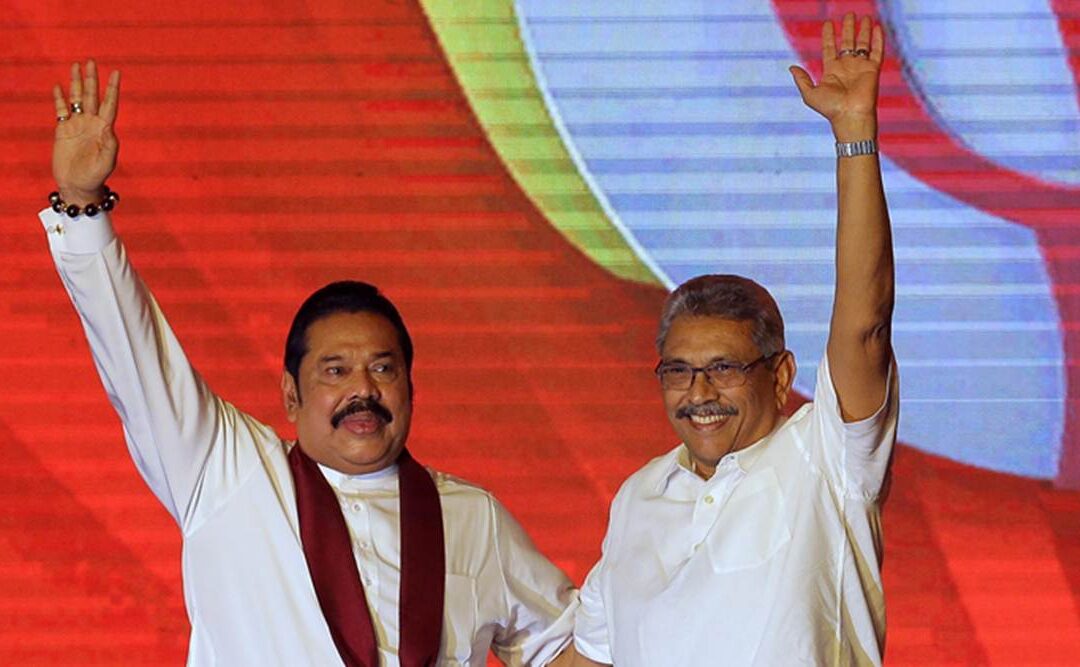
The Sri Lankan parliament should reject the Sri Lankan Government’s efforts to amend the country’s constitution to provide unfettered powers to the President while encroaching on the powers of the legislature and infringing upon the independence of the judiciary, said the ICJ today.
“The proposed 20th Amendment, which bestows an already powerful executive president with additional powers with no effective checks on him, essentially placing him above the law,” said Sam Zarifi, ICJ’s Secretary General. “These amendments would tilt the balance of State power heavily on the side of the executive and in particular on a single person.”
The proposed 20th Amendment to the Constitution bill rolls back most of the reforms brought about by the 19th Amendment to the Constitution, the passage of which the UN Human Rights Council welcomed as “promoting democratic governance and oversight of key institutions”.
The 19th amendment, adopted in 2015, had imposed certain limits to the Executive President’s authority and powers, including in respect of terms of the office of President, the capacity to dissolve Parliament and to fast-track legislation. It also removed the blanket immunity the President enjoyed from legal proceedings. Critically, it had established a Constitutional Council which restrained the President’s discretion in appointing key governmental actors including in the judiciary, the Attorney General and the Inspector General of Police.
The ICJ notes that the 20th amendment appears to reproduce much of the regressive features of the old 18th amendment, which the 19th amendment had been brought about to correct.
“Sri Lanka’s Executive branch has a poor record of respecting human rights and the rule of law, and the 19th Amendment was an effort to impose the checks and balances necessary for the rule of law,” said Sam Zarifi. “The constitutional changes being proposed would take the country back to the dark days of Executive impunity.”
“We are particularly concerned that these changes would undermine the independence of the judiciary, as the President would have unfettered discretion to appoint the superior judiciary, including the Chief Justice, the President and Judges of the Court of the Appeal, and to control the Judicial Service Commission,” said Sam Zarifi.
The JSC is the body entrusted with the power to appoint, promote, transfer exercise disciplinary control and dismiss judicial officers of the subordinate courts. The changes would also grant the President the power to nominate members of the Judicial Service Commission (JSC) other than its Chairman which is ex officio, the Chief Justice.
The UN Basic Principles on the Independence of the Judiciary states that “Any method of judicial selection shall safeguard against judicial appointments for improper motives.”
Under international standards and recommendations of the UN Special Rapporteur on the Independence of the Judiciary, appointments to the judiciary should not be vested solely with the executive.
A judicial appointment process which gives the President full discretion would inevitably result in the significant erosion of the independence and impartiality of the Sri Lankan judiciary.
Moreover, several checks placed on the President’s powers by the 19th Amendment have also been removed while giving him greater legal immunity. The President would also be granted sole power to appoint the cabinet, assign to himself any cabinet portfolio and been given unfettered discretion in relation to the appointment and dismissal of the Prime Minister. The President would also retain the power to dissolve the Parliament within one year.
Contact
For questions and clarifications: Osama Motiwala, Communications Officer – osama.motiwala(a)icj.org

Sep 8, 2020 | Advocacy, News
The ICJ, in collaboration with the Zimbabwe Anti-Corruption Commission (ZACC), today launched a whistleblowing application (tip off) mechanism in Harare.
It is common that people reporting corruption, tipping off and submitting key evidence prefer to stay anonymous, as they may have an often, well-founded, fear of reprisal by the parties involved. In such instances it is imperative for the ZACC to adopt a protective solution that guarantees user anonymity. This tip off mechanism will enable ZACC to receive information and evidence securely while the user of the mechanism remains anonymous. In turn ZACC will be able to use the information received to investigate and prosecute cases of corruption. Additionally, the application will also have a case management dashboard which will aid evaluation of ZACC’s efficiency in handling corruption cases.
Corruption undermines the rule of law by impeding access to justice through diversions of public resources for private gain. As such, the ICJ, through the support by the EU, is working towards increased transparency and integrity in the justice delivery system in order to increase access to justice for all. The whistleblowing application is not undertaken in isolation, as it builds on other initiatives to combat corruption under this programme, which include the Anti-Corruption Campaign, establishment of an anti-corruption court, capacity building, and various research initiatives.
“Corruption remains a key challenge confronting Zimbabwe. If unabated, corruption undermines democracy and the rule of law leading to violations of human rights. Its destructive effect on development disproportionately affects the poor. The participation of the public, in augmenting government efforts in combating corruption is therefore critical. It is our hope that through this awareness programme, ordinary members of the public will be able to recognize corrupt behaviour and feel empowered to take a stand against it. Further, we hope that the mechanism will sustain the momentum against corruption and increase the demand for improved accountability and transparency in various sectors in Zimbabwe thereby contributing to reduction of corruption,” said Blessing Gorejena, ICJ’s Zimbabwe Project Team leader.
Once officially launched, the whistle-blowing mechanism will be available to the public. It will be promoted and encouraged by publicizing stories of successful prosecutions and other actions as a result of information provided by whistle-blowers, as well as reporting on the effective protection of such persons from any form of reprisal or other harm.
The project is facilitated through the support of the European Union.
Contact:
Blessing Gorejena, Senior Legal Adviser and Team Leader of ICJ Zimbabwe Project, t:0772151989, e: blessing.gorejena(a)icj.org
Sep 7, 2020 | News
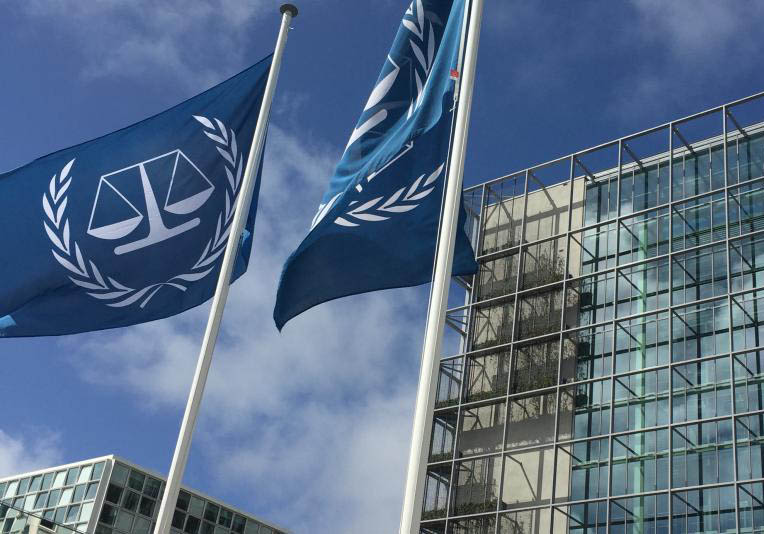
Ongoing attacks by United States officials on the International Criminal Court (ICC) and its staff amount to a full-frontal assault on international justice and the rule of law, said the ICJ, today.
On 2 September 2020, the US Secretary of State, Michael Pompeo, describing the ICC as a “thoroughly broken and corrupted institution,” indicated that the US would place on sanctions on ICC Prosecutor Fatou Bensouda, and the ICC’s Head of Jurisdiction, Complementary, and Cooperation Division, Phakiso Mochochoko, “for having materially assisted Prosecutor Bensouda” pursuant to the President’s 11 June 2020 Executive Order.
“The US must end these despicable and destabilizing attempts to interfere with the independence of the ICC and the functioning of its mandate to pursue justice for victims of the most serious crimes under international law,” said Kingsley Abbott, Coordinator of the ICJ’s Global Accountability Initiative.
“It is imperative that the 123 countries that are States Parties to the Rome Statute continue to work in solidarity to defend the Court and show the world that even individuals from a global superpower are subject to the rule of law.”
“Retaliating against individual ICC staff for merely working to fulfill the mandate of the Court sets a dangerous precedent and must be condemned specifically in the strongest possible terms,” added Abbott.
Background
On 21 September 2018, the ICJ, together with ten other organisations, sent a joint letter to UN Special Procedures regarding threats made by the then US National Security Adviser, John Bolton, against the ICC and its staff.
On 22 March 2019, the UN Special Rapporteur on the situation of human rights defenders, Michel Forst, and the Special Rapporteur on the Independence of Judges and Lawyers, Diego García-Sayán, issued a press release expressing concern at Bolton’s remarks, reaffirming the important mandate of the ICC and saying they were in contact with the US authorities on the issue.
On 11 June 2020, the ICC issued a statement expressing “profound regret at the announcement of further threats and coercive actions, including financial measures, against the Court and its officials, made earlier today by the Government of the United States.” The Court said the US action “represents an attack against the interests of victims of atrocity crimes, for many of whom the Court represents the last hope for justice.”
On 18 June 2020, the ICJ urged the United Nations Human Rights Council’s Special Procedures to act in response to steps taken by the United States against staff of the International Criminal Court (ICC) and their families.
On 25 June 2020, UN Human Rights Special Procedures experts issued a statement condemning US attacks on the ICC and its staff saying they “have been in contact with the US authorities on the issues.”
On 2 September 2020, the ICC issued a statement condemning the economic sanctions imposed on the Prosecutor and Phakiso Mochochoko, saying that the attacks “are unprecedented and constitute serious attacks against the Court, the Rome Statute system of international criminal justice, and the rule of law more generally.”
Contact
Kingsley Abbott, Coordinator of the ICJ’s Global Accountability Initiative, t: +66 94 470 1345; e: kingsley.abbott(a)icj.org
Sep 1, 2020 | Noticias
Hoy, la CIJ llamó a la Organización de los Estados Americanos (OEA) a respetar la autonomía e independencia de la Comisión Interamericana de Derechos Humanos (CIDH), como órgano encargado de promover la observancia de los derechos humanos en las Américas, incluso respecto de sus funciones administrativas básicas.
El Secretario General de la OEA se ha negado a respaldar la decisión unánime tomada por la Comisión Interamericana en enero de 2020, de renovar el mandato del Secretario Ejecutivo de la CIDH, Paulo Abrão, cuyo mandato expiró el 15 de agosto.
La negativa a renovar un mandato no puede hacerse sobre la base de denuncias presentadas, sino que éstas deben ser previamente resueltas en un plazo razonablemente breve, con base en los principios del debido proceso para todas las partes interesadas.
La CIJ señala la importancia de tramitar oportunamente las quejas realizadas por el personal conforme a los principios del debido proceso para todas las partes, y de contar con procedimientos transparentes e independientes para ello.
La CIJ recuerda que es fundamental asegurar la independencia y la autonomía de la Comisión Interamericana, lo que necesariamente incluye su Secretaría Ejecutiva y las funciones relacionadas con el proceso de nombramiento de su titular.
El Secretario General de la CIJ, Sam Zarifi, mencionó que “la CIDH ha desempeñado un papel fundamental en las Américas para promover los derechos humanos y proteger a las víctimas de violaciones de derechos humanos”. Agregó que “la situación requiere una resolución urgente que garantice el respeto de los principios de independencia y autonomía de la CIDH”.