May 1, 2020 | Advocacy, News
The ICJ today condemned the recent decisions of the governments of the Republic of Benin and Côte d’Ivoire to withdraw their respective declarations that gave individuals and nongovernmental organizations the right to directly bring cases of human rights violations against those States, before the African Court on Human and Peoples Rights.
The ICJ called on the authorities of both States to reconsider and rescind these decisions.
Coming after a similar withdrawal by Tanzania in November 2019, these withdrawal decisions serve to deprive the inhabitants of these countries access to a judicial remedy at the regional level for human rights violations, and undermine the effective of the African regional human rights system.
The ICJ stressed that withdrawal decisions serve to undermine Aspiration 3 of the African Union’s AGENDA 2063, by which the AU aims at “[a]n Africa of good governance, democracy, respect for human rights, justice and the rule of law.”
Both States have offered vague and unsubstantiated rationales for their decisions, but their actions follow their dissatisfaction with the outcomes of particular cases against them. Responses of this kind are effectively an attack on the independence of the Court and can serve to undermine the integrity of the Court itself.
The ICJ recalls that in February 2020, the Executive Council of the African Union called on African States to accede to the Protocol Establishing the African Court and to make the declaration required under article 34(6) of the Protocol. These decisions of the governments of Benin and Côte d’Ivoire to withdraw their article 34(6) declarations fly in the face of this call by the Executive Council of the African Union and greatly threaten the progress that has been made towards protection of human rights in Africa.
Background
Article 34(6) of the Protocol to the African Charter on Human and Peoples’ Rights establishing the African Court on Human and Peoples’ Rights requires that State Parties to the Protocol make a separate declaration in order to allow direct access to individuals and non-governmental organizations to bring cases against them before the African Human Rights Court. Benin which deposited its declaration on 8 February 2016 announced its withdrawal of the declaration on 23 April 2020. Benin claimed that its decision is based ‘dysfunctions and slip-ups’ it has increasingly observed in the work of the African Human Rights Court, allegedly resulting in the Court’s increasing departure from its mandate and core area of competence. Benin cited the earlier withdrawals of Rwanda and Tanzania as further justification for its decision.
Côte d’Ivoire, which deposited its declaration on 23 July 2013 and announced its withdrawal on 29 April 2020, says that its decision was based on what it considers to be ‘the serious and intolerable actions that the African Court has allowed itself’ and which ‘not only undermines the sovereignty of the state of Côte d’Ivoire … but are also likely to cause serious disruption to the internal legal order of states’.
Contact:
Arnold Tsunga, ICJ Africa Director, C: +27716405926, or +254 746 608 859 E: arnold.tsunga@icj.org
Solomon Ebobrah, Senior Legal Advisor, ICJ Africa, C: +234 8034927549; E: Solomon.ebobrah@icj.org
Full text, in PDF: Ivory-Coast-Statement-Advocacy-ENG-2020

Apr 22, 2020 | Advocacy, News
The ICJ based on the consultations with the participants of the Regional Forum of Lawyers held in Dushanbe, Tajikistan, published recommendations on the Independence of Legal Profession and Role of Lawyers in Justice Systems of the Central Asian States.
The recommendations draw attention of State and non-State actors in the Central Asian countries to the urgency in ensuring in law and practice the independence of the lawyers’ professional associations and individual lawyers.
“Lawyers play a critical role in strengthening the rule of law and protection of human rights in the justice systems of all countries of the world, including in Central Asia,” Temur Shakirov, ICJ Senior Legal Adviser said.
“We hope that these recommendations, which are based on consultations and international law and standards on the role of lawyers, will contribute to strengthening the independence lawyers and Bar Associations in Central Asia”.
The recommendations, apart from the lawyers’ communities themselves, are addressed to national professional associations of lawyers, Parliaments, and Governments, and specifically Ministries of Justice that continue in some countries of Central Asia to exercise formal and informal influence over the national Bar Association, including by imposing control in regard to access to the profession and disciplinary proceedings.
“The ICJ calls on these institutions to adopting urgent and effective measures legal and policy measures to safeguarding lawyers’ ability to carry out their professional duties in an atmosphere free from any other improper interference, institutional or personal, in each of the countries of the Central Asian region,” Shakirov added.
Background:
On 9 November 2018, the ICJ facilitated the Regional Forum on the Independence in Justice Systems of the Central Asian States in Dushanbe, Tajikistan. This was the first regional event hosted by the Union of Lawyers of Tajikistan, a professional association of lawyers that was established in 2014. The Forum brought representatives of the National Bar Associations of the Republic of Kazakhstan, the Kyrgyz Republic, the Republic of Tajikistan and the Republic of Uzbekistan. The event was also supported by Legal Policy Research Centre (LPRC), a think tank from Almaty, Kazakhstan, that works on the reform of legal profession in the region.
The participants of the Forum highlighted the continuing and renewed attempts to undermine the independence of the professional associations of lawyers in countries of Central Asia, including targeted disbarment and harassment of individual lawyers for fulfilment of professional duties towards their clients. The participants also discussed the emerging practice of the establishment of specialized bodies for the protection of the rights of lawyers within the professional associations of lawyers to counter negative trends in Central Asian countries, affecting the legal profession.
Recommendations, in PDF: Central Asia-Recommendations-Advocacy-2020-ENG
Apr 21, 2020 | News
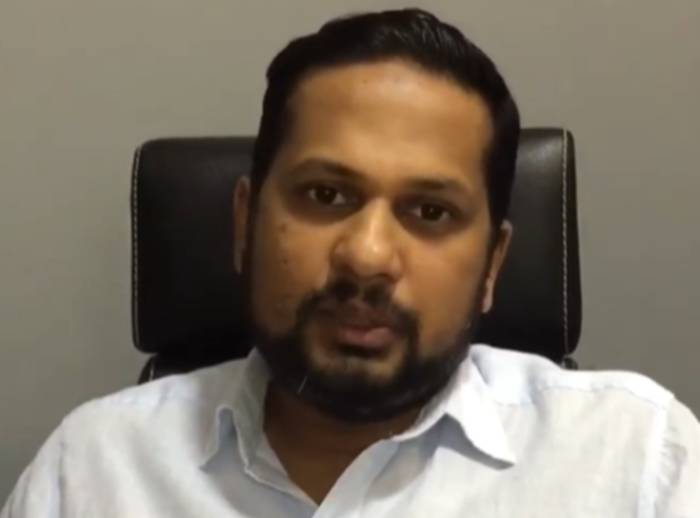
The ICJ called upon the Sri Lankan authorities to respect human rights in the conduct of their investigation of the 2019 Easter Sunday bombings, including ensuring that investigations into the alleged involvement of Sri Lankan lawyer, Hejaaz Hizbullah, are conducted in accordance with due process and fair trial guarantees under international law.
Specifically, the authorities must specify the charges against him, grant him full and immediate access to a lawyer, and investigate the circumstances of his arrest for potential rights violations.
Sri Lankan Lawyer Hejaaz Hizbullah was arrested by the Criminal Investigation Department of the Police (CID) on April 14, 2020 pursuant to the Prevention of Terrorism Act (PTA) and has since been kept in detention. No reasons were provided at the time of the arrest. During a media briefing, a police spokesperson stated that he was arrested as a result of the evidence found against him during investigations into the 2019 Easter Sunday bombings. The ICJ understands that no remand or detention orders authorising his continued detention have been served even after the lapse of 72 hours as required by Sections 7 and 9 of the PTA. Moreover, Hizbullah was only granted limited access to legal counsel on April 15 and 16, under the supervision of a CID official, who had insisted that the conversation be in Sinhala, in breach of attorney-client privilege. Legal access has been denied at least since April 16, 2020.
“No one questions the government’s need and obligation to investigate the horrendous Easter Sunday attacks, but these investigations must be conducted in a way that is consistent with international law and the Sri Lankan Constitution,” said Frederick Rawski, ICJ Asia-Pacific Director. “Not serving Hizbullah a remand order as required by law, and denying him full and confidential access to legal counsel is unacceptable and in violation of international standards on the right to liberty.”
A Habeas Corpus petition was filed by Hizbullah’s father on April 17 seeking his release from detention, and demanding that he be given access to his attorneys. According to the application, five persons posing as officials of the Ministry of Health entered his home and interrogated him, after placing him in handcuffs. They demanded access to two of his case files, recorded a statement from him and subsequently took him into custody at the Criminal Investigation Department.
“By allowing warrantless entry, search of premises and the arrest of persons, the Prevention of Terrorism Act violates basic due process guarantees under international law,” added Rawski. “This legal provision is one of many problematic provisions of the PTA. The ICJ reiterates it calls for the PTA to be repealed, and replaced with an a law that conforms with Sri Lanka’s international human rights obligations.”
According to Article 9 of the International Covenant on Civil and Political Rights, “anyone who is arrested shall be informed, at the time of arrest, of the reasons for his arrest and shall be promptly informed of any charges against him.” Article 14 entitles anyone charged of a criminal offence “to have adequate time and facilities for the preparation of his defence and to communicate with counsel of his own choosing”. Similar guarantees are enshrined under Article 13 of the Sri Lankan Constitution.
The UN Basic Principles on the Role of Lawyers provide that, “Governments shall further ensure that all persons arrested or detained, with or without criminal charge, shall have prompt access to a lawyer, and in any case not later than forty-eight hours from the time of arrest or detention.”
The ICJ has consistently called for the repeal of the Prevention of Terrorism Act, which has been used to arbitrarily detain suspects for months and often years without charge or trial, facilitating torture and other abuse. The ICJ reiterated its call for the repeal and replacement of this vague and overbroad anti-terror law in line with international human rights standards and Sri Lanka’s international obligations.
Contact
Frederick Rawski, ICJ Asia-Pacific Director, t: +66 64 478 1121; e: frederick.rawski(a)icj.org
Apr 2, 2020 | News
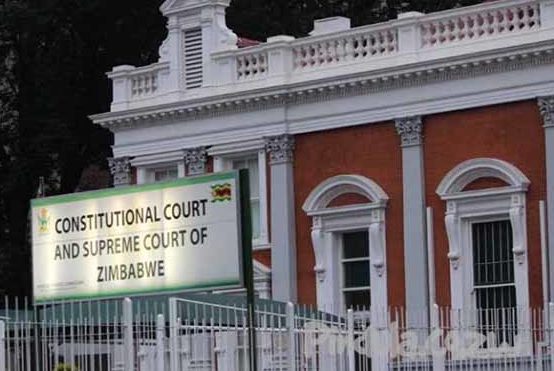
The ICJ welcomes the decision by the Constitutional Court of Zimbabwe to invalidate the enactment of Constitutional Amendment Bill (No. 1) of 2017 in Gonese and Anor v Parliament of Zimbabwe and 4 Ors. The judgment restores important Constitutional guarantees for the independence of the judiciary in Zimbabwe.
Zimbabwe adopted a new Constitution in 2013 and one of the progressive elements of this Constitution was its provisions regulating the appointment of judicial leaders such as the Chief Justice, Deputy Chief Justice and Judge President of the High Court. These judicial leaders perform important administrative functions with a huge impact on access to justice for the public.
For example, the Chief Justice is the head of the Judicial Service Commission (JSC) and therefore, presides over processes to select and recommend candidates for judicial appointment.
The Judge President is responsible for case allocation in the High Court and therefore, selects judges to sit on cases. It is important that the procedures for appointing these judicial leaders be transparent and independent of executive control in order to maintain the independence and impartiality of judges as well as promote public confidence in the judiciary.
The 2013 Constitution ensured this by prescribing procedures which accorded the executive a constrained role in the selection and appointment of these judicial leaders.
For example, the process of selecting these office bearers was to be led by an independent Judicial Service Commission (JSC) which would publicly advertise the vacancies, shortlist candidates, conduct interviews that are open to the public and recommend candidates for appointment by the President. The President was required to appoint only from the shortlist submitted by the JSC.
In 2017, the then-President of Zimbabwe Robert Mugabe signed into law a constitutional amendment bill which sought to change these provisions and give the President the authority to select and appoint these judicial leaders without conducting public interviews and without being constrained or restricted to the shortlist provided by the JSC.
The enactment of this constitutional amendment bill was challenged in the Constitutional Court on grounds that the amendment had been adopted and enacted into law without following due process.
In its judgment, the Constitutional Court concluded that, “It is declared that the passing of Constitutional Amendment Bill (No. 1) of 2017 by the Senate on 01 August 2017 was inconsistent with the provisions of s 328(5) of the Constitution, to the extent that the affirmative votes did not reach the minimum threshold of two-thirds of the membership of the House. Constitutional Amendment Bill (No. 1) of 2017 is declared invalid to the extent of the inconsistency. The declaration of invalidity shall have effect from the date of this order but is suspended for a period of one hundred and eighty days, subject to the provisions of paragraph 1(b).”
The Court directed the Senate to conduct a vote in accordance with the procedure for amending the Constitution prescribed by s 328(5) of the Constitution within one hundred and eighty days of the order given. Failure to do so will render the declaration of invalidity of Constitutional Amendment Bill (No. 1) of 2017 final, said the Court.
Commenting on this judgment, ICJ Africa Director Arnold Tsunga said: “This is a positive judgment which underscores the vital principle of legality, particularly that changes to the Constitution must be processed and enacted in strict accordance with the laid out procedures. Respect for the Constitution, and ensuring the independence of the judiciary, are fundamental elements of the rule of law; both are advanced by this judgment.”
The decision by the Constitutional Court comes at a time when the Parliament of Zimbabwe has gazetted further proposed changes to the Constitution, which amongst other things seek to give the executive a stronger role in the selection and appointment of judges to the Supreme Court and Constitutional Court.
These proposed changes would undermine judicial independence and undercut public confidence in the independence and impartiality of the judiciary. Further, these proposed changes are contrary to international and African standards. For instance, the United Nations Basic Principles on the Independence of the Judiciary enjoin member states to ensure that “Any method of judicial selection shall safeguard against judicial appointments for improper motives.”
The African Commission on Human and Peoples’ Rights’ Principles and Guidelines on the Right to a Fair Trial and Legal Assistance in Africa further provide that, “The process for appointments to judicial bodies shall be transparent and accountable and the establishment of an independent body for this purpose is encouraged.” The ICJ therefore, calls upon the government of Zimbabwe to reconsider its decision to proceed with these proposed changes to the Constitution.
Contact
Arnold Tsunga, t: +26377728 3248; e: arnold.tsunga@icj.org
Mar 26, 2020 | News
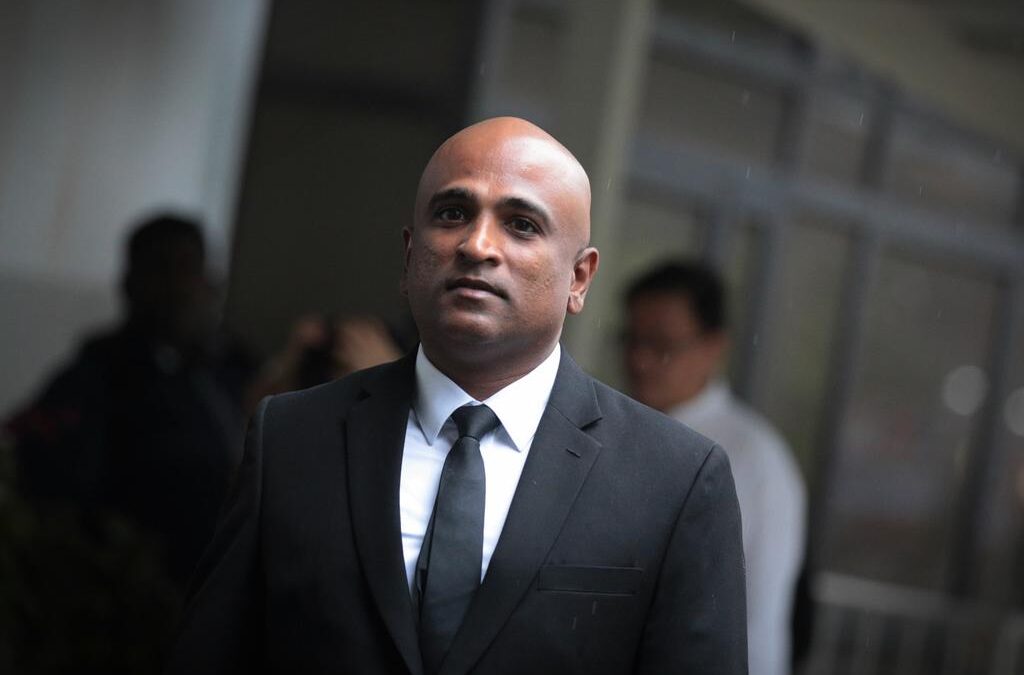
The ICJ, Amnesty International, ARTICLE 19, ASEAN Parliamentarians for Human Rights, CIVICUS and Human Rights Watch today called on Singapore authorities to drop investigations of human rights lawyer M Ravi and two other individuals under Singapore’s contempt of court law and cease their harassment of human rights defenders.
On 13 March, police raided the office of human rights lawyer M Ravi, editor of an independent news website, Terry Xu, seizing his phone, passport and firm’s laptop.
He is apparently under investigation for contempt of court under the Administration of Justice Act (AJPA).
The investigation followed the publication of articles on independent media website ‘The Online Citizen’ (TOC) relating to his client, Mohan Rajangam, a Singaporean who challenged the legality of his extradition from Malaysia in 2015.
The same day, police raided the home of Terry Xu, TOC’s editor, and confiscated his electronic equipment. He is also being investigated for contempt of court under the AJPA, after he published articles on Rajangam’s case. Two other individuals are also being subject to investigation, including Rajangam himself and a writer for the TOC.
Even as the police have stated that the publication online on TOC of parts of Rajangam’s affidavit breached contempt of court regulations, it is unclear what exact content poses a risk of prejudice to the court proceedings.
“The contempt of court doctrine under common law was, for years, used by authorities to curtail speech surrounding politically sensitive topics and cases,” noted Frederick Rawski, ICJ’s Director for Asia and the Pacific.
“After the coming into force of the AJPA, the contempt regime is even more vulnerable for misuse – these current raids and investigations only evidence that how the law can be abused to violate the rights of individuals.”
Investigations of the four individuals for contempt of court continue. The ICJ has been informed that as of 15 March, M Ravi had put the police on notice that the contents of his mobile phone and laptop are subject to legal professional privilege and should remain confidential until a formal ruling is made by a court of law on the matter.
Terry Xu and M Ravi have been targeted and harassed constantly by authorities for information they have released in their professional capacities as an independent journalist and human rights lawyer respectively – notably through abuse of legal mechanisms. Terry Xu is currently fighting pending cases in court relating to alleged defamation of political officials and Singapore’s problematic Protection from Online Falsehoods and Manipulation Act (POFMA). M Ravi has similarly faced action by the Attorney-General’s Chambers for his advocacy against the death penalty.
“In the lead-up to elections, it is even more crucial that the Singapore government ensure that freedom of expression, opinion and information are protected and that independent media is allowed to operate to ensure communication of a diversity of opinions and ideas and inform public opinion,” said Rawski.
“For these reasons we urge the authorities to cease harassment of the four individuals and call on them to drop investigations against them”.
Read the joint statement here.
Contact
Frederick Rawski, ICJ Asia Pacific Regional Director, frederick.rawski(a)icj.org
Background
In its 2019 regional report, ‘Dictating the Internet: Curtailing Free Expression, Opinion and Information Online in Southeast Asia’, the ICJ found that in Singapore contempt of court proceedings have been used to curtail freedom of expression and information under the guise of “maintaining orderly proceedings” and “protecting public confidence in the judiciary”, particularly in cases of online criticism touching on politically sensitive matters.
In October 2017, the Administration of Justice (Protection) Act 2016 came into force, despite well founded concerns that its vague provisions could result in abusive interpretation and implementation, given existing trends of use of contempt of court under common law to limit freedom of expression.
The AJPA lowered the threshold for contempt in what is referred to as “scandalizing the Court”, expanding judicial powers to punish such contempt with increased and onerous penalties. Section 3(1) criminalizes the “scandalizing of court” through (i) “impugning the integrity, propriety or impartiality” of judges by “intentionally publishing any matter or doing any act that… poses a risk that public confidence in the administration of justice would be undermined” (section 3(1)(a)); and (ii) “intentional” publishing of any material which interferes with pending court proceedings, or sub judice contempt (section 3(1)(b)). Section 3(1)(a) reduced the threshold for “scandalizing” contempt to a mere “risk” of undermining public confidence in the judiciary, where the common law test established in the landmark case of Attorney-General v Shadrake Alan was to establish a “real risk” of such undermining of confidence. This exacerbated a standard that was already deeply problematic.
Section 12(1) of the AJPA increased the maximum penalty for “scandalizing” contempt to three years’ imprisonment or a fine of S$100,000 (approx. USD 72,051) or both, when under common law, a six-week imprisonment sentence and S$20,000 (approx. USD 14,410) fine had been deemed appropriate.