Mar 13, 2019 | Comunicados de prensa, Noticias
La CIJ, conjuntamente con una jueza de Honduras y otra de Costa Rica, de sus respectivas asociaciones de jueces, sostuvieron una reunión con el Presidente de la Corte Suprema de Justicia.
Una vez más, pidieron la destitución del Director de Seguridad Institucional del Organismo Judicial, ya que a partir de dicho nombramiento, las y los jueces más independientes e imparciales, empezaron a ser vigilados ilegalmente y se han sentido vulnerables e inseguros.
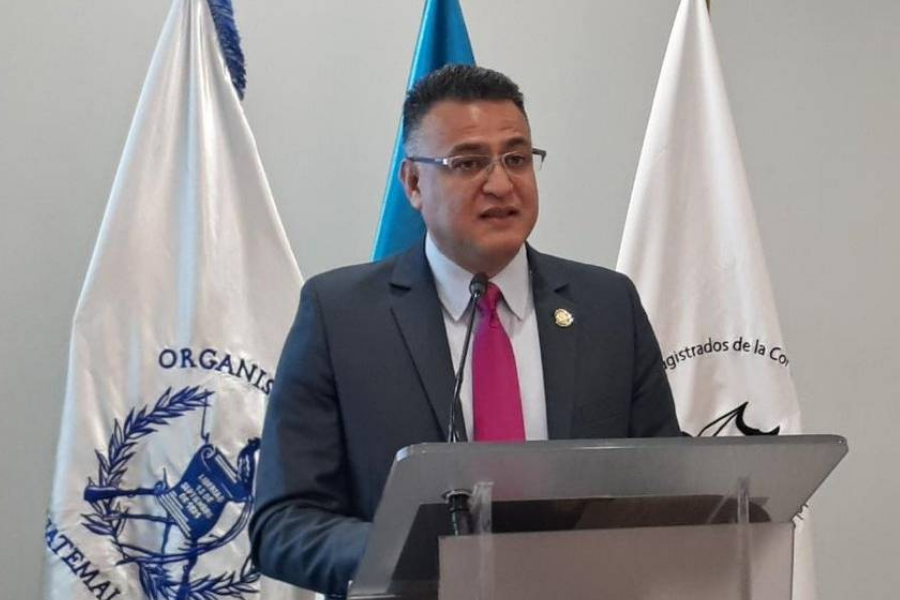
El día de hoy, gracias a una nota periodística, se supo que el Director de Seguridad Institucional del Organismo Judicial, Roberto Mota Bonilla (foto), tiene orden de captura, por la supuesta comisión del delito de violencia contra la mujer.
Esta nueva acusación hace insostenible que el Presidente de la Corte Suprema de Justicia lo siga protegiendo y manteniendo en su puesto y el pleno de magistrados de dicha Corte debería ahora intervenir, por tratarse de un asunto relacionado directamente con la seguridad de jueces y juezas.
“Tal y como nos informara el día de ayer el Presidente de la Corte Suprema de Justicia, en él recae la responsabilidad del nombramiento del Director de Seguridad Institucional, pero los asuntos de seguridad de jueces, debe discutirlos con el pleno de la Corte Suprema de Justicia,” expresó Ramón Cadena, Director de la CIJ para Centroamérica.
La CIJ hace un llamado a las autoridades del Estado de Guatemala, para que respeten el Estado de Derecho y que cesen los ataques en contra de la independencia del Poder Judicial y de las y los jueces que administran justicia en forma independiente e imparcial.
Lamentablemente, tal y como lo confirmara el Presidente del Organismo Judicial, está a la espera de informe de Auditoría Interna para tomar una decisión definitiva. Sin embargo, ante estos nuevos hechos, no debería esperar el informe para tomar una decisión. El Director de Seguridad Institucional Roberto Mota Bonilla, debería ser destituido en forma inmediata.

Mar 13, 2019
The ICJ said today in an new report that Moldova remained a significant way from having a functionally independent judiciary, which is an indispensable element in the country’s capacity to deliver justice for its people and institutions.
The report ”Only an empty shell” – The undelivered promise of an independent judiciary in Moldova sets out a number of specific recommendations for reform which with a view to achieving a fully independent judiciary and effective justice system.
The report followed its field mission to Moldova in November 2018, which built upon the work of previous missions undertaken in 2004 and in 2012.
“While many significant legislative reforms have been undertaken, judicial independence is far from being achieved in Moldova,” said Massimo Frigo, Senior Legal Adviser for the ICJ Europe and Central Asia Programme,
“Reforms are needed in the law, but more than that a change is needed the mindset and working culture of many judges themselves that must protect and promote judicial independence in all of their work,” he added.
The ICJ acknowledged that important progress had been achieved in many areas, including in efforts to secure audio-recordings of all court hearings, the introduction of a system of random allocation of cases, and staff and salary increases for all judges.
However, the ICJ has concluded that the implementation of the most crucial legal reforms is significantly lagging behind and often lacks political will and conviction.
A culture of excessive hierarchy in the judiciary and of the judge remained prevalent among judges.
The ICJ is concerned at reports that the Superior Council of Magistracy (SCM) – a judicial self-governance body – instead of playing its crucial role of defending the independence of the judiciary, institutionally and in respect of individual judges, has become an instrument of pressure on individual judges and a threat to their independence.
“During our mission, we were presented with witness statements and stories of judges living often in a condition of fear: fear to express their opinions on the situation of the judiciary; and fear of criminal prosecution solely for issuing a decision contrary to the requests of the prosecutor’s office or of other powerful interests,” said Massimo Frigo.
Achieving judicial independence requires a change of attitude towards the judiciary from the executive and other sources of State and private power, but most importantly from the judiciary itself.
Contact
Massimo Frigo, Senior Legal Adviser, Europe and Central Asia Programme, International Commission of Jurists, massimo.frigo@icj.org
Download
The full story with additional information:
Moldova-Only an empty shell report launch-News-press releases-2019-ENG
The full version of the report and full set of recommendations is available in English and Romanian:
Moldova-Only an empty shell-Publications-Reports-Mission reports-2019-ENG
Moldova-Only an empty shell-Publications-Reports-Mission reports-2019-ROM
Mar 12, 2019 | News
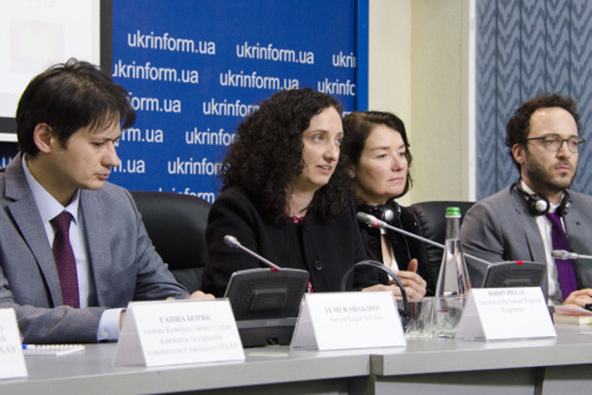
Following its mission to Ukraine on 4-8 March, the ICJ has called on the Ukrainian authorities to take urgent steps to ensure the physical safety of lawyers and to bring to justice those responsible for a series of violent attacks against them.
During its visit, the ICJ delegation heard consistent testimony of attacks on lawyers by private persons, ranging from acts of intimidation to use of firearms against them.
Several lawyers have been attacked physically and verbally by individuals or organized groups, including in court. At least six lawyers have recently been killed in relation to the exercise of their professional duties.
These attacks take place in an environment where legislative reforms directed at governance of the legal profession, which would have grave consequences for freedom of association and the functioning of the bar association and civil society, have been proposed by the Presidential Administration without consultation with lawyers.
Without urgent and significant efforts to prevent attacks and combat impunity, the independence of the legal profession, and the ability of lawyers to protect human rights, will be increasingly jeopardized, the ICJ concluded at the end of its mission to the country.
It is of concern that violent attacks against lawyers, many of which have been credibly attributed to extreme right-wing groups, often result in impunity of the perpetrators, despite evidence and despite specific provisions in the criminal law which protect lawyers against attacks.
The ICJ heard that the law enforcement bodies often fail to investigate these cases in a prompt and impartial manner even where the identity of perpetrators is known.
The ICJ stresses that these attacks on lawyers, which are often related to the defence of clients in politically sensitive criminal cases, undermine the ability of lawyers to exercise their duties and protect the human rights of their clients, free from intimidation, hindrance, harassment or improper interference.
Furthermore, the ICJ recalls that under international human rights law, the State must take steps to protect the security of persons who the authorities know or ought to know are under threat, and they must ensure an independent, prompt, and thorough investigation of any attacks on the life or physical integrity of individuals.
In this regard, the ICJ stresses that a well-functioning, independent legal profession is essential to any justice system that upholds the rule of law. International standards recognize the importance of lawyers in protecting human rights and the contribution they make to maintaining the rule of law and the fair administration of justice.
The UN Basic Principles on the Role of Lawyers emphasize the importance of the independence of bar associations in ensuring the fair and effective administration of justice. Such associations must be institutionally independent, both in law and in practice, from all external actors, including the government, other executive agencies, parliaments and outside private interests.
In light of these standards, the ICJ is concerned about the process of adoption of draft law No 9055 “On the Bar Association and Lawyers’ Activity”, which was drafted without the necessary level of consultation and participation of a main stakeholder, the National Bar Association of Ukraine, which strongly opposes it.
It is unacceptable that in this context the draft law had been submitted to the Parliament through an urgent procedure, the need for which appears to be dubious, the ICJ says.
If adopted without the necessary consultation and endorsement by the Bar Association, this law may pose a threat to the independence of the legal profession in Ukraine and the capacity of civil society, including human rights defenders, to carry out their critical work, the Geneva-based organization adds.
The ICJ is particularly concerned that according to the draft law, lawyers would not be able to be employed by NGOs while being members of the Bar Association.
While international practice may differ, in the context of Ukraine specifically, this may undermine the ability of human rights NGOs to provide qualified legal representation or assistance to those whose human rights have been violated.
The ICJ further noted consistent allegations of corruption and lack of integrity of lawyers including in the context of legal aid system.
It also appears that the examination process for qualification as a lawyer, especially in some regions, is not free from corruption. Until now, the Bar Association has not been able to effectively resolve this problem which must be addressed as a matter of urgency.
The mission to Ukraine included members of the ICJ Secretariat as well as representatives of the Amsterdam and Geneva Bar Associations. It met with leading human rights NGOs, IGOs, the members of the Ukrainian National Bar Association as well as representatives of the Ministry of Justice of Ukraine.
The ICJ wishes to thank all those whom its representatives met in Kyiv. A final report based on the key findings of the mission will be published later this year.

Mar 11, 2019 | Advocacy
The “Independent Commission of Enquiry” (ICOE) on Rakhine State, announced by the Government of Myanmar in May 2018 and established in July, has not demonstrated any reasonable prospect of meeting international standards of independence, impartiality or effectively contributing to justice or accountability for human rights violations constituting crimes under international law.
The ICOE is not transparent about how its information gathering will, if at all, shed light on the truth, or contribute to accountability and redress, while protecting individuals it comes into contact with. It is also yet to fulfill conditions called for by the UN Human Rights Council in its September 2018 resolution 39/2.
Any move to shift reference in the Council resolution currently under discussion, to include more positive recognition of the ICOE, would be wholly unjustified.
Furthermore, the government continues its unwillingness to address credible allegations of crimes under international law, including in its report to the CEDAW Committee in February in which rape allegations were dismissed as “wild claims.”
The International Commission of Jurists (ICJ), in response to a “Call for Submissions” on 12 December 2018, inviting “individuals, groups, witnesses and alleged victims to submit their complaints or accounts, with supporting data and evidence,” wrote to the ICOE Chairperson with four questions, summarised as:
- Are any measures in place to protect complainants and witnesses against threats of violence, legal action or other forms of reprisals for providing information to the ICOE? What specific measures have been taken to ensure the confidentiality of any materials submitted, and to protect the identities and wellbeing of witnesses?
- Given statements by commissioners that accountability is not part of their mandate, as the ICOE is seeking submissions of data and evidence from victims and witnesses, please clarify the ICOE’s position on how these submissions will be utilized – including for possible criminal investigations.
- Can you provide information on any measures taken to deal with real or perceived conflicts of interests that may affect the public’s trust in the ICOE’s impartiality and independence, including victims and witnesses and others who may submit materials in response to your call?
- The recommendations of past Commissions of Inquiry have not been fully implemented. Given the sensitive nature of the ICOE’s mandate, what considerations have been taken into account to increase the likelihood that recommendations will be more effectively implemented than in the past?
The ICOE did not respond to these questions, despite having formally acknowledged receipt of the letter. The deadline for public submissions to the ICOE has now passed. Its silence in this instance illustrates a broader failure to demonstrate independence or transparency and underlines protection concerns.
The ICJ is unaware of efforts by the ICOE to genuinely seek cooperation with the UN Independent International Fact Finding Mission or the Special Rapporteur on the situation of human rights in Myanmar, as has been called for by the Council.
Based on extensive experience and research in Myanmar and globally, and recalling a 5-page legal assessment of the ICOE published in September 2018, the ICJ remains of the view that the ICOE, like previous government-backed inquires, cannot effectively contribute to or deliver justice or accountability.
Myanmar-Inquiry Rakhine-Advocacy-2019-BUR (Burmese version, in PDF)
Mar 6, 2019 | News
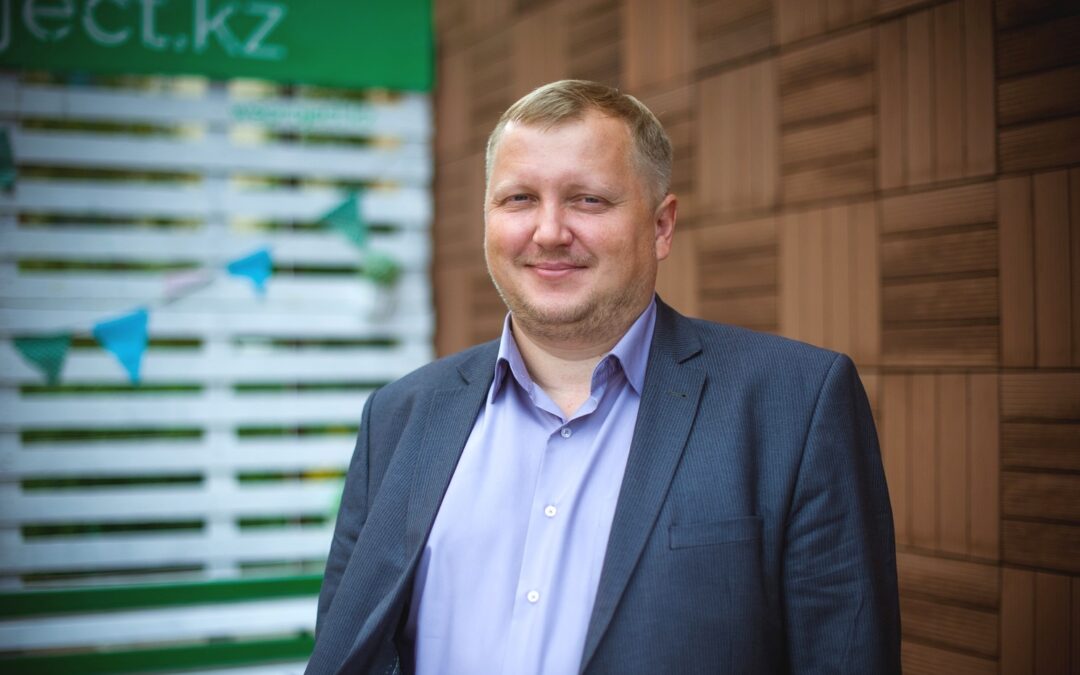
Today, the ICJ expressed concern at the initiation of disbarment proceedings by the Ministry of Justice of Kazakhstan against Sergey Sizintsev, former Executive Director of the National Bar Association and the newly-elected head of the Scientific-Consultative Board of the National Bar Association.
The official ground for disbarment of Sizintsev is his work as the Director the National Bar Association in 2016-2018 while continuing his legal practice at the same time.
On his facebook public account, however, Sizintsev alleged that this initiative is not related to the officially stated grounds, and that in fact continuing to practice while working as Director of the Bar Association is clearly permitted by the Kazakhstan’s law. Rather, he alleges, he is being pursued for his criticism of the law “On lawyers’ activity and legal aid” as well as his public statements in different international and national fora in regard to issues related to the independence of the legal profession.
The ICJ recalls that freedom of expression and association, in particular, constitute essential requirements for the proper and independent functioning of the legal profession and must be guaranteed by law and in practice.
According to Principle 23 of the UN Basic Principles on the Role of Lawyers, lawyers “[…] have the right to take part in public discussion of matters concerning the law, the administration of justice and the promotion and protection of human rights and to join or form local, national or international organizations and attend their meetings, without suffering professional restrictions by reason of their lawful action or their membership in a lawful organization. In exercising these rights, lawyers shall always conduct themselves in accordance with the law and the recognized standards and ethics of the legal profession.”
Sergey Sizintsev as Executive Director of the National Bar Association and as a member of the Parliament working group on the Law on Lawyers’ Activities, was expected to voice concerns of members of the legal position including on the new law which the legal profession consider to be restrictive.
Moreover, his position demanded that he expresses his position on behalf of the National Bar Association including to draw attention to legislative developments which can jeopardise the independence of the legal profession in Kazakhstan.
The ICJ is concerned that this initiative appears to constitute an attack on the independence of lawyers in Kazakhstan and may have a chilling effect on members of the legal profession.
The ICJ therefore calls on the Ministry of Justice to end this lawsuit immediately.
The ICJ will closely follow the case of Sergei Sizintsev and the proceedings at the Rayon Court in Petropavlovsk.
In December 2017, the ICJ organized a mission to Kazakhstan and raised concerns over the then planned reform.
In November 2018, the ICJ raised concern at the disbarment proceedings against Presidents of Aktybinsk and Pavlodar Bar Association as well as resignation of Anuar Tugel, the President of the National Bar Association of Kazakhstan, allegedly as a result of the pressure from the Ministry of Justice.

![Smoke rises after an Israeli air strike on the village of Taybeh in southern Lebanon [Source: Al Jazeera]](https://www.icj.org/wp-content/uploads/2026/03/Screenshot-2026-03-20-at-15.56.24-300x200.png)