Nov 6, 2018 | Communiqués de presse, Nouvelles
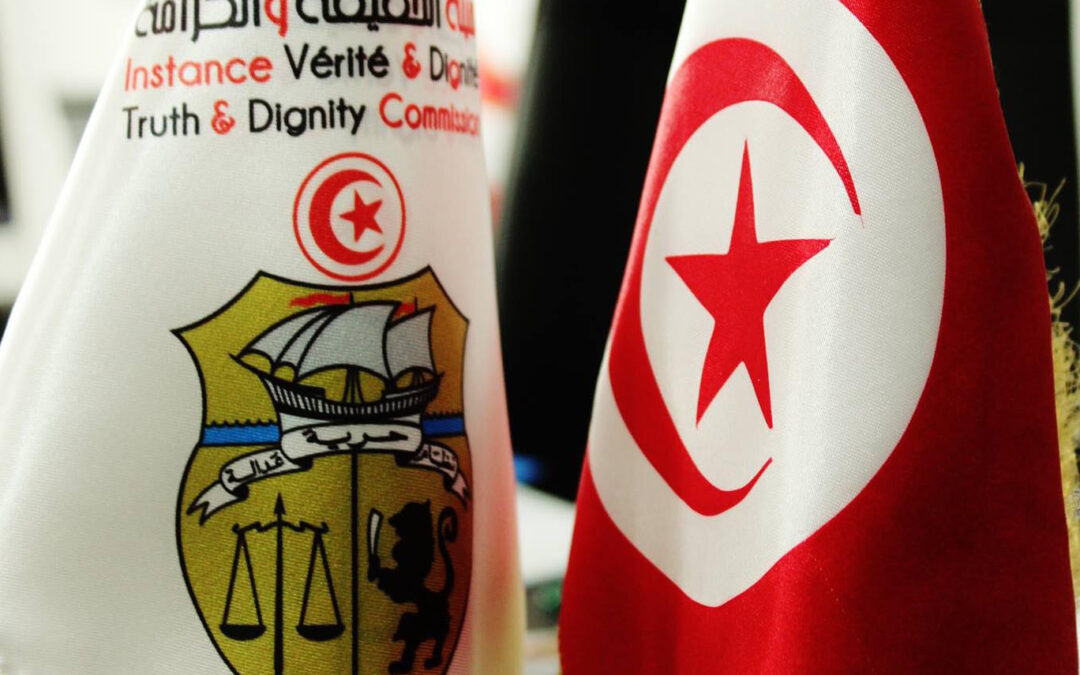
Les organisations de la société civile défendant le processus de justice transitionnelle en Tunisie suivent avec beaucoup de préoccupations et d’inquiétudes l’évolution récente de la situation en ce qui concerne les campagnes réclamant, d’abord, la suspension des travaux de l’Instance Vérité et Dignité et contestant la légalité de son existence et de ses décisions.
Ces campagnes et attaques lancées par certains blocs parlementaires ainsi que par un certain nombre de syndicats des forces de sécurité et de responsables de partis politiques, ont touché les chambres criminelles spécialisées en justice transitionnelle et ses juges, dans le but de nuire aux travaux et à la crédibilité du pouvoir judiciaire auprès de l’opinion publique nationale et internationale.
Lire la totalité de l’article ci-dessous:
Tunisia-Justice transitionnelle-News-Press releases-2018-FRE (version française, PDF)
Tunisia-Justice transitionnelle-News-Press releases-2018-ARA (version arabe, PDF
Oct 31, 2018 | News
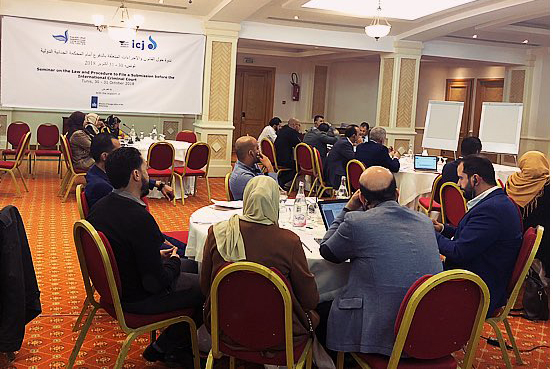
On 28‒31 October 2018, the ICJ hosted two seminars for 30 judges and prosecutors and 26 lawyers from Libya.
The events were co-organized with the Libyan Network for Legal Aid and commenced with opening remarks by ICJ Commissioner, Justice Kalthoum Kennou of Tunisia.
The first seminar on 28‒29 October on “Fair Trial Guarantees in Libya in light of International Standards” aimed to deepen the understanding of Libyan judges and prosecutors of the application of international law and standards regarding fair trials.
The seminar covered pre-trial rights, such as the right to liberty, to effective legal counsel and to be brought promptly before a judge, and rights at trial, such as the right to defend oneself in person, to call and examine witnesses and to an appeal.
International fair trial standards were considered in light of Libyan domestic law and cases, including case 630/2012 involving 37 Ghaddafi-era officials.
The second seminar on 30‒31 October on “The Law and Procedure to File a Submission before the International Criminal Court” aimed to increase Libyan lawyers’ understanding of how to properly file a successful submission to the Office of the Prosecutor.
The Seminar covered the structure and functioning of the ICC, the jurisdictional and admissibility requirements, and the standards for collection and admissibility of evidence.
The Seminar further discussed the roles of NGOs, lawyers and victims in ICC proceedings, providing practical guidance on how and when to file a communication under Article 15 of the Rome Statute of the ICC.
Speakers included judges and prosecutors from international courts and tribunals as well as ICJ staff.
Oct 25, 2018
In a memorandum published today, the ICJ called on the Lebanese authorities to introduce comprehensive reforms to enhance the independence and impartiality of the administrative courts system, in particular by divesting the executive of any role in the selection, appointment and disciplining of administrative judges.
“The Lebanese authorities must set out transparent procedures for the selection and appointment of administrative judges, including in senior judicial positions,” said Said Benarbia, ICJ MENA Director.
“While such appointments should in principle seek to reflect the diversity of the Lebanese society as a whole, including its various religious groups, they must be based on objective criteria, including legal qualifications, skills, experience and integrity,” he added.
The power to take decisions relating to the management of judges’ careers, including promotions, transfers, and disciplinary proceedings, should be exclusively reserved to the State Council Bureau once the framework governing its composition and mandate is reformed.
The Lebanese authorities should ensure that the State Council Bureau is independent and consists of a majority of judges who are elected by their peers from the State Council and, once they are established, from first instance administrative courts.
The membership of the State Council Bureau should also reflect a gender balance.
The Lebanese authorities should also amend the Statute of the State Council with a view to enhancing the individual independence of administrative judges.
“The conditions for the transfer, assignment or secondment of administrative judges should be clearly defined in the law and the entire process must not compromise judges’ individual independence, including through the use of secondment as a reward for judges,” Benarbia said.
The ICJ is also concerned that the disciplinary system does not fully conform to international standards and has the potential to compromise judges’ individual independence.
The Lebanese authorities must rescind the powers of the Ministry of Justice in relation to the disciplinary procedure, including the authority to initiate disciplinary investigations and to refer matters to the Disciplinary Council.
“Disciplinary offences must be clearly and precisely defined within the law and related procedures must guarantee judges’ rights to a fair hearing before an independent and impartial body, including the right to have decisions and sanctions reviewed by a higher judicial body,” Benarbia added.
Contact:
Said Benarbia, Director of ICJ’s Middle East and North Africa Programme, t: +41-22-979-3817; e: said.benarbia(a)icj.org
Lebanon-Memo re Court Reform-Advocacy-Analysis Brief-2018-ENG (Memo in English, PDF)
Lebanon-Memo Courts System launch-New-2018-ARA (Story in Arabic, PDF)
Lebanon-Memo Court Reform-Advocacy-Analysis Brief-2018-ARA (Memo in Arabic, PDF)
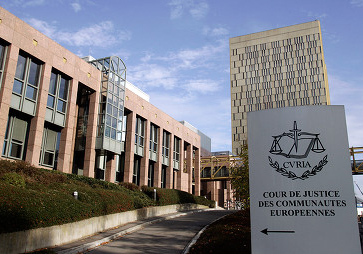
Oct 19, 2018 | News
The ICJ welcomes the interim measures prescribed today by the Court of Justice of the EU as a necessary step in stemming the evident erosion of the rule of law in Poland.
The Court provisionally ordered Poland to preserve the composition of its Supreme Court of 3 April 2018, before a law forcing into retirement a third of the Court’s members entered into force.
The ICJ urges the Polish authorities to comply with the EU Court order by maintaining in office the Supreme Court judges .
“In accordance with today’s court’s order, Polish authorities should immediately rescind all measures taken since April 2018 that modify the composition of the Supreme Court. They are obliged to do this under EU law as it is binding on Polish authorities and by the fundamental principle of the rule of law that decisions of the judiciary must be respected and implemented.” said Róisín Pillay, Director of the ICJ Europe and Central Asia Programme.
On 10 October, President Andrzej Duda appointed 27 judges to the Supreme Court in place of those forcibly “retired” last July. The ICJ condemned this act of the President of Poland because it contravened an order of the Supreme Court suspending the law under which these appointments were made, pending a decision by the EU Court. Critically, the mass and forced retirement of sitting judges before the end of the established terms of tenure undermines their security of tenure, a key principle regarding the independence of the judiciary.
Background
The independence of the judiciary in Poland has been systematically undermined by the Polish executive and legislative authorities.
Earlier this year Poland issued a new law on the Supreme Court that attempts to force the “retirement” of one third of the Supreme Court judges, including the First President, by lowering the mandatory retirement age for its judges from 70 to 65. This measure clearly contravenes international human rights law and standards.
The European Commission has launched an infringement procedure for lack of compliance of this law with EU law.
In the absence of satisfactory reforms by Poland, on 24 September, the Commission referred Poland to the Court of Justice of the European Union (CJEU) and asked for interim measures to restore Poland’s Supreme Court to its situation before 3 April 2018. Today’s decision by the Court of Justice granted this interim measures request.
At the same time, the Supreme Court of Poland submitted a preliminary ruling request to the CJEU seeking its interpretation on the compliance of the legislation on retirement ages of judges with EU law, in particular with the prohibition of discrimination on grounds of age under Directive 2008/78.
An ICJ letter of 11 July 2018, signed by 22 senior judges from all regions of the world, urged the Polish government to act immediately to reinstate the forcibly retired judges in office.

Oct 11, 2018 | News
The ICJ today condemned the appointment by President Andrzej Duda of 27 judges to the Supreme Court in place of those forcibly “retired” last July.
“These appointments are patently illegitimate and deal a severe blow to the rule of law in Poland,” said Róisín Pillay, Director of the ICJ Europe and Central Asia Programme.
The new appointments purport to replace the Supreme Court Justices including President of the Supreme Court Małgorzata Gersdorf, whose forced “retirement” is in clear violations of international standards on the security of tenure and independence of judges.
The decision of the President is even more concerning since it contravenes an order of the Supreme Court suspending the law under which these appointments were made, pending a decision by the Court of Justice of the European Union.
It is a fundamental tenet of the rule of law and principles on the independence of the judiciary that the executive respect decisions duly made by the judiciary.
“In announcing these appointments now, while cases on the forced retirement of Supreme Court judges are still pending at the EU Court, President Duda has disregarded the proceedings of the EU’s apex judicial body,” Róisín Pillay added.
The ICJ considers that the legality of the appointments of the new judges is further compromised by the role played by the now politicized National Council for the Judiciary, whose independence and impartiality has been seriously compromised following recent legislative amendments.
The ICJ urges the Polish authorities to cease all interference with the Supreme Court in carrying out its legitimate functions, and to reverse the measures taken to force the retirement of Supreme Court judges.
Background
This attack against the actions of the Supreme Court occurs amid a systematic undermining of the independence of the judiciary in Poland by the Polish executive and legislative authorities, which attempt to increase political influence in the judiciary and which the ICJ has repeatedly condemned.
Earlier this year Poland issued a new law on the Supreme Court that attempts to force the “retirement” of one third of the Supreme Court judges, including the First President, by lowering the mandatory retirement age for its judges from 70 to 65. This measure clearly contravenes international human rights law and standards.
The European Commission has launched an infringement procedure for lack of compliance of this law with EU law.
In the absence of satisfactory reforms by Poland, on 24 September, the Commission referred Poland to the Court of Justice of the European Union (CJEU) and asked for interim measures to restore Poland’s Supreme Court to its situation before 3 April 2018.
At the same time Supreme Court of Poland submitted a preliminary ruling request to the CJEU seeking its interpretation on the compliance of the legislation on retirement ages of judges with EU law, in particular with the prohibition of discrimination on grounds of age under Directive 2008/78.
Following the jurisprudence of the CJEU, the Supreme Court suspended the effect of national law on the forcible retirement of the judges.
An ICJ letter of 11 July 2018, signed by 22 senior judges from all regions of the world, urged the Polish government to act immediately to reinstate the forcibly retired judges in office.

![Smoke rises after an Israeli air strike on the village of Taybeh in southern Lebanon [Source: Al Jazeera]](https://www.icj.org/wp-content/uploads/2026/03/Screenshot-2026-03-20-at-15.56.24-300x200.png)