Oct 11, 2018 | Nouvelles
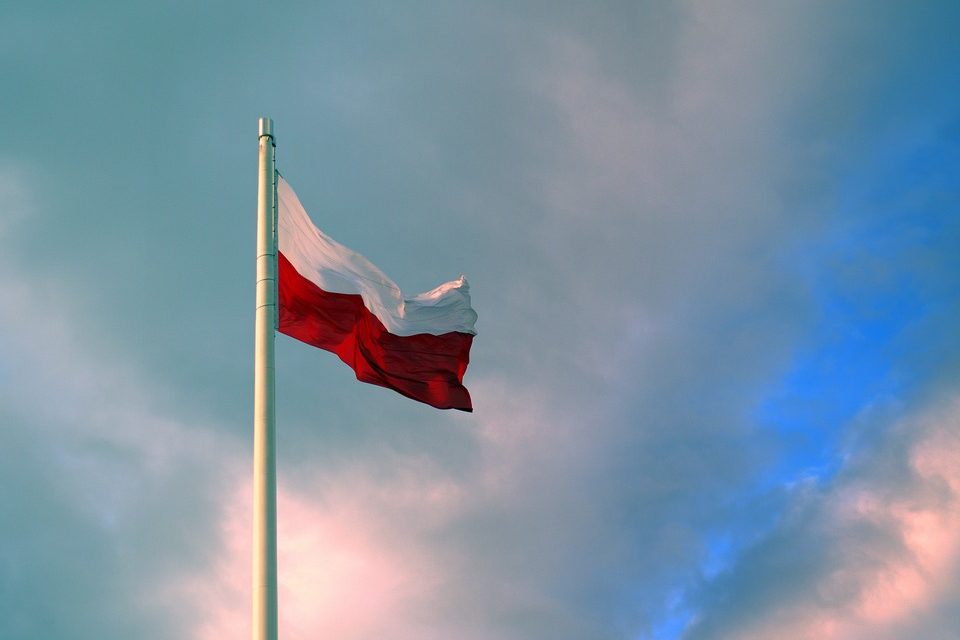
La CIJ a condamné aujourd’hui la nomination par le président Andrzej Duda de 27 juges à la Cour suprême en remplacement de ceux qui ont été mis «à la retraite forcée» en juillet dernier.
«Ces nominations sont manifestement illégitimes et portent gravement atteinte à l’état de droit en Pologne», a déclaré Róisín Pillay, directrice de programme de la CIJ pour l’Europe et l’Asie centrale.
Les nouvelles nominations visent à remplacer les juges de la Cour suprême, y compris la présidente de la Cour suprême, Małgorzata Gersdorf, dont la «retraite forcée» constitue une violation flagrante des normes internationales relatives à la sécurité du mandat et à l’indépendance des juges.
La décision du président est d’autant plus préoccupante qu’elle enfreint une décision de la Cour suprême suspendant la loi en vertu de laquelle ces nominations ont été faites, dans l’attente d’une décision de la Cour de justice de l’Union européenne.
L’un des principes fondamentaux de l’état de droit et des principes relatifs à l’indépendance du pouvoir judiciaire est que l’exécutif respecte les décisions dûment prises par le pouvoir judiciaire.
«En annonçant ces nominations maintenant, alors que des cas relatifs à la retraite forcée de juges de la Cour suprême sont toujours pendants à la Cour européenne, le président Duda a ignoré les procédures de l’instance judiciaire suprême de l’Union européenne», a ajouté Róisín Pillay.
La CIJ considère que la légalité de la nomination des nouveaux juges est d’avantage compromise par le rôle joué par le Conseil national de la magistrature, désormais politisé, dont l’indépendance et l’impartialité ont été gravement compromises par les récentes modifications législatives.
La CIJ exhorte les autorités polonaises à cesser toute ingérence envers la Cour suprême dans l’exercice de ses fonctions légitimes, et à inverser les mesures prises de contraindre les membres de la Cour suprême à prendre leur retraite.
Contexte
Cette offensive contre les agissements de la Cour suprême a lieu dans le cadre d’un travail de sape systématique de l’indépendance du pouvoir judiciaire en Pologne par les autorités exécutives et législatives polonaises, dans le but d’accroître leur influence politique sur le pouvoir judiciaire, ce que la CIJ a maintes fois condamné.
Plus tôt cette année, la Pologne a adopté une nouvelle loi sur la Cour suprême qui tente de contraindre un tiers des juges à la Cour suprême « à prendre leur retraite », y compris son Premier président, en abaissant l’âge de la retraite obligatoire de ses juges de 70 à 65 ans. Cette mesure contrevient clairement au droit et aux standards internationaux relatifs aux droits de l’Homme.
La Commission européenne a lancé une procédure d’infraction pour non-conformité de cette loi avec le droit européen.
En l’absence de réformes satisfaisantes de la part de la Pologne, la Commission a saisi la Cour de justice de l’Union européenne (CJUE) le 24 septembre et a demandé des mesures provisoires pour rétablir la Cour suprême de ce pays dans sa situation antérieure au 3 avril 2018.
Au même moment, la Cour suprême de Pologne a adressé à la CJUE une demande de décision préliminaire visant à obtenir son interprétation sur la conformité de sa législation sur l’âge de la retraite des juges au regard du droit européen, en particulier en ce qui concerne l’interdiction de la discrimination basée sur l’âge, et ce en vertu de la Directive 2008/78. .
Conformément à la jurisprudence de la CJUE, la Cour suprême a suspendu l’application du droit national sur la retraite forcée des juges.
Une lettre de la CIJ du 11 juillet 2018 (uniquement disponible en anglais), signée par 22 hauts magistrats de toutes les régions du monde, a exhorté le gouvernement polonais à agir immédiatement pour réintégrer les juges mis de force à la retraite.
Oct 3, 2018 | News
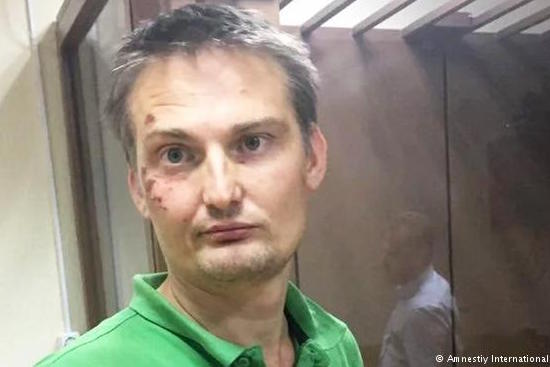
Today, the ICJ expressed concern at ongoing criminal proceedings against Mikhail Benyash, a lawyer practicing in Russia, who is charged with use of force against the police and impeding justice.
The lawyer has been detained until 23 November. The ICJ called on the responsible authorities to drop any criminal charge relating to his conduct of professional duties in the courtroom, and to ensure that the lawyer’s rights are protected and that allegations of his ill-treatment are fully investigated.
Benyash alleges that following his apprehension by the police on 9 September, the police beat him up in the car. According to the police report he inflicted the injuries on himself, contrary to demands of the police that he stop doing so.
He was charged with disobedience to the police, which according to the police report was due to “the fact that the police asked Benyash not to injure himself, but he continued self-beating”. Benyash was convicted and sentenced to 14 days of imprisonment and 40 hours of correctional works.
On 23 September, the day of his release, Benyash was arrested again. He was charged with two further offences: violence against a representative of authority (Criminal Code Article 318(1)) based on an allegation, seemingly not raised at the time of his earlier charge and conviction in relation to the same incident, that in the course of his arrest on 9 September he allegedly bit a police officer and hit another.
On 23 September he was also charged with obstruction of justice (Criminal Code Article 294(1)), reportedly on the basis of an allegation that in a court hearing on 6 May 2018, Benyash had “repeatedly interrupted, gave instructions and objections to the decisions of the judge” and after he had been removed from the courtroom “continued unlawful behaviour”.
According to the lawyer, he was taken out of the courtroom by force due to his motions to allow certain members of the public to be present at the open hearing.
The ICJ is concerned that the criminal obstruction charge against Mikhail Benyash appears to relate at least in part to statements he made in court in the course of carrying out his professional duties of representation of his clients.
The fact that this charge was only laid following his recent arrest, some five months after the alleged incident occurred, also raises questions as to the motivation for bringing the charge forward now.
“Benyash is currently charged on account of his alleged attack on a police officer and obstruction of justice. While the first charge requires an impartial and independent inquiry, the second charge should be of concern to the entire lawyers’ community”, said Karinna Moskalenko, ICJ honorary member. “We fear that this may lead to lawyers in Russia being charged with obstruction of justice simply for actively expressing their position and objections in accordance with the procedure prescribed by law”, she added.
Furthermore, the ICJ emphasises that under international human rights law, states have obligations to investigate allegations of treatment that may amount to torture or inhuman or degrading in violation of Article 3 of the European Convention on Human Rights, as well as other international law norms binding on the Russian Federation.
The investigative authorities have duty to investigate allegations of ill-treatment of the lawyer by police following his arrest on 9 September promptly, effectively and impartially and any persons responsible should be brought to justice.
Read the ICJ’s full statement here: Russia-Statement on Benyash-News-Web Story-2018-ENG
Oct 1, 2018 | Advocacy, Cases, Legal submissions
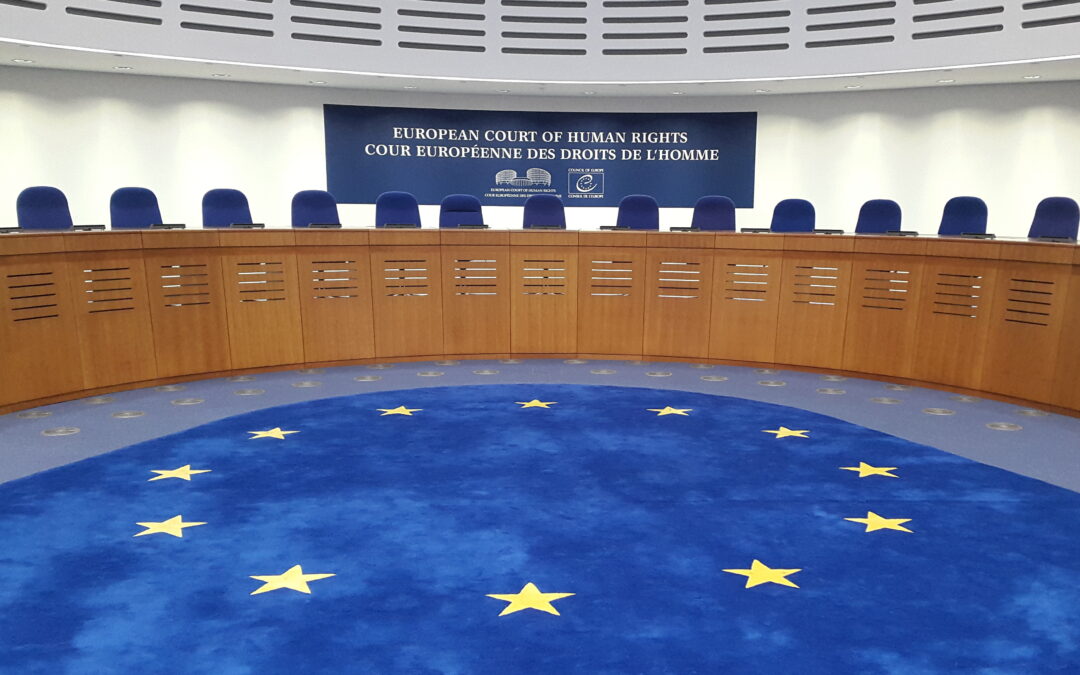
The ICJ made submissions today to the European Court of Human Rights in support of the right of association of Azerbaijan’s lawyers representing applicants before the Court and highlighting the situation of harassment of the legal profession in the country.
The ICJ intervened today in the cases of Democracy and Human Rights Resource Centre v. Azerbaijan and Mustafayev and Democracy and Human Rights Resource Centre v. Azerbaijan.
In these cases, lawyer Asabali Mustafayev and its NGO challenged the compliance of the freezing of their assets and criminal proceedings for financial offences as arbitrary interferences with their work as human rights defenders and in representation of clients before the European Court of Human Rights itself.
The ICJ has intervened to highlight the case-law regarding the right to individual application before the Court under article 34 ECHR and its application to the work of lawyers and legal NGOs.
It further examined the systemic practice in Azerbaijan of harassment of lawyers and of NGOs established by lawyers for the purpose of providing legal advice or representation, including representation of applicants before the European Court of Human Rights.
Finally, the ICJ analyzed the implications of such practices with regard to the State’s obligations under article 18 ECHR read together with article 11 ECHR.
Azerbaijan-icj-DHRRC&other-Advocacy-legal submission-2018-ENG (download the submission)
“Defenseless Defenders: Systemic Problems in the Legal Profession of Azerbaijan” – ICJ report in Azeri, Russian and English.
Question to the parties: http://hudoc.echr.coe.int/eng?i=001-184179
Sep 26, 2018
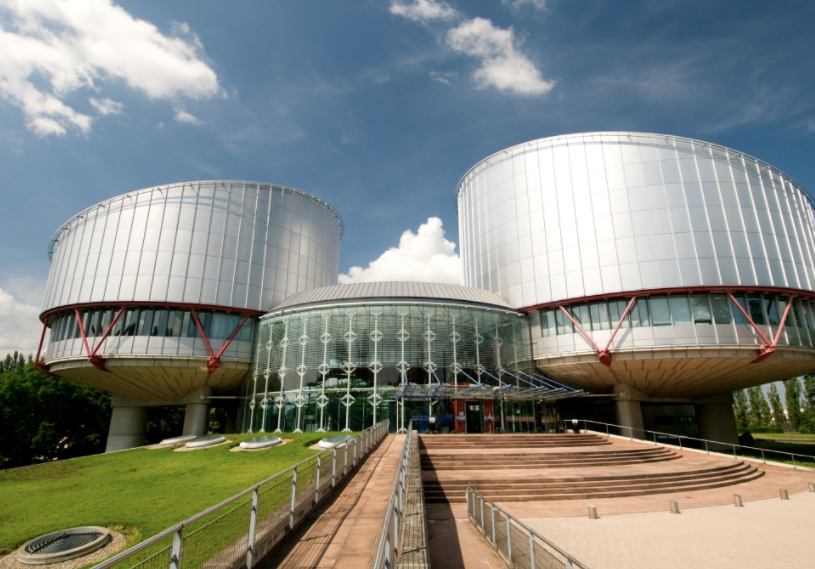
Today, the ICJ has presented a third party intervention before the European Court of Human Rights in Alayif Hasan oglu Hasanov v. Azerbaijan case.
In its submissions, the ICJ stresses that, while lawyers must perform their professional functions in conformity with ethical standards, the systems and procedures in respect of conditions of service, including in respect of admission to the profession and discipline, must not enforce such obligations in a way that impairs the exercise of human rights by lawyers or their capacity to effectively represent their clients.
The ICJ presented the submissions based on the jurisprudence of this Court as well as international standards governing the legal profession.
In particular, the submission addressed permissible restrictions of lawyers’ rights to respect for private (including professional) life under article 8 ECHR and to freedom of expression under article 10 ECHR, as well as the procedural safeguards required to apply such restrictions under article 6 ECHR.
Finally, the submission set out key findings of a recent ICJ fact-finding mission to assess the compliance of the governance of the legal profession in Azerbaijan with international law and standards.
Additional information:
Questions to the parties are available at http://hudoc.echr.coe.int/eng?i=001-184367
“Defenseless Defenders: Systemic Problems in the Legal Profession of Azerbaijan” – ICJ report in Azeri, Russian and English.
Azerbaijan-ICJ submission to ECHR-legal submission-2018-ENG – Submission in English.
Sep 20, 2018 | Advocacy, Non-legal submissions
The ICJ today put the spotlight the lack of independence of the legal profession in Azerbaijan speaking at the UN Human Rights Council in Geneva.
The statement, made during the consideration of the Universal Periodic Review (UPR) of Azerbaijan, read as follows:
The International Commission of Jurists (ICJ) welcomes the acceptance by Azerbaijan of the recommendations by France (140.70), by Greece (141.12), Austria (141.13), Estonia (141.68), Slovenia (141.71), and Mexico (141.77), to respect the rights of lawyers.
The ICJ regrets, however, that Azerbaijan only noted and did not explicitly support the recommendations by Sweden (141.33), USA (141.39), Czechia (141.67) and Germany (141.76) and rejected the recommendation by the United Kingdom (141.60) to “End all interference in the work of lawyers through disbarment or other disciplinary measures on improper grounds such as expressing critical views.”
These recommendations call for the amendment of the Law on Advocates and Advocates’ Activities to ensure the effective independence of the Bar Association of Azerbaijan. They also call for the setting up of independent and transparent mechanisms for lawyers’ admission to practice, and disciplinary proceedings against lawyers, in conformity with the UN Basic Principles on the Role of Lawyers.
The ICJ notes that Azerbaijan’s support of most recommendations is predicated on the assumption that the situation of the independence of the legal profession in Azerbaijan is in line with international law.
This, however, is not the situation in the country.
The ICJ expresses concern at the persistent lack of independence of the Bar Association of Azerbaijan; indeed, it has actually played a role in undermining the work of lawyers defending human rights. The situation is exacerbated by recent hasty reforms that prohibit lawyers from appearing in any court hearing unless they are members of this non-independent Bar association, furthermore without a sufficient and meaningful transition period. This seriously curtails access to justice for human rights violations in the country.

![Smoke rises after an Israeli air strike on the village of Taybeh in southern Lebanon [Source: Al Jazeera]](https://www.icj.org/wp-content/uploads/2026/03/Screenshot-2026-03-20-at-15.56.24-300x200.png)