Nov 17, 2018 | News
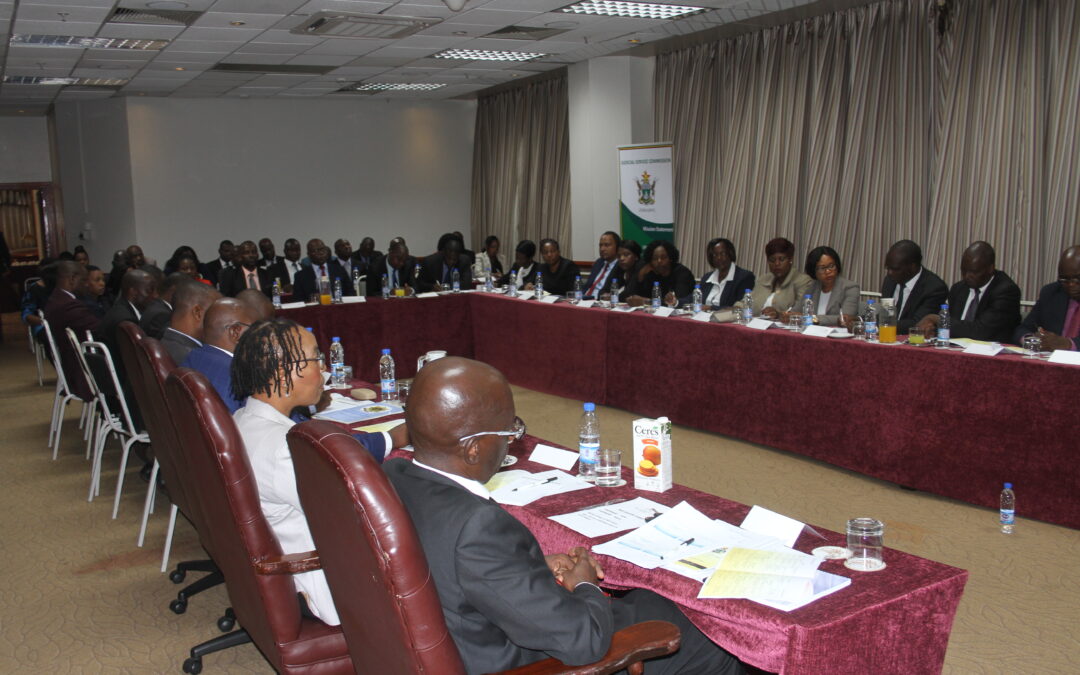
The Judicial Service Commission (JSC) of Zimbabwe with the support of the ICJ convened a two-day workshop from 16 to 17 November 2018 in Harare to train magistrates designated to the anti-corruption court. 56 Magistrates (39 males 17 females) attended the Workshop.
Speaking during the workshop the Honourable Chief Justice, Luke Malaba encouraged the magistrates to work diligently to “flash out” corrupt elements from society.
He lamented that the current court practice seems to merely launder accused persons through constant remands which eventually lead to failed cases resulting in impunity for corruption in the country.
He pointed out that corruption is a threat to the rule of law urging the judiciary to be conscientious in dealing with corruption cases.
The workshop is part of a broader justice sector intervention by the JSC with the support of the ICJ, through generous funding provided by the European Union (EU) targeting combating corruption in the legal system.
The two-day training meeting looked at equipping 56 magistrates with the skills and knowledge to adjudicate cases of white-collar crime.
The training covered international best practices in the setting up of such courts, substantive law on corruption and practical court administration issues.
Besides the quality of the investigations, the effectiveness of the anti-corruption courts will also depend on the integrity and competency of the officers appointed to preside over them.
This workshop is one of a number of initiatives that the JSC are effecting with the support of the ICJ and the EU to contribute to a reduction in the levels of corruption and strengthen the ability of the justice system to resolve corruption and resource diversion cases in Zimbabwe.
Contact
Brian Penduka on brian.penduka(a)icj.org or +263772274307
Nov 16, 2018 | News
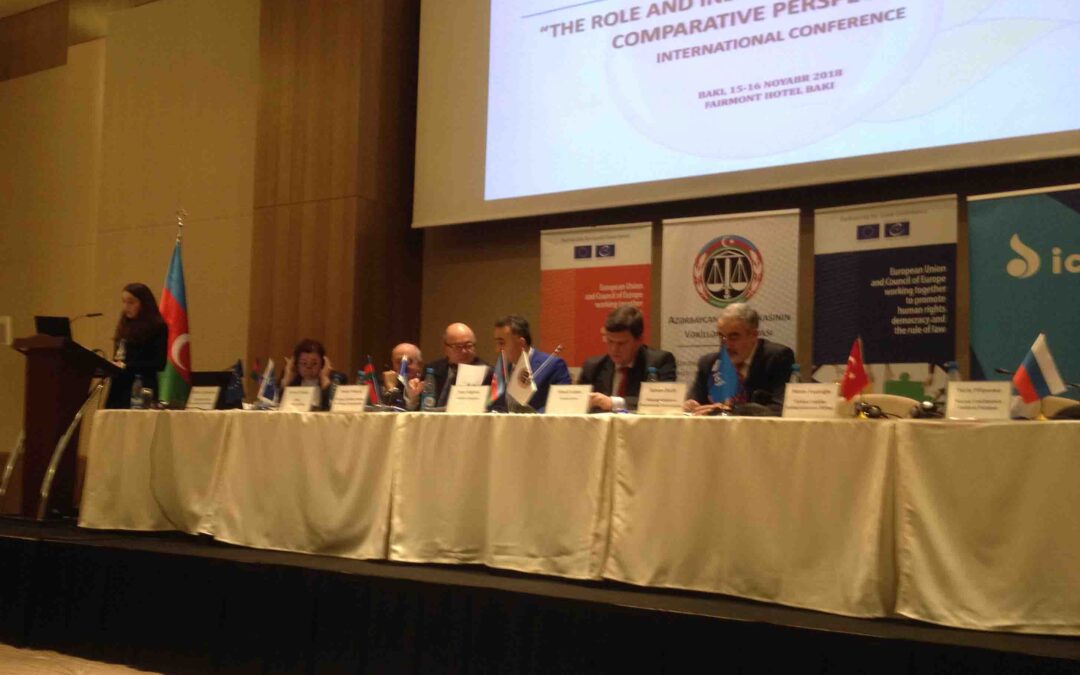
On 15 and 16 November, the ICJ, jointly with the Council of Europe (CoE) and the Azerbaijan Bar Association (ABA), is holding an international conference in Baku on “the Role and Independence of Lawyers: comparative perspectives”.
The conference, which is the first such event on the role and independence of the legal profession organized in the country, aims to bring together perspectives on the governance and role of the legal profession from international experts and representatives of bar associations from a wide range of countries, including the Council of Europe countries, Central Asian as well as representatives of international organizations.
The interventions provide a comparative view on the conditions and requirements that lawyers should comply with while carrying out their professional duty of protection of human rights of their clients.
Participants of the Conference will address in particular the organization and governance of the legal profession, lawyers’ ethics and qualification of lawyers.
Contact:
Temur Shakirov, Senior Legal Adviser, Europe and Central Asia Programme, temur.shakirov@icj.org
Live cast: https://youtu.be/POVlaKXjUrg
Azerbaijan-Conference Independence Lawyers-News-Agenda-2018-ENG (Agenda of the Conference, in PDF)
Nov 9, 2018 | News
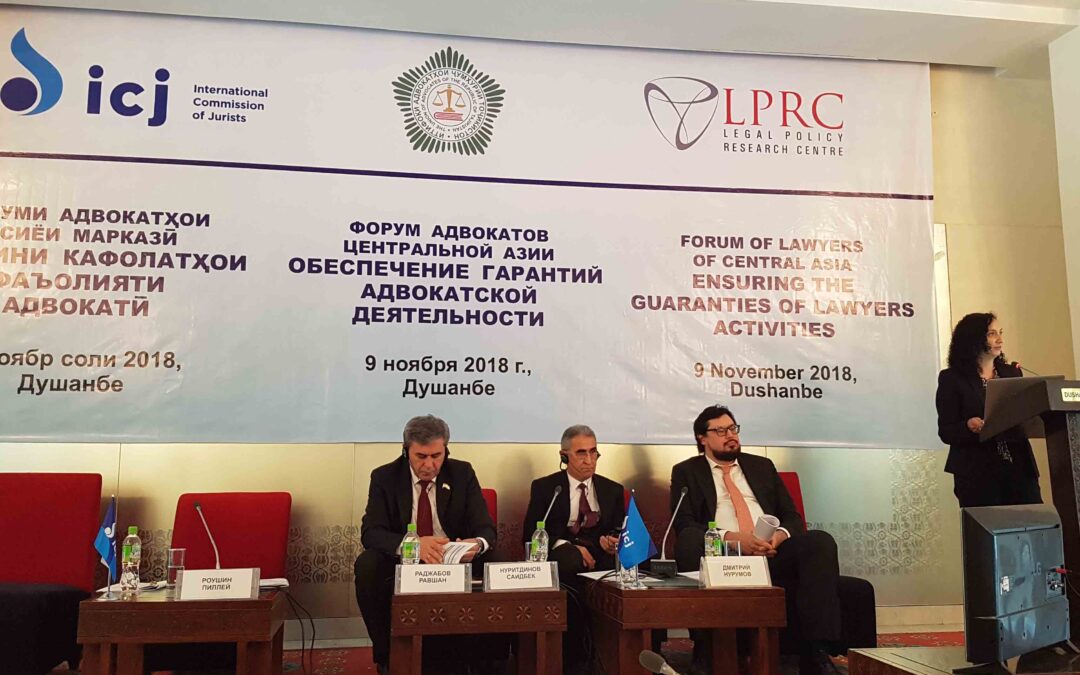
Today the ICJ, in co-operation with the Legal Policy Research Centre and the Union of Lawyers of Tajikistan, is holding a regional conference on the independence and role of lawyers, in Dushanbe.
Lawyers from Tajikistan as well as other countries of Central Asia, the Commonwealth of Independent States and Europe will discuss the legal safeguards that should apply to lawyers to ensure that they can defend the human rights of their clients and the role of bar associations in protecting the security and independence of lawyers.
They will consider the role of committees to protect the rights of lawyers, which have been established within the bar associations of several countries in the region, and how these specialized bodies can work most effectively.
A set of recommendations on the protection of lawyers in the region will be produced following the conference.
Contact:
Temur Shakirov, Senior Legal Advisor, Europe and Central Asia Programme, temur.shakirov(a)icj.org
Tajikistan-Lawyers Conference-News-Agenda-2018-ENG (Agenda, in PDF)
Nov 6, 2018 | Communiqués de presse, Nouvelles
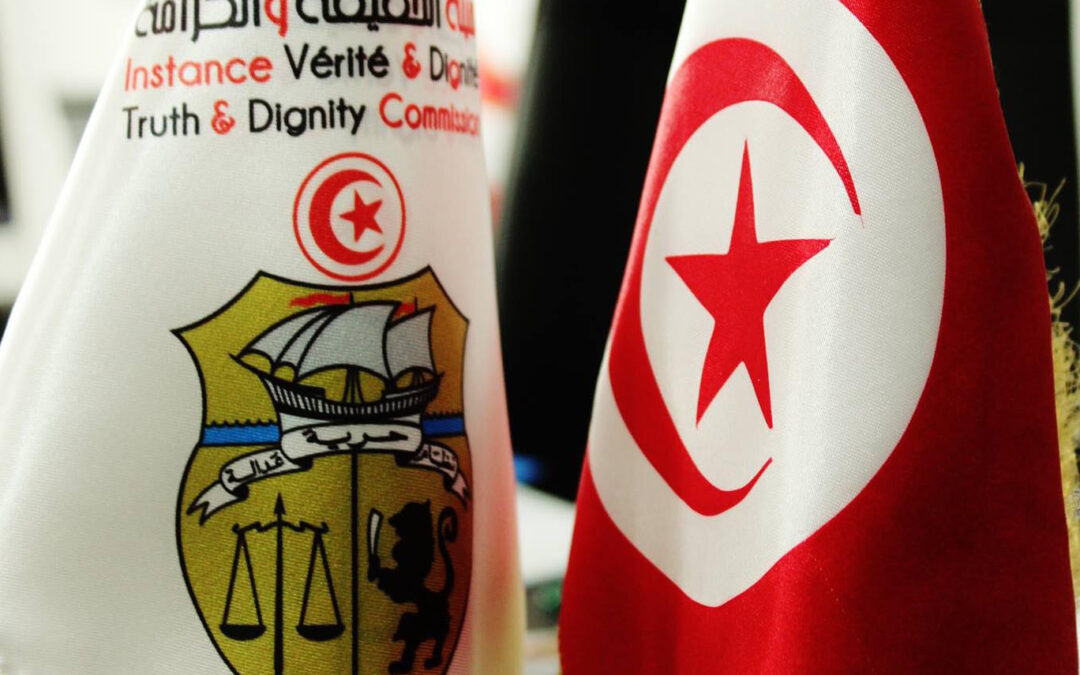
Les organisations de la société civile défendant le processus de justice transitionnelle en Tunisie suivent avec beaucoup de préoccupations et d’inquiétudes l’évolution récente de la situation en ce qui concerne les campagnes réclamant, d’abord, la suspension des travaux de l’Instance Vérité et Dignité et contestant la légalité de son existence et de ses décisions.
Ces campagnes et attaques lancées par certains blocs parlementaires ainsi que par un certain nombre de syndicats des forces de sécurité et de responsables de partis politiques, ont touché les chambres criminelles spécialisées en justice transitionnelle et ses juges, dans le but de nuire aux travaux et à la crédibilité du pouvoir judiciaire auprès de l’opinion publique nationale et internationale.
Lire la totalité de l’article ci-dessous:
Tunisia-Justice transitionnelle-News-Press releases-2018-FRE (version française, PDF)
Tunisia-Justice transitionnelle-News-Press releases-2018-ARA (version arabe, PDF
Oct 31, 2018 | News
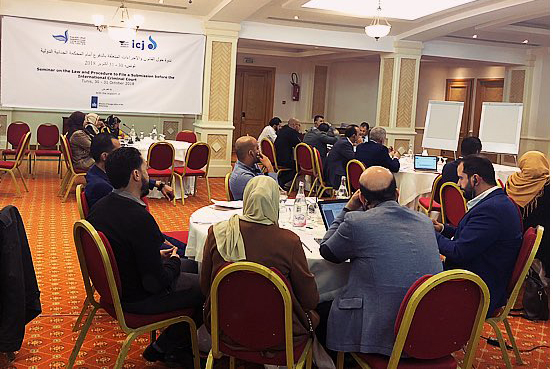
On 28‒31 October 2018, the ICJ hosted two seminars for 30 judges and prosecutors and 26 lawyers from Libya.
The events were co-organized with the Libyan Network for Legal Aid and commenced with opening remarks by ICJ Commissioner, Justice Kalthoum Kennou of Tunisia.
The first seminar on 28‒29 October on “Fair Trial Guarantees in Libya in light of International Standards” aimed to deepen the understanding of Libyan judges and prosecutors of the application of international law and standards regarding fair trials.
The seminar covered pre-trial rights, such as the right to liberty, to effective legal counsel and to be brought promptly before a judge, and rights at trial, such as the right to defend oneself in person, to call and examine witnesses and to an appeal.
International fair trial standards were considered in light of Libyan domestic law and cases, including case 630/2012 involving 37 Ghaddafi-era officials.
The second seminar on 30‒31 October on “The Law and Procedure to File a Submission before the International Criminal Court” aimed to increase Libyan lawyers’ understanding of how to properly file a successful submission to the Office of the Prosecutor.
The Seminar covered the structure and functioning of the ICC, the jurisdictional and admissibility requirements, and the standards for collection and admissibility of evidence.
The Seminar further discussed the roles of NGOs, lawyers and victims in ICC proceedings, providing practical guidance on how and when to file a communication under Article 15 of the Rome Statute of the ICC.
Speakers included judges and prosecutors from international courts and tribunals as well as ICJ staff.