Jun 18, 2018
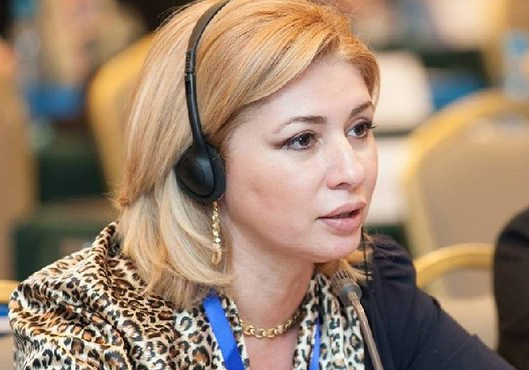
Today, the ICJ expressed concern at the recent disbarment of Irada Javadova, a high-profile lawyer in Azerbaijan and a former member of the Board of the Azerbaijan Bar Association.
The ICJ called on the Bar Association to reopen the disciplinary proceedings to afford Irada Javadova a chance to fully present her case in fair proceedings.
The ICJ also called on the Bar Association to reform their disciplinary procedures and practice with a view to ensuring fairness.
Disciplinary proceedings should not be used as a means of harassment of lawyers or as reprisals for lawyers’ defence of the human rights of their clients.
On June 11 2018, the Presidium of the Bar Association decided to disbar Irada Javadova, based on the information provided by a person who sought her legal assistance (K.M.). According to K.M.’s submission, Javadova made statements in the media concerning K.M.’s case, without her consent and without having a notarized power of attorney.
After receiving a request from K.M’s mother to inquire about the whereabouts of her daughter, in an open letter, Javadova had raised concerns at the possible arbitrary detention of K.M. This triggered disciplinary action against the lawyer.
The ICJ notes that contrary to the procedure established by the Law on Lawyers and Advocates Activities, Irada Javadova had no opportunity to present her case at the summary disciplinary hearing before the Presidium.
She did not receive a copy of the opinion of the Disciplinary Commission submitted to the Presidium, and evidence that she provided to it not considered or evaluated.
Irada Javadova is the latest of several Azerbaijan lawyers to be disbarred after publically raising concerns about possible human rights violations of their clients. Such disbarments represent an alarming trend and have a chilling effect on lawyers’ work to defend human rights, including by attempting to assist relatives of missing persons.
In its report on the independence of lawyers in Azerbaijan, the ICJ concluded that disciplinary procedures for lawyers “suffer from a lack of objective criteria, predictability and transparency. There are also concerns regarding the lack of clear criteria in law, practice or guidance, for the imposition of the most severe disciplinary penalty, disbarment. These gaps in standards lead to problems in practice, opening the way for … arbitrary victimization of lawyers through disciplinary proceedings.”
The ICJ stresses that, in accordance with the right to a fair hearing and with international standards on the role of lawyers, disciplinary proceedings against lawyers must be fair, must protect against arbitrariness, and must provide guarantees for the independence of lawyers.
Lawyers should be able to present their case and should be able to introduce evidence to be considered and evaluated in good faith.
In accordance with these principles, the ICJ calls on the Azerbaijan Bar Association to ensure that lawyers subject to disciplinary proceedings obtain copies of all relevant documents in the proceedings, in order to be able to prepare their arguments prior to the hearing in the Presidium.
Background information
Irada Javadova is a lawyer based in Baku. She has been a member of the Azerbaijan Bar Association for 13 years. From 2012-2017 she was a member of the Presidium of the Bar Association and is known for her work as a human rights lawyer.
Irada Javadova represented K.M. who was a suspect in a fraud-related case. K.M. concluded a contract with Javadova and was on her way to notarize it. After K.M. had left the lawyer’s office she was apprehended by people in plain clothes and was brought to the Main Organized Crime Department of the Ministry of Interior.
Subsequently, K.M.’s mother contacted Javadova asking her to take up the case and find out about the whereabouts of her daughter.
Acting upon the request of K.M.’s mother, Irada Javadova applied to the responsible State authorities urging them to provide information about her client. Having obtained no response, Javadova published an open letter addressed to the Minister of Internal Affairs. After the open letter had been published, K.M. was released.
However, later K.M. complained about the actions of her lawyer, stating that she did not have a power of attorney to represent her and that the statement made by Irada Javadova in the media was false and slanderous.
Irada Javadova, in turn, denies the allegations and states that she has all the evidence to prove that she acted based on a contract signed with K.M. and in the best interest of her client. On 12 June, Javadova met with representatives of the Presidium of the Bar Association to submit her evidence.
She was informed that there would be an appeal to Baku Administrative Economic Court No. 1 and that she could defend her claims in court.

Jun 18, 2018 | Artículos, Noticias
Jueces de Centroamérica, conjuntamente con la CIJ inician Jornadas sobre Independencia Judicial en Guatemala.
Con el objeto de llevar a cabo diferentes reuniones en el contexto de las Jornadas sobre Independencia Judicial en Guatemala, la Jueza de Paz en la ciudad de El Progreso, Departamento de Yoro y Presidenta de la Asociación de Jueces por la Democracia de Honduras; la Jueza de lo Contencioso Administrativo y Presidenta de la Asociación Costarricense de la Judicatura (ACOJUD); el Magistrado de la Cámara Penal de Santa Ana y Primer Vocal de la Junta Directiva del Foro De Jueces Democráticos de El Salvador y el Coordinador de la Oficina Técnica de la Asociacion de Jueces por la Democracia de Honduras, con el apoyo de la CIJ, realizarán una visita a Guatemala los días 18 y 19 de junio.
En el transcurso de su visita, se reunirán con diferentes funcionarios del Poder Judicial y analizarán la situación que se está presentando en Guatemala de ataques contra la Independencia del Poder Judicial y de jueces y juezas independientes y honestas como Ericka Aifán, Yassmín Barrios, Miguel Ángel Gálvez y Pablo Xitumul, entre otros.
Además, analizarán la situación de la Independencia Judicial en la región centroamericana.
La oportunidad será propicia para llevar a cabo dos conversatorios con jueces del Poder Judicial los días 18 y 19 de junio, para poder analizar in situ las acciones que se están presentando en contra de estos jueces y que contravienen los principios básicos y estándares internacionales.
Al final de su visita, darán a conocer las conclusiones generales a las que han llegado y las propuestas que consideran podrían aliviar en parte esta situación.
Jun 7, 2018
In a memorandum published today, the ICJ called on the Lebanese authorities to introduce comprehensive legal and institutional reforms with a view to ensuring that the Office of the Public Prosecutor (OPP) is strictly separated from the judiciary and judicial functions.
The reforms must also guarantee that the OPP’s independence and impartiality is fully safeguarded consistent with internationals standards, the ICJ says.
“The structure of the OPP, its role, status and functions are not in compliance with international standards on the independent and impartial functioning of prosecutors,” said Said Benarbia, ICJ MENA Director.
“The Lebanese authorities must ensure that the functions of judges and prosecutors are clearly separated and distinct and that prosecutors are not granted any powers to take decisions of a judicial character, including those relating to renewing police custody and ensuring oversight over police custody’s facilities, periods and conditions,” he added.
In the memorandum, the ICJ also formulates recommendations for amendment and reform of law and practice with a view to ensuring the administration of criminal justice in a manner that respects and protects human rights, due process and the rule of law.
The Code of Criminal Procedure and Decree-Law No. 150/83 on the Organization of the Judiciary do not provide for appropriate safeguards and limitations on internal and external instructions to prosecutors, do not adequately limit the power of the Minister of Justice in relation to the conduct of prosecutions, and, therefore, do not safeguard the real and perceived independence of the prosecution services.
If public faith and confidence in the integrity of the justice system is to be restored, the functional independence of prosecutors must be safeguarded from any undue or improper interference, including those emanating from within the OPP itself.
“The Lebanese authorities must ensure that the executive is prohibited from issuing instructions not to prosecute or requiring prosecution in a specific case,” said Benarbia.
“Any instructions to individual prosecutors regarding the conduct of a prosecution must be in writing, exercised transparently, and take into account established prosecution guidelines and the interests of victims and other interested parties,” he added.
Contact
Rola Assi, Associate Legal Adviser, t: 0096170821670 ; e: rola.assi(a)icj.org
Lebanon-Memo re prosecutors-Advocacy-Analysis Brief-2018-ENG (full memo in English, PDF)
Lebanon-Prosecutors memo launch-News-2018-ARA (full story in Arabic, PDF)
Lebanon-Memo prosecutors-Advocacy-Analysis Brief-2018-ARA (full memo in Arabic, PDF)
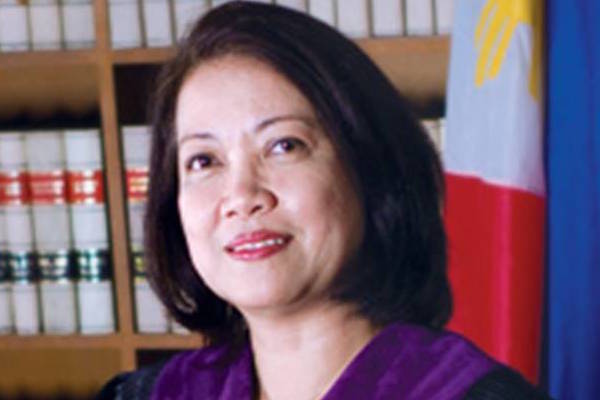
May 30, 2018 | News
As Chief Justice Maria Lourdes Sereno filed a motion today to reconsider the Supreme Court’s 11 May 2018 decision to remove her from the Court, the ICJ expressed its grave concern that the proceedings in the case had contributed to an overall deterioration in the rule of law in the country.
Sereno’s removal comes on the heels of a series of public statements by President Rodrigo Duterte attacking the Chief Justice, including direct threats to seek her removal from the Court.
The ICJ and other national and international observers have repeatedly and publicly condemned these attacks.
Her removal, through the contrivance of a judicial ruling by a sharply divided Court, adds to the perception that the government institutions are unable or unwilling to safeguard the rule of law, and will attack the institutions that protect it.
“Preserving the independence of the judiciary in the Philippines is crucial at a time when the government is credibly alleged to have been engaged in widespread and systematic human rights violations, amounting to crimes under international law,” said Frederick Rawski, Asia Pacific Director for the ICJ.
“Given the perception of political interference and the potential impact of this case on the credibility of the judiciary as a whole, it is imperative that the Court swiftly and fairly consider the Chief Justice’s motion for reconsideration,” he added.
The removal decision came in response to a quo warranto petition filed by the Solicitor General, the government’s foremost counsel.
The petition sought to nullify her appointment on the grounds that she had failed to comply with disclosure requirements, despite the fact that her qualifications had already been certified as sufficient by the Judicial and Bar Council when her name was included in the short-list submitted to the president for consideration.
The decision superseded ongoing impeachment proceedings in the Congress.
The ICJ raised concerns that the decision could open the floodgates to similar attacks, not only against members of the Court, but to members of the judiciary and other bodies, such as the Philippine Commission on Human Rights.
It called on the Supreme Court to take care to ensure that any proceedings are conducted in line with the highest standards of judicial ethics, as reflected in the international standards such as the Bangalore Principles of Judicial Conduct.
The ICJ also reminded the government of the Philippines that under international standards – including the UN Basic Principles on the Independence of the Judiciary – the judiciary, including individual judges, must be able to conduct itself without “improper influences, inducements, pressures, threats or interferences, direct or indirect… for any reason.”
It is a responsibility of both the judiciary and the political branches of government to ensure that this principle is respected.
Contact
Emerlynne Gil, Senior International Legal Adviser for Southeast Asia, t: +662 619 8477 (ext. 206) ; e: emerlynne.gil@icj.org

May 30, 2018 | Advocacy, Non-legal submissions
The ICJ today made a submission for an upcoming report by the UN Secretary General on recent developments concerning human rights in the administration of justice.
In 2016, the UN General Assembly requested the Secretary General “to submit to the General Assembly at its seventy-third session a report on the latest developments, challenges and good practices in human rights in the administration of justice, including on efforts to ensure equal access to justice for all through the independent, impartial and effective administration of justice, and on the activities undertaken by the United Nations system as a whole”.
The UN is in the process of preparing the report, which will cover developments during the last two years since the previous report of the Secretary General.
The ICJ’s submission can be downloaded in PDF format here: UN-GA-AdminJustice-2018

![Smoke rises after an Israeli air strike on the village of Taybeh in southern Lebanon [Source: Al Jazeera]](https://www.icj.org/wp-content/uploads/2026/03/Screenshot-2026-03-20-at-15.56.24-300x200.png)