Jul 22, 2018 | Artículos, Noticias
La reciente elección del magistrado suplente de la Corte de Constitucionalidad, llevada a cabo por la Corte Suprema de Justicia (CSJ), pone en grave riesgo la justicia constitucional y su imparcialidad.
En efecto, días atrás, la Corte Suprema de Justicia eligió al magistrado suplente de la Corte de Constitucionalidad (CC), puesto que había quedado vacante luego de que la magistrada suplente anterior, fuese electa como Fiscal General por el Presidente de la República.
Los ocho magistrados de la CSJ que votaron a favor del profesional electo como magistrado suplente de la Corte de Constitucionalidad, no han observado las normas y estándares internacionales en materia de administración de justicia.
Los Principios Básicos relativos a la Independencia de la Judicatura estipulan que “Las personas seleccionadas para ocupar cargos judiciales serán personas íntegras e idóneas y tendrán la formación o las calificaciones jurídicas apropiadas.”
No obstante, la CIJ ha podido constatar que los magistrados de la CSJ nombraron a una persona:
a) que en el año 2010, fue destituido como Fiscal General por la propia Corte de Constitucionalidad cuando recién había asumido el cargo, por haber sido considerado una persona no idónea para ocupar tan importante cargo;
b) que abiertamente ha estado en contra de la presencia de la Comisión Internacional contra la Impunidad (CICIG) en el país, a pesar del buen trabajo que ha realizado dicha comisión en la lucha contra la impunidad y la corrupción;
c) que en el 2010, ya en su calidad de Fiscal General y luego de asumir el cargo, fue acusado de afectar casos relacionados con la lucha contra la corrupción e impunidad y de intervenir y afectar la prueba existente en dichos casos.
Por ello, en esta elección, la CIJ tiene hondas y legítimas preocupaciones sobre la verdadera voluntad de la Corte Suprema de Justicia de: a) tramitar un genuino y necesario proceso de depuración del Sistema de Justicia; y b) de apoyar las reformas constitucionales que vendrían a fortalecer el Sistema de Justicia.
Además, con esta elección, la CSJ ha contribuido a profundizar la crisis del Sistema de Justicia; su decisión viene a afectar la poca credibilidad que la población guatemalteca aún tiene en el Sistema de Justicia.
Debemos recordar que los actos del Congreso de la República del 11 de septiembre de 2017, llevaron a la Corte de Constitucionalidad a catalogarlos como actos susceptibles de causar “un daño irreparable a la justicia” en Guatemala.
Es opinión de la CIJ, que la elección del magistrado suplente de la Corte de Constitucionalidad, llevada a cabo por la Corte Suprema de Justicia, también debe ser considerada como una forma de causar un daño irreparable a la justicia.
Por ello, la CIJ tiene la esperanza de que la Corte de Constitucionalidad protegerá, una vez más, el Estado de Derecho en Guatemala.
Ramón Cadena, Director para Centro América de la CIJ expresó: “El acto de la Corte Suprema de Justicia de elegir a una persona que no es idónea para el cargo de magistrado suplente de la Corte de Constitucionalidad, resulta altamente preocupante para una recta administración de justicia y la vigencia efectiva del Estado de Derecho en Guatemala”.

Jul 18, 2018 | Communiqués de presse, Nouvelles, Publications, Rapports
La CIJ a salué aujourd’hui la levée de l’état d’urgence en vigueur en Turquie depuis presque deux ans, qui devrait être effective à partir de minuit. La CIJ a toutefois ajouté que les autorités devaient désormais instaurer une série de mesures visant à rétablir l’état de droit dans le pays.
La prise de position de la CIJ coïncide avec la publication de son rapport Justice Suspended – Access to Justice and State of Emergency in Turkey (disponible en anglais seulement) qui décrit comment les mesures prises en vertu de l’état d’urgence, notamment la révocation massive de magistrats et les arrestations et poursuites arbitraires d’avocats et de défenseurs des droits de l’Homme, ont érodé les institutions et les mécanismes judiciaires du pays.
Le rapport préconise, entre autres, l’abrogation de ces mesures, le rétablissement de l’indépendance du système judiciaire et la réforme des lois antiterroristes du pays.
“Avec la fin de l’état d’urgence, nous appelons au retrait immédiat des notifications de dérogations à la Convention européenne des droits de l’homme et au Pacte international relatif aux droits civils et politiques,” a déclaré Massimo Frigo, conseiller juridique principal pour le programme Europe et Asie centrale de la CIJ.
“Nous sommes préoccupés par le fait que la plupart de ces mesures d’exception restent ancrées dans la loi turque, avec des des conséquences pernicieuses à long terme sur la jouissance des droits de l’Homme élémentaires et les bases de l’Etat de droit dans le pays,” a-t-il ajouté.

Jul 18, 2018 | News, Publications, Reports
The ICJ welcomed today the lapse of Turkey’s nearly two-year state of emergency, which is expected to be effective as of midnight, but said that the authorities needed now to take a range of measures to repair the rupture to the rule of law in the country.
The ICJ’s comments came as it released its report Justice Suspended – Access to Justice and State of Emergency in Turkey, outlining how measures undertaken pursuant to a state of emergency, including the mass dismissal of judges and arbitrary arrests and prosecutions of lawyers and human rights defenders had eroded the justice institutions and mechanisms in the country.
The report recommends a number of measures including the repeal of measures enacted under the state of emergency, the restoral of the independence of the judiciary and the reform of the country’s anti-terrorism legislation.
“With the end of the state of emergency we call for the immediate withdrawal of the notifications of derogations to the European Convention on Human Rights and the International Covenant on Civil and Political Rights,” said Massimo Frigo, ICJ Senior Legal Adviser for the Europe and Central Asia Programme.
“We remain concerned that many of the emergency measures have been given permanent effect in Turkish law and will have pernicious and lasting consequences for the enjoyment of human rights and for the rule of law in Turkey,” he added.
These measures include the dismissals of hundred of thousands of people from their job, including judges and prosecutors.
Constitutional amendments, introduced during the state of emergency, permanently enshrine executive and legislative control of the governing institutions of the judiciary, contrary to international standards on judicial independence, the ICJ says.
Many of those charged with vaguely-defined offences under the state of emergency face trial before courts that are not independent and cannot guarantee the right to a fair trial, the Geneva-based organization adds.
Crucially, most of the people affected by emergency measures, including summary dismissals, have not yet had the opportunity to obtain a remedy before an effective and independent court or tribunal.
The ICJ report illustrates how the mechanisms which should address and remedy human rights violations in Turkey lack effectiveness and independence and that these deficiencies extend both to the courts and the state of emergency complaints commission.
It further finds that the ordinary functions of lawyers and activities civil society, key actors in ensuring access to justice, have been considerably curtailed.
“The Turkish Government says that they want their actions to respect the rule of law. Effective and independent remedies and reparations for human rights violations must be available to all if this principle is to have any reality in practice,” said Massimo Frigo.
Contact
Massimo Frigo, ICJ Senior Legal Adviser for the Europe and Central Asia Programme, t: +41 22 979 3805, e: massimo.frigo@icj.org
Download
Full ICJ report in PDF in English: Turkey-Access to justice-Publications-Reports-2018-ENG
Full ICJ report in PDF in Turkish: Turkey-Access to justice-Publications-Reports-2018-TUR
Jul 11, 2018 | News
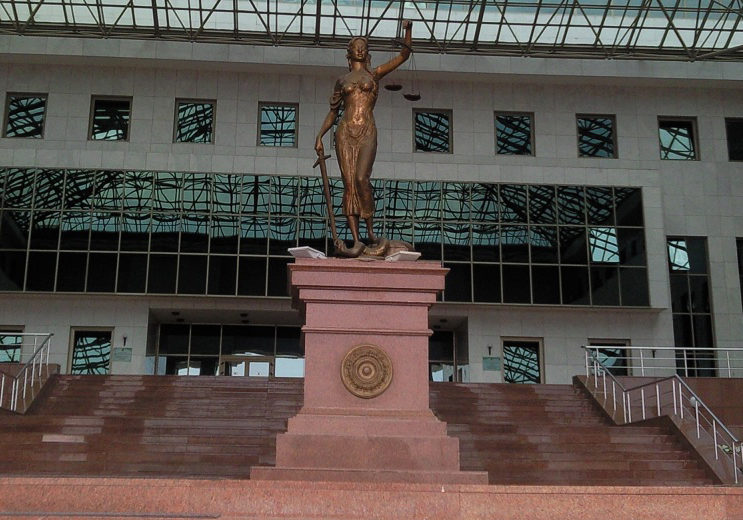
Today, the ICJ expressed concern at the adoption of a new law on lawyers in Kazakhstan.
The Law ‘On the Professional Activities of Advocates and Legal Assistance’, signed into law on 10 July 2018, contradicts international law and standards on the independence of the legal profession, by enabling the executive to influence or to have control over who is allowed to practice law and substantial influence on disciplinary proceedings against lawyers.
The law will have negative repercussions for protection of human rights and the rule of law in the Republic of Kazakhstan.
“Some of the key provisions of the adopted law undermine the independence of the legal profession, a cornerstone of the rule of law,” Temur Shakirov, ICJ Europe Program Senior Legal Adviser said today.
“Not only does the law weaken the legal profession, it sends an unfortunate message to the public that, as a result, their human rights, including their right to a fair trial, may be harder to uphold within the legal system,” he added.
More specifically, the ICJ is concerned that, under the new law, the role of the independent Bar Association in the composition of the disciplinary commissions is reduced.
Besides lawyers, the Disciplinary Commission will now include ‘representatives of the public’ designated by the Ministry of Justice. While the law does not specify how these members of the Disciplinary Commission would be selected, the selection is to be made by the Ministry of Justice.
The same procedure is not excluded to select members who are retired judges, which the Law requires also be part of disciplinary commissions.
While many of the specific procedures are unclear, it is apparent that these provisions would give the Ministry extensive influence over the Disciplinary Commission, especially as the law does not explicitly require these members perform their duties independently from the instructions of the Ministry of Justice.
The influence of the executive over the disciplinary proceedings of the Bar Association is contrary to the principles of independence of lawyers.
The UN Basic Principles on the Role of Lawyers provide that disciplinary proceedings against lawyers are to be brought before an impartial disciplinary committee established by the legal profession, before an independent statutory authority, or before a court, and shall be subject to an independent judicial review.
Furthermore, the law continues to give the Ministry of Justice control over admission to the practice of law.
It stipulates that prospective lawyers who have completed their professional training are to be assessed by the Commission for admission to practice established by territorial bodies of the Ministry of Justice.
The commissions consist of seven members, of which only three are members of the Bar Association. The composition of the commissions and the principles of their work are to be approved by the orders of the Minister of Justice of the Republic of Kazakhstan.
The Law therefore preserves the previous procedure on admission to the profession criticized by the ICJ earlier, according to which the attestation of applicants for obtaining the membership to the Bar Association and issuing a license were within the exclusive competence of the Ministry of Justice of the Republic of Kazakhstan.
At the same time, many defense rights listed in the Law are curtailed or compromised by the wording that would allow for enactment of restrictions by secondary legislation, including that the adopted Law would not allow lawyers to freely and without interference collect evidence in defense of their clients or that lawyer’s inquiries can be subject to limitation where they seek to obtain “restricted information”.
The ICJ notes that according to the UN Basic Principles on the Role of Lawyers, States must ensure lawyers have access to appropriate information, files and documents in their possession or control in sufficient time to enable lawyers to provide effective legal assistance to their clients. Such access should be provided at the earliest appropriate time (Principle 21).
Read the full text in English here
Read the full text in Russian here

Jul 4, 2018 | News
The ICJ condemned today the forced retirement of 27 out of 72 judges of the Supreme Court of Poland in defiance of the most basic principles on the independence of the judiciary.
“The forced retirement of a third of the Supreme Court under the new law on the judiciary amounts to an arbitrary dismissal of judges” said Róisín Pillay, Director of the ICJ Europe and Central Asia Programme, “It is a flagrant breach of a basic tenet of the independence of the judiciary, the security of tenure of judges.”
The government claims the law and its implementing measure of forced retirements are aimed at improving the administration of justice. However, the ICJ considers them to be a deliberate attempt to destroy judicial independence and install executive control.
“We call on the Polish authorities to follow the EU’s recommendations, abolish this draconian legislation and immediately reinstate the Supreme Court justices. Not to do so strikes at the very core of judicial independence”, said Róisín Pillay.
“Universal principles of judicial independence guaranteeing security of tenure were developed long ago exactly to safeguard the kind of abuse of political authority driving this forced retirement measure, whereby judges would serve at the pleasure of the government of the day,” she added.
The ICJ considers that the implementation of the new law on the Supreme Court and the dismissal of the 27 Supreme Court Justices directly contravenes the security of tenure of judges and, hence, the principle of judicial independence, as expressed in the UN Basic Principles on the Independence of the Judiciary, Council of Europe standards, the European Court of Human Rights’ jurisprudence and the rule of law principle of the EU Treaties.
Poland-Attacks on judiciary-News-web stories-2018-ENG (full story – with additional background information – in PDF)