Sep 12, 2017 | Comunicados de prensa, Informes, Noticias, Publicaciones
Hoy la Comisión Internacional de Juristas lanza un nuevo informe sobre la grave ruptura del Estado de Derecho: El Tribunal Supremo de Justicia de Venezuela: un instrumento del Poder Ejecutivo.
A través de diferentes sentencias emitidas desde diciembre de 2015, el máximo órgano de la Judicatura venezolana fue progresivamente desmantelando el Estado de Derecho, socavando los derechos humanos y dejando sin aplicación la Constitución política de ese país.
En sus decisiones Nos. 155 y 156 de marzo de 2017, el Tribunal Supremo de Justicia (TSJ) daría una estocada final al Estado de Derecho, arrogándose las facultades legislativas, despojando a la Asamblea Nacional de sus facultades constitucionales y otorgando amplísimos y arbitrarios poderes al Ejecutivo.
En su Sentencia No. 155 de 27 de marzo de 2017, el TSJ se pronunció sobre un recurso de nulidad presentado por un Diputado oficialista contra un acto de la Asamblea Nacional, que pedía la reactivación del proceso de aplicación de la Carta Democrática Interamericana de la Organización de los Estados Americanos, para una resolución pacífica de la crisis y la reinstauración del orden constitucional en Venezuela.
En su Sentencia No. 156 de 28 de marzo de 2017, el TSJ se pronunció sobre una demanda de interpretación sobre Ley Orgánica de Hidrocarburos, que cercenó las facultades constitucionales de la Asamblea Nacional.
“Estas decisiones constituyen un verdadero Golpe de Estado al orden constitucional y han dado inicio del reino de la arbitrariedad”, declaró Sam Zarifi, Secretario General de la CIJ.
El informe de la CIJ analiza, a la luz de estándares internacionales y de los principios del Estado de Derecho así como de la Constitución venezolana, la jurisprudencia emitida desde diciembre de 2015 por el TSJ en relación con las funciones y facultades constitucionales del Poder Legislativo, el control parlamentario, los estados de excepción y la amnistía.
El TSJ – una institución totalmente cooptada por el Poder Ejecutivo e integrada mayoritariamente por del Partido Socialista Unido de Venezuela (PSUV) y/o ex funcionarios del Gobierno- se convirtió en un apéndice del Gobierno y un instrumento político del régimen para enfrentar la cada vez más creciente oposición política y social.
Invocando arbitrarias interpretaciones de la Constitución, omitiendo el análisis de otras normas constitucionales, otorgando rango supraconstitucional a normas de inferior jerarquía y obviando el debido proceso y el sistema de contradicción judicial, el TSJ fue despojando y vaciando a la Asamblea Nacional de sus funciones constitucionales en materia legislativa, de control parlamentario, de reglamentación y de administración interna, para favorecer políticamente al Gobierno.
“Los fallos no se han proferido con imparcialidad, de conformidad a los hechos y el derecho, como lo prescriben el principio 2 de los Principios básicos relativos a la independencia de la judicatura pero más bien están en flagrante violación de la Constitución venezolana. El TSJ ha proferido sus decisiones basado en consideraciones políticas y lealtades partidistas e ideológicas con el Poder Ejecutivo”, declaró Sam Zarifi.
Asimismo, el informe relaciona las recomendaciones sobre administración de justicia que han venido formulando a Venezuela, desde hace varios años, distintos órganos y procedimientos internacionales de protección de los derechos humanos, tanto en el ámbito de las Naciones Unidas como del Sistema Interamericano.
Ninguna de esas recomendaciones ha sido acatada por las autoridades venezolanas, incluso las órdenes de reparación decretadas por la Corte Interamericana de Derechos Humanos, las cuales son de obligatorio cumplimiento.
“Esa posición de las autoridades venezolana es violatoria de su obligación internacional de cooperar de buena fe con órganos y procedimientos internacionales de protección de los derechos humanos”, declaró Sam Zarifi.
Finalmente, el informe concluye que el TSJ ha socavado el Estado de Derecho, vulnerado el principio de separación de poderes y conculcado las funciones constitucionales y la autonomía del Poder Legislativo.
El TSJ, como consecuencia de sus decisiones basadas en imponer los intereses políticos del Poder Ejecutivo, ha perdido sus atributos esenciales de un genuino Poder Judicial, tales como: independencia, imparcialidad, autonomía, y legitimidad.
“El TSJ ha asumido un rol de dar apariencia de legitimidad jurídica a las acciones políticas arbitrarias emanadas del Poder Ejecutivo, convirtiéndose en un apéndice del Poder Ejecutivo y dejando de ejercer su función constitucional de garante del Estado de Derecho y de los derechos humanos y libertades fundamentales”, declaró Sam Zarifi.
Contactos:
Sam Zarifi: Secretario General de la CIJ; t +41 79 726 44 15 ; e sam.zarifi@icj.org
Federico Andreu-Guzmán: Representante para Suramérica de la CIJ; t + 57 311 481 8094; e federico.andreu@icj.org
Venezuela-Tribunal Supremo-Publications-Reports-Thematic reports-2017-SPA (el informe en PDF)
Venezuela-Actualización-Advocacy-Analysis brief-2017-SPA (mas información en PDF)
Sep 8, 2017 | News
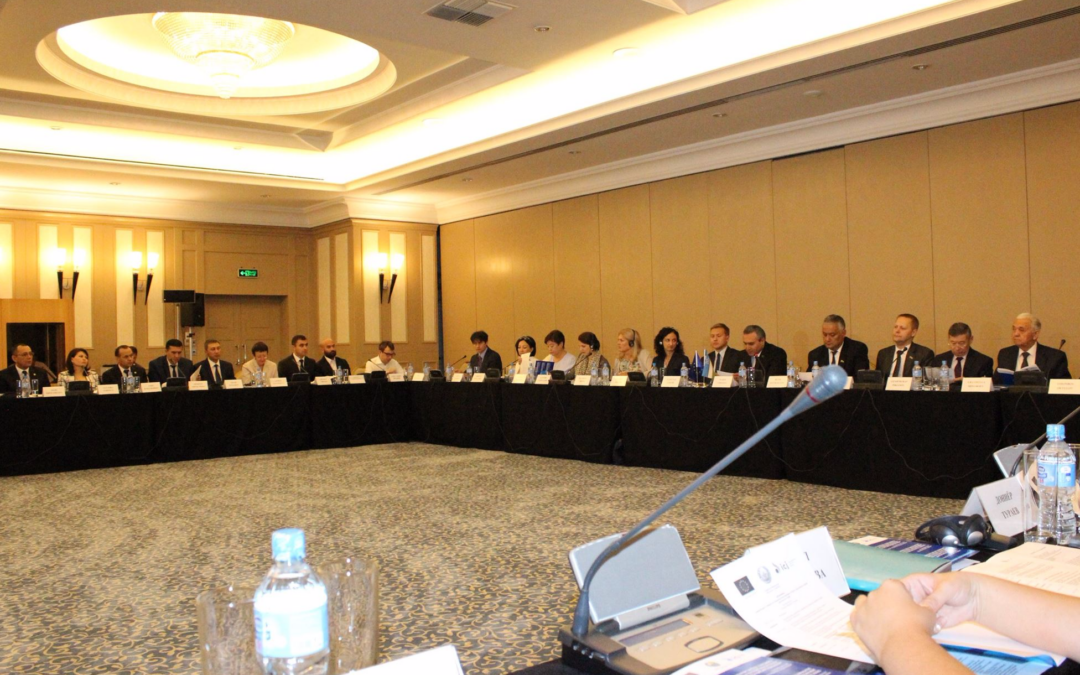
Today, 8 September, the ICJ and the Supreme Judicial Council of the Republic of Uzbekistan (SJC) hold a joint International Seminar on Comparative Approaches to Selection, Appointment and Evaluation of Judges.
The seminar will address issues related to the institutions and procedures on appointment and selection of judges as well as assessment of judicial performance. International standards and national comparative examples will be discussed, including experiences of Uzbekistan, Austria, Germany, Kazakhstan, the Kyrgyz Republic and Serbia. The European and Central Asian perspectives will allow the participants to identify common challenges and find ways to address them.
A Press Release about the event is available to download:
In English, in Russian, or in Uzbek.
Sep 1, 2017 | News
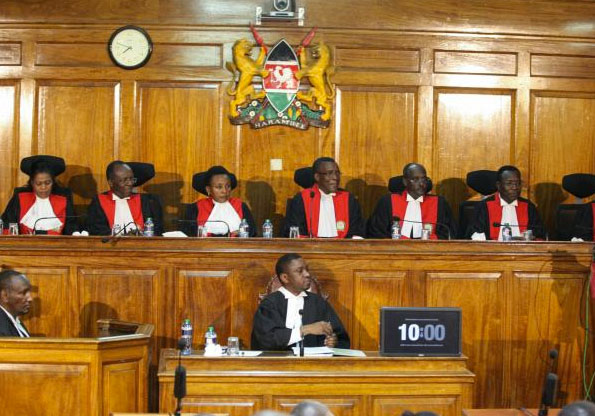
Today the Supreme Court of Kenya took the unprecedented step of voiding the presidential elections held on 8 August 2017 citing the failure by the Independent Electoral and Boundaries Commission (IEBC) to adhere to constitutionally mandated processes.
The ICJ commends the Supreme Court of Kenya for adjudication of a sensitive case at a high professional standards amidst a charged political atmosphere.
The ICJ in partnership with the Africa Judges and Jurists Forum (AJJF) sent a mission of three distinguished judges to observe the proceedings during the presidential petition in Kenya.
The delegation consisted of Retired Chief Justice Earnest Sakala (Zambia), Justice Dingake (Botswana) and Justice Chinhengo (Zimbabwe).
The mission’s observations will be publicized in due course.
Kenya held national elections on 8 August 2017 administered by the IEBC.
The IEBC subsequently announced that Uhuru Kenyatta had won the elections with a 54% majority.
The opposition National Super Alliance Coalition led by Raila Odinga filed an election petition alleging serious irregularities in the tabulation and transmission of the results of the elections and asking the court to nullify the results and order fresh elections.
The Supreme Court heard the election petitition culminating in the decision that was handed down today.
According to the observers, the court conducted the hearing in a manner consistent with the rule of law and that adhered to the Kenyan Constitution and international principles of a fair trial.
The Court gave acted fully as a competent, independent and impartial judicial body.
“The decision taken by the Supreme Court today is precedent setting. It places a cost on the election management body for apparently failing to adhere to constitutional imperatives and the normative framework governing the conduct of elections,” said Arnold Tsunga, Africa Director of the ICJ.
“Elections are a high stakes subject in Kenya, as elsewhere in the world. Previous elections have shown that violence and multiple human rights violations increase during the election period. We therefore encourage the political leaders in Kenya to accept the court’s verdict and to encourage their supporters to exercise maximum restraint and tolerance as the country braces itself for fresh elections,” he added.
Finally the ICJ urges the authorities in Kenya and the IEBC to quickly comply with and implement the court’s judgement.
Contact
Arnold Tsunga, ICJ Director for Africa, t: +27716405926 ; e: arnold.tsunga@icj.org
Aug 31, 2017
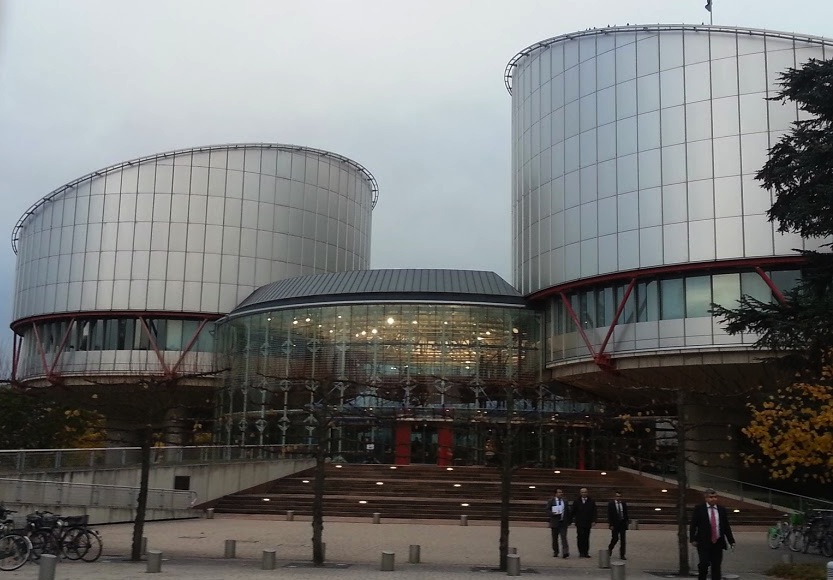
Today, the ICJ intervened in the case Anatoliy Oleksiyovych Denisov v Ukraine, Application no. 76639/11.
In its submission, the ICJ provided the Court with an analysis in relation to:
(a) The role of court presidents in the self-governance of the courts and in maintaining judicial independence;
(b) International standards in relation to security of tenure of judges and court presidents;
(c) The importance of procedural safeguards, including under Article 6.1 ECHR, in decisions affecting the career and tenure of court presidents; and
(d) In light of international standards and principles, the extent to which a disciplinary measure such as removal from the position of president of a court may interfere with the right to respect for private life as protected by Article 8 ECHR.
The ICJ argued that court presidents, in many European jurisdictions, play an important role in the self-governance and impartiality of the judiciary.
Upholding the independence of the judiciary requires, inter alia, that court presidents should, in the discharge of these functions, enjoy independence from the executive, as well as from other powerful interests.
The intervener will argue that the nature of court presidents’ role has consequences for the application of Convention rights to measures affecting their judicial career, including removal from the role of court president, even in cases where they retain judicial office.
Ukraine-Denisov v Ukraine -Advocacy-legal submission-2017-ENG (full text in PDF)
Aug 30, 2017 | Comunicados de prensa, Noticias
La CIJ considera que la crisis institucional que se vive en Guatemala requiere la intervención directa del Secretario General de Naciones Unidas Sr. Antonio Guterres.
La CIJ a la comunidad nacional e internacional expresa:
1. El Acuerdo entre La Organización de las Naciones Unidas y el Gobierno de Guatemala, relativo al establecimiento de una Comisión Internacional contra la Impunidad en Guatemala (CICIG), en su punto 10 numeral 4. , establece el compromiso del Gobierno, de proporcionar a la CICIG y a su personal, en todo el territorio, “la seguridad necesaria para el cumplimiento eficaz de sus actividades”. Además, el punto 10 citado anteriormente, compromete al Gobierno de Guatemala a velar por que el personal de la CICIG, nacional o internacional, no sea objeto de abusos, amenazas, represalias o intimidaciones, por el desempeño de su trabajo.
2. Los actos unilaterales del Presidente Jimmy Morales constituyen una violación a dichas garantías y pueden interpretarse como un mecanismo para afectar el eficiente trabajo que viene realizando el Comisionado Iván Velásquez al frente de la CICIG; para obstaculizar la justicia, para interferir en la Independencia del Poder Judicial y promover así, más impunidad en el país.
3. La decisión de la Corte de Constitucionalidad de dejar en suspenso en forma definitiva el acto reclamado por el Procurador de los Derechos Humanos y de esa forma, dejar sin efecto el acto unilateral por medio del cual el Presidente Jimmy Morales declaró “persona non grata” al Comisionado Velásquez, viene a reforzar el Estado de Derecho en Guatemala y fortalece al máximo Tribunal Constitucional.
Sam Zarifi, Secretario General de la Comisión Internacional de Juristas expresó:
“Ante la crisis institucional que se vive en Guatemala, la Comisión Internacional de Juristas considera que es necesaria la intervención directa del Secretario General de Naciones Unidas Sr. Antonio Guterres mediante una Misión de Alto Nivel, que permita evaluar “in loco”, si el Gobierno de Guatemala está dispuesto a honrar el Acuerdo firmado en la ciudad de Nueva York el 12 de diciembre de 2006.”
“El Gobierno de Guatemala debe dar a la Organización de las Naciones Unidas, garantías convincentes de que la CICIG, el Comisionado Iván Velásquez y todo su personal nacional e internacional, podrán cumplir en el futuro con sus funciones, sin abusos, amenazas, represalias o intimidaciones de ningún tipo,” concluyó.

![Smoke rises after an Israeli air strike on the village of Taybeh in southern Lebanon [Source: Al Jazeera]](https://www.icj.org/wp-content/uploads/2026/03/Screenshot-2026-03-20-at-15.56.24-300x200.png)