Oct 3, 2014 | Agendas, Events
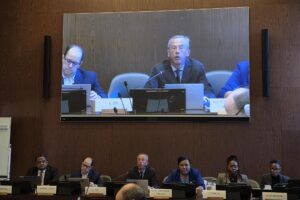
Today, the International Commission of Jurists (ICJ) held its second expert roundtable on asylum claims based on sexual orientation and/or gender identity.
Participants included asylum judges, lawyers, and academics, as well as officials from the Office of the UN High Commissioner for Refugees and staff members from a number of civil society organizations.
Prof. Hathaway, Director of the Program in refugee and asylum law at the University of Michigan Law School, Prof. Anker, Director of the Harvard Law School’s Immigration and Refugee Clinical Program, and Judge Lars Bay Larsen, judge of the Court of Justice of the European Union, were the main speakers at the roundtable. Each delivered a presentation focussing on different normative aspects of asylum claims based on sexual orientation and/or gender identity.
The programme of the second expert roundtable, including a list of all participants, can be downloaded here.
This roundtable forms part of a broader ICJ’S project on international protection claims based on sexual orientation AND/OR gender identity. The programme of the first roundtable organised in Brussels last June can be downloaded here. The ICJ’s commentary on the related CJEU judgment in X, Y and Z v. the Netherlands can be downloaded here.
Sep 26, 2014 | News
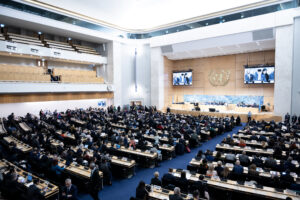
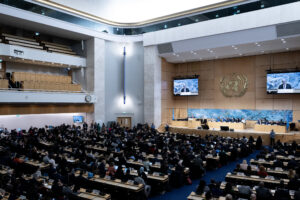
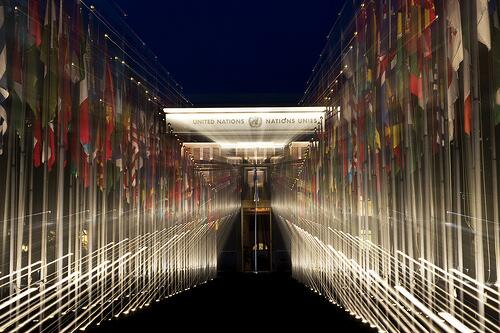
As the UN Human Rights Council approached the conclusion of its 27th regular session tonight, it adopted resolutions including on the topics of violence and discrimination on the basis of sexual orientation or gender identity and the protection of civil society space.
The resolutions on civil society space, and on non-violence and non-discrimination on grounds of sexual orientation or gender identity, were adopted after a series of hostile amendments were defeated.
The resolution on sexual orientation and gender identity, led by Brazil, Chile, Colombia and Uruguay, recognizes the worldwide problem of violence and discrimination, and builds on a resolution on the same subject from 2011. It calls for the High Commissioner for Human Rights to update the report produced under the 2011 resolution.
The States that supported the resolution on sexual orientation and gender identity overcame a series of amendments brought by Congo, Djibouti, Egypt, Malaysia, Nigeria, South Sudan, Uganda, and United Arab Emirates. The amendments would have among other things deleted all references to sexual orientation and gender identity from the resolution text, fundamentally changing its purpose, and perpetuating a complete denial of the very real violence and discrimination inflicted on lesbian, gay, bisexual, transexual and intersex people in all regions of the world.
The civil society space resolution, which was led by Chile, Ireland, Japan, Sierra Leone, Tunisia, draws on discussions at a Panel convened by the Council earlier in the year. It affirms the valuable contribution made by civil society in countries around the world, expresses concern about the threats and challenges faced by civil society, and requests the High Commissioner for Human Rights to produce practical recommendations for addressing these threats and concerns.
The texts of the resolutions (in the final draft form on which they were adopted – the official final versions are not yet available) are available here: Civil Society Resolution Sexual Orientation Gender Identity Resolution
A joint NGO press release on the resolution on sexual orientation and gender identity is available here.
The ICJ maintains databases of jurisprudence, legislation and UN action on the topic of sexual orientation and gender identity.
Jun 27, 2014 | Agendas, Events
The ICJ is today holding an expert roundtable on asylum claims based on sexual orientation, gender identity or expression.
Participants include asylum judges and lawyers; officials from national refugee status determination authorities, the Office of the UN High Commissioner for Refugees and the Office of the UN High Commissioner for Human Rights; asylum academics; and staff members from other NGOs, including the Organization for Refuge, Asylum & Migration (ORAM), the Human Dignity Trust (HDT), the Advice on Individual Rights in Europe (AIRE) Centre and the Belgian Refugee Council.
At the roundtable, taking place in Brussels, participants will discuss: the legal challenges and responses in the context of asylum claims based on sexual orientation, gender identity or expression and refugee law; reflections on the UNHCR’s Guidelines on International Protection No. 9: Claims to refugee status based on Sexual Orientation and/or Gender Identity; the concept of persecution and assessment of evidence in the context of those claims; and the relevance of European human rights law to asylum claims based on sexual orientation, gender identity or expression.
The programme of the expert roundtable can be downloaded here.
This roundtable forms part of a broader project of the ICJ on international protection claims based on sexual orientation, gender identity or expression. The ICJ’s commentary on the related CJEU judgment in X, Y and Z v The Netherlands can be downloaded here.
Jun 26, 2014 | Advocacy, Cases, Legal submissions, News
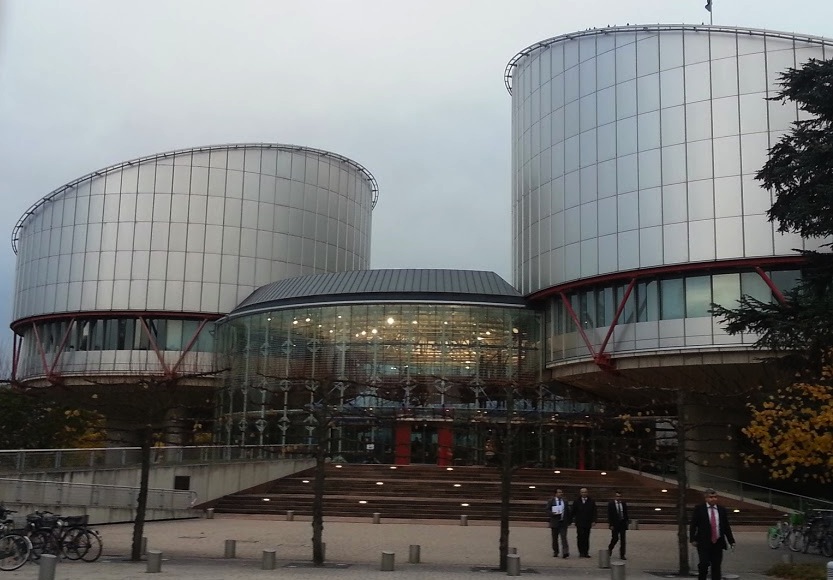
The ICJ expresses its disappointment today at the judgment of the European Court of Human Rights in the case of M.E. v. Sweden (Application No. 71398/12).
Jun 11, 2014 | Advocacy, Non-legal submissions
The ICJ, together with the International Lesbian and Gay Association (ILGA) and on behalf of ARC International, today delivered an oral statement to the Human Rights Council during an interactive dialogue with the UN Special Rapporteur on peaceful assembly and association.
The report of the Special Rapporteur addressed challenges faced by groups at risk, including lesbian, gay, bisexual, transgender and intersex persons.
The statement welcomed the report by the Special Rapporteur.
It referred to the Nigerian Same Sex Marriage (Prohibition) Act (which in fact criminalizes a much broader range of human rights-protected activities than its title would necessarily suggest), Uganda’s Anti-Homosexuality Act, and Ukraine’s draft law on “propaganda of homosexual relations”. All of these laws impede freedom of peaceful assembly of LGBTI persons. The Nigerian law also interferes with freedom of association, as it bans registration, funding and activities of “gay” organizations.
It also referred to Russia’s ban on “propaganda of non-traditional sexual relations”.
It emphasised the detrimental impact of such laws on the work of LGBTI human rights defenders and the activities of health care providers. It stressed that laws directly targeting the freedom of peaceful assembly or association of LGBTI individuals solely because of their sexual orientation or gender identity are inconsistent with international human rights law.
UN-HRC26-AssociationLGBTI-OralStatement-advocay-non legal submission-2014 (full text in pdf)
The report of the Special Rapporteur is available here.