Sep 22, 2017 | Advocacy, Non-legal submissions
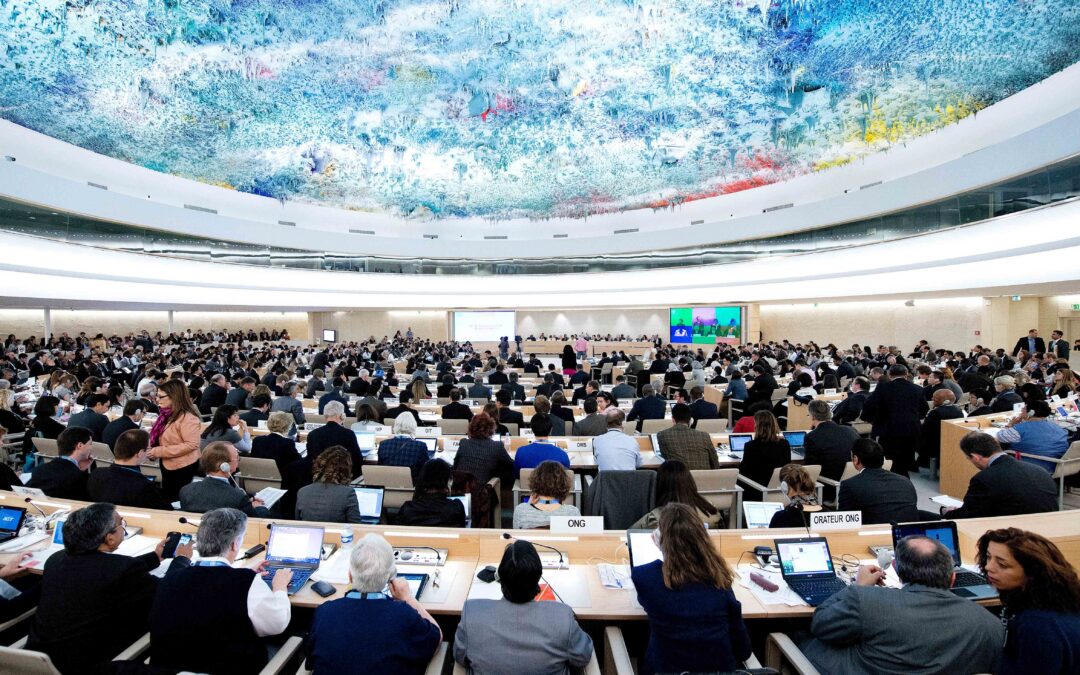
The ICJ spoke today at the UN, on behalf of its Dutch national section NJCM and the civic rights organization Kompass, addressing the need for the Netherlands to adopt concrete measures to implement commitments it has accepted under the Universal Periodic Review process.
The statement, delivered in the discussion by the UN Human Rights Council of the outcome of the third cycle UPR of the Netherlands, read as follows:
The ICJ makes this statement with the support of our Dutch section NJCM (Nederlands Juristen Comité voor de Mensenrechten) and civic rights organization Kompass, who together coordinated the report ‘Bringing Human Rights Home’ on behalf of 23 Dutch organizations that contributed to the UPR of the Netherlands.
Some aspects of the Netherlands’ engagement with the UPR have been positive: the Foreign Ministry as well as UPR-info organized valuable interactions in Geneva for NGOs and delegates. Dutch politicians attended the UPR sessions, setting an important precedent. The Dutch Parliament discussed the UPR process for the first time ever.
Other aspects have been disappointing. The Dutch Foreign Minister has used the term “check-box diplomacy” in reference to States that formally engage with the UPR in Geneva but do not take the necessary steps to implement human rights at home. We fear that, ironically, the phrase could well be applied to the Netherlands itself, where the Government’s “National Action Plan” does not accord with relevant OHCHR guidance, and is commonly referred to by Dutch civil society as the “No Action Plan”. Indeed, Dutch civil society have yet to see any new action by the Government designed to implement the UPR recommendations.
We therefore encourage the future Minister of Interior to put an end to this passive attitude and start investing in the national coordination of the implementation of human rights, including in relation to accepted UPR recommendations, and to engage with the Dutch Parliament on priorities and meaningful actions for the New National Action Plan.
National Action Plans and UPR recommendations are a means to an end, not an end in themselves. Human Rights and the UPR are about taking action and reforming laws, policies and practices at home, not paper pushing and bureaucracy. With the Netherlands’ accepted UPR recommendations now in hand, Dutch civil society’s message is (to paraphrase a saying from Rotterdam): “enough talk, let’s get to work!”
Responding to these and similar remarks from other stakeholders, the delegation of the Netherlands stated that the government would convene, in November, a multi-stakeholder conference on UPR follow up, consisting of plenary and workshop sessions to discuss how to follow up the process at the national level.
The delegation also noted in its final remarks that the Netherlands views this third cycle of the UPR as being about implementation, specifically referencing the ICJ/NJCM/Kompass statement, saying, “in other words, as one of the NGO speakers put it, let’s get to work!”
The statement may be downloaded in PDF format here: HRC36-OralStatement-UPR-Netherlands-2017
Sep 19, 2017 | Advocacy, Non-legal submissions
The ICJ today joined other civil society organisations in calling for the UN Human Rights Council to renew the mandate of the Commission of Inquiry on Burundi and to initiate suspension of Burundi’s membership in the Council, and other measures of justice and accountability.
The call came in an open letter to all Member and Observer States of the Human Rights Council.
The letter in English: HRC36-OpenLetter-Burundi-2017-EN
Sep 19, 2017 | Plaidoyer
La CIJ s’est jointe à d’autres organisations de la société civile pour demander au Conseil des droits de l’Homme de renouveler le mandat de la Commission d’enquête sur le Burundi.
Ils demandent aussi de suspendre la participation du Burundi au Conseil et d’autres mesures de justice et de responsabilité.
Nous, les organisations de la société civile soussignées, vous écrivons pour vous demander de soutenir une résolution renouvelant le mandat de la Commission d’enquête des Nations Unies sur le Burundi (la Commission), et d’appeler le Conseil des droits de l’homme des Nations Unies (le Conseil) à explorer pendant sa 36ème session toutes les options pour assurer la responsabilité des crimes documentés par la Commission y compris, conformément à sa recommandation, l’ouverture d’une enquête par la Cour pénale internationale (CPI), dont le Bureau du Procureur a annoncé l’ouverture d’un examen préliminaire le 25 avril 2016. En outre, nous sollicitons le Conseil de demander la suspension du Burundi du Conseil ou, au minimum, de demander explicitement à l’Assemblée générale d’examiner la question conformément à l’OP8 de la résolution 60/251 de l’Assemblée générale.
Suite du plaidoyer dans le PDF ci-dessous:
HRC36-OpenLetter-Burundi-2017-FR (Lettre complète en PDF)
Sep 19, 2017 | Advocacy, Non-legal submissions
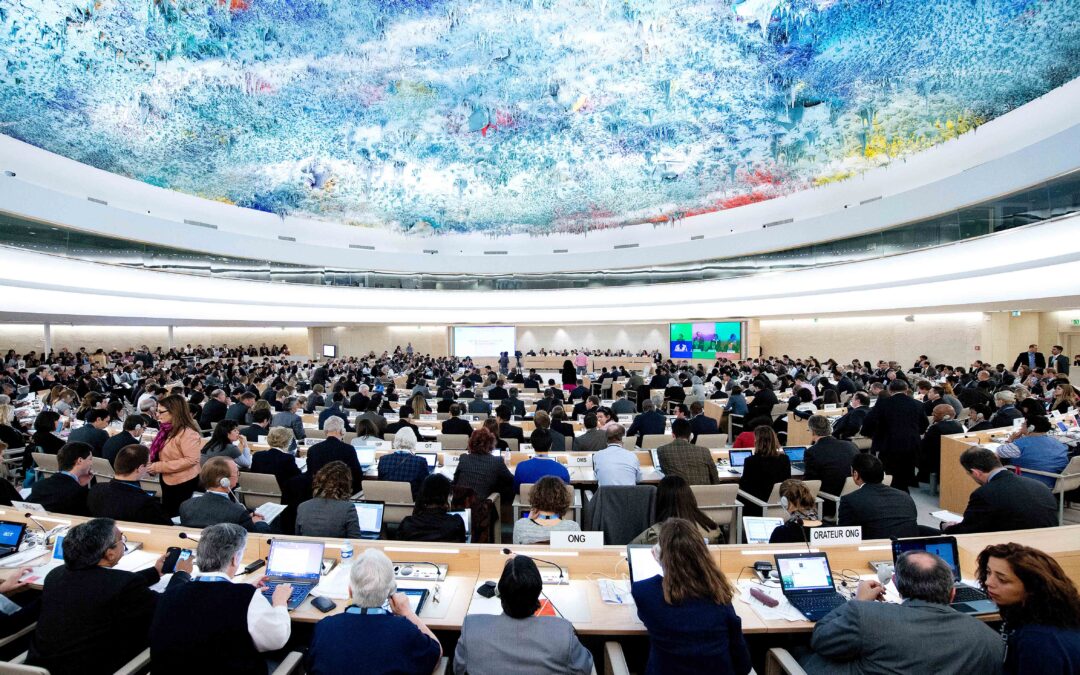
In a statement to the UN Human Rights Council today, the ICJ called for the appointment of a Special Rapporteur on the situation for human rights in Venezuela, given the ongoing human rights and rule of law crisis in the country.
The statement, which was delivered during a general debate on country situations of concern, read as follows:
“In Venezuela, extrajudicial and arbitrary executions, torture, arbitrary detention, prosecution of civilians by military tribunals, and persecution and attacks against opponents, dissidents and human rights defenders have become systematic and widespread practices.
Demonstrations and protests are violently suppressed by state security bodies and groups of armed civilians close to the government.
These gross human rights violations remain subject to impunity.
The possibility of exercising fundamental freedoms of expression and assembly, as well as political rights, is non-existent.
Following a series of decisions by the Supreme Court of Justice and the Government, the rule of law has ceased to exist, there is no separation of powers, the legislative branch has been stripped of its constitutional powers and the judiciary has become an instrument of the Executive Branch.
The National Constituent Assembly has usurped functions that do not belong to it, such as legislating and dismissing officials.
The International Commission of Jurists considers that, given the very serious human rights situation and the breakdown of the rule of law, it is imperative that the Human Rights Council appoint a Special Rapporteur on the situation of human rights in Venezuela.”
ICJ reports:
Venezuela: the Supreme Court of Justice has become an arm of an authoritarian executive
Venezuela: rule of law and impunity crisis deepens
Venezuela: dismissal of Attorney General a further blow to the rule of law and accountability
Venezuela: Human rights and Rule of Law in deep crisis
Strengthening the Rule of Law in Venezuela
Sep 18, 2017 | Events
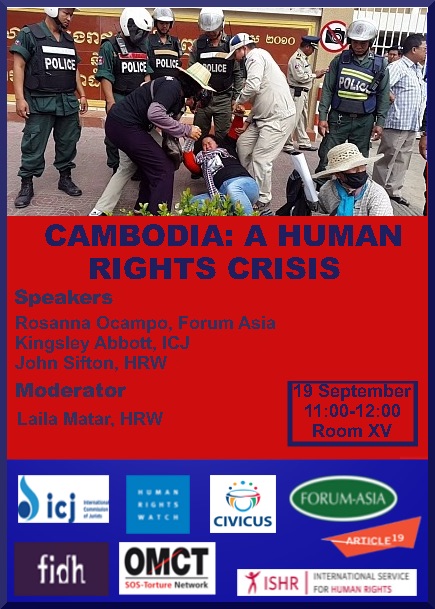
On 19 September, the ICJ and other leading international NGOs are convening a panel to discuss the crisis for human rights and rule of law in Cambodia, at a side event to the UN Human Rights Council session taking place in Geneva.
The side event comes as States consider a new draft resolution on Cambodia for adoption by the Human Rights Council. Before the session, the ICJ joined other organizations in calling for strengthening of the resolution and its measures for monitoring, reporting on and discussing the situation for human rights in the country.
Moderator:
- Laila Matar, Senior UN Advocate, Human Rights Watch
Speakers:
- Rosanna Ocampo, Forum Asia
- Kingsley Abbott, International Commission of Jurists
- John Sifton, Human Rights Watch
The event takes place Tuesday, 19 September 2017, 11:00 – 12:00, in the Palais des Nations, Room XV.
ICJ is organizing the event together with Human Rights Watch, Forum-Asia, Civicus, Article 19, FIDH, OMCT, and ISHR.
For more information, contact un(a)icj.org