Dec 8, 2020 | Editorial, Noticias
Una opinión editorial de Carolina Villadiego Burbano, Asesora Legal para America Latina de la CIJ, y Carlos Lusverti, Consultor de la CIJ.
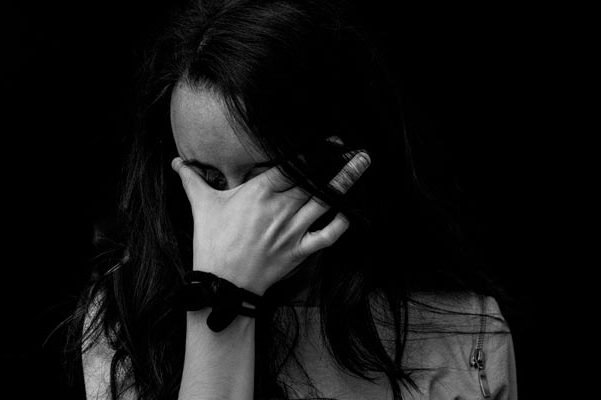
Los derechos humanos de las mujeres se han visto severamente afectados durante la pandemia de COVID-19 alrededor del mundo y Venezuela no es una excepción a esta tendencia. En medio de la crisis de derechos humanos generalizada que el país atraviesa desde 2014, y que ha tenido un impacto desproporcionado en mujeres y niñas, la COVID-19 y las medidas extraordinarias adoptadas por el gobierno para atender la pandemia han agravado la situación de derechos humanos de las mujeres.
En octubre de 2020, esta situación fue reconocida por el Consejo de Derechos Humanos de las Naciones Unidas.
Teniendo en cuenta lo anterior, en este texto analizamos las afectaciones al derecho a la salud y al derecho a una vida libre de violencia que enfrentan las mujeres en Venezuela durante la pandemia, con el objetivo de presentar algunas recomendaciones.
La salud de las mujeres está en riesgo
De acuerdo con la Comisión Económica para America Latina (CEPAL), las mujeres en Latinoamérica están significativamente afectadas durante la pandemia, y en el sistema de salud “representan el 72,8% del total de personas ocupadas en ese sector en la región.”
En Venezuela, el sistema de salud ya se encontraba en estado crítico antes que la pandemia envolviera al país, y la COVID-19 ha agravado la situación.
Durante varios años, distintas instituciones y organizaciones han descrito el terrible estado del sistema de salud en el país, y desde que estalló la pandemia, la Comisión Interamericana de Derechos Humanos (CIDH) y Human Rights Watch han mencionado la necesidad de proteger el derecho a la salud de las personas en Venezuela; la Alta Comisionada de las Naciones Unidas para los Derechos Humanos ha dado declaraciones similares.
Durante la pandemia, los limitados servicios de salud fueron direccionados principalmente a atender la COVID-19.
Esto tuvo como resultado una disminución del acceso a los servicios de salud no relacionados con COVID-19, incluidos aquellos necesarios para la atención en salud sexual y reproductiva y para mujeres gestantes.
Así, un grupo de 91 organizaciones de la sociedad civil y varias personas expresaron su preocupación por casos de mujeres embarazadas con sospechas de COVID-19 a quienes se les habría negado la atención oportuna, así como la suspensión de servicios pre y post natales en los centros de salud materna.
Este grupo destacó la necesidad de que las autoridades garanticen los derechos de las mujeres y niñas, incluyendo la atención en salud sexual y reproductiva.
Además, en cantidades alarmantes, las mujeres son responsables principales del cuidado de personas dependientes o que necesitan cuidado en el hogar, lo que las ha expuesto a riesgos adicionales durante la pandemia.
La Asociación Venezolana de Educación Sexual Alternativa (AVESA), una ONG local, ha documentado cómo las medidas de encierro y cuarentena han incrementado las tareas domésticas y han profundizado los problemas económicos que las mujeres ya estaban experimentando antes de la pandemia.
Las autoridades venezolanas deben actuar de manera más efectiva para proteger los derechos de las mujeres durante la pandemia de conformidad con sus obligaciones legales derivadas del derecho internacional de los derechos humanos.
En efecto, Venezuela es parte de varios tratados de derechos humanos que prevén estas obligaciones, incluyendo la Convención Interamericana para Prevenir, Sancionar y Erradicar la Violencia contra la Mujer (“Convención de Belém do Pará”) y la Convención de la ONU sobre la Eliminación de todas las Formas de discriminación contra la mujer (“CEDAW” por sus siglas en inglés).
El Comité de la CEDAW ha declarado que los Estados deben “[a]bordar el impacto desproporcionado de la pandemia en la salud de la mujer”; “[g]arantizar los servicios de salud sexual y reproductiva en tanto servicios esenciales”; “[p]roteger a las mujeres y niñas de la violencia de género”; y “[f]ortalecer la respuesta institucional, la difusión de información y la recopilación de datos”, entre otras recomendaciones.
Adicionalmente, las autoridades venezolanas deben adoptar políticas para la prevención y tratamiento de la COVID-19 con perspectiva de género, considerando un enfoque interseccional y los diferentes contextos en los que las mujeres pueden vivir en Venezuela, incluyendo la situación de pobreza.
Además, las autoridades deben asegurar la asignación adecuada de recursos al sistema de salud, garantizar el derecho a la salud del personal de la salud, y brindar servicios de salud sexual y reproductiva para todas las mujeres.
El hogar es un lugar inseguro para las mujeres
En 2019, organizaciones de la sociedad civil venezolana reportaron que en el 58.6% de los casos de violencia contra las mujeres, los perpetradores fueron sus parejas. Adicionalmente, en un 7,7% de los casos, los ataques fueron perpetrados por exparejas. De acuerdo con el monitoreo de medios que realiza COTEJO, durante ese año, 107 mujeres fueron víctimas de feminicidios.
El representante en Venezuela del Fondo de Población de las Naciones Unidas (UNFPA) dijo que, durante el primer semestre de 2020, ocurrieron más feminicidios que muertes por COVID-19. Por su parte, el Ministerio Público reportó el ingreso de 185 causas del delito de feminicidio durante 2020.
De otro lado, desde el inicio de la pandemia y hasta comienzos de octubre, la mayoría de juzgados y tribunales estuvieron cerrados, por lo cual, las mujeres han enfrentado mayores obstáculos para acceder a la justicia durante la pandemia.
Además, la Oficina de la ACNUDH dijo en julio que ha observado “una falta de diligencia debida en los procesos de investigación relativos a casos de violencia de género” en Venezuela.
Asimismo, según informó el Centro de Justicia y Paz (CEPAZ), una ONG local, existen varios obstáculos para el acceso a la justicia de las mujeres, incluida la evasión de las responsabilidades policiales cuando las mujeres acuden a presentar denuncias o la falta de respuestas rápidas por parte las fiscalías que dan lugar a que las víctimas tengan que pedir información de manera reiterada.
Por este motivo, las autoridades venezolanas deben abordar la violencia de género de conformidad con sus obligaciones legales derivadas del derecho internacional, incluyendo aquellas contenidas en la Convención Interamericana de Belem Do Pará que enfatiza que el Estado debe “actuar con la debida diligencia para prevenir, investigar y sancionar la violencia contra la mujer” (artículo 7b).
Asimismo, las autoridades venezolanas deben garantizar que el sistema de justicia brinde servicios a las mujeres víctimas de violencia de género, e incluir la adopción de protocolos específicos para la investigación efectiva y la protección de las víctimas.
Las autoridades deben cumplir la reciente sentencia de la Corte Interamericana de Derechos Humanos (caso Lopez Soto de 2018), y deben implementar programas de capacitación permanentes y obligatorios para los servidores públicos que laboran en el sistema judicial y en el sistema de salud, y que intervienen en los casos de mujeres víctimas de cualquier tipo de violencia.
Finalmente, las autoridades venezolanas deben permitir la acción legítima de las organizaciones humanitarias, quienes pueden brindar ayuda humanitaria con perspectiva de género durante la pandemia.
Dec 8, 2020
An opinion editorial by Carolina Villadiego Burbano, ICJ Latin America Legal and Policy Adviser, and Carlos Lusverti, ICJ consultant.
Around the world, women’s human rights have been severely and adversely affected during the COVID-19 pandemic, and Venezuela is no exception to this trend.
The more general ongoing human rights crisis that Venezuela has faced since 2014, which has had a disproportionate impact on women and girls, and the COVID-19 pandemic and the sometimes ill-conceived government measures to tackle the pandemic have combined to aggravate the situation of women’s human rights.
This was recently well expressed in a 2020 October Resolution on Venezuela by the UN Human Rights Council. It is against this backdrop that we discuss the health risks and the gender-based violence that women are facing during the pandemic in Venezuela with the aim to provide some recommendation for authorities.
Health risks for women
According to the Economic Commission for Latin America and the Caribbean (ECLAC), women in Latin America are “particularly affected by the pressure on health systems because they account for 72.8% of people employed in the sector in the region”.
The Venezuelan healthcare system was in a critical state before the COVID-19 pandemic engulfed the country, and the pandemic has aggravated the situation. For many years, several institutions and organizations have been expressing about the dire state of the health system in the country.
Since the pandemic struck, the Inter-American Commission of Human Rights (IACHR) and Human Rights Watch have called on the need to protect Venezuelans’ rights to health; the OHCHR has provided similar statements.
During the pandemic, the already limited health services have been primarily focused on responding to COVID-19. This has resulted in a diminished access to non-COVID-19 related health services, including those needed for sexual and reproductive care and for pregnant women.
A group of 91 Civil society organizations and additional individuals have expressed concerns about cases of pregnant women suspected of COVID-19 who have been denied timely care and the suspension of pre and postnatal care services in maternal health centers.
They stressed the need for the authorities to act to guarantee women’s rights, including access to sexual and reproductive care for women and girls.
Also, women in disproportionate numbers are responsible for dependents or people in need of care within their homes, and this has exposed them to additional risks during the pandemic.
The Asociación Venezolana de Educación Sexual Alternativa (AVESA), a local NGO, documented how the lockdown/quarantine measures increased home care tasks and deepened the economic problems women were already experiencing.
It is clear the Venezuelan authorities must act more effectively to protect women’s rights during the pandemic in line with their legal obligations under international human rights law.
Venezuela is party to several human rights treaties that provide for this legal obligation, including the Inter-American Convention for the Prevention, Punishment and Eradication of Violence against Women (“Convention of Belém do Pará”) and the UN Convention on the Elimination of all Forms of Discrimination against Women (“CEDAW”).
The CEDAW Committee has stated that States should “address the disproportionate impact of the pandemic on women’s health”; “provide sexual and reproductive health as essential services”; “protect women and girls from gender-based violence”; and “strengthen institutional response, dissemination of information and data collection”, among other recommendations.
Additionally, Venezuelan authorities should adopt policies related to the prevention and treatment of COVID-19 with gender perspective, considering the intersectional approach and the different contexts in which may women live in Venezuela, including situations of poverty.
Also, authorities should ensure proper resource allocation to the health system, guarantee the health right of the health workers, and provide sexual and reproductive health services for all women.
Home is an unsafe place for women
In 2019, Venezuelan civil society organizations reported that in 58.6% of the cases of violence against women, the perpetrators were their current partners; and in an additional 7.7% of the cases, the attacks were perpetrated by former partners.
According to the media monitoring done by COTEJO, during that year around 107 women were victims of femicides.
The United Nations Population Fund (UNFP) representative in Venezuela said that during the first semester of 2020 there were more femicides than people dying from COVID-19. Also, the Attorney General’s office reported on 185 cases during 2020.
From the start of the pandemic and until early October, most courts and tribunals were closed. As a result, women faced even greater obstacles in securing access to justice.
The OHCHR has reported that it observed “a lack of due diligence in investigative proceedings related to cases of gender-based violence” in Venezuela.
In addition, as reported by the Centro de Justicia y Paz (CEPAZ), a local NGO, there are several obstacles for access to justice for women, including the dereliction of police responsibilities when women go to file complaints or the lack of rapid answers from prosecutors that result in victims needing to repeatedly to ask them for information.
The Venezuelan authorities must better tackle gender-based violence according with their legal obligations under international law, including the Inter-American Convention of Belem Do-Pará that stresses that the state must “apply due diligence to prevent, investigate and impose penalties for violence against women” (Article 7b).
Also, authorities should do better to ensure that the justice system provide services for women victims of gender-based violence, including the adoption of specific protocols for the effective investigation and the protection of victims.
Venezuelan authorities should comply with the recent ruling of the Inter-American Court of Human Rights (Lopez Soto case of 2018), and must implement compulsory permanent training programs for public servants that work in the justice and the health care systems, who intervene in cases of women victims of any type of violence.
Finally, Venezuelan authorities must allow the legitimate action of the humanitarian organizations, who can provide humanitarian aid with gender perspective during the COVID-19 pandemic.
Venezuela-Women at Risk-News-op-eds-2020-ENG (full op-ed in PDF)
Nov 23, 2020 | Agendas, Events, News
The International Commission of Jurists and the Human Rights Joint Platform (IHOP) invite you to a Zoom workshop where Turkish and international experts will discuss the plight of violence against women in Turkey in light of the Council of Europe’s Istanbul Convention.
To participate, please register by writing an email to ihop@ihop.org.tr (the Human Rights Joint Platform).
Join our great panel of speakers:
– Dame Silvia Cartwright, ICJ Commissioner, former Governor-General and High Court judge of New Zealand, former CEDAW member
– Prof. Dr. Feride Acar, former Member of CEDAW, former Chair of GREVIO
– Zuzanna Warso, Lawyer, Helsinki Foundation for Human Rights of Poland
– Hülya Gülbahar, Women rights activist, Lawyer
– Nebahat Akkoç, Chair of KAMER Foundation
– Yasemin ÖZ, Lawyer, Kaos GL
– Feray Salman, General Coordinator of the Human Rights Joint Platform (IHOP)
– Massimo Frigo, ICJ Senior Legal Adviser
IHOPICJ-ZoomConference-WomenAccess2Justice-Agenda-2020-ENG (download the agenda in English)
IHOPICJ-ZoomConference-WomenAccess2Justice-Agenda-2020-TUR (download the agenda in Turkish)
The event is part of the REACT project: implemented jointly by ICJ and IHOP, this project seeks to support the role of civil society actors in turkey in ensuring effective access to justice for the protection of human rights. This project is funded by the European Union. The views expressed in the event do not necessarily reflect the opinion of the EU.
Nov 16, 2020
Today, the ICJ published The case for reform: Criminal Law and Sexual Violence in Zimbabwe, a legal brief which examines sexual crimes in the Zimbabwean Criminal Code in light of the country’s obligations under international human rights law and standards.
The brief’s analysis is informed by provisions of the Constitution of Zimbabwe as well as regionally and internationally recommended practices.
It highlights a number of concerns with respect to sections 65 – 72 of the Criminal Law (Codification and Reform) Act [Chapter 9:23] (Criminal Code) and makes specific recommendations for reform.
In particular, the brief highlights the following concerns:
- the limited scope of the crime of rape;
- the problematic characterization of certain acts of a sexual nature as ‘indecent’ when, instead, they should be properly proscribed as violations of sexual autonomy;
- the lack of adequate protection of children against sexual exploitation; and
- the concurrent failure to recognize the sexual autonomy of adolescents engaged in non-exploitative, consensual sexual activity with a peer.
Speaking on the value of this brief, ICJ Senior Legal Adviser Blessing Gorejena noted that: “Sexual offences in Zimbabwe, particularly rape continue to be viewed to a larger extent as a private matter for which silence is a requirement, to the detriment of the victim and society at large. As a result, there is an urgent need to reform sexual offence legislation, including the Criminal Code in Zimbabwe. This brief offers clear and concise recommendations on how this can be done. It is an invaluable tool for legislative reform.”
Background
Zimbabwe has seen an increase in the incidence of rape over the last five years according to 2019 statistics by Zimbabwe National Statistics Agency (Zimstats). The Zimbabwe Gender Commission reports that 22 women are raped daily, with one woman raped every 75 minutes. On average, 646 women are sexually abused monthly, with one in three girls raped or sexually assaulted before they reach the age of 18. The vast majority of sexual offences are committed by men against women, children and other men.
The legal brief published by the ICJ follows on from a November 2015 ICJ reflection paper titled: “Sexual and Gender Based Violence, Fair Trial Rights and the Rights of Victims – Challenges in Using Law and Justice Systems Faced by Women Human Rights Defenders”. This publication compiled information gathered from a regional colloquium held by the ICJ in Swaziland in July 2015.
The 2015 publication highlighted a gap in the protection guaranteed to victims of sexual offences by the criminal law in Zimbabwe. Authors noted that certain provisions relating to sexual crimes in the Criminal Code offered limited protection to victims/survivors of such offences.
Contact
Blessing Gorejena, Senior Legal Adviser and Team Leader of ICJ Zimbabwe Project, t: +263 77 215 1989, e: blessing.gorejena(a)icj.org
Elizabeth Mangenje, Legal Adviser, t: +263 77 474 2420, e: elizabeth.mangenje(a)icj.org
Zimbabwe-Sexual violence-Advocacy-Analysis brief-2020-ENG (full paper, in PDF)
Oct 30, 2020 | Agendas, Events, News
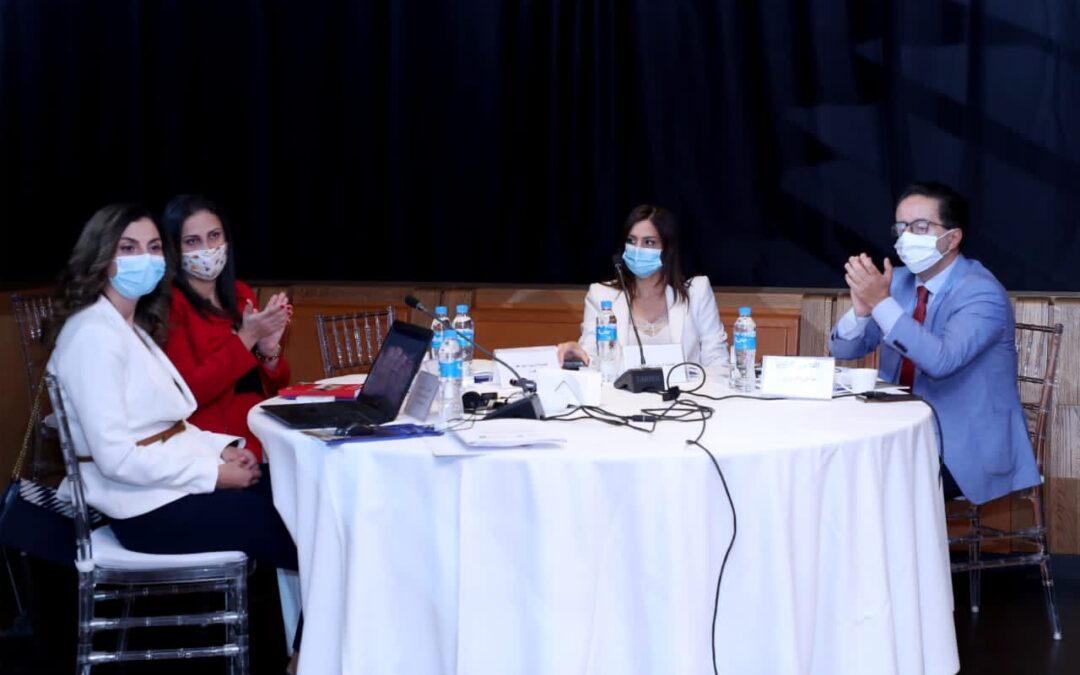
From 27 to 28 October 2020, the ICJ, in collaboration with the National Commission for Lebanese Women (NCLW), held a seminar on recommended practice with respect to evidentiary standards in the investigation, prosecution and adjudication of sexual and gender-based violence offences in Lebanon.
Consultations held by the ICJ with the Lebanese authorities and with practitioners in July 2019 revealed the need to support and bolster the capacity of criminal justice system actors to effectively investigate, prosecute, adjudicate and sanction SGBV, prompting the ICJ, together with NCLW, to organize the seminar.
The seminar accordingly aimed to address the significant gaps in law and procedure and practical obstacles to ensuring key evidence be identified, collected and assessed in a manner consistent with international standards, including Lebanon’s obligations under international human rights law. It also aimed to provide a platform to connect Lebanese judges, prosecutors, police officers, lawyers, forensic practitioners and international experts, with a view to identifying solutions that will ensure women and girls’ effective access to justice for SGBV in Lebanon, in addition to accountability for, and protection from, SGBV.
The discussions predominantly focused on the international law and standards that apply to the identification, gathering, storing, admissibility, exclusion and evaluation of evidence in SGBV cases and how such standards may be used to fill gaps and strengthen domestic law and practice. Participants also discussed the adverse impact patriarchal and other harmful stereotypes have on investigation, prosecution and adjudication processes.
The seminar commenced with opening remarks from NCLW’s President and the International Commission of Jurists’ Middle East and North Africa Programme Director. Speakers included practitioners from international and domestic courts and tribunals, as well as ICJ staff.
The seminar followed the publication of ICJ guidance and recommendations to criminal justice actors in its report Accountability for Sexual and Gender-Based Violence in Lebanon, published on 22 October 2020.
Informed by international law and standards, the ICJ will now formulate recommendations based on the identification by the seminar’s participants of the reforms needed with respect to the Lebanese framework and practice. These recommendations will be included in the ICJ’s forthcoming publication on evidentiary rules and recommended practices in cases of SGBV in Lebanon, which will be published and disseminated among practitioners in Lebanon.