Sep 13, 2013 | News
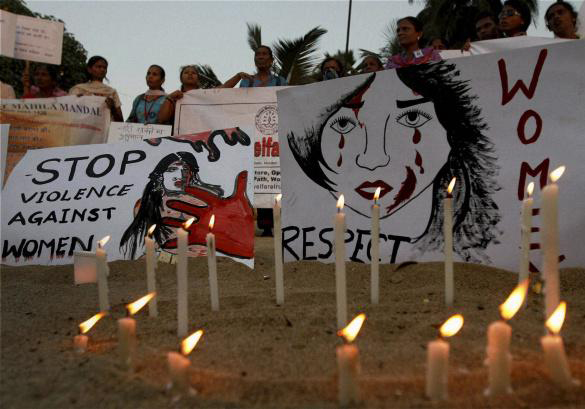
The ICJ denounced the death sentences handed down in the Delhi gang rape and murder case and urged the Indian Government to take steps to abolish the death penalty in law and practice.
A special fast-track court today sentenced to death four men convicted for the gang rape and murder of a 23-year-old student on 16 December 2012.
The fifth accused, who was a minor at the time he committed the crime, was convicted and sentenced to three years in a reform home by a juvenile court on 31 August 2013.
“Women’s rights groups in India have taken a firm stance against the death penalty and strongly believe that the death penalty is counterproductive in every way to preventing and curtailing sexual violence against women,” said Vrinda Grover, leading human rights lawyer and ICJ’s South Asia advocate.
The ICJ considers the death penalty to constitute a violation of the right to life and the right not to be subjected to cruel, inhuman or degrading punishment.
“Those who commit acts of violence against women must be prosecuted and brought to justice,” said Sheila Varadan, ICJ’s South Asia Legal Advisor. “But the sentence and the administration of the death penalty constitutes a perversion of justice.”
“Instead of giving in to the vengeful demand for killing the perpetrators of this horrific crime, the Indian Government must take concrete steps to prevent, investigate and punish acts of violence against women,” Varadan added.
A high level commission constituted to reform Indian law on violence against women, led by the late Chief Justice of the Indian Supreme Court Justice J.S. Verma, recommended that the death penalty should not be used in rape cases.
“In demanding and securing the death penalty, Indian authorities have created a spectacle that distracts from their responsibility for systemic change in the legal system which alone will create deterrence in law,” said Vrinda Grover.
The ICJ calls on India to join the great majority of States around the world in rejecting the use of the death penalty.
To that end, India should impose a moratorium on the practice and take steps towards its abolition, as prescribed by repeated United Nations General Assembly Resolutions, the ICJ says.
Contacts:
Sheila Varadan (Bangkok), ICJ South Asia Legal Advisor, t: +66 857 200 723 (mobile); email: sheila.varadan(a)icj.org
Ben Schonveld (Kathmandu), ICJ South Asia Director, t: +977 980 459 6661 (mobile); email: ben.schonveld(a)icj.org
Additional Information
The United Nations has adopted various instruments in support of the call for the worldwide abolition of the death penalty. In 2007, the UN General Assembly adopted a resolution emphasizing that ‘that the use of the death penalty undermines human dignity’ and calling for the establishment of a moratorium on the use of the death penalty ‘with a view to abolishing the death penalty.’ The resolution was reaffirmed in 2008, 2010, and most recently in December 2012, when a large majority of UN Member States voted in favor of a worldwide moratorium on executions as a step towards the death penalty’s abolition.
Currently, 150 countries worldwide, including 30 states in Asia and the Pacific region, have abolished the death penalty in law or in practice.
Rape and other forms of sexual violence against women are pervasive in India. According to the National Crime Records Bureau, 24,923 rape cases were registered in India in 2012. Experts believe that the actual number is much higher, as rape is vastly under-reported. In most cases, however, victims and survivors get no justice from a criminal justice system that has been widely characterized as gender-insensitive, under-resourced and corrupt.
Photo: PTI
Sep 5, 2013 | News
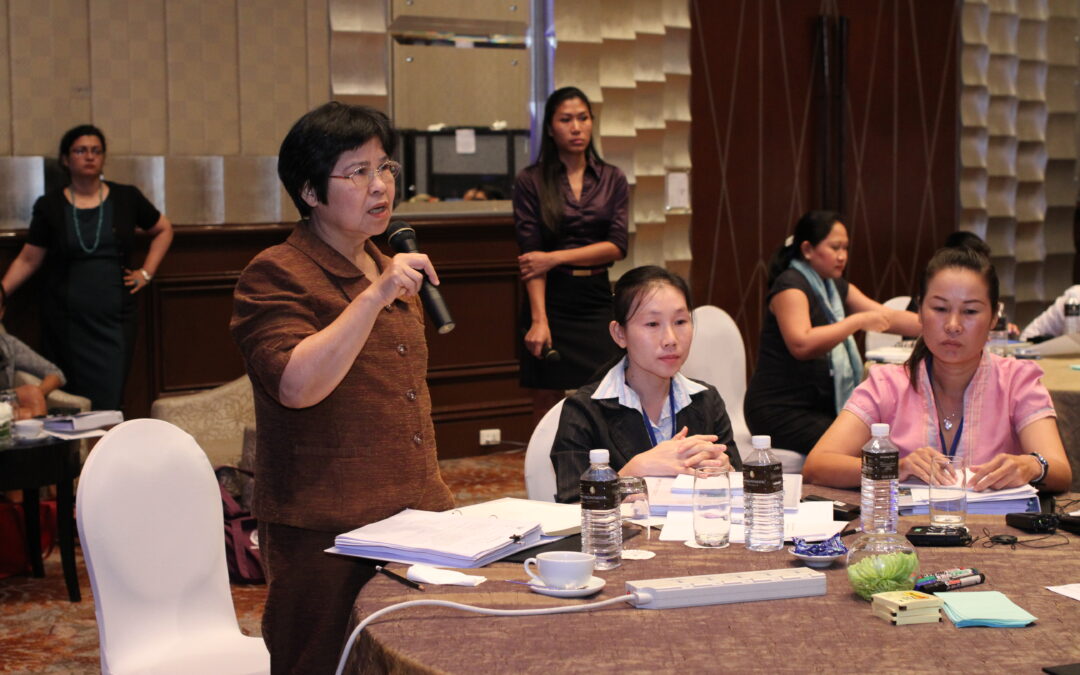
The ICJ collaborated on this judicial colloquium with the UN Entity for Gender Equality and Empowerment of Women and the Thailand Office of the Judiciary.
The Judicial Colloquium on Gender Equality Jurisprudence and the Role of the Judiciary in Promoting Women’s Access to Justice was held from 4 to 5 September 2013 in Bangkok, Thailand.
Judges from eight Southeast Asian countries (Cambodia, Indonesia, Lao PDR, Myanmar, the Philippines, Thailand, Timor Leste, and Thailand) came to the colloquium to discuss the role of judges in the implementation of the Convention on the Elimination of All Forms of Discrimination against Women (CEDAW).
Representatives from the eight countries’ judicial training institutions and civil society organizations joined them in this colloquium. All eight participating countries are parties to the CEDAW.
The judicial colloquium is part of the work of the ICJ in engaging various actors, including judges, lawyers, and human rights defenders, to explore ways to address the range of obstacles that persistently reduce women’s access to justice and legal protection.
Sam Zarifi, ICJ’s Regional Director for Asia and the Pacific, also noted the importance of this colloquium in the context of the development of a regional human rights mechanism in the ASEAN. He observed during his opening speech that the ASEAN is in the midst of setting standards and emphasized “it is important for judges to be aware of international standards of this issue so that they can substantially contribute to the discourse in setting up a regional mechanism.”
At the end of the colloquium, the participating judges, representatives from judicial training institutes and civil society organizations adopted a statement which noted, among other things, the uneven progress in the implementation of CEDAW in domestic laws and that judges should strive to interpret domestic law in consonance with the CEDAW.
They also agreed on recommendations, one of which is to encourage the formation of a regional network of judges to promote continuing dialogue, knowledge and information sharing regarding the application of CEDAW and other international human rights treaties in judicial systems.
Contact:
Emerlynne Gil, International Legal Advisor, tel. no. +66 6198477 ext. 206 or emerlynne.gil(a)icj.org

Mar 6, 2013
El Centro de Derechos Reproductivos y la CIJ desean proveer información complementaria al Comité de Derechos Humanos (CDH) en su revisión del quinto informe periódico de Perú durante el 107 periodo de sesiones que tendrá lugar entre el 11 y 28 de marzo de 2013.
Peru-HRCttee107-JointAR-CRR-ICJ-LegalSubmission-2013 (texto completo en español, PDF)

Dec 22, 2012
 In this case the applicants alleged that Costa Rica’s complete prohibition on in vitro fertilization (IVF) contravened the American Convention on Human Rights giving rise to violations of their rights to privacy and family life.
On 21 December 2012, the Inter-American Court upheld the applicants claim and requested Costa Rica to take measures to address the situation including overturning the prohibition within a six month period.
In its important decision the Court held that the prohibition contravened the applicants’ rights to privacy, liberty, personal integrity, and to form a family as protected by the American Convention on Human Rights.
The court also considered the prohibition undermined enjoyment of the right to be free from discrimination.
The ICJ filed an Amicus brief in the case in September 2012.
In its brief the ICJ focused on the legal principles and doctrine that should be applied by the Court when considering the case.
Specifically the ICJ addressed the criteria that should be taken into account by the Court when considering whether Costa Rica’s complete ban on IVF amounted to a permissible limitation on the applicant’s human rights.
Costa Rica-ICJ Amicus Fertilization in vitro-legal submission-2012 (full text in PDF)
Costa Rica-Amicus ICJ-fecundacion in vitro-legal submission-2012-spa (full text in PDF)
Aug 22, 2012
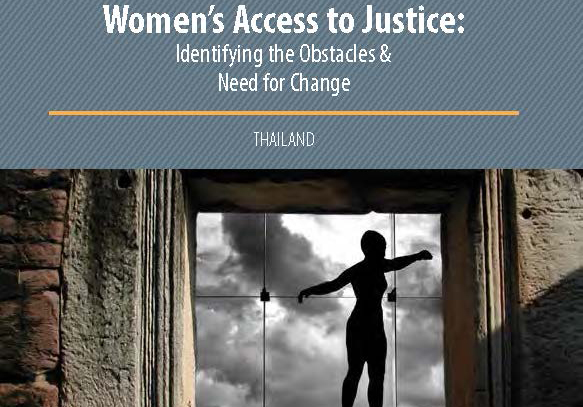 In this new report, the ICJ and and Justice for Peace Foundation (JPF) call for a series of changes in law, practice, approach and behaviour to address the justice needs of women across Thailand.
Thailand Women’s Access to Justice Report 2012 (download in English)
Thailand Women’s Access to Justice Report 2012 (download in Thai)