Sep 14, 2018 | News
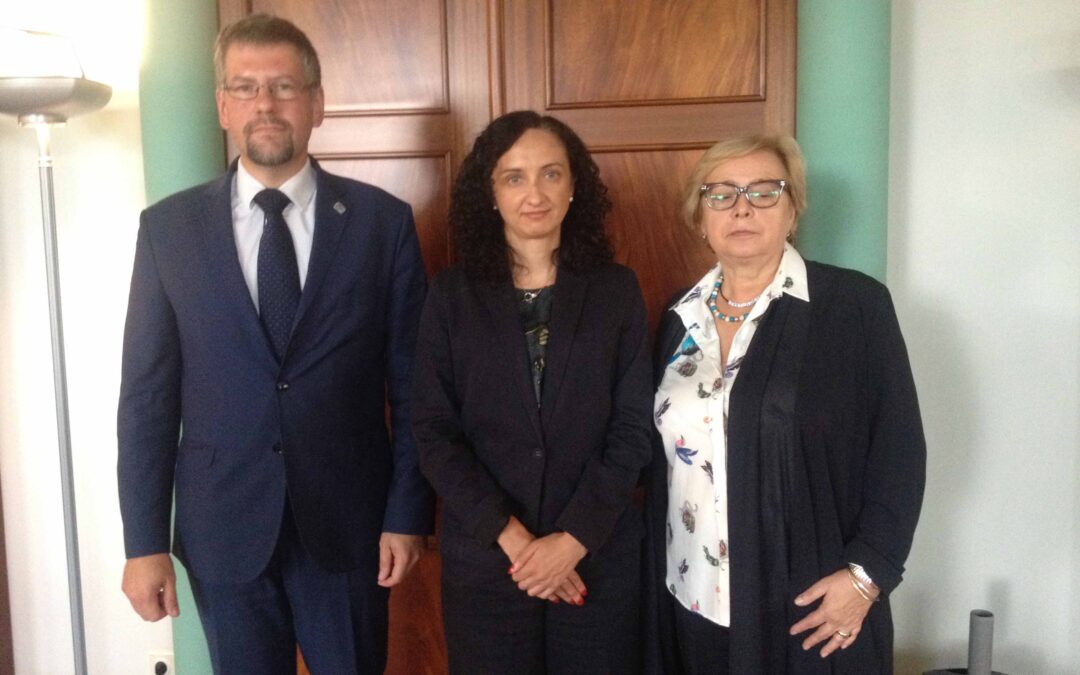
The ICJ met this week in Warsaw with the First President of the Polish Supreme Court, Małgorzata Gersdorf.
Róisín Pillay, Director of the ICJ Europe and Central Asia Programme, met with President Gersdorf to convey the support of the ICJ for the Court’s defence of the rule of law and the independence of the judiciary in Poland, in the face of government attacks.
The ICJ emphasized that a new law on the Supreme Court that attempts to force the “retirement” of 27 of the 72 Supreme Court judges, including the First President, by lowering the mandatory retirement age for its judges from 70 to 65 years, contravenes international human rights law and standards, including the right to a fair hearing.
The measure is contrary to the principle of the security of tenure of judges and therefore to the independence of the judiciary, as expressed in the UN Basic Principles on the Independence of the Judiciary.
In August, the Supreme Court submitted a preliminary ruling request to the Court of Justice of the EU (CJEU) seeking its interpretation on the compliance of the measure with EU law. The Supreme Court has suspended implementation of the law pending the proceedings before the CJEU.
The European Commission has recognized the current situation as undermining “the principle of judicial independence, including the irremovability of judges” and has triggered a procedure under Article 7 of the Treaty of the European Union that could ultimately lead to suspension of Poland’s EU voting rights.
The Commission has also launched infringement proceedings against Poland in respect of the law on the Supreme Court.
An ICJ letter of 11 July 2018, signed by 22 senior judges from all regions of the world, urged the Polish government to act immediately to reinstate the forcibly retired judges in office.
Sep 14, 2018 | Noticias
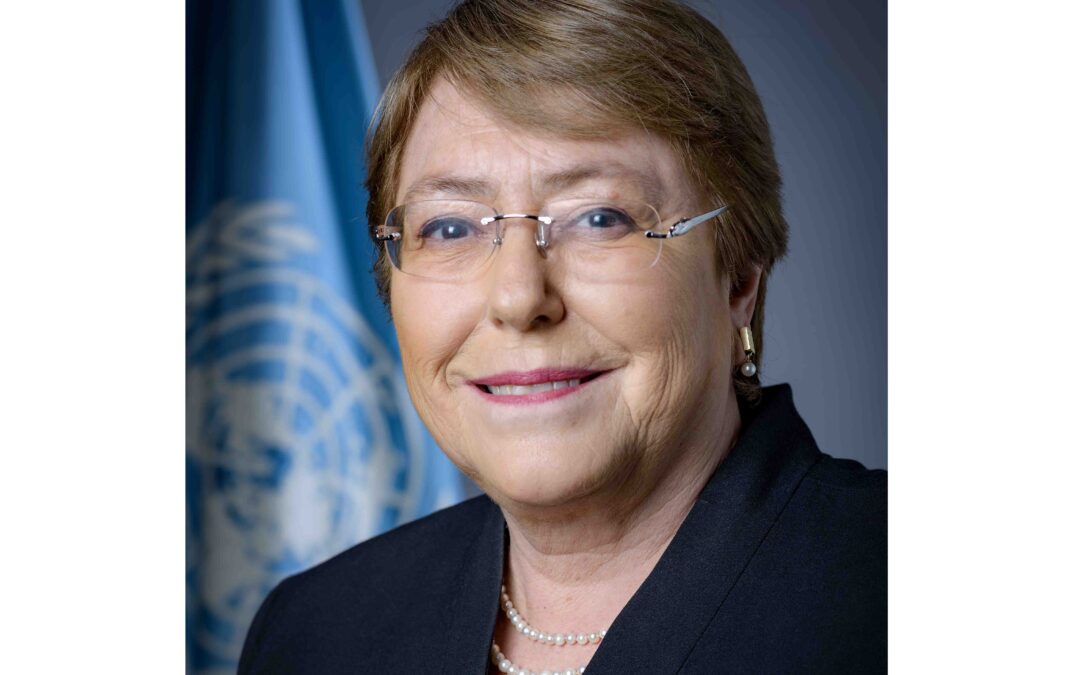
El 14 de septiembre 2018, la CIJ junto a 67 otras organizaciones internacionales y guatemaltecas de la sociedad civil enviaron una carta a la Alta Comisionada de las Naciones Unidas para los Derechos Humanos, Michelle Bachelet, para expresar sus graves preocupaciones en relación a los acontecimientos recientes restringiendo los esfuerzos para combatir la impunidad en el país.
Estos incluyen la decisión del Presidente Jimmy Morales el 31 agosto de 2018 de no renovar el mandato de la Comisión Internacional contra la Impunidad en Guatemala (CICIG); y la decisión subsecuente de parte de las autoridades guatemaltecas el 4 septiembre de 2018 de prohibir el regreso al país del comisionado de la CICIG Iván Velásquez; y las reformas judiciales aprobadas por el Congreso el 6 septiembre de 2018 que amenazan a socavar la independencia judicial y la función de los y las jueces de la Corte de Constitucionalidad y la oficina del Procurador de los Derechos Humanos.
Los signatarios expresaron su beneplácito por la referencia crítica sobre estos acontecimientos de parte de la Alta Comisionada en sus observaciones en la apertura del 39º periodo de sesiones del Consejo de Derechos Humanos.
En su carta, las organizaciones pidieron a la Alta Comisionada de continuar apoyando la luche contra la corrupción y la impunidad en Guatemala y de seguir presionando a las autoridades guatemaltecas para que adopten las medidas necesarias para facilitar el cumplimiento del mandato de la CICIG según los términos del Acuerdo firmado entre Guatemala y las Naciones Unidas.
La carta en español está disponible aquí. Guatemala-Letter to Michelle Bachelet-News-2018-SPA
Sep 14, 2018 | News
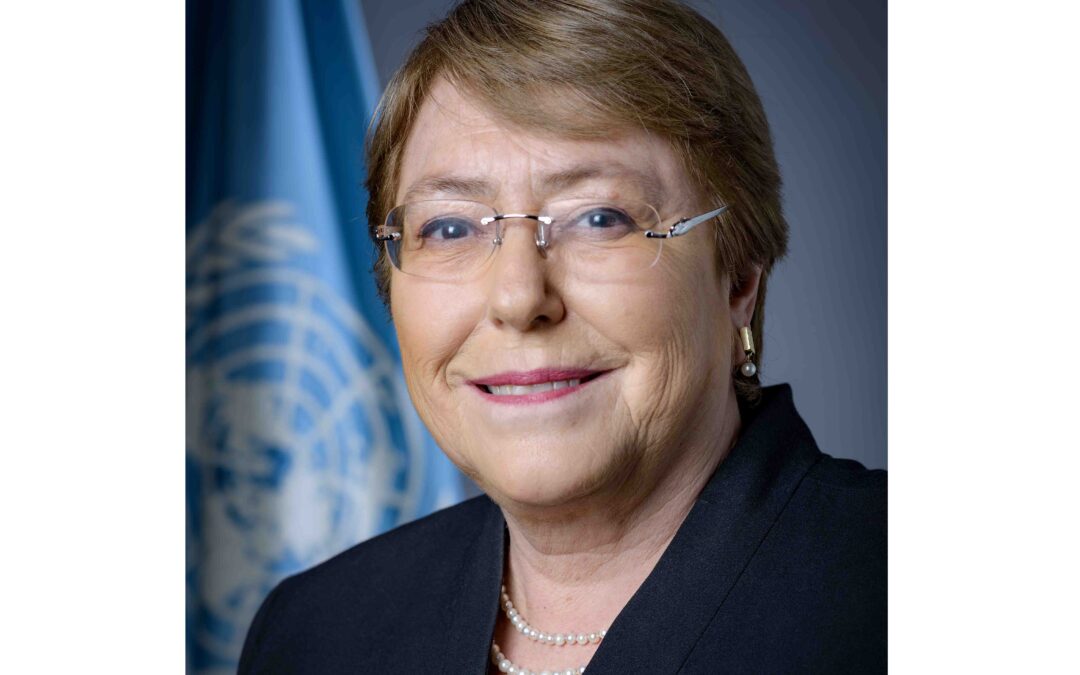
On 14 September 2018, the ICJ joined 67 other international and Guatemalan civil society organizations in a letter to the High Commissioner for Human Rights, Michelle Bachelet, to express grave concern about recent developments to curtail anti-impunity efforts in the country.
These include President Jimmy Morales’ decision on 31 August 2018 not to extend the mandate of the International Commission against Impunity in Guatemala (CICIG); the Guatemalan authorities’ subsequent decision on 4 September 2018 to prohibit the re-entry into the country of the CICIG’s Commissioner Iván Velásquez; and judicial reforms adopted by Congress on 6 September 2018 that threaten to undermine the independence of the judiciary and the function of the Constitutional Court judges and the office of the Human Rights Ombudsman.
The signatories welcomed the High Commissioner’s critical reference of these developments in her opening remarks to the 39th session of the Human Rights Council.
They asked that the High Commissioner give continued support in the fight against corruption and impunity in Guatemala and called on her to press the Guatemalan authorities to adopt necessary measures to facilitate compliance with the mandate of the CICIG under the terms of the Agreement signed between Guatemala and the United Nations.
The letter is available here (in Spanish): Guatemala-Letter to Michelle Bachelet-News-2018-SPA
Sep 13, 2018 | Advocacy, Non-legal submissions
The ICJ prepared an oral statement on procedural safeguards and civil society’s action to prevent arbitrary detention and enforced disappearance, for the interactive dialogue with the UN Working Groups on Arbitrary Detention and on Enforced and Involuntary Disappearances.
Although the statement could not ultimately be read out due to the limited time for civil society statements at the Human Rights Council, the text can found here:
“Mr President, Chairpersons of the Working Groups,
The International Commission of Jurists (ICJ) welcomes the focus of the report of the Working Group on Arbitrary Detention on “Linkages between arbitrary detention and instances of torture and ill- treatment”.
The ICJ shares the view of the Working Group that “safeguards … to prevent” torture and ill-treatment minimize and prevent “instances of arbitrary detention” (A/HRC/39/45, para. 59, and the view that “Judicial oversight of detention is a fundamental safeguard of personal liberty ” (A/HRC/39/45, para. 60).
The ICJ further welcomes the interim report of the Working Group on Enforced and Involuntary Disappearances on effective investigations (A/HRC/39/46), including the finding that “relatives of the disappeared have proven to be essential in the context of investigations and should have the right to know the truth … .” (para. 65)
The ICJ however stresses that these standards are not always upheld by States in their policies and actions.
For example, in Turkey, judicial review of detention is carried out by Judgeships of the Peace whose independence is highly questionable.
Finally, with regard to enforced disappearances, the ICJ is very concerned by the actions of Turkish authorities prohibiting the Saturday Mothers to hold their weekly protests in Galatasaray Square (Istanbul) in memory of their disappeared, in breach of their right to freedom of assembly.
Events of this kind seriously weaken the procedural safeguards and the action of civil society to protect and promote the prohibition of arbitrary detention and ensure accountability against enforced disappearances.
The ICJ urges the Council to address these worrying developments.
I thank you.”
HRC39-OralStatement-WGADWGEID-2018-draft-ENG (download the statement)
Sep 13, 2018
The ICJ today issued a briefing note following the Independent International Fact-Finding Mission on Myanmar and the ICC ruling relating to Bangladesh.
Fact-Finding Mission identifies crimes, calls for ICC referral and IIIM
On 27 August 2018, the Independent International Fact-Finding Mission on Myanmar (FFM) released a report finding that members of Myanmar’s military should be investigated and prosecuted for crimes against humanity and war crimes in Rakhine, Kachin and Shan States, and for genocide in the north of Rakhine State.
The FFM identified that many of the same kinds of crimes committed against the Rohingya in Rakhine State, were also being committed by the same or linked military authorities against other minorities in Kachin and Shan states.
While the FFM focused on the situations in Kachin, Rakhine and Shan States since 2011, it noted “serious allegations have also arisen in other contexts, meriting further investigation.”
The FFM concluded by recommending among other things that:
- the UN Security Council should refer the situation to the International Criminal Court (ICC) or create an ad hoc international criminal tribunal; an
- until the Security Council acts, the General Assembly or the Human Rights Council should create an independent evidence gathering mechanism, similar to the IIIM for Syria.
ICC ruling on jurisdiction re: Bangladesh
On 6 September 2018, an ICC Pre-Trial Chamber ruled that the Court could exercise jurisdiction over the alleged deportation (as a crime against humanity) of the Rohingyas from Myanmar into Bangladesh, since one element of the crime (crossing a border) took place in Bangladesh, which is a State party to the Rome Statute.
The Chamber noted that the same rationale could apply to other crimes within the jurisdiction of the Court “if it were established that at least an element of another crime … or part of such a crime is committed on the territory of a State Party,” citing persecution and other inhumane acts as possible examples in this case. The crime of genocide was not directly addressed.
The ruling did not address other crimes allegedly committed against the Rohingya, or crimes against other minorities elsewhere within Myanmar, including in Shan and Kachin States.
The proceeding is still at an early, pre-investigation, phase. If at the conclusion of a preliminary examination the Prosecutor assesses that there is a reasonable basis to proceed with an investigation, she must first seek authorization from the Pre-Trial Chamber.
The preliminary examination phase has been known to take from less than a week (Libya) to more than 14 years (Colombia).
Need for an IIIM or similar independent evidence gathering mechanism
An independent evidence gathering mechanism, with functions similar to those of the IIIM for Syria, should be created by the Human Rights Council as a matter of urgency.
- The passage of time increases the chances that critical evidence will deteriorate or be lost entirely, reducing the possibility of effective prosecution.
- An IIIM mechanism would ensure that evidence is collected, preserved and analyzed to a standard and methodology facilitating its use in national, regional or international courts.
- The delay and uncertainty associated with referring the question of creation of a mechanism to the General Assembly mean the Council should establish the mechanism at this session.
The ICC ruling relating to Bangladesh does not reduce the need for an IIIM:
- The limited scope of the ruling relating to Bangladesh creates a high risk that the existing ICC proceeding will not cover all crimes under international law against the Rohingya, or other crimes against other minorities elsewhere in Myanmar, including Kachin and Shan states.
- At best, the ICC will only be able to prosecute a fraction of the crimes identified by the FFM, and an even smaller fraction of the perpetrators, leaving an impunity gap. An IIIM will preserve evidence to enable that gap to be filled now, or later, by national courts or other tribunals.
- The work of an independent evidence gathering mechanism would be complementary to and cooperate with any ICC investigation and prosecution (or that of an ad hoc tribunal).
Referral of Myanmar to the ICC
States should continue to call for Security Council referral to the ICC despite the jurisdictional ruling relating to Bangladesh.
- With a Chapter VII referral, the ICC would assume jurisdiction over all crimes listed in the Rome Statute that may have been committed after the Rome Statute entered into force on 1 July 2002 either in the territory of Myanmar or elsewhere by a Myanmar national.
Contact:
Kingsley Abbott, Senior Legal Adviser (Global Accountability), kingsley.abbott(a)icj.org