Aug 30, 2018 | News
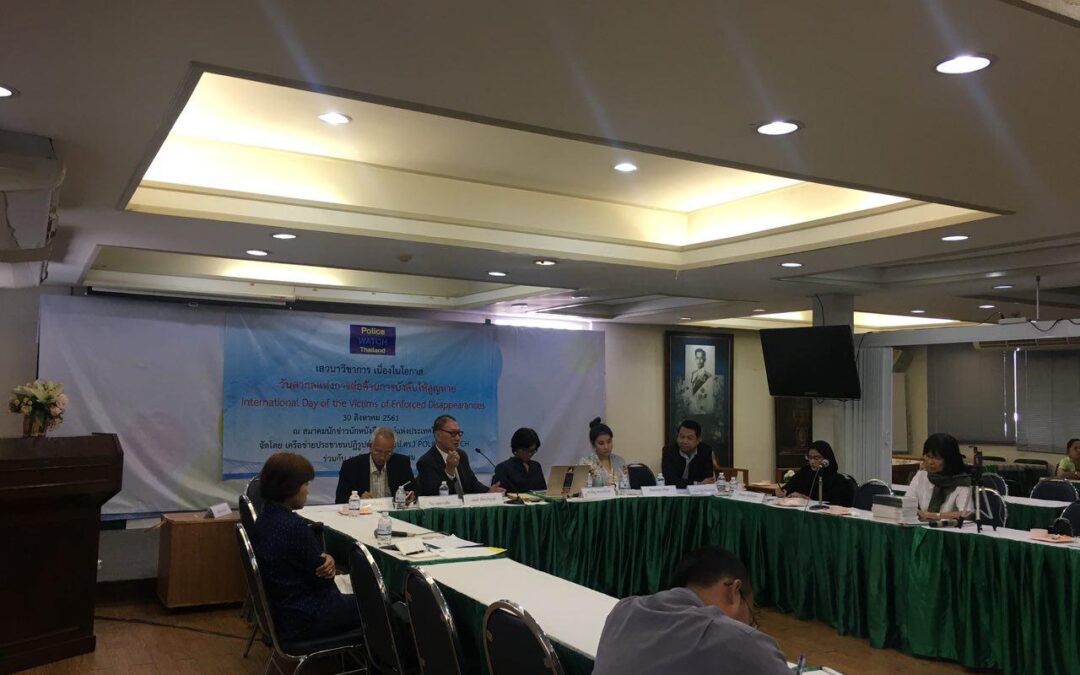
The ICJ participated in a panel discussion to commemorate International Day of the Victims of Enforced Disappearances, organized by Police Watch Thailand and Cross Cultural Foundation.
The discussion was held at the premises of the Thai Journalists’ Association.
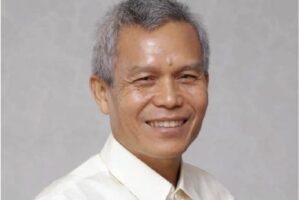
The event began with opening remarks by Surapong Kongchantuk, Chairperson of the Cross Cultural Foundation, who called on the Thai Government to ratify the International Convention for the Protection of All Persons from Enforced Disappearance (ICPPED) and for the existing Draft Prevention and Suppression of Torture and Enforced Disappearance Act (‘Draft Act’) to come into force without undue delay.
He also emphasized that perpetrators of the crime of enforced disappearance needed to be brought to justice, and victims and relatives of victims of enforced disappearance must be provided with effective remedies and reparation.
A panel discussion followed the opening remarks, moderated by Pornpen Khongkachonkiet, Director of Cross Cultural Foundation. Panelists included Sanhawan Srisod, ICJ’s National Legal Adviser, Veera Somkomkid, from People Anti-Corruption Network, Pol.Col. Wirut Sirisawadibuth, Columnist and police reform activist, and Adul Kiewboribon, Chair of a committee of persons whose relatives disappeared during May 1992 protests against the government of General Suchinda Kraprayoon.
In her remarks, Sanhawan Srisod expressed concern at the absence of domestic legislation making torture and enforced disappearance specific crimes in Thai law and gaps in the existing Draft Act.
She also called for prompt, independent, impartial and effective investigations into the fate and whereabouts of disappeared persons consistent with international law and standards.
Human Rights Commissioner, and wife of disappeared lawyer and human rights defender Somchai Neelapaijit, Angkhana Neelapaijit, made closing remarks for the event.
The panel discussion followed a forum the ICJ co-hosted in March this year, commemorating the 14th year anniversary of the enforced disappearance of Somchai Neelapaijit, which also raised awareness about amendments to the Draft Act.
During the forum, the ICJ raised concerns about the independence of the ‘Committee managing complaints of torture and enforced disappearance cases’, which was established in May 2017, and expressed the need for further clarification on the legal framework – domestic and/or international – that will ground the Committee’s operation.
Background
The International Day of the Victims of Enforced Disappearances falls on 30 August every year.
Thailand is bound by international legal obligations under the International Covenant on Civil and Political Rights (ICCPR) and Convention against Torture and Other Cruel, Inhuman or Degrading Treatment or Punishment (CAT) – both of which it has acceded to – to investigate, prosecute, punish and provide remedies and reparation for the crimes of torture, other acts of ill-treatment, and enforced disappearance.
However, Thailand has not enacted domestic legislation recognizing enforced disappearance as a criminal offence. Thailand is also yet to ratify the ICPPED, despite signing the Convention in January 2012.
Thailand’s Ministry of Justice concluded a second round of public consultation on the Draft Act and is now reportedly in the process of evaluating the results of the consultation.
On 30 August 2017, 23 November 2017 and 12 March 2018, civil society organizations, including the ICJ, Amnesty International and Human Rights Watch, sent open letters to the Government, including to Thailand’s Minister of Justice, outlining amendments that would be necessary to bring the Draft Act in line with Thailand’s international human rights obligations.
In the absence of domestic legislation criminalizing torture and enforced disappearance, on 23 May 2017, a ‘Committee managing complaints for torture and enforced disappearance cases’ was established by the Prime Minister, pursuant to Prime Minister’s Office Order No. 131/2560 (2017).
The Committee, chaired by the Minister of Justice, consists of 15 officials drawn from different ministries,including the Ministry of Defence, the Royal Thai Police and the Internal Security Operations Command (ISOC).
Aug 27, 2018 | Nouvelles, Plaidoyer
Aujourd’hui, la CIJ a publié une note d’information juridique sous la forme d’un questions-réponses (uniquement disponible en anglais) dans laquelle elle énonce ce qui est requis pour pouvoir prouver un génocide, et en particulier, l’élément d’«intention génocidaire».
La note d’information de la CIJ sort au moment où la Mission internationale indépendante d’établissement des faits au Myanmar (FFM) appelle à enquêter les crimes commis au regard du droit international, y compris le génocide.
Le génocide est un crime particulièrement odieux dont la genèse en tant que crime de droit international réside dans la politique d’extermination du régime nazi pendant la Seconde Guerre mondiale.
En vertu du droit international coutumier et de la Convention pour la prévention et la répression du crime de génocide de 1948 («convention sur le génocide»), tous les États ont le devoir de prévenir et de punir le génocide.
Les agences des Nations Unies et des experts indépendants ont rapporté des informations crédibles et cohérentes selon lesquelles des crimes graves en vertu du droit national et international ont été commis contre les musulmans Rohingya au Myanmar, y compris les crimes contre l’humanité de déportation, viol et meurtre.
Un certain nombre d’experts et d’autorités ont également suggéré qu’un génocide avait été commis et ont demandé des enquêtes à ce sujet.
Aujourd’hui, la FFM a demandé l’ouverture d’une enquête sur un génocide dans le nord de l’État de Rakhine, ainsi que sur des crimes contre l’humanité et des crimes de guerre dans les États de Rakhine, Kachin et Shan.
Cette annonce fait suite à la déclaration du Haut-Commissaire des Nations Unies aux droits de l’Homme, Zeid Ra’ad al-Hussein, en décembre 2017, selon laquelle “des éléments de génocide pourraient exister”.
Et en mars 2018, le Rapporteur spécial des Nations Unies sur la situation des droits de l’Homme au Myanmar, Yanghee Lee, et le Conseiller spécial des Nations Unies pour la prévention du génocide, Adama Dieng, ont évoqué la possibilité que le traitement des Rohingyas par le Myanmar puisse constituer un génocide.
Les Rohingyas constituent la grande majorité des plus de 700’000 personnes déplacées à la suite d’opérations de sécurité commandées par l’armée du Myanmar dans le nord de l’État de Rakhine, à la suite d’attaques perpétrées le 25 août 2017 par l’Armée Arakan Rohingya (ARSA).
Le génocide est un crime complexe qui, dans de nombreux cas, peut être difficile à établir au-delà du doute raisonnable dans un procès.
L’un des domaines qui s’est révélé particulièrement difficile est la nécessité de prouver «une intention spéciale» ou une «intention génocidaire», qui est un élément constitutif et distinctif essentiel du crime de génocide.
La note d’information juridique devrait aider ceux qui examinent si un génocide a été commis contre la population Rohingya et, dans l’affirmative, si quelqu’un peut être tenu individuellement pénalement responsable.
La note d’information juridique répond aux questions suivantes:
1. Quelle est la définition du génocide?
2. Que signifie légalement une “intention génocidaire”?
3. Quelles sont les similitudes et les différences entre les crimes relevant du droit international en matière de persécution et de génocide?
4. Comment les différentes juridictions ont-elles abordé les intentions génocidaires de manière factuelle?
5. Dans quelle mesure l’élément d’intention des crimes sous-jacents contre l’humanité en matière de de déportation ou de transfert forcé à l’intention génocidaire est-il pertinent?
Contact
Kingsley Abbott, ICJ Senior Legal Adviser, t: +66 (0)94 470 1345 ; e: kingsley.abbott(a)icj.org
Download
Universal-Genocide Q & A FINAL-Advocacy-analysis brief-2018-ENG (PDF en anglais)
Aug 27, 2018
Today, the ICJ issued a Questions & Answers legal briefing note setting out what is required to prove genocide and, in particular, the element of “genocidal intent”.
This came as the Independent International Fact-Finding Mission on Myanmar (FFM) called for investigations into crimes under international law including genocide.
Genocide is a particularly heinous crime whose genesis as a crime under international law resides in the extermination policies of the Nazi regime during World War Two.
Under customary international law and the Convention on the Prevention and Punishment of the Crime of Genocide 1948 (“Genocide Convention”), all states have a duty to prevent and punish genocide.
UN agencies and independent experts have reported credible and consistent information that serious crimes have been committed under domestic and international law against Rohingya Muslims in Myanmar, including the crimes against humanity of deportation, rape and murder.
A number of experts and authorities have also suggested that genocide may have been committed and have called for investigations in that respect.
Today, the FFM called for investigations into genocide in the north of Rakhine State, as well as for crimes against humanity and war crimes in Rakhine, Kachin and Shan States.
This announcement followed the United Nations High Commissioner for Human Rights, Zeid Ra’ad al-Hussein’s statement in December 2017 that “elements of genocide may be present.”
And in March 2018, UN Special Rapporteur on the situation of human rights in Myanmar, Yanghee Lee, and UN Special Adviser on the Prevention of Genocide, Adama Dieng, raised the possibility that Myanmar’s treatment of Rohingyas may amount to genocide.
Rohingyas constitute the vast majority of the more than 700,000 persons displaced as a result of security operations commanded by Myanmar’s military in northern Rakhine State, following attacks on police posts by the Arakan Rohingya Salvation Army (ARSA) on 25 August 2017.
Genocide is a complex crime that in many instances may be difficult to establish beyond reasonable doubt in a trial setting.
One area that has proved particularly challenging is the requirement to prove “special intent” or “genocidal intent” which is a critical constitutive and distinctive element of the crime of genocide.
The legal briefing note should assist those who are examining whether genocide has been committed against the Rohingya population and, if so, whether anyone can be held individually criminally responsible.
The Q & A answers the following questions:
1. What is the definition of genocide?
2. What does “genocidal intent” mean legally?
3. What are the similarities and differences between the international crimes of persecution and genocide?
4. How have different jurisdictions approached genocidal intent factually?
5. How relevant is any establishment of the intent element of the underlying crimes against humanity of deportation or forcible transfer to the genocidal intent?
Contact
Kingsley Abbott, ICJ Senior Legal Adviser, t: +66 (0)94 470 1345 ; e: kingsley.abbott(a)icj.org
Download
Universal-Genocide Q & A FINAL-Advocacy-analysis brief-2018-ENG (Q & A in pdf)
Summarized Report (in English)
ICJ Genocide Q&A Summary Final Mar 2019 BURMESE(Q & A, summarized version, in pdf in Burmese)

Aug 27, 2018 | News
The ICJ today joined other International Non-Government Organizations operating in Myanmar in a statement marking one year since the commencement of military ‘clearance operations’ that caused the exodus of around 700,000 Rohingyas into neighbouring Bangladesh.
The statement reads:
As the UN Security Council meets in New York to mark one year since nearly 700,000 Rohingya refugees fled to neighboring Bangladesh, International Non-Governmental Organizations (INGOs) working in Myanmar say 600,000 Rohingya still left in Myanmar face daily discrimination and human rights abuses, making conditions unsafe for refugees to return.
INGOs urge the Security Council to use the one-year anniversary as an opportunity to step up pressure on the government of Myanmar to take action on three critical areas: addressing the root causes of the crisis in Rakhine State; ensuring accountability for human rights violations and improving humanitarian access.
Discriminatory policies mean that Rohingya communities in Rakhine State continue to lack citizenship and face restrictions on their freedom of movement, impeding their ability to go to school, seek medical care, find jobs or visit friends and family.
128,000 Rohingya and other Muslim communities remain trapped in closed camps in central Rakhine for the sixth year since the intercommunal violence of 2012.
Although some steps have been taken to relocate camp residents to new sites, the displaced communities have not been adequately consulted, are unable to return to their original homes, or another location of their choice, and continue to lack freedom of movement, access to jobs and services, thus further entrenching their confinement and segregation.
At the same time, a full and independent international investigation into human rights violations – sexual violence, killings, beatings and destruction of homes and properties – that caused refugees to flee has not happened and the perpetrators who facilitated these abuses have not been brought to justice.
The rights violations committed in Rakhine State are part of a pattern of ongoing military abuses against ethnic minorities throughout Myanmar, including in Kachin State, Shan State and the southeast of the country.
Humanitarian organizations working throughout Rakhine State continue to face serious restrictions on their access to affected communities and bureaucratic and administrative barriers hamper their ability to carry out their daily work.
In northern Rakhine, from where the majority of refugees in Bangladesh fled, full humanitarian access for most organizations has not been restored more than one year since restrictions were first put in place.
Although a Memorandum of Understanding was signed between UNHCR, UNDP and the Government of Myanmar in June with a view to enabling both agencies to resume operations in northern Rakhine, they still await full, unfettered access, and have not yet been able to begin the work of supporting affected communities and monitoring conditions.
The recommendations of the Kofi Annan-led Advisory Commission on Rakhine, published one year ago, provide the best roadmap for addressing the root causes of the crisis in Rakhine State, improving the lives of all communities and creating the conditions for an inclusive, fair and prosperous society for all the people in Rakhine.
INGOs welcome the progress made by the Government of Myanmar in implementing some of the recommendations, including those related to improving development and infrastructure, such as building new roads, schools, and hospitals, but conclude that not enough progress has been made in addressing structural human rights issues or in creating an environment where all communities can benefit from these developments without discrimination.
Without citizenship rights and freedom of movement, Rohingya communities in Rakhine State cannot equally benefit from improved development and refugees in Bangladesh will not feel safe to return.
INGOs call on the UN Security Council to set time-bound and measurable targets for the Government of Myanmar to make meaningful progress in all three of these areas and to hold regular public meetings on the crisis.
Specifically, the Security Council should call on the Government of Myanmar to implement the recommendations of the Advisory Commission in their entirety, including addressing structural problems of discrimination, restrictions on movement and denial of citizenship faced by Rohingya communities.
Implementation of the Advisory Commission recommendations also requires listening to the perspectives of all ethnic groups in Rakhine in an effort to break down the divisions that have pitted communities against each other.
Second, the Security Council should request the government of Myanmar to grant full and unfettered access for humanitarian organizations to all parts of Rakhine State as well as full access for independent media and journalists.
And finally, it should step up efforts with the government of Myanmar to allow independent human rights investigators full and unimpeded access to investigate human rights abuses, gather untampered evidence and refer cases to an international tribunal.
The Security Council must send a strong message to the Government of Myanmar to end impunity and prevent future violations.
Unless these measures are implemented, the international community risks perpetuating impunity and cementing segregation in Rakhine State for decades to come.
Myanmar-RohingyaJointNGOstatement-News-webstory-2018-ENG (full story in PDF)
Aug 24, 2018 | Новости, Событие, Статьи
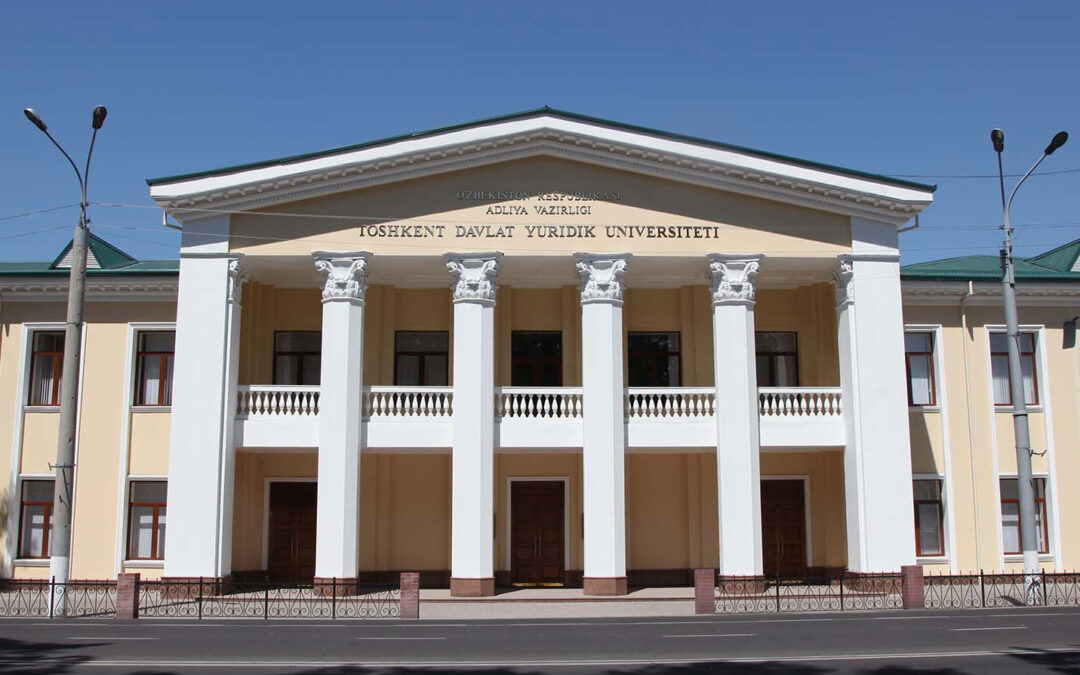
Международная комиссия юристов (МКЮ) совместно с Ташкентским государственным юридическим университетом (ТГЮУ) начинает «Экспертные дискуссии по экономическим, социальным и культурным правам».
В рамках дискуссий, МКЮ и ТГЮИ приглашают всех желающих подготовить и представить доклады (статьи) на рассмотрение рабочей группой для включения в список докладчиков и последующей их презентации, и обсуждения на первой экспертной встрече.
Первая встреча пройдет «18» сентября 2018 года в ТГЮУ. Темой первой встречи является «Право на труд» и принять участие в экспертной встрече могут все желающие, включая студентов и специалистов, интересующихся данной тематикой. Для регистрации просим пройти по следующей ссылке: https://goo.gl/forms/4WRTdugLuFI6l7Hu1. Регистрация открыта до «14 сентября» 2018 года.
Uzbekistan-ESCR Call for papers_ACCESS-News-web story-2018-RUS